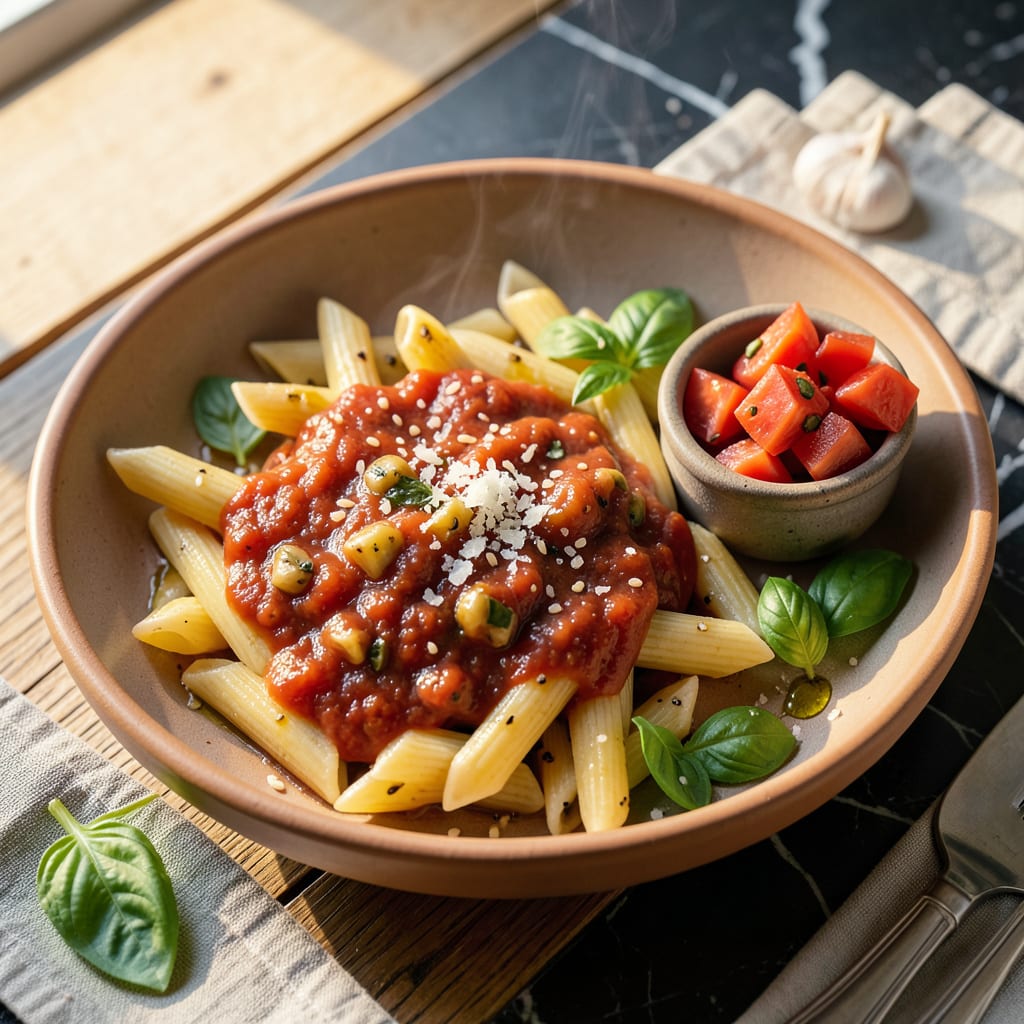
Use ½ cup tomato sauce for every 1 cup of diced tomatoes called for in recipes. Adjust liquid content slightly, as sauce is thicker and more concentrated in flavor.
This substitution works beautifully in slow-cooked dishes where you want depth without extra chunkiness. 🔥 I’ve found that tomato sauce’s reduced water content actually intensifies the umami notes, which is why it’s my go-to for braises and ragùs. The key is monitoring consistency—sauce can make your dish thicker faster, so keep a splash of broth or water nearby for balance.
What surprises most cooks is how this swap affects cooking time. Since the sauce is already partially reduced, you’ll often shave 10-15 minutes off simmering time while still achieving that rich, developed flavor profile. Just remember to taste as you go—the concentration means salt levels might need tweaking too. ✨
💡 In This Article
- Why Tomato Sauce Works as a Diced Tomato Substitute
- Adjusting Recipes When Using Tomato Sauce Instead of Diced Tomatoes
Why Tomato Sauce Works as a Diced Tomato Substitute
The magic lies in how tomato sauce is processed. When fresh tomatoes are cooked down into sauce, they lose about 60% of their water content through evaporation. This concentration transforms the flavor profile—what was once bright and acidic becomes deeper and more umami-rich.
The natural sugars caramelize slightly during reduction, creating that signature rich, slightly sweet base we associate with tomato sauce. 🔥
Texture plays a huge role in this substitution’s success. Fresh diced tomatoes contain about 95% water by weight, while tomato sauce typically sits around 80-85% moisture. This means you’re working with a product that’s already partially reduced. The cell walls in the tomatoes break down during processing, releasing pectin that naturally thickens the sauce.
For comparison, a cup of diced tomatoes will yield about ½ cup of sauce after 30 minutes of simmering—this is why the 2:1 ratio works so well.
Where this swap truly shines is in applications where texture isn’t the star. I’ve used this substitution most successfully in braised dishes, ragùs, and long-simmered sauces where the tomatoes are meant to melt into the background.
The sauce’s consistency helps create body faster—think of how a bolognese comes together in 2 hours with sauce versus 3 hours with fresh tomatoes. The flavor development happens more efficiently because you’re starting with already-browned tomato compounds.
However, there are limits to this substitution. In fresh applications like pico de gallo or quick sautés, the textural difference becomes obvious. The sauce lacks the fresh, crisp cell structure that makes diced tomatoes pop in raw preparations.
For dishes where tomato texture matters—like a chunky marinara or shakshuka—you’d want to either stick with fresh tomatoes or add some diced fresh tomatoes back into the sauce for contrast. ✨
The processing method also affects the acidity. Tomato sauce typically has a pH of 4.0-4.5, while fresh tomatoes sit around 4.3-4.9. This slight increase in acidity means you might need to balance with a pinch of sugar in some recipes, especially if you’re sensitive to tartness.
I’ve found this particularly true in Italian-American dishes where that sweet-tart balance is crucial to the final flavor profile.
What most cooks don’t realize is that commercial tomato sauce often includes added salt (about 200-300mg per ½ cup serving) and sometimes herbs. This means you’re not just substituting tomato flavor—you’re potentially adding seasoning elements.
Always taste your dish before adding extra salt when making this swap, and consider reducing other salty ingredients by about 10-15% to compensate. 💫
The heat application during sauce production also develops different flavor compounds. The Maillard reaction creates new savory notes that fresh tomatoes lack until they’re cooked for extended periods.
This is why tomato sauce can give your dishes that “all-day simmered” flavor in a fraction of the time—you’re essentially getting a head start on flavor development that would normally take hours to achieve with fresh tomatoes.

Trained in classic French technique but raised on slow-cooked ribs and spicy rubs, she blends culinary skill with smoke and soul.
- Recipe for Boneless Pork Chops in Cast Iron Skillet: Sear and Baste to Juicy Perfection - October 3, 2026
- Recipe for Boneless Cross Rib Roast: Slow-Roasted Beef with Herb Crust - October 3, 2026
- Hamburgers in Sauce Recipe Crock Pot: Slow-Cooked Savory Delight - October 3, 2026