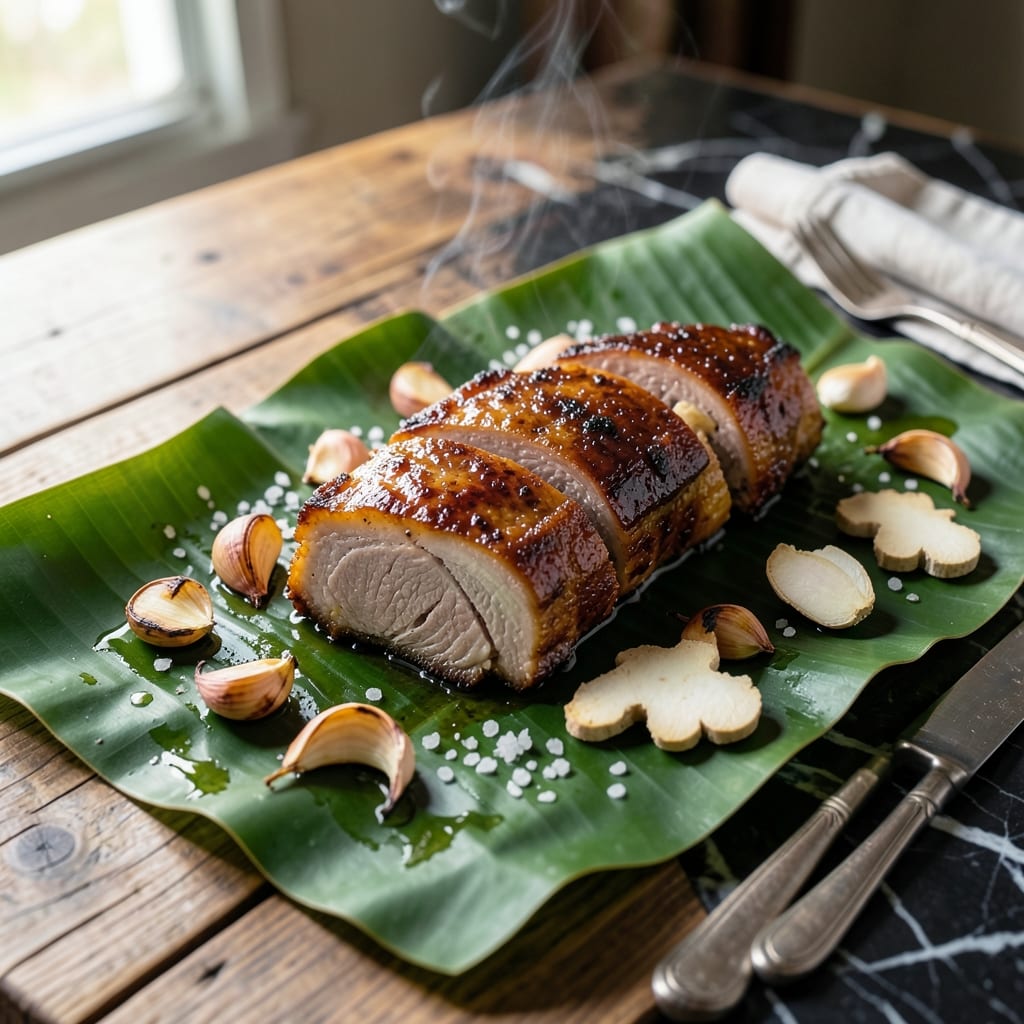
I’ve always been captivated by how banana leaves transform this dish, infusing it with a subtle earthy aroma that’s unmistakably traditional. The slow-roasting process is what makes the pork so tender, falling apart with the slightest touch.
This method relies on patience and simplicity—just a few ingredients, including Hawaiian sea salt, wrapped in banana leaves and cooked low and slow. The result is meat so moist it practically melts, with a depth of flavor that’s hard to replicate any other way.
What you’ll love most is how the banana leaves lock in juices while adding a unique, smoky note. It’s a technique passed down through generations, and it delivers results that feel like a taste of Hawaii at home.
Perfect for gatherings or a comforting weekend meal, this recipe stays true to its roots while being approachable for any home cook.
Ingredients for Kalua Pork Recipe Banana Leaves
Traditional Hawaiian flavors start with pork, banana leaves, and sea salt for authentic taste.
| Ingredient | Amount | Notes |
|---|---|---|
| Pork Shoulder 🥩 | 3 lb | Boneless, skin-on preferred |
| Banana Leaves 🍌 | 4 sheets | Fresh or thawed frozen |
| Hawaiian Sea Salt 🧂 | 2 tbsp | Coarse grains, traditional alaea salt |
| Liquid Smoke 💨 | 1 tbsp | Hickory or mesquite flavor |
| Garlic Cloves 🧄 | 6 cloves | Peeled and smashed |
| Fresh Ginger 🌿 | 1 whole | 2-inch piece, sliced |
| Green Onions 🧅 | 4 whole | White and green parts separated |
| Water 💧 | ½ cup | For steaming in leaves |
| Black Peppercorns 🌶️ | 1 tsp | Whole, lightly crushed |
[recipe_ingredient_scaler]
The pork shoulder is non-negotiable here—bone-in works too but boneless is easier to wrap. Look for well-marbled cuts at Costco or your local butcher. Banana leaves are sold frozen at most Asian markets or Latin grocery stores. Thaw them overnight in the fridge (or at room temp for a few hours) before using. Alaea salt is the traditional choice, but any coarse Hawaiian sea salt will capture that authentic mineral tang.
No banana leaves? Parchment paper plus foil can work in a pinch, though you’ll lose that signature aroma. Out of liquid smoke? Charcoal briquettes wrapped in foil and placed in the oven can add a smoky touch. Fresh ginger can be swapped for ground ginger at one-quarter the amount, but the fresh stuff adds brightness. If you can’t find alaea salt, kosher salt with a pinch of red clay mimics the color and flavor.
Leftovers keep beautifully in the fridge for 4-5 days. Reheat gently in a skillet or microwave with a splash of water to keep it moist. Freezes well for up to 3 months—portion before freezing for easy meals. The flavor deepens over time, making it even better the next day.
Why You’ll Love This Recipe
- Set It and Forget: I toss the pork shoulder with Hawaiian sea salt, liquid smoke, and garlic, wrap it in banana leaves, and let the slow cooker do the rest.
- Smoky Paradise: The banana leaves lock in that rich, smoky flavor with the garlic and sea salt—tastes like a Hawaiian luau in my kitchen.
- Feeds a Hungry Crowd: One pork shoulder stretches to feed eight, so it’s my go-to for potlucks or Sunday dinner with leftovers for tacos the next day.
- Budget-Friendly Luxury: Pork shoulder is cheap, and a little liquid smoke and banana leaves turn it into something that feels way fancier than the cost.
Step-by-Step Instructions for Kalua Pork Banana Leaves
Traditional method delivers fall-apart tender results with authentic island flavors.
Step 1: Prepare the Banana Leaves and Pork
Thaw the 4 sheets Banana Leaves if frozen, then rinse under warm water to soften. Pat dry with a clean towel. I always check for tears and trim any rough edges to prevent punctures during cooking.
Rub the 3 lb Pork Shoulder all over with 2 tbsp Hawaiian Sea Salt, making sure to coat every surface. The coarse grains will dissolve as the pork cooks, infusing it with that signature salty-sweet Hawaiian flavor. Place the pork in the center of two overlapping banana leaf sheets.
Step 2: Add Aromatics and Liquid Smoke
Scatter the 6 cloves Garlic Cloves, sliced 1 whole Fresh Ginger, and 1 tsp Black Peppercorns around the pork. Lightly crush the peppercorns first to release their aroma. Drizzle 1 tbsp Liquid Smoke evenly over the meat—this replicates the smoky depth of traditional imu pit cooking.
Arrange the white parts of the 4 whole Green Onions around the pork, saving the green tops for garnish later. The onions will mellow and sweeten as they cook, balancing the saltiness. Fold the banana leaf edges inward to create a loose package, then add the remaining two sheets on top for extra protection.
Step 3: Wrap Securely and Add Moisture
Fold all the banana leaf edges upward and inward to completely enclose the pork, tucking the ends under like a burrito. This tight wrap prevents steam from escaping while allowing the leaves to impart their subtle, earthy flavor. Secure the package with kitchen twine if needed.
Place the wrapped pork seam-side down in a roasting pan. Pour 0.5 cup Water into the bottom of the pan—this creates steam that keeps the leaves pliable and the pork moist during the long cooking process. The water should never touch the banana leaf package.
Step 4: Slow-Roast to Perfection
Preheat your oven to 325°F. Roast the pork for 4 to 5 hours until the meat is fork-tender and shreds easily. You’ll know it’s ready when the internal temperature reaches 195-200°F and the pork pulls apart with minimal resistance.
Resist the urge to open the oven frequently—each peek releases valuable heat and moisture. The banana leaves will darken and soften as they cook, and your kitchen will fill with an intoxicating smoky aroma. If the water evaporates before the pork is done, add another ¼ cup to the pan.
Step 5: Rest and Shred
Carefully transfer the banana leaf package to a cutting board and let it rest for 20 minutes. This allows the juices to redistribute throughout the meat. Unwrap the leaves—the pork should be glistening and infused with the flavors of the aromatics.
Using two forks, shred the pork directly in its cooking juices. Discard any large pieces of ginger or peppercorns, but keep the softened garlic and onions—they’re packed with flavor. Garnish with the reserved green onion tops before serving. The result should be incredibly tender with a subtle smokiness and the unmistakable essence of traditional Hawaiian cooking.
Pro Tips For Making Kalua Pork Recipe Banana Leaves
- Preheat the Leaves: I learned this the hard way—pass the banana leaves briefly over a low flame or hot pan to soften them before wrapping. Makes them pliable and prevents cracks when folding.
- Rub Salt Overnight: Coat the pork shoulder with Hawaiian sea salt at least 12 hours ahead. The longer it sits, the deeper the flavor penetrates.
- Skip the Soaking: Resist the urge to soak the banana leaves in water first—it dilutes the smoky aroma. Just wipe them clean with a damp cloth.
- Use 2 Layers: Sounds weird, but it works: double up the banana leaves when wrapping to keep the juices sealed in and prevent tearing during cooking.
Essential Equipment for This Dish
Banana Leaf Prep
Thaw frozen leaves overnight in the fridge, then rinse under warm water to soften. I always pat them dry with a clean towel and check for tears. Trim any rough edges to prevent punctures during cooking. Fresh leaves from Asian markets work best for me.
Roasting Pan Essentials
Use a heavy-duty stainless steel roasting pan with at least 2-inch sides to catch drippings. My go-to is the Cuisinart Multi-Clad—it distributes heat evenly and lasts forever. The pan needs to accommodate your wrapped pork with room for ½ cup water at the bottom.
Kitchen Twine
Secure your banana leaf package with 100% cotton kitchen twine. I prefer unbleached for a natural look. Avoid plastic-coated twine as it can melt. A 12-foot roll from Williams Sonoma costs about $5 and lasts for multiple cooking sessions.
Oven Thermometer
Don’t trust your oven’s built-in thermometer. I use a Taylor Precision oven thermometer to verify my 325°F setting. It’s a $10 investment that prevents undercooked or dried-out pork. Check it every hour during the long cook.
Meat Thermometer
An instant-read thermometer is non-negotiable for this recipe. I love the ThermoWorks ThermoPop for its accuracy and speed. Check the pork’s internal temp in multiple spots—you’re aiming for 195-200°F for perfect tenderness. 🌡️
Shredding Tools
Two sturdy forks work perfectly for shredding, but I’ve found bear claw meat shredders save time and effort. Look for ones with heat-resistant handles. The pork should pull apart easily when it’s ready, with minimal resistance.
Nutrition Facts
Frequently Asked Questions
Where can I find banana leaves if my grocery store doesn’t carry them?
Check Asian markets or Latin grocery stores—they often sell them frozen. You can also find them online at specialty food retailers.
Can I make this without liquid smoke?
Yes! For a smoky flavor, place charcoal briquettes wrapped in foil in the oven with the pork. Or use smoked paprika in the rub instead.
How do I know when it’s done cooking?
The pork is ready when it reaches 195-200°F internally and shreds easily with forks. This usually takes 4-5 hours at 325°F.
What’s the best way to reheat leftovers?
Gently warm in a skillet with a splash of water or broth. Microwave in 30-second intervals, stirring between each, to prevent drying out.

Trained in classic French technique but raised on slow-cooked ribs and spicy rubs, she blends culinary skill with smoke and soul.
- Recipe for Boneless Pork Chops in Cast Iron Skillet: Sear and Baste to Juicy Perfection - October 3, 2026
- Recipe for Boneless Cross Rib Roast: Slow-Roasted Beef with Herb Crust - October 3, 2026
- Hamburgers in Sauce Recipe Crock Pot: Slow-Cooked Savory Delight - October 3, 2026