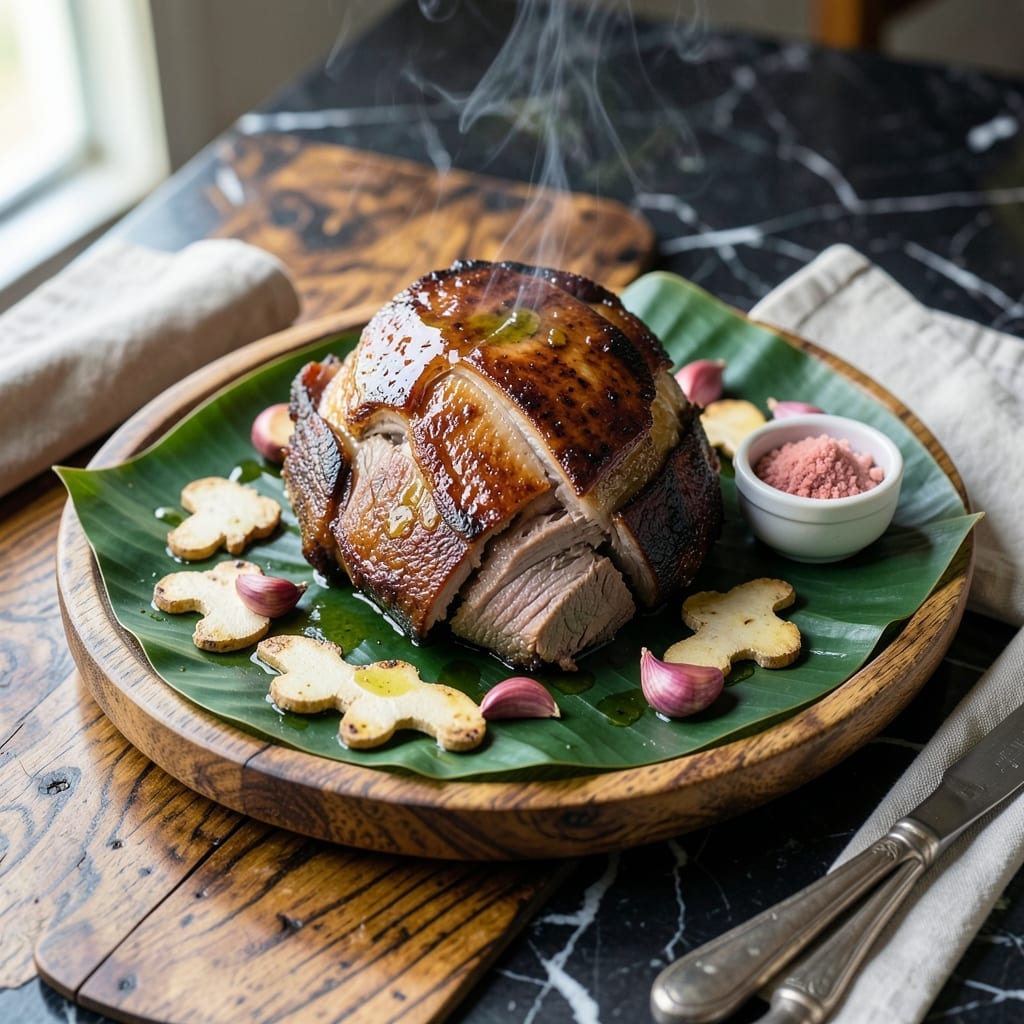
I remember my grandmother’s handwritten note: “Cook until it gives.” This method delivers that same tender result, adapted for modern smokers.
Hawaiian tradition meets low-and-slow smoking. The process transforms pork shoulder into pull-apart perfection with minimal effort. No fancy techniques—just time and proper temperature control.
What emerges after hours in the smoker is meat so tender it nearly dissolves, infused with subtle smoky depth. The bark develops a gentle crust while the inside stays impossibly moist.
This approach respects the original imu method while working within home kitchen limitations. The result proves authentic flavor doesn’t require traditional pits.
Ingredients for Kalua Pork Recipe Smoker
Traditional Hawaiian flavors meet low-and-slow smoking with these simple, authentic ingredients.
| Ingredient | Amount | Notes |
|---|---|---|
| Pork Shoulder 🐖 | 4 lb | Bone-in preferred for moisture |
| Hawaiian Sea Salt 🧂 | ¼ cup | Coarse grain, traditional alaea |
| Liquid Smoke 💨 | 2 tbsp | Hickory or mesquite variety |
| Banana Leaves 🍌 | 2 pieces | Optional for traditional wrapping |
| Fresh Ginger 🌿 | 1 whole | Peeled and sliced |
| Garlic Cloves 🧄 | 6 cloves | Smashed for maximum flavor |
| Brown Sugar 🍚 | ¼ cup | Light or dark, for caramelization |
| Soy Sauce 🫒 | ¼ cup | Low-sodium preferred |
| Apple Cider Vinegar 🍏 | 2 tbsp | Balances richness |
| Black Peppercorns 🌶️ | 1 tbsp | Freshly cracked |
| Yellow Onion 🧅 | 1 whole | Quartered for aromatics |
| Water 💧 | 1 cup | For moisture during smoking |
[recipe_ingredient_scaler]
The pork shoulder is non-negotiable—bone-in yields the most tender, juicy result. Source from a reputable butcher or Whole Foods for quality cuts with good marbling. Hawaiian sea salt (alaea) is traditional, but any coarse sea salt works. For banana leaves, check Asian markets or Amazon (frozen sections often carry them).
No banana leaves? Heavy-duty foil works nearly as well. Liquid smoke can be replaced with 1 hour of actual smoking using kiawe or hickory wood. Brown sugar can be swapped for coconut sugar for a deeper caramel note. If avoiding soy, coconut aminos provide similar umami without gluten.
Pork can be dry-brined with the salt 12-24 hours ahead for deeper penetration. Store raw pork in the fridge for up to 3 days or freeze for 6 months. Cooked pork keeps 5 days refrigerated or freezes beautifully for 3 months.
Why You’ll Love This Recipe
- Set and Forget: I toss the pork shoulder with Hawaiian sea salt and liquid smoke, wrap it in banana leaves, and let the smoker do all the work.
- That Smoky Sweetness: The banana leaves and ginger create this deep, island-inspired flavor that makes the pork ridiculously tender and aromatic.
- Crowd Pleaser: Honestly, it’s my go-to for luaus, potlucks, or even just a lazy Sunday dinner with family.
- Leftovers for Days: One pork shoulder feeds us for multiple meals—tacos, rice bowls, you name it.
Step-by-Step Instructions for Kalua Pork Smoker
Master this traditional method for fall-apart pork with authentic island flavors.
Step 1: Prepare the Pork Shoulder with Traditional Seasoning
Begin by rubbing the 4 lb Pork Shoulder thoroughly with the 0.25 cup Hawaiian Sea Salt, ensuring complete coverage on all surfaces. The coarse alaea salt penetrates deeply while forming the characteristic crust.
In a small bowl, combine the 0.25 cup Brown Sugar, 0.25 cup Soy Sauce, 2 tbsp Apple Cider Vinegar, and 2 tbsp Liquid Smoke. This liquid mixture will infuse the pork with layers of sweetness, umami, and smoky depth that defines authentic kalua flavor.
Step 2: Create the Aromatic Base for Slow Smoking
Peel and slice the 1 whole Fresh Ginger, then smash the 6 cloves Garlic Cloves to release their essential oils. Quarter the 1 whole Yellow Onion and crack the 1 tbsp Black Peppercorns for maximum flavor extraction.
Line your smoker pan with the 2 pieces Banana Leaves if using—this traditional method adds subtle earthy notes and prevents sticking. The leaves also help retain moisture during the long cook.
Step 3: Begin the Low-and-Slow Smoking Process
Place the seasoned pork shoulder in the prepared smoker pan, fat-side up. Pour the brown sugar mixture over the pork, then add the ginger, garlic, onion, and peppercorns around the meat. Pour in the 1 cup Water at the base of the pan for steam.
Set your smoker to 225-250°F. The low temperature is crucial for breaking down the collagen in the pork shoulder without drying it out. Maintain this range throughout the entire cook time.
Step 4: Smoke to Tender Perfection
Smoke the pork undisturbed for 8-10 hours or until the internal temperature reaches 195-203°F. Resist the urge to check or baste during the first 4 hours—this allows the bark to form properly.
You’ll know it’s ready when a probe slides into the thickest part with no resistance, like butter. The meat should pull apart easily with a fork, and the exterior will have developed a deep mahogany color.
Step 5: Rest and Shred for Service
Transfer the pork to a cutting board and tent loosely with foil. Let it rest for 30-45 minutes—this allows the juices to redistribute and the collagen to fully transform into gelatin, ensuring maximum tenderness.
Shred the pork using two forks, discarding any large fat pieces. Mix in some of the cooking liquid from the pan to maintain moisture. The result should be incredibly tender, with a perfect balance of salty, sweet, and smoky flavors in every bite.
Pro Tips For Making Kalua Pork Recipe Smoker
- Low and Slow Wins: Keep your smoker at 225°F—any hotter and the pork shoulder dries out before it gets that fall-apart texture. I learned this the hard way after pulling tough meat off a 275°F cook.
- Salt the Night Before: Rub the pork shoulder with Hawaiian sea salt at least 12 hours ahead—it penetrates deep and pulls out moisture for a better bark. My grandmother swore by this, and she was right.
- Skip the Soaking: Resist the urge to soak banana leaves before wrapping—they steam the pork and wash away flavor. Just wipe them down with a damp cloth to remove dust.
- Ginger Under the Skin: Slice fresh ginger thin and tuck it between the meat and banana leaves—it infuses the pork with aroma without overpowering. Sounds weird, but it works.
Troubleshooting This Dish
Stall Phase Solutions
If your pork temperature plateaus around 160-170°F for hours, don’t panic. This stall happens when evaporative cooling slows progress. I wrap mine in pink butcher paper with ¼ cup cooking liquid to power through. 💡
Temperature Fluctuations
Smoker temps will vary—it’s normal. If your smoker runs below 200°F, extend cooking time by 1-2 hours. If it spikes above 275°F, crack the vent or add ice cubes to the water pan to regulate.
Dry Meat Concerns
If the pork seems dry, baste with the cooking liquid every 2 hours after the first 4 hours. Alternatively, add ½ cup apple juice to the pan for extra moisture. Remember, pork shoulder has enough fat to self-baste.
Bark Too Dark
If the bark darkens too quickly, tent the pork with heavy-duty foil after 6 hours. This prevents burning while allowing the interior to continue cooking. The bark will still develop flavor without becoming bitter.
Uneven Cooking
If one side cooks faster, rotate the pan 180 degrees halfway through. Also, ensure your smoker’s heat source isn’t directly under the pork. I learned this the hard way with my first smoker setup.
Probe Resistance
If your probe hits resistance at 195°F, give it more time. True tenderness comes at 203°F when collagen fully renders. I’ve pulled pork at 203°F that shredded like butter after resting properly. 🌡️
Nutrition Facts
Frequently Asked Questions
What’s the best wood for smoking?
Kiawe wood is traditional for authentic flavor, but hickory or mesquite work well too. Avoid strong woods like cedar that can overpower the pork’s natural taste.
Can I use boneless pork shoulder?
Yes, but bone-in stays juicier longer. If using boneless, reduce cooking time by 1-2 hours and monitor internal temperature closely to prevent drying out.
How do I know when it’s done?
The pork is ready when it reaches 195-203°F internally and a probe slides in like butter. The meat should pull apart effortlessly with forks.
Can I make this without banana leaves?
Heavy-duty foil works just as well for wrapping. The leaves add subtle flavor but aren’t essential for great results.

Trained in classic French technique but raised on slow-cooked ribs and spicy rubs, she blends culinary skill with smoke and soul.
- Recipe for Boneless Pork Chops in Cast Iron Skillet: Sear and Baste to Juicy Perfection - October 3, 2026
- Recipe for Boneless Cross Rib Roast: Slow-Roasted Beef with Herb Crust - October 3, 2026
- Hamburgers in Sauce Recipe Crock Pot: Slow-Cooked Savory Delight - October 3, 2026