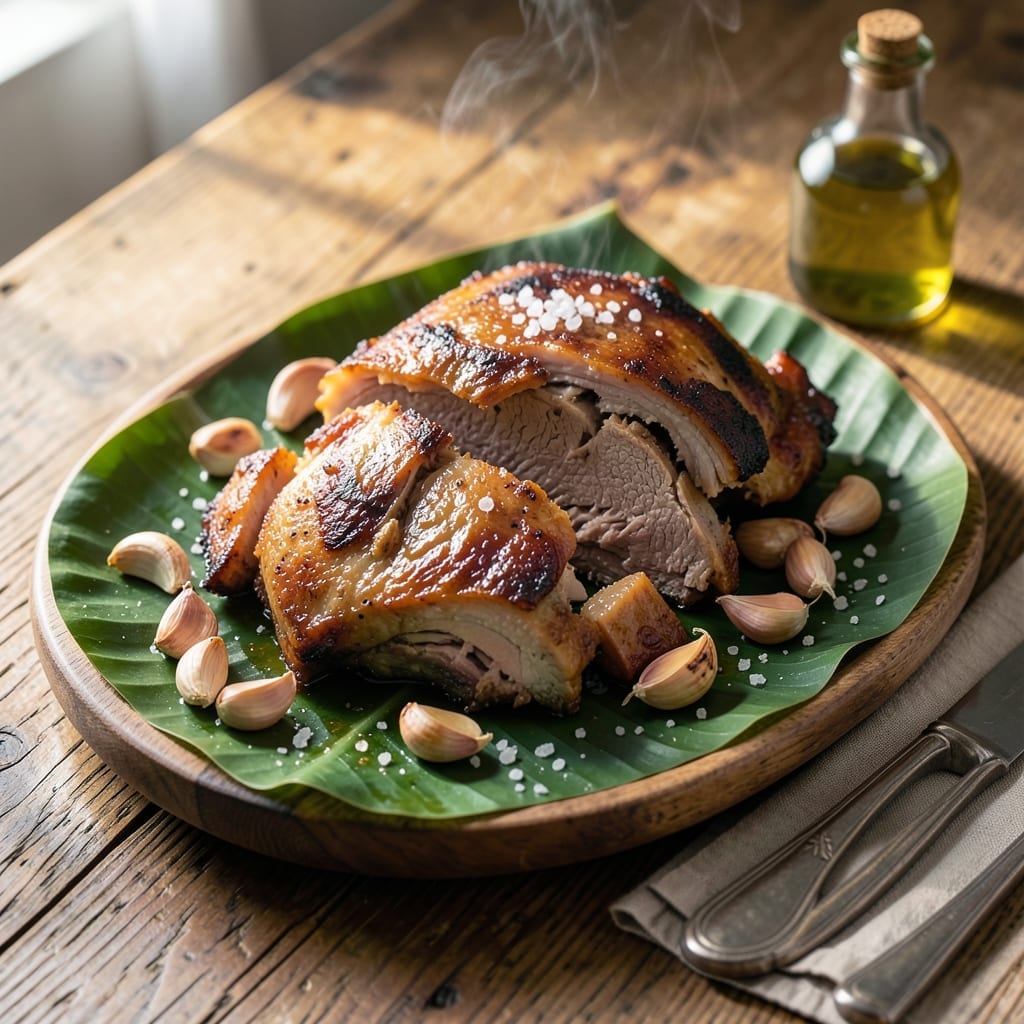
This traditional Hawaiian method transforms pork shoulder into tender, smoky perfection using simple seasoning and low, slow heat. The imu-style preparation captures the essence of authentic island cooking.
With just a few ingredients and patience, you’ll achieve the same fall-apart texture and rich flavor that defines this traditional dish. Pair with cabbage and rice for the complete experience.
Ingredients for Kalua Pork
Simple seasoning and slow heat create authentic island flavor in this dish.
| Ingredient | Amount | Notes |
|---|---|---|
| Pork Shoulder 🍖 | 4 lb | Bone-in or boneless, fat cap intact |
| Hawaiian Sea Salt 🧂 | 2 tbsp | Coarse-grained, authentic alaea salt preferred |
| Liquid Smoke 💨 | 1 tbsp | Hickory or mesquite variety |
| Banana Leaves 🌿 | 4 sheets | Fresh or thawed frozen, optional for wrapping |
| Water 💧 | 1 cup | For imu-style steam |
| Garlic Cloves 🧄 | 6 cloves | Peeled and smashed |
| Green Onions 🧅 | 4 whole | White and green parts, chopped |
| Cabbage 🥬 | ½ whole | Green cabbage, cored and chopped |
| White Rice 🍚 | 2 cups | Long-grain, uncooked |
| Black Pepper 🌶️ | 1 tsp | Freshly cracked for best flavor |
[recipe_ingredient_scaler]
The pork is everything here. Pork shoulder with the fat cap intact yields the most authentic texture—bone-in adds depth, but boneless works too. Source from local butchers or Costco for quality cuts. Hawaiian sea salt (alaea) is traditional (find it at Asian markets or online), but coarse kosher salt works in a pinch. The banana leaves add that signature imu aroma.
No banana leaves? Parchment paper or aluminum foil will do (just wrap tightly). Out of liquid smoke? Charcoal briquettes in the slow cooker bag can mimic the smoky flavor. Garlic powder at half the amount works if fresh isn’t available. For the cabbage, Napa or savoy can substitute, though green cabbage stays truest to tradition.
Leftovers taste even better the next day. Store pork in its juices in the fridge for up to 5 days or freeze for 3 months. Reheat gently to preserve the tender texture. The cabbage and rice are best fresh, so prep those just before serving.
Why You’ll Love This Recipe
- Set and Forget: I toss the pork shoulder with Hawaiian sea salt, wrap it in banana leaves, and let the slow cooker do all the work.
- Smoky Island Flavor: Honestly, the liquid smoke and sea salt give it that authentic underground imu taste without the digging.
- Feeds the Whole Crew: Leftovers? Please—this makes enough for tacos, rice bowls, and sandwiches all week.
- Budget-Friendly Centerpiece: Pork shoulder is cheap, and with just four ingredients, I’m serving a crowd without breaking the bank.
Step-by-Step Instructions for Traditional Hawaiian Imu-Style Pork
This traditional method delivers authentically tender pork with minimal effort.
Step 1: Season and Prepare the Pork Shoulder
Rub the 4 lb Pork Shoulder thoroughly with the 2 tbsp Hawaiian Sea Salt and 1 tbsp Liquid Smoke, ensuring every surface is evenly coated. The coarse sea salt will penetrate deeply, while the liquid smoke imparts that signature imu flavor without an actual underground oven.
For best results, I let the seasoned pork shoulder rest at room temperature for 30 minutes before cooking. This allows the salt to begin breaking down the muscle fibers, which is key to achieving that melt-in-your-mouth texture.
Step 2: Prepare the Imu-Style Cooking Environment
Line a large Dutch oven or slow cooker with the 4 sheets Banana Leaves, if using. These traditional leaves add an authentic touch and infuse subtle flavor, though they’re optional. The banana leaves also help create steam, which keeps the pork moist during the long cooking process.
Add the 6 cloves Garlic Cloves, 4 whole Green Onions, and 0.5 whole Cabbage to the pot. These aromatics will steam alongside the pork, contributing to the layered, traditional flavor profile. Pour in the 1 cup Water to create the necessary steam for imu-style cooking.
Step 3: Slow Cook to Tender Perfection
Place the seasoned pork shoulder on top of the aromatics in the pot. Cover tightly with the lid and cook on low heat. For a slow cooker, this means 8-10 hours on the low setting. If using a Dutch oven, maintain a temperature of 275-300°F in your oven for 6-8 hours.
Resist the urge to check or stir during cooking. The steam created by the water and vegetables will circulate naturally, basting the pork shoulder in its own juices and the infused flavors. You’ll know it’s ready when the meat shreds easily with a fork and reaches an internal temperature of 195-200°F.
Step 4: Shred and Serve with Traditional Sides
Once the pork shoulder is fall-apart tender, remove it from the pot and let it rest for 10-15 minutes. This allows the juices to redistribute throughout the meat. Then, using two forks, shred the pork into bite-sized pieces.
Serve the kalua pork with the cooked 0.5 whole Cabbage from the pot, which will have absorbed the delicious cooking liquids. For a complete traditional meal, prepare the 2 cups White Rice separately and serve alongside. Finish each plate with a sprinkle of 1 tsp Black Pepper for a touch of heat that complements the smoky, savory pork perfectly.
Pro Tips For Making Kalua Pork
- Use Real Banana Leaves: I learned this the hard way—substitutes like foil just don’t give that authentic earthy aroma. Soak the leaves in warm water for 10 minutes first so they don’t crack when wrapping.
- Salt Generously Overnight: Rub the pork shoulder with Hawaiian sea salt the night before—about 1 tablespoon per pound—and let it sit in the fridge. The salt penetrates deep, making the meat juicier.
- Skip the Over-Smoking: A few drops of liquid smoke go a long way; I ruined a batch once with a heavy hand. Start with 1 teaspoon for 3-4 pounds of pork and adjust to taste.
- Low and Slow Wins: Cook it at 300°F for 6-8 hours in the oven or slow cooker. Sounds long, but it’s the only way to get that fall-apart tenderness without drying it out.
Common Mistakes When Making Perfect Results
Skipping the Resting Time
I see many home cooks rush to shred the pork immediately after cooking. This skips the crucial 10-15 minute rest that lets juices redistribute. Without resting, your meat will be dry and the texture uneven. Trust me, patience pays off with juicier results. 💪
Over-Salting the Pork
Hawaiian sea salt is more potent than regular table salt. Using the full 2 tbsp without adjusting can make your dish unpleasantly salty. I recommend starting with 1.5 tbsp and tasting before adding more.
Using Too Much Liquid Smoke
More isn’t better with liquid smoke. The 1 tbsp called for is plenty. Adding extra can make your pork taste bitter and artificial. If you’re unsure, start with 1 tsp and adjust to taste.
Not Enough Cooking Time
True kalua pork needs 8-10 hours in a slow cooker or 6-8 hours in a Dutch oven at 275-300°F. Cutting this short results in tough meat. I learned this the hard way at my first local BBQ competition – the judges could tell! 🔥
Ignoring the Fat Cap
The fat cap on your pork shoulder isn’t just for flavor—it bastes the meat as it renders. Trimming it off means losing moisture and richness. Leave it intact for the most authentic texture and taste.
Wrong Banana Leaf Usage
If using banana leaves, ensure they’re fresh or properly thawed. Frozen leaves used without thawing can impart a bitter taste. I source mine from Asian markets where turnover is high.
Nutrition Facts
Frequently Asked Questions
What’s the best cut of meat to use?
Use pork shoulder with the fat cap intact for authentic texture. Bone-in adds depth, but boneless works too. Source from local butchers for quality.
Can I make this without banana leaves?
Yes! Parchment paper or aluminum foil work as substitutes. They won’t add the same aroma but will keep the meat moist.
How do I know when it’s done?
The pork is ready when it shreds easily with a fork and reaches an internal temperature of 195-200°F. This takes 8-10 hours on low in a slow cooker.
Can I use regular salt instead of Hawaiian?
Coarse kosher salt works in a pinch. Start with 1.5 tbsp instead of 2 tbsp since Hawaiian sea salt is more potent.

Trained in classic French technique but raised on slow-cooked ribs and spicy rubs, she blends culinary skill with smoke and soul.
- Recipe for Boneless Pork Chops in Cast Iron Skillet: Sear and Baste to Juicy Perfection - October 3, 2026
- Recipe for Boneless Cross Rib Roast: Slow-Roasted Beef with Herb Crust - October 3, 2026
- Hamburgers in Sauce Recipe Crock Pot: Slow-Cooked Savory Delight - October 3, 2026