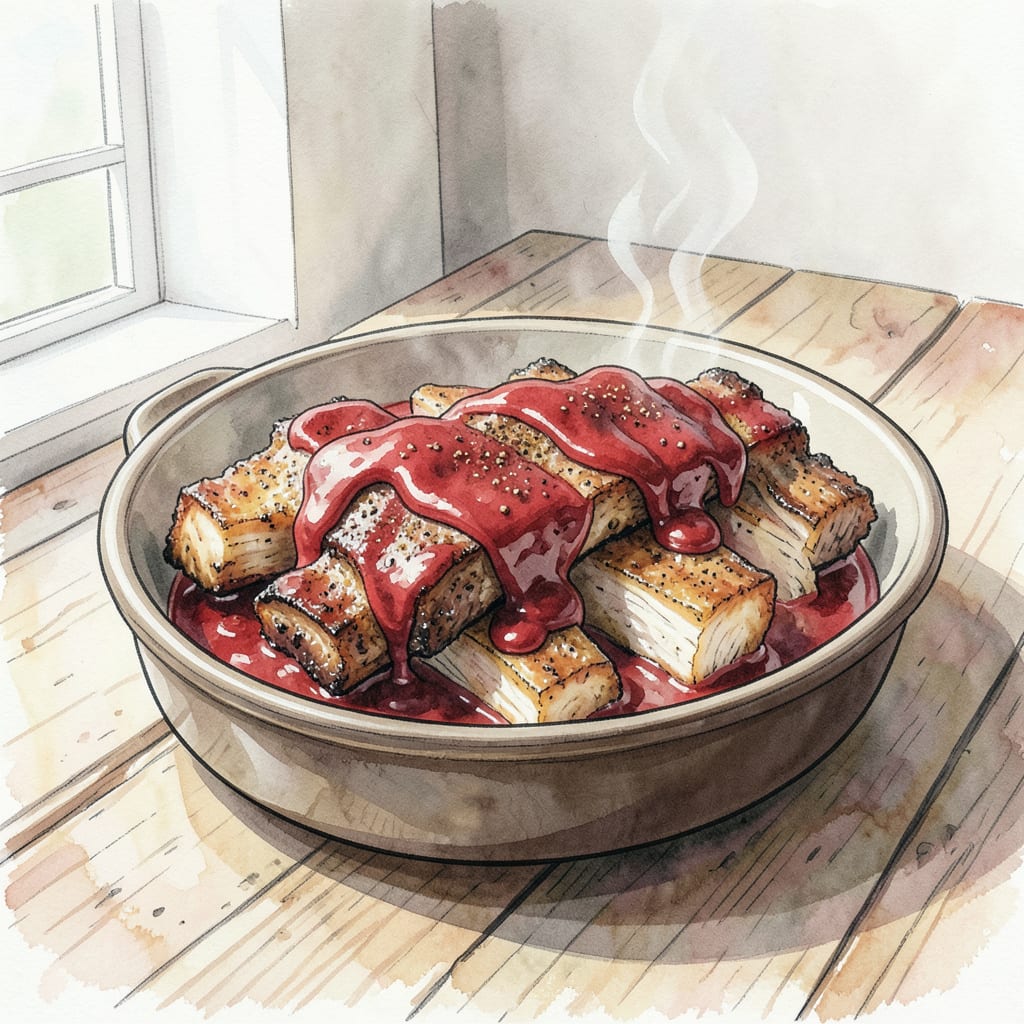
I’ve spent years perfecting my Kansas City-style BBQ sauce recipe, blending sweet and smoky flavors that elevate grilled meats and vegetables. This rich, tangy sauce is a staple in my kitchen, and I’m excited to share it with you.
With a balance of tomato paste, brown sugar, and spices, this sauce delivers deep, complex flavor that’s perfect for slathering on ribs, chicken, or using as a dipping sauce. Let’s make it!
Ingredients for Kansas City Bbq Sauce
Make your own Kansas City-style BBQ sauce with these simple ingredients.
| Ingredient | Amount | Notes |
|---|---|---|
| Tomato Paste 🍅 | 6 tbsp | Concentrated for rich flavor |
| Brown Sugar 🍮 | ½ cup | Packed for sweetness |
| Apple Cider Vinegar 🍎 | ¼ cup | For tanginess and balance |
| Worcestershire Sauce 🌶️ | 2 tbsp | For umami flavor |
| Smoked Paprika 🌿 | 2 tbsp | For smoky depth |
| Chili Powder 🔥 | 1 tbsp | For heat and complexity |
| Garlic Powder 🧄 | 1 tbsp | For savory flavor |
| Onion Powder 🧅 | 1 tbsp | For depth |
| Salt 🧂 | 1 tsp | Kosher or sea salt |
| Black Pepper 🌶️ | ½ tsp | Freshly ground preferred |
| Water 💧 | 1 cup | For thinning the sauce |
[recipe_ingredient_scaler]
The tomato paste matters—look for concentrated, not watery varieties. I find it at Trader Joe’s or in the international section of most supermarkets. For the best flavor, choose a brand with minimal additives. Smoked paprika can be found at specialty spice stores or online at Penzeys.
No apple cider vinegar? White wine vinegar or white distilled vinegar works as a substitute, though the flavor will be slightly different. If you prefer a milder sauce, reduce the chili powder to 0.5 tbsp. For an even smokier flavor, add 1 tsp liquid smoke.
This sauce keeps for up to 2 weeks in the fridge. Store it in an airtight container and give it a good stir before using. You can also freeze it for up to 3 months—just thaw and reheat gently.
Step-by-Step Instructions for Kansas City BBQ Sauce
Creating this iconic BBQ sauce is straightforward and rewarding. Let’s get started!
Step 1: Combine Dry Spices and Tomato Paste
In a medium saucepan, mix together the 2 tbsp Smoked Paprika, 1 tbsp Chili Powder, 1 tbsp Garlic Powder, 1 tbsp Onion Powder, 1 tsp Salt, and 0.5 tsp Black Pepper. Add the 6 tbsp Tomato Paste to the dry spice mixture and stir until well combined, ensuring there are no lumps. The mixture will be thick and fragrant.
The combination of smoked paprika and chili powder gives this BBQ sauce its signature Kansas City-style flavor profile. Make sure to stir well to distribute the spices evenly throughout the tomato paste.
Step 2: Add Liquid Ingredients and Sugar
Gradually add the 0.5 cup Brown Sugar, 0.25 cup Apple Cider Vinegar, 2 tbsp Worcestershire Sauce, and 1 cup Water to the saucepan. Whisk continuously to prevent lumps from forming as you add the liquids. The mixture will start to thin out and turn into a smooth, velvety sauce.
Keep whisking until the brown sugar has fully dissolved and the sauce is uniform. This step is crucial for achieving a smooth consistency in the final product.
Step 3: Simmer and Reduce the Sauce
Place the saucepan over medium heat and bring the mixture to a gentle simmer. Once simmering, reduce the heat to low and let the sauce cook for 10-15 minutes, stirring occasionally. The sauce will thicken as it reduces, coating the back of a spoon when done.
Monitor the heat to prevent the sauce from boiling vigorously, which can cause it to thicken too quickly or stick to the bottom of the pan. You’re looking for a gentle reduction that results in a rich, thick sauce.
Step 4: Finalize and Store the BBQ Sauce
Remove the saucepan from the heat and let the BBQ sauce cool to room temperature. Once cooled, transfer the sauce to an airtight container, such as a glass jar with a tight-fitting lid. Store the BBQ sauce in the refrigerator for up to 2 weeks. The flavors will meld together and mature over time, enhancing the sauce’s overall taste.
Before using, give the sauce a good stir to recombine any ingredients that may have separated during storage. This BBQ sauce is perfect for slathering on ribs, brisket, or chicken, and can also be used as a dipping sauce.
Troubleshooting This Dish
Common Issues with Kansas City BBQ Sauce
One of the most common problems I encounter is the sauce being too thin. This usually happens when the reduction time is too short or the heat is too high, causing the sauce to simmer too vigorously. To fix this, simply continue simmering for a few more minutes until you reach the desired consistency. 🔥
Fixing Lumps in the Sauce
If your sauce has lumps, it’s likely because the tomato paste wasn’t fully incorporated or the sauce wasn’t whisked enough when adding the liquid ingredients. To fix lumps, strain the sauce through a fine-mesh sieve into a clean saucepan, pressing on the solids to extract as much liquid as possible. Alternatively, use an immersion blender directly in the pan to smooth out the sauce.
Adjusting the Flavor
Sometimes the sauce might be too sweet or too tangy. To balance the flavors, adjust the seasoning gradually. If it’s too sweet, add a bit more apple cider vinegar. If it’s too tangy, add a bit more brown sugar. For a smokier flavor, add a bit more smoked paprika. Taste frequently to avoid overcorrecting.
Preventing Sauce from Sticking to the Pan
To prevent the sauce from sticking to the bottom of the pan,
Reheating Stored Sauce
When reheating stored BBQ sauce, do it gently over low heat, stirring frequently to prevent scorching. If the sauce has thickened too much in the fridge, you can thin it out with a small amount of water or apple cider vinegar. Bring it to a gentle simmer to re-emulsify the ingredients before using.
Freezing and Thawing Tips
For longer storage, you can freeze the BBQ sauce for up to 3 months. Freeze it in airtight containers or freezer bags, leaving some headspace for expansion. To thaw, transfer the container to the refrigerator overnight or thaw it gently in a saucepan over low heat, stirring frequently. Once thawed, give it a good stir before using to ensure the flavors are well combined. ❄️

Trained in classic French technique but raised on slow-cooked ribs and spicy rubs, she blends culinary skill with smoke and soul.
- Recipe for Boneless Pork Chops in Cast Iron Skillet: Sear and Baste to Juicy Perfection - October 3, 2026
- Recipe for Boneless Cross Rib Roast: Slow-Roasted Beef with Herb Crust - October 3, 2026
- Hamburgers in Sauce Recipe Crock Pot: Slow-Cooked Savory Delight - October 3, 2026