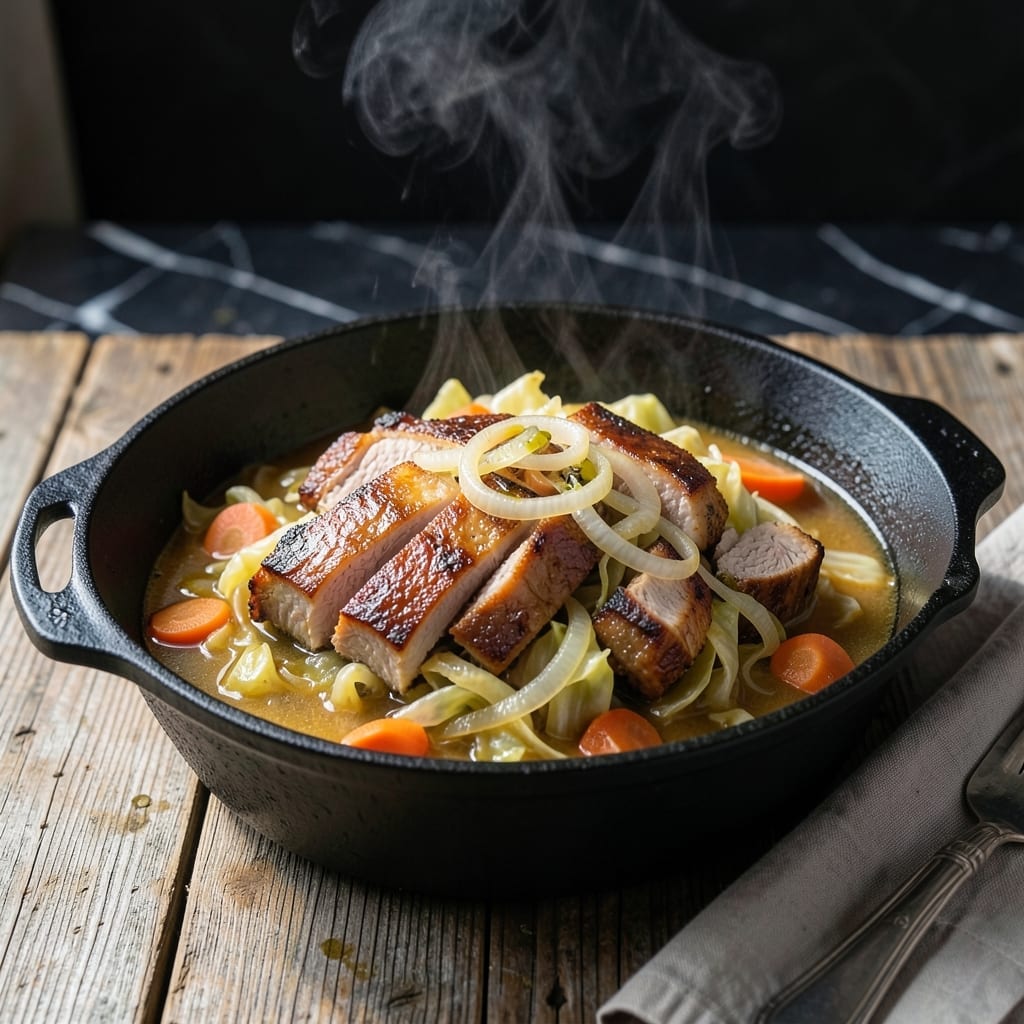
This hearty stew combines tender pork with slow-cooked cabbage for a dish that warms you from the inside out. I’ve tested this method in my small Boston kitchen, perfecting the balance of savory meat and sweet, caramelized cabbage.
The key is low, steady heat—letting the pork break down into fall-apart tenderness while the cabbage softens and absorbs the rich flavors. It’s a one-pot meal that fills your home with comforting aromas as it simmers.
What emerges is a rustic, deeply satisfying stew with layers of flavor. The cabbage becomes silky, the pork impossibly tender, and the broth reduces to a rich, savory gravy that ties it all together.
Serve it with crusty bread to soak up every last bite. This is the kind of dish that feels like a hug on a cold day.
Ingredients for Kapusta Recipe with Pork
Pantry staples and a trip to the butcher set this stew in motion.
| Ingredient | Amount | Notes |
|---|---|---|
| Pork Shoulder 🐷 | 1 ½ lb | Boneless, cut into chunks |
| Green Cabbage 🥬 | 1 whole | Medium head, cored and shredded |
| Yellow Onion 🧅 | 1 whole | Large, diced |
| Garlic Cloves 🧄 | 4 cloves | Minced for depth |
| Carrots 🥕 | 2 whole | Peeled and sliced |
| Chicken Broth 🍲 | 2 cups | Low-sodium preferred |
| Tomato Paste 🍅 | 2 tbsp | For rich umami depth |
| Apple Cider Vinegar 🍏 | 1 tbsp | Balances sweetness |
| Bay Leaf 🌿 | 1 whole | Dried or fresh |
| Caraway Seeds 🌿 | 1 tsp | Traditional Eastern European flavor |
| Olive Oil 🫒 | 2 tbsp | For sautéing vegetables |
| Salt 🧂 | 1 ½ tsp | Kosher or sea salt |
| Black Pepper 🌶️ | 1 tsp | Freshly ground preferred |
| Dried Thyme 🍃 | ½ tsp | Subtle earthy note |
[recipe_ingredient_scaler]
The pork shoulder is non-negotiable here. Boston Butcherie or Whole Foods have great options with good marbling—ask for the blade end if you can. It breaks down beautifully. Look for green cabbage with tight, vibrant leaves (skip the pre-shredded bags). The carrots and onion add sweetness to balance the savory, so grab whatever looks freshest at your local Market Basket.
No pork shoulder? Pork butt works just as well—same cut, different name. Want it leaner? Boneless country-style ribs stay tender too. Skip the caraway if it’s not your thing, but I’d keep the vinegar—it brightens everything. Fresh thyme can stand in for dried at three times the amount. Vegetable broth instead of chicken works if that’s what you’ve got on hand.
This stew actually gets better overnight. Store in the fridge for up to 4 days or freeze for 3 months. The cabbage will soften more, the pork more tender. Leftovers reheat like a dream—just add a splash of broth if it’s too thick.
Why You’ll Love This Recipe
- One Pot Wonder: I toss in pork shoulder, cabbage, and carrots—then let them simmer together while I do something else.
- Rich and Smoky: The pork renders down with garlic and onion into this deep, savory sauce that soaks into every bite of cabbage.
- Feeds Everyone: I make a big batch on Sunday and we eat it for dinner, then lunch the next day.
- Budget Stretcher: Pork shoulder and green cabbage are cheap, and this fills up a crowd without breaking the bank.
Step-by-Step Instructions for Kapusta with Pork
Here’s my tested method for a hearty stew that fills your kitchen with amazing aromas.
Step 1: Brown the Pork Shoulder
Heat the 2 tbsp olive oil in a large Dutch oven over medium-high heat. Pat the 1.5 lb pork shoulder chunks dry with paper towels—this prevents steaming and ensures a good sear.
Add the pork in a single layer and let it cook undisturbed for 4-5 minutes per side until deep golden brown on all sides. I don’t stir it too much; the browned crust adds incredible flavor to the finished dish. Remove the pork and set aside.
Step 2: Sauté the Vegetables
In the same pot, add the diced yellow onion and cook for 3 minutes until it starts to soften. Stir in the sliced carrots and minced 4 cloves garlic cloves, cooking for another 2 minutes.
Add the 2 tbsp tomato paste and cook for 1 minute, stirring constantly. You’ll notice the color deepen—that’s the tomato paste caramelizing and developing rich umami flavors that will transform this stew.
Step 3: Build the Stew and Simmer
Return the pork to the pot. Add the shredded green cabbage, 2 cups chicken broth, 1 tbsp apple cider vinegar, 1 whole bay leaf, 1 tsp caraway seeds, 1.5 tsp salt, 1 tsp black pepper, and 0.5 tsp dried thyme. Stir well to combine.
Bring to a boil, then reduce heat to low. Cover and let it simmer for 1.5 to 2 hours, stirring occasionally. The stew is ready when the pork is fork-tender and the cabbage has softened into the rich, flavorful broth.
Step 4: Adjust Seasoning and Serve
Remove the bay leaf and discard it. Taste the stew and adjust the seasoning if needed—I often find it needs just a touch more salt or a splash of vinegar to brighten the flavors.
Ladle the kapusta into bowls while hot. The pork should fall apart at the touch of your fork, and the cabbage should be silky and infused with all the wonderful flavors from the meat and spices. This tastes even better the next day as the flavors meld together.
Pro Tips For Making Kapusta Recipe With Pork
- Brown the Pork First: Sear the pork shoulder in batches over medium-high heat until deeply browned—about 4-5 minutes per side. This builds a flavor base that simmering alone won’t achieve.
- Shred Cabbage Thin: Slice the green cabbage into thin ribbons, about 1/8-inch thick. Thicker cuts stay tough, while fine shreds melt into the dish and soak up the pork juices.
- Don’t Rush the Simmer: Let the kapusta cook low and slow for at least 1.5 hours, stirring occasionally. I learned this the hard way—rushing it leaves the pork chewy and the cabbage undercooked.
- Add Carrots Late: Toss in the carrots about 30 minutes before serving so they stay sweet and firm. If added too early, they turn mushy and lose their brightness.
Essential Equipment for kapusta recipe with pork
Dutch Oven Essentials
I swear by my 5.5-quart Le Creuset Dutch oven for this stew—its heavy enamel coating distributes heat evenly and retains it perfectly for the 2-hour simmer. The wide base gives plenty of room for browning the pork without crowding. 🔥
Wooden Spoon Workhorse
A sturdy wooden spoon is non-negotiable for scraping up all those flavorful browned bits from the bottom. I use mine from OXO—it’s heat-resistant and won’t scratch your pot. The flat edge helps you get every last bit of caramelized tomato paste.
Sharp Chef’s Knife
Shredding cabbage and dicing onions demands a sharp 8-inch chef’s knife. I’ve had my Victorinox Fibrox for years—it’s affordable, stays sharp, and handles all the prep for this recipe. Dull knives slip, and I learned that the hard way in my tiny Boston kitchen.
Cutting Board
A large plastic or wood cutting board gives you space to work with the cabbage and vegetables. I prefer epoxy-resin boards from my local Boston neighborhood market—they’re gentle on knives and easy to clean. Just avoid glass boards that’ll ruin your blade.
Measuring Tools
Accurate measurements matter for the spices and liquids. I keep a set of stainless steel measuring spoons and a glass measuring cup for the broth. The 1 tsp caraway seeds and 2 tbsp tomato paste need to be precise for balanced flavor. 💡
Tongs for Pork
When browning the pork, 12-inch locking tongs give you control without splattering hot oil. I use mine from TongMaster—they’re sturdy and grip the meat securely. Never use a fork; it pierces the pork and lets juices escape.
Nutrition Facts
Frequently Asked Questions
Can I use a different cut of pork?
Yes! Pork butt works just as well as shoulder. For a leaner option, try boneless country-style ribs. Avoid lean cuts like tenderloin—they won’t hold up to the 1.5-2 hour simmer.
Why does the cabbage turn sweet?
Slow cooking caramelizes the natural sugars in cabbage, creating a silky, sweet texture. The apple cider vinegar balances this sweetness perfectly. Don’t skip it!
Can I make this in a slow cooker?
Brown the pork first, then transfer everything to the slow cooker. Cook on low for 6-8 hours or high for 4 hours. The flavors will meld beautifully.
How do I store leftovers?
Keep in an airtight container in the fridge for up to 4 days, or freeze for 3 months. Reheat gently on the stove with a splash of broth.

Trained in classic French technique but raised on slow-cooked ribs and spicy rubs, she blends culinary skill with smoke and soul.
- Recipe for Boneless Pork Chops in Cast Iron Skillet: Sear and Baste to Juicy Perfection - October 3, 2026
- Recipe for Boneless Cross Rib Roast: Slow-Roasted Beef with Herb Crust - October 3, 2026
- Hamburgers in Sauce Recipe Crock Pot: Slow-Cooked Savory Delight - October 3, 2026