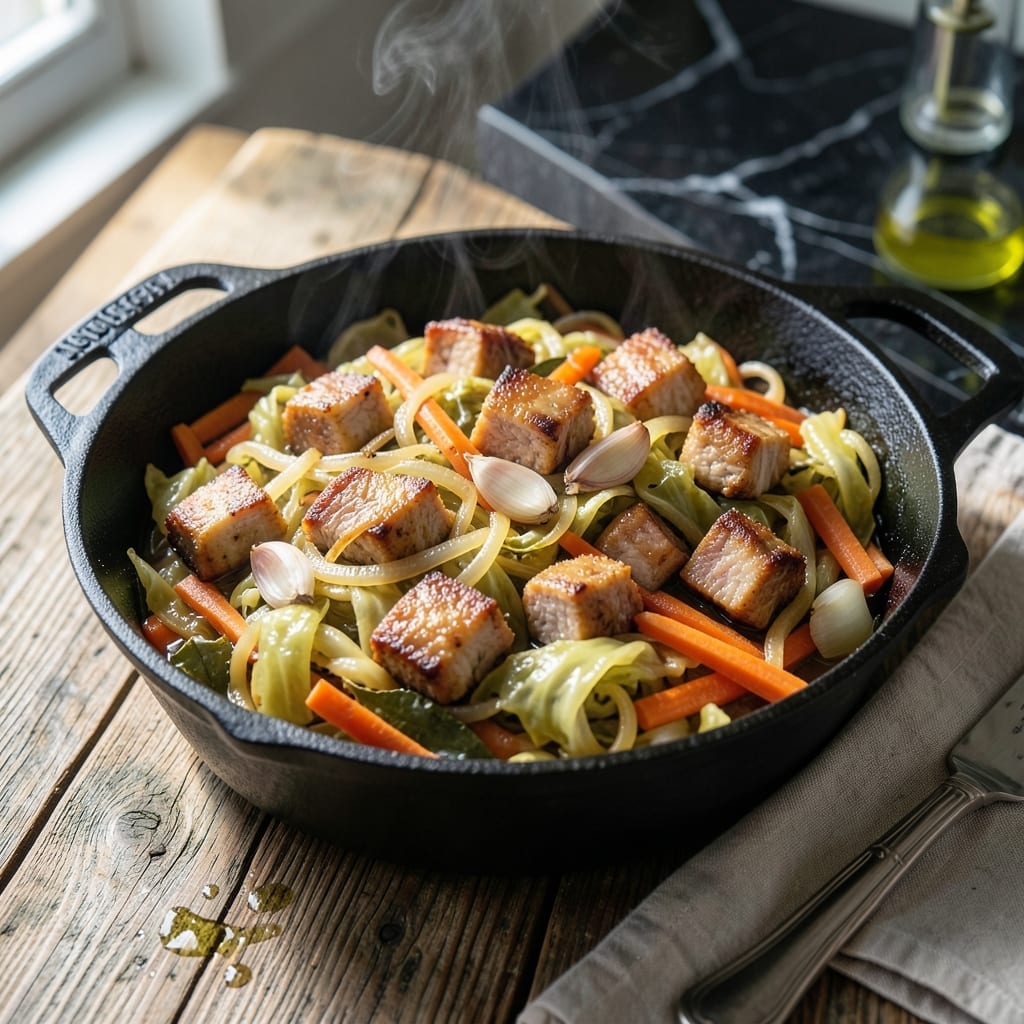
This recipe brings my grandmother’s Eastern European roots to life through a simple yet profound dish. She never wrote down measurements, just taught by feel and memory.
Slow-cooked cabbage transforms into tender, sweet perfection when braised with smoky salt pork. The pork renders down, infusing every bite with rich, savory depth that defines traditional kapusta.
The long, gentle cooking process allows flavors to meld completely. What emerges is a dish that’s both hearty and comforting, with the cabbage absorbing all the smoky, meaty essence.
Perfect for cold weather meals or family gatherings. This is the kind of dish that tastes even better the next day.
Ingredients for Kapusta Recipe with Salt Pork
Hearty cabbage and smoky salt pork braise into Eastern European comfort in one pot.
| Ingredient | Amount | Notes |
|---|---|---|
| Green Cabbage 🥬 | 2 lb | Cored and thinly sliced |
| Salt Pork 🥓 | ¾ lb | Diced, skin-on for flavor |
| Yellow Onion 🧅 | 1 whole | Medium, finely chopped |
| Carrots 🥕 | 2 whole | Medium, julienned |
| Garlic Cloves 🧄 | 4 cloves | Minced for depth |
| Bay Leaves 🌿 | 2 pieces | Dried, whole |
| Juniper Berries 🫒 | 1 tsp | Lightly crushed |
| Black Peppercorns 🌶️ | 1 tsp | Whole, for braising |
| Apple Cider Vinegar 🍏 | ¼ cup | For brightness |
| Chicken Stock 🍲 | 1 cup | Low-sodium preferred |
| Dijon Mustard 🟡 | 1 tbsp | For tangy depth |
| Caraway Seeds 🌿 | ½ tsp | Toasted briefly |
[recipe_ingredient_scaler]
The salt pork is non-negotiable for authentic kapusta flavor. Seek out skin-on cuts from a trusted butcher or specialty grocer like Whole Foods—the fat renders differently, creating that signature unctuous texture. Green cabbage should be firm and dense, with vibrant outer leaves. If your market carries Polish or Eastern European brands like Krakus, even better. Fresh caraway seeds (lightly toasted) elevate the dish significantly over pre-ground.
No salt pork? Smoked bacon or pancetta can substitute in a pinch, though the saltiness will differ—reduce added salt accordingly. For a lighter option, smoked turkey bacon works but lacks depth. The apple cider vinegar can be swapped for white wine vinegar or lemon juice. If caraway isn’t your thing, fennel seeds at half the amount offer a similar anise note.
Kapusta improves overnight as flavors deepen. Store in an airtight container for up to 5 days in the fridge or freeze for 3 months. Reheat gently to preserve the cabbage’s tender texture (worth the extra minute).
Why You’ll Love This Recipe
- One Pot Meal: I love that I can toss cabbage, salt pork, and carrots into a single pot and let it simmer while I do other things.
- Rich, Savory Depth: The salt pork renders down into this incredible, smoky base that makes the cabbage taste like it’s been cooking all day.
- Feeds a Crowd: Honestly, this is my go-to for family gatherings—it stretches easily and everyone leaves happy.
- Better the Next Day: Between us, the flavors meld overnight, so leftovers taste even more ridiculous the next day.
Step-by-Step Instructions for Kapusta With Salt Pork
This method ensures tender cabbage infused with smoky depth and rich savory notes.
Step 1: Render the Salt Pork and Sauté Aromatics
Place a heavy Dutch oven over medium heat and add the 0.75 lb Salt Pork. Cook slowly for 8-10 minutes, stirring occasionally, until the fat renders and the pork becomes golden and crisp at the edges. This gentle rendering builds the flavor foundation for the entire dish.
Add the 1 whole Yellow Onion and 2 whole Carrots to the rendered fat. Sauté for 5-6 minutes until the onion turns translucent and the carrots begin to soften. The natural sugars in the vegetables will caramelize slightly, adding depth to the braising liquid.
Step 2: Bloom Spices and Deglaze the Pan
Stir in the 4 cloves Garlic Cloves, 0.5 tsp Caraway Seeds, 1 tsp Juniper Berries, and 1 tsp Black Peppercorns. Cook for 1 minute until the spices release their fragrance—you’ll smell the warm, earthy notes immediately. Be careful not to burn the garlic, as it can turn bitter quickly.
Pour in the 0.25 cup Apple Cider Vinegar and scrape the browned bits from the bottom of the pot. The vinegar will sizzle and deglaze the pan, lifting all those concentrated flavors into the liquid. Let it simmer for 2 minutes to mellow the sharpness slightly.
Step 3: Add Cabbage and Braising Liquid
Add the 2 lb Green Cabbage in batches, stirring to wilt slightly before adding more. This prevents the pot from becoming overcrowded, which could lead to uneven cooking. Once all the cabbage is in, pour in the 1 cup Chicken Stock and add the 2 pieces Bay Leaves.
The liquid should just cover the bottom of the pot. If it seems too dry, add a splash more stock. The cabbage will release its own moisture as it cooks, so don’t be tempted to add too much liquid at this stage.
Step 4: Braise Until Tender and Flavorful
Reduce the heat to low, cover the pot, and let the mixture braise for 1 hour. Stir occasionally to prevent sticking. The cabbage is done when it’s tender but still slightly toothsome and the liquid has reduced to a rich, flavorful sauce.
Uncover the pot and stir in the 1 tbsp Dijon Mustard. This adds a tangy depth that balances the richness of the pork. Simmer uncovered for another 5-10 minutes to allow the flavors to meld and the sauce to thicken slightly.
Step 5: Adjust Seasoning and Serve
Taste and adjust the seasoning if needed, though the salt pork will have contributed significant saltiness. Remove the bay leaves before serving. The final dish should have a balance of smoky, savory, tangy, and slightly sweet flavors from the caramelized vegetables.
Serve hot, allowing the flavors to continue developing as it sits. The cabbage will be deeply savory with tender texture, while the pork provides rich, smoky bites throughout each serving.
Pro Tips For Making Kapusta Recipe With Salt Pork
- Render the Fat First: Start by browning the salt pork in the pot before adding anything else—this renders out the fat, which becomes the flavor base for the cabbage and vegetables.
- Shred Cabbage Thin: Slice the green cabbage as thin as possible, almost like coleslaw, so it softens evenly and absorbs the pork fat and seasoning without turning mushy.
- Don’t Rush the Onions: Cook the yellow onions until they’re golden and translucent before adding carrots or garlic—I learned this the hard way when my kapusta tasted raw and harsh.
- Use a Splash of Water: After everything’s in the pot, add about 1/4 cup of water, cover, and let it steam for 10 minutes—this speeds up the cooking and prevents the cabbage from drying out.
Essential Equipment for This Recipe
Heavy Dutch Oven
A 5-7 quart Dutch oven is non-negotiable for kapusta. I use my grandmother’s old Lodge enameled cast iron—its heavy base distributes heat evenly and retains warmth perfectly for the 1-hour braise. The high sides prevent splattering as the cabbage wilts down. 💪
Wooden Spoon
Use a wooden spoon to stir and scrape the browned bits from the bottom. Unlike metal, it won’t scratch your Dutch oven’s surface. I keep one dedicated to braising dishes like this—it’s absorbed all the flavors from years of cooking.
Sharp Chef’s Knife
A 8-inch chef’s knife makes quick work of the 2 lb cabbage and vegetables. I recommend Wüsthof or Victorinox for home cooks. Keep it sharp—dull knives slip and make thin slicing dangerous. A good knife changes everything in the kitchen.
Cutting Board
Use a large, stable cutting board (at least 12×18 inches). I prefer bamboo or hard maple for their gentle surface that won’t damage knife edges. The size gives you room to work with the whole cabbage head without crowding.
Measuring Spoons
While my grandmother cooked by feel, precise measurements for spices like 0.5 tsp caraway seeds and 1 tsp juniper berries make a difference. I use OXO stainless steel measuring spoons—they’re durable and nest neatly together. 💫
Tongs for Serving
Use 12-inch locking tongs to serve the kapusta. They give you the reach and control to grab both cabbage and pork pieces together. I like OXO Good Grips for their comfortable handles and spring action that won’t wear out your hands.
Nutrition Facts
Frequently Asked Questions
Can I use regular bacon instead of salt pork?
Yes, but reduce added salt since bacon is saltier. Use thick-cut smoked bacon for best texture. The flavor will be slightly different but still delicious.
How do I know when the cabbage is done?
It should be tender but still have slight bite after 1 hour of braising. The leaves will darken and soften significantly while retaining some texture.
Why does my kapusta taste bitter?
This usually means the cabbage was overcooked or old. Use fresh, firm heads and avoid boiling. The apple cider vinegar should balance any mild bitterness.
Can I make this in a slow cooker?
Sear the pork first, then transfer everything to a slow cooker. Cook on low for 6-8 hours for the same rich results.

Trained in classic French technique but raised on slow-cooked ribs and spicy rubs, she blends culinary skill with smoke and soul.
- Recipe for Boneless Pork Chops in Cast Iron Skillet: Sear and Baste to Juicy Perfection - October 3, 2026
- Recipe for Boneless Cross Rib Roast: Slow-Roasted Beef with Herb Crust - October 3, 2026
- Hamburgers in Sauce Recipe Crock Pot: Slow-Cooked Savory Delight - October 3, 2026