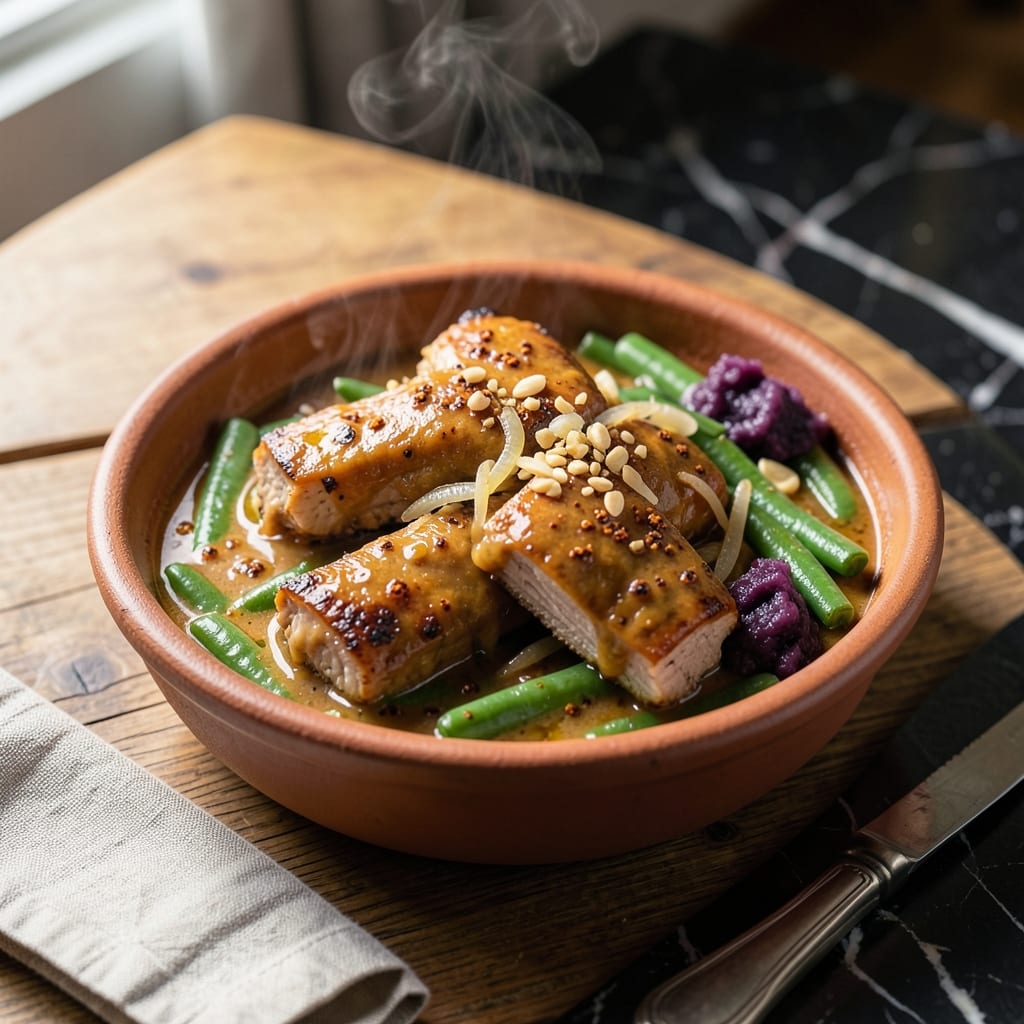
This Filipino classic transforms tough pork pata into a fall-off-the-bone masterpiece through slow simmering in a rich peanut sauce. The dish balances savory, nutty, and slightly sweet flavors with a depth that comes from traditional techniques.
I developed this version after years of testing to capture the authentic texture and taste. The key is patience—allowing the pork to become fork-tender while the peanut sauce thickens to the perfect consistency.
What emerges is a deeply flavorful stew with layers of complexity. The peanut butter melts into the broth, creating a velvety sauce that clings to the meat and vegetables.
Serve this with steamed rice to soak up every last drop of the sauce. The leftovers taste even better the next day as the flavors continue to meld.
Ingredients for Kare Kare Recipe Pork Pata
Pantry staples and a trip to the Asian market. Nothing too exotic, just good layers of flavor.
| Ingredient | Amount | Notes |
|---|---|---|
| Pork Pata 🐖 | 2 lb | Cut into 2-inch pieces, skin-on |
| Peanut Butter 🥜 | ¾ cup | Smooth, unsweetened variety |
| Onion 🧅 | 1 whole | Large, quartered |
| Garlic Cloves 🧄 | 6 cloves | Peeled, smashed |
| Ginger 🌿 | 2 tbsp | Fresh, minced |
| Baguio Beans 🌱 | 1 cup | Trimmed, cut into 2-inch pieces |
| Eggplant 🍆 | 1 whole | Asian variety, sliced into rings |
| Peanuts 🥜 | ½ cup | Raw, skin-on for texture |
| Annatto Seeds 🌶️ | 1 tsp | For authentic color |
| Beef Stock 🥩 | 4 cups | Low-sodium preferred |
| Soy Sauce 🫒 | 3 tbsp | Filipino brand if available |
| Oyster Sauce 🫒 | 2 tbsp | Optional but traditional |
| Salt 🧂 | 1 tsp | Adjust to taste |
| Black Pepper 🌶️ | ½ tsp | Freshly ground |
| Cooking Oil 🫒 | 2 tbsp | Neutral-flavored oil |
[recipe_ingredient_scaler]
Pork pata is key here—look for skin-on, meaty pieces at Filipino or Asian grocery stores. The skin adds that melt-in-your-mouth texture once simmered. If you can’t find pata, pork hock works too, but expect a slightly gamier flavor. Annatto seeds give the dish its signature golden color (don’t skip this). Most Asian markets carry them in the spice aisle.
No Baguio beans? Green beans or long beans work just as well. Out of eggplant? Daikon radish or bananas (yes, really) are traditional swaps. For a nut-free version, toasted rice flour can replace peanut butter—stir in gradually. The oyster sauce is optional but adds depth; vegetarian oyster sauce keeps it meat-free.
This stew tastes even better the next day. Refrigerate in an airtight container for up to 4 days, or freeze for 3 months. Reheat gently to keep the peanut sauce from separating (the oil will rise to the top—just stir it back in).
Why You’ll Love This Recipe
- One Pot Wonder: I just toss the pork pata, peanut butter, and aromatics in and let it simmer—hardly any cleanup afterward.
- Rich Peanut Depth: The peanut butter melts into this thick, nutty sauce that clings to the tender pork pata, and the garlic and ginger give it this warm, layered kick.
- Feeds a Hungry Table: I make a big batch for family gatherings, and it’s always the first dish wiped out. Even picky eaters go back for more.
- Leftovers for Days: Honestly, it tastes even better the next day, and it freezes like a dream—my lazy-day lifesaver.
Step-by-Step Instructions for Kare Kare with Pork Pata
Here’s my tried-and-true method for this rich, peanutty Filipino stew.
Step 1: Sear and Brown the Pork Pata
Heat the 2 tbsp cooking oil in a large pot over medium-high heat. Add the 2 lb pork pata pieces and sear until golden brown on all sides, about 5-7 minutes. This builds deep flavor and renders some fat.
You’ll notice the skin starting to crisp—that’s your signal to flip each piece. Don’t rush this step; the caramelization here creates the stew’s rich base. Once browned, remove the pork and set aside.
Step 2: Toast the Annatto and Sauté Aromatics
In the same pot, add the 1 tsp annatto seeds and toast for 30 seconds until the oil turns bright orange. Remove the seeds with a slotted spoon—they’ve infused their color.
Add the 1 whole onion, 6 cloves garlic cloves, and 2 tbsp ginger. Sauté for 2-3 minutes until the onion softens and the garlic turns lightly golden. The aroma will be incredible at this point.
Step 3: Simmer the Pork Until Tender
Return the pork to the pot and pour in the 4 cups beef stock, 3 tbsp soy sauce, 2 tbsp oyster sauce, 1 tsp salt, and 0.5 tsp black pepper. Bring to a boil, then reduce heat to low.
Cover and simmer for 1.5 to 2 hours until the pork is fall-off-the-bone tender. Check occasionally and add a splash of water if the liquid reduces too much. The pork should easily pull apart with a fork when done.
Step 4: Add Vegetables and Peanut Butter
Stir in the 1 cup Baguio beans and 1 whole eggplant slices. Cook for 5 minutes until the vegetables soften slightly but still hold their shape.
Reduce heat to low and add the 0.75 cup peanut butter and 0.5 cup peanuts. Stir well until the peanut butter fully dissolves into the stew, creating a thick, creamy sauce. Simmer for another 5 minutes to meld the flavors.
Step 5: Adjust and Serve
Taste and adjust seasoning with more salt or pepper if needed. The stew should be rich, nutty, and perfectly balanced.
Serve hot with steamed rice and a side of bagoong (shrimp paste) for the full experience. The pork should be so tender it nearly melts in your mouth, and the peanut sauce should coat every piece beautifully.
Pro Tips For Making Kare Kare Recipe Pork Pata
- Pre-Boil the Pata: Parboil the pork pata for 10-15 minutes first to remove impurities—this keeps your broth clean and removes that gamey smell I used to hate in my early versions.
- Toast the Peanut Butter: Lightly toast the peanut butter in the pot before adding liquid; it deepens the flavor and prevents that raw, chalky aftertaste that ruins the sauce.
- Skip the Shortcuts: Don’t replace fresh ginger with powder—it lacks the bright, sharp kick that balances the peanut sauce. My grandmother swore by this, and she was right.
- Simmer Low and Slow: After adding the peanut sauce, keep it at a gentle simmer for 30-40 minutes. I learned this the hard way—boiling it hard makes the sauce split and turns the meat tough.
Creative Variations of This kare kare recipe pork pata
Seafood Kare Kare
Swap the pork pata for 1.5 lb shrimp or 2 lb mussels for a coastal twist. Add them during the final 10 minutes of cooking to prevent overcooking. The peanut sauce pairs beautifully with seafood, and I love how the shrimp absorb the rich flavors. 🌊
Vegetarian Version
Replace pork with 2 cups chickpeas and 1 lb tofu for a hearty meatless option. Use vegetable stock instead of beef, and add mushrooms for umami depth. The texture remains satisfying, and my daughter Lily gobbles this up.
Spicy Peanut Kick
Add 1 tbsp chili garlic sauce or 1 tsp cayenne to the peanut butter for heat. I also stir in 1 chopped red chili with the aromatics. This version warms you up on chilly Portland evenings, and Tom always asks for seconds. 🔥
Slow Cooker Adaptation
Brown the pork first, then transfer everything to a slow cooker. Cook on low for 6-8 hours or high for 4-5 hours. The pork becomes incredibly tender, and the flavors meld beautifully. I set mine in the morning and come home to an amazing aroma.
Coconut Milk Twist
Stir in 1 cup coconut milk with the peanut butter for a creamier, slightly sweeter sauce. This variation is popular in some Filipino regions and adds a lovely richness. The coconut balances the nuttiness perfectly.
Extra Nutty Crunch
Toast the peanuts in a dry pan before adding them to the stew. This brings out their natural oils and adds a delightful crunch. I also sprinkle extra toasted peanuts on top when serving for texture contrast.
Nutrition Facts
Frequently Asked Questions
Can I use pork belly instead of pata?
Yes, but expect a richer, fattier result. Pata’s connective tissue gives that signature melt-in-mouth texture. If using belly, reduce simmering time to 1-1.5 hours to prevent mushiness.
Why did my peanut sauce separate?
This happens when peanut butter is added too quickly to hot liquid. Always stir in peanut butter gradually on low heat and keep stirring until fully dissolved. A splash of warm water can help reincorporate separated sauce.
How do I make it ahead?
The stew tastes even better the next day! Cool completely, then refrigerate in an airtight container for up to 4 days. Reheat gently, stirring occasionally to prevent separation.
What if I can’t find annatto seeds?
Use 1 tsp turmeric or 1 tbsp tomato paste for color instead. The flavor won’t be identical, but the dish will still look vibrant. Annatto is primarily for its golden hue, not taste.

Trained in classic French technique but raised on slow-cooked ribs and spicy rubs, she blends culinary skill with smoke and soul.
- Recipe for Boneless Pork Chops in Cast Iron Skillet: Sear and Baste to Juicy Perfection - October 3, 2026
- Recipe for Boneless Cross Rib Roast: Slow-Roasted Beef with Herb Crust - October 3, 2026
- Hamburgers in Sauce Recipe Crock Pot: Slow-Cooked Savory Delight - October 3, 2026