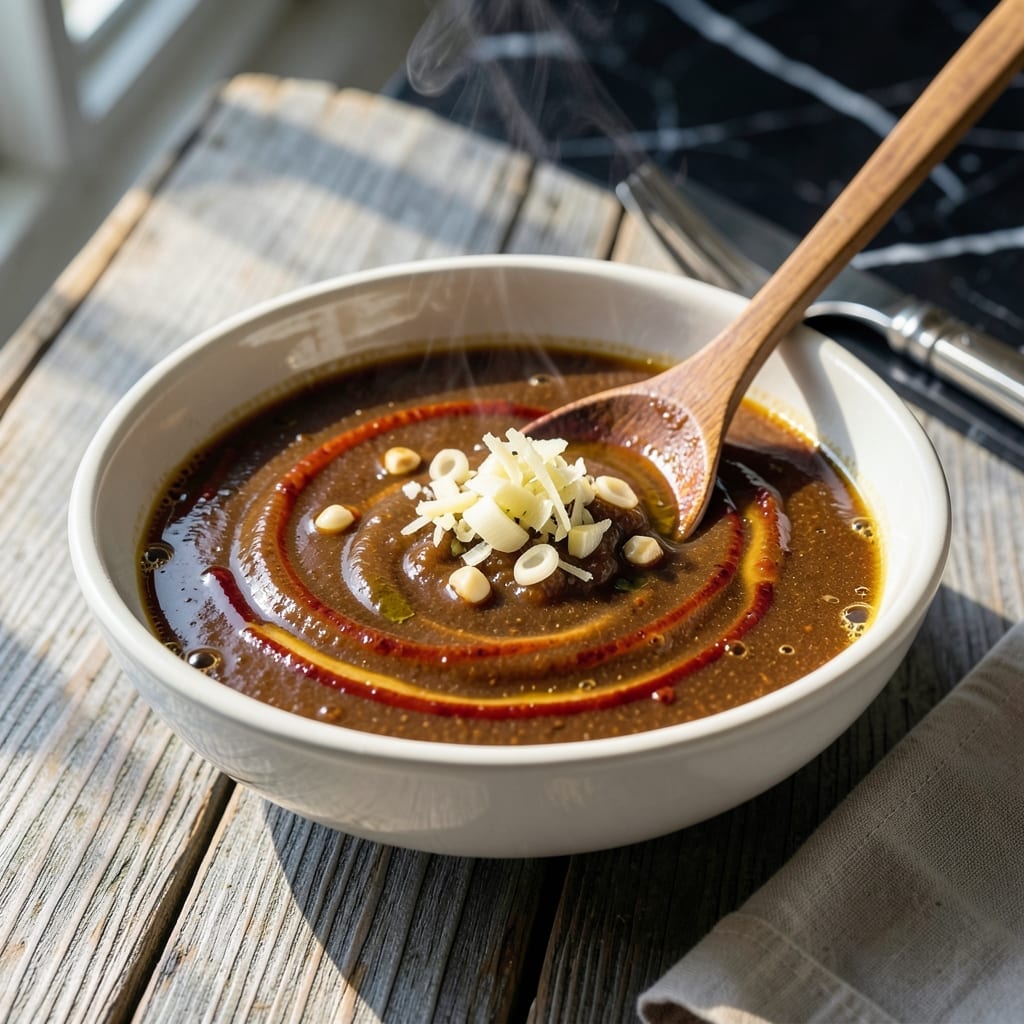
This bold glaze transforms any cut of meat with its deep, savory-sweet Korean BBQ essence. My years of blending smoke and spice led me to perfect this balance of gochujang, soy, and garlic.
With just 10 minutes of simmering, you’ll have a thick, glossy sauce that clings to ribs, chicken, or beef. The aromatics bloom into a complex, umami-rich finish that elevates grilled dishes instantly.
Ingredients for Kbbq Sauce
Ten bold ingredients blend into this rich, umami-packed Korean BBQ glaze for meats.
| Ingredient | Amount | Notes |
|---|---|---|
| Gochujang 🌶️ | ½ cup | Korean red pepper paste,Adjust heat level to taste |
| Soy Sauce 🫒 | ½ cup | Low-sodium preferred for balance |
| Brown Sugar 🍚 | ¼ cup | Packed for sweetness depth |
| Rice Vinegar 🍯 | 2 tbsp | Adds bright tangy contrast |
| Garlic Cloves 🧄 | 4 cloves | Minced for aromatic base |
| Fresh Ginger 🌿 | 1 tbsp | Grated for warm spice |
| Sesame Oil 🫒 | 1 tbsp | Toasted for nutty finish |
| Honey 🍯 | 2 tbsp | Balances heat with sweetness |
| Sesame Seeds 🌾 | 1 tbsp | Toasted for garnish crunch |
| Green Onions 🧅 | 2 whole | Thinly sliced for freshness |
[recipe_ingredient_scaler]
The gochujang is non-negotiable here. H Mart or Korean markets carry the authentic brands—look for Sunchang or CJ. Avoid the super spicy versions unless you want fire-breathing heat. Soy sauce matters too: Kikkoman low-sodium lets you control the salt. Brown sugar should be dark for that molasses depth, and don’t skip the toasted sesame oil—it’s the secret to that restaurant-level complexity.
No gochujang? Miso paste plus sriracha gets you 80% there (start with 2 tbsp miso + 1 tbsp sriracha). Out of rice vinegar? Apple cider vinegar at half the amount. For a gluten-free version, tamari replaces soy sauce one-to-one. The honey can be swapped for agave if you’re avoiding bee products. Fresh ginger is ideal, but ground ginger at one-quarter the amount works in a pinch.
This keeps 1 week in the fridge—if it lasts that long. The flavors deepen overnight, so make it ahead. Freeze portions for up to 3 months in ice cube trays for easy single-use amounts. Always give it a good stir before using, as the ingredients love to separate.
Why You’ll Love This Recipe
- 5-Minute Mix: I just dump everything in a bowl—gochujang, soy sauce, the works—and whisk. No simmering, no fuss.
- Sweet-Spicy Kick: The brown sugar balances the gochujang’s heat, while the garlic and rice vinegar add that tangy depth I crave.
- Marinade or Dip: I slather it on bulgogi, use it as a dipping sauce for lettuce wraps, or even toss it with noodles. Honestly, it does it all.
- Fridge Staple: Makes a big batch, keeps for weeks, and saves me from last-minute takeout runs. Between us, it’s my secret weapon.
Step-by-Step Instructions for KBBQ Sauce
This method delivers a glossy, balanced glaze with depth and complexity.
Step 1: Build the Aromatic Base
In a medium saucepan over medium heat, combine the 0.5 cup gochujang, 0.5 cup soy sauce, 0.25 cup brown sugar, and 2 tbsp rice vinegar. Stir continuously with a wooden spoon as the mixture comes to a gentle simmer.
You’ll notice the gochujang beginning to dissolve and the sugar melting into the liquid—this is your signal that the base is properly combining. Keep stirring to prevent any sticking at the bottom of the pan, which can create bitter flavors.
Step 2: Infuse with Garlic and Ginger
Add the 4 cloves garlic cloves and 1 tbsp fresh ginger to the saucepan. Reduce the heat to medium-low and let the mixture simmer for 3-4 minutes, stirring occasionally.
The garlic and ginger will release their fragrant aromas into the sauce, creating that signature KBBQ depth. You’ll smell the transformation as the raw edge of the garlic mellows and the ginger’s warmth becomes pronounced. Don’t let it boil vigorously at this stage.
Step 3: Finish with Sweet and Nutty Elements
Stir in the 1 tbsp sesame oil, 2 tbsp honey, and 1 tbsp sesame seeds. Simmer the sauce for an additional 2-3 minutes until it thickens slightly and develops a glossy sheen.
The honey will add its natural sweetness while the sesame oil contributes its distinctive nutty aroma. The sesame seeds will toast lightly in the heat, enhancing their flavor. You’re looking for a sauce that coats the back of a spoon but still drizzles easily.
Step 4: Garnish and Cool
Remove the saucepan from heat and let the sauce cool for 5 minutes. Stir in the 2 whole green onions during this cooling period to preserve their fresh, crisp character.
The green onions will soften slightly from the residual heat but maintain their bright color and mild onion flavor. The sauce will continue to thicken as it cools, reaching the perfect consistency for brushing onto meats or using as a dipping sauce.
Pro Tips For Making Kbbq Sauce
- Bloom the Gochujang: Heat the gochujang in the pan for 1-2 minutes before adding liquids—I learned this the hard way after my first few batches tasted raw and harsh.
- Grate the Garlic: Use a microplane for the garlic cloves instead of mincing; it dissolves better into the sauce and saves you from chewing on bitter chunks.
- Balance the Sweetness: Taste before adding all the brown sugar—some gochujang brands are sweeter than others, and you can always add more but can’t take it out.
- Simmer Low and Slow: Once combined, keep the heat at a gentle bubble for 8-10 minutes so the flavors meld without the sugars burning—after scorching one batch, I never rush it again.
Common Mistakes When Making This Dish
Overheating the Sauce
Never let your sauce reach a rolling boil, especially after adding honey and brown sugar. High heat causes sugars to caramelize too quickly, leading to a bitter, burnt flavor. Keep it at a gentle simmer—just enough to meld the flavors together. 🌡️
Skipping the Aromatics
Rushing past the garlic and ginger infusion step means missing the soul of this sauce. These ingredients need 3-4 minutes on medium-low heat to release their oils and create that signature depth. I always smell when they’re ready.
If you add them too late, the raw garlic taste will overpower the glaze.
Wrong Pan Choice
Thin aluminum pans can scorch your sauce due to uneven heat distribution. Use a heavy-bottomed saucepan—my go-to is a 2-quart stainless steel from All-Clad. It prevents hot spots and gives you better control over the simmer.
Inconsistent Stirring
Gochujang loves to stick to the bottom and burn. Stir continuously during the first 5 minutes of cooking, scraping the edges with a wooden spoon. This keeps the sauce smooth and prevents bitter burnt bits from forming.
Over-Reducing
This glaze should coat the back of a spoon but still drip easily. If you reduce it too much, it’ll turn into a thick paste that’s hard to brush on meats. Aim for a syrupy consistency—about 10 minutes total simmer time usually does it. 💡
Nutrition Facts

Trained in classic French technique but raised on slow-cooked ribs and spicy rubs, she blends culinary skill with smoke and soul.
- Recipe for Boneless Pork Chops in Cast Iron Skillet: Sear and Baste to Juicy Perfection - October 3, 2026
- Recipe for Boneless Cross Rib Roast: Slow-Roasted Beef with Herb Crust - October 3, 2026
- Hamburgers in Sauce Recipe Crock Pot: Slow-Cooked Savory Delight - October 3, 2026