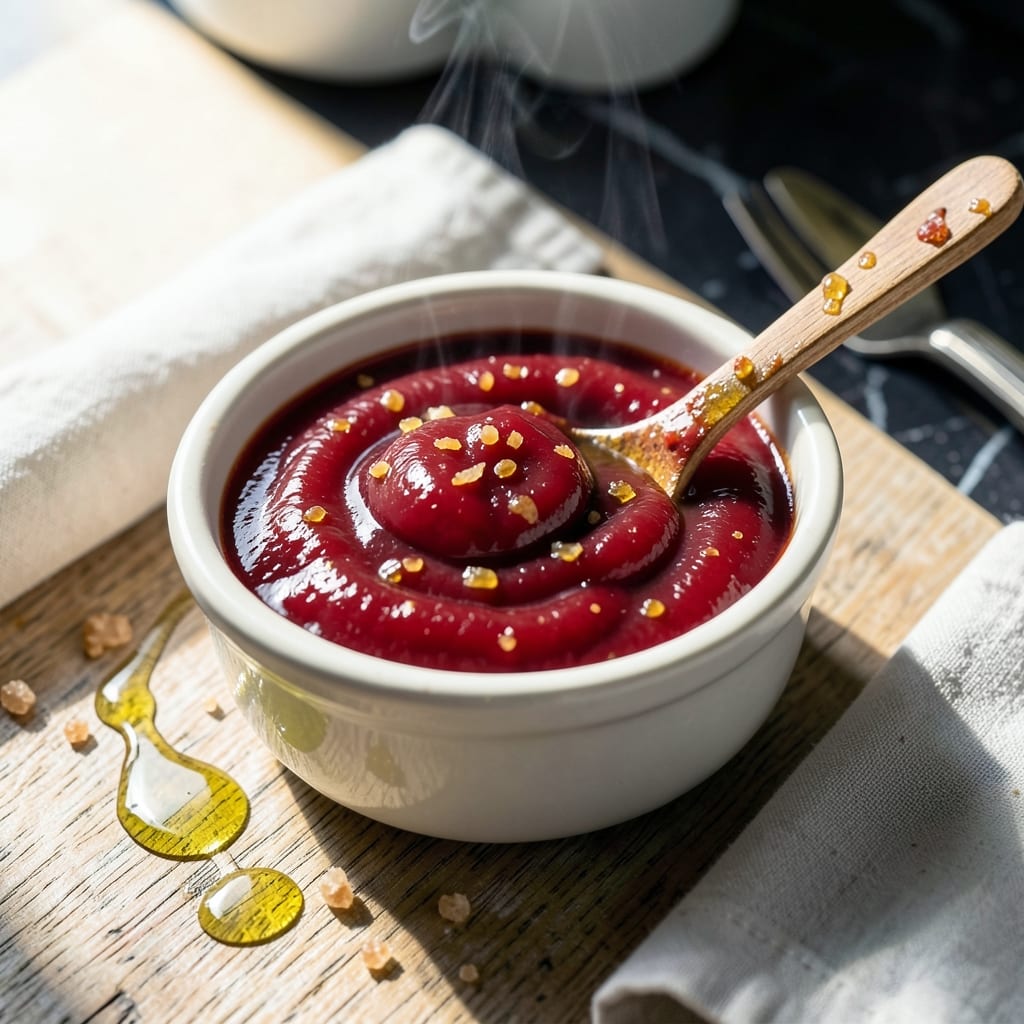
This homemade version delivers the thick and tangy flavor you love, with a depth that store-bought can’t match.
Using tomato paste as the base creates a richer, more concentrated ketchup that sticks to fries and burgers perfectly. The slow simmering process develops complex flavors while achieving just the right consistency.
You’ll end up with a smooth, slightly sweet condiment that’s perfect for all your favorite dishes. The best part? You control the ingredients and the taste.
Make a batch and store it in the fridge for up to 3 weeks, or can it for longer shelf life.
Ingredients for Ketchup Recipe with Tomato Paste
Ten ingredients transform into that thick, tangy condiment you crave. Nothing artificial here.
| Ingredient | Amount | Notes |
|---|---|---|
| Tomato Paste 🍅 | 1 can | 6 oz size, double-concentrated preferred |
| Apple Cider Vinegar 🍏 | ½ cup | 5% acidity for tang |
| Light Brown Sugar 🍚 | ⅓ cup | Packed for sweetness balance |
| Granulated White Sugar 🍚 | ¼ cup | Fine grain for smooth texture |
| Yellow Onion 🧅 | ½ whole | Finely grated for smoothness |
| Garlic Cloves 🧄 | 2 cloves | Minced for depth of flavor |
| Ground Allspice 🌿 | ¼ tsp | Essential for classic ketchup warmth |
| Ground Cloves 🌿 | 0.125 tsp | Just a pinch for complexity |
| Ground Cinnamon 🌿 | 0.125 tsp | Adds subtle sweet spice |
| Salt 🧂 | 1 ½ tsp | Diamond Crystal kosher preferred |
[recipe_ingredient_scaler]
The tomato paste is non-negotiable for that concentrated, sticky texture—look for double-concentrated if you can find it (usually in tubes at Whole Foods). The allspice, cloves, and cinnamon might seem like odd additions, but they’re the secret to that classic ketchup depth. I grab my spices from Penzeys (worth the splurge), but any fresh, quality brand works. Onion and garlic should be finely grated so they melt right into the sauce.
No apple cider vinegar? White vinegar in a pinch (but add an extra tablespoon of brown sugar to compensate). Swap the brown sugar for molasses at half the amount if you want a deeper, almost caramel-like note. Skipping the spices entirely? You’ll miss that signature warmth, but a dash of pumpkin pie spice can substitute in a hurry. For a smoother ketchup, blend it at the end—no one likes chunky condiments.
This keeps in the fridge for about 3 weeks (if it lasts that long). For longer storage, can it using proper canning methods—it’ll stay good for 6-12 months. The flavor actually improves after a day or two as everything melds together.
Why You’ll Love This Recipe
- No-Fuss Cooking: I just dump the ingredients in one pot and let them simmer—no fancy techniques, no stress.
- Sweet-Tangy Balance: The mix of brown sugar and apple cider vinegar gives it that classic ketchup zing I crave.
- Endless Uses: Honestly, I slather this on burgers, mix it into meatloaf, and even use it as a base for BBQ sauce.
- Pantry Staples: Between us, I always have tomato paste and these other ingredients on hand, so I can make it anytime.
Step-by-Step Instructions for Homemade Ketchup With Tomato Paste
This method yields a thick, tangy condiment with deep flavor that beats store-bought every time.
Step 1: Sauté Aromatics to Build Flavor Base
Finely grate the 0.5 whole Yellow Onion and mince the 2 cloves Garlic Cloves—this ensures they melt into the sauce without chunky bits. Heat a small saucepan over medium-low heat and add the grated onion.
Cook for 5-7 minutes, stirring frequently, until the onion becomes translucent and soft but not browned. Add the minced garlic and cook for another 1 minute until fragrant. This gentle cooking develops the sweetness of the onion and mellows the garlic’s sharpness, creating a solid foundation for the sauce.
Step 2: Combine and Simmer the Base Ingredients
Add the 1 can Tomato Paste, 0.5 cup Apple Cider Vinegar, 0.33 cup Light Brown Sugar, and 0.25 cup Granulated White Sugar to the saucepan. Stir well to combine, making sure to break up any lumps in the tomato paste.
Increase the heat to medium and bring the mixture to a gentle simmer. This is where the magic starts—the vinegar’s tang will begin to balance the sweetness of the sugars, while the tomato paste deepens in color and flavor. Simmer for 5 minutes, stirring occasionally to prevent sticking.
Step 3: Add Spices and Season to Taste
Stir in the 0.25 tsp Ground Allspice, 0.125 tsp Ground Cloves, 0.125 tsp Ground Cinnamon, and 1.5 tsp Salt. These spices might seem subtle, but they’re essential for that classic ketchup warmth and complexity.
The allspice adds a hint of peppery sweetness, while the cloves and cinnamon contribute depth without overpowering. Taste the mixture now—you should detect a balance of sweet, tangy, and spiced notes. If it needs more salt or acidity, adjust slightly, but remember the flavors will concentrate as it reduces.
Step 4: Reduce to Desired Consistency
Reduce the heat to low and let the mixture simmer gently for 20-25 minutes, stirring every 5 minutes to prevent burning. The sauce will darken significantly and thicken to a glossy, spoon-coating consistency.
Watch for the sauce to reduce by about a third—it should look rich and thick, with a deep red-brown color. If it reduces too quickly or starts to stick, lower the heat further or add a splash of water. The goal is a smooth, velvety texture that clings to the back of a spoon.
Step 5: Cool and Store for Best Flavor
Remove the saucepan from the heat and let the ketchup cool to room temperature. As it cools, it will thicken slightly more. This step is crucial—tasting it hot won’t give you the true flavor profile.
Once cooled, transfer the ketchup to a clean, airtight jar or bottle. It will keep in the refrigerator for up to 2 weeks. For the best flavor, let it sit for at least 24 hours before using—the spices need time to meld and mature. The result is a thick, tangy, homemade classic that’s perfect for burgers, fries, or any dish needing that signature ketchup kick.
Pro Tips For Making Ketchup Recipe With Tomato Paste
- Simmer Low and Slow: Cook the mixture on medium-low heat for at least 20-25 minutes—rushing it with high heat leaves the ketchup thin and the flavors raw. I learned this the hard way after ending up with vinegary soup instead of thick, rich ketchup.
- Fine Chop the Onion: Pulse the yellow onion in a food processor or mince it by hand until it’s almost paste-like. Sounds tedious, but it blends seamlessly into the final texture and saves you from picking out chunks later.
- Balance the Sweeteners: Start with half the brown sugar, taste, then add more—light brown sugar adds molasses depth, but too much can overpower the tang of the vinegar and tomato paste. My grandmother swore by this, and she was right.
- Cool Before Jarring: Let the ketchup cool completely to room temperature before transferring to jars. Hot ketchup creates condensation, which can lead to mold—yes, even if you’re impatient like me.
Common Mistakes When Making Perfect Results
Skipping the Sauté
I see home cooks rush this step, but cooking the onion and garlic until soft is non-negotiable. Raw aromatics will give your sauce a harsh, sharp flavor that no amount of sugar can fix. Take the full 5-7 minutes on medium-low heat. 💡
Over-Sweetening Early
The sugars will concentrate as the sauce reduces, so resist adding extra sweetness upfront. Start with the recipe’s brown and white sugar amounts, then taste after 15 minutes of simmering. You can always add more, but you can’t take it out.
High Heat Scorching
Tomato paste burns easily due to its thickness. Keep your heat at medium or low and stir every 5 minutes during the 20-25 minute reduction. If you see dark spots forming, immediately lower the heat and scrape the bottom.
Ignoring Spice Balance
The allspice, cloves, and cinnamon might seem subtle, but they’re crucial for that classic depth. Use a light hand—¼ tsp allspice and ⅛ tsp each cloves and cinnamon is perfect. Overdoing these will make your ketchup taste like pumpkin pie.
Skipping the Rest
Letting the ketchup cool completely and rest for 24 hours is key. The flavors need time to meld together. I’ve made the mistake of using it fresh—it tastes flat and one-dimensional compared to the next day.
Storage Missteps
Always use a clean, airtight container and store in the fridge for up to 3 weeks. If you notice any mold or off smells, it’s time to toss it. For longer storage, proper canning extends shelf life to 6-12 months. ❄️
Nutrition Facts
Frequently Asked Questions
Can I use regular tomato sauce instead?
No, tomato paste is essential for that thick, concentrated texture. Regular sauce will make your ketchup too watery. Stick with double-concentrated paste for best results.
How long does homemade ketchup last?
In an airtight container in the fridge, it stays fresh for up to 3 weeks. For longer storage, can it properly—it’ll keep for 6-12 months.
Why does it taste better the next day?
The spices need time to meld and mature. After 24 hours, the flavors deepen, giving you that rich, classic ketchup taste. Patience pays off!
Can I adjust the sweetness or tang?
Taste after 15 minutes of simmering. Add more brown sugar for sweetness or apple cider vinegar for tang. Start small—you can always add more.

Trained in classic French technique but raised on slow-cooked ribs and spicy rubs, she blends culinary skill with smoke and soul.
- Recipe For Oven Baked Haddock: Buttery Crumbs With Zesty Lemon Topping - October 3, 2026
- Recipe For Fried Salmon Patties With Flour: Crispy Golden Crust With Flaky Centers - October 3, 2026
- Meat and Potato Recipe Ideas: Savory Pairings for Hearty Meals - October 3, 2026