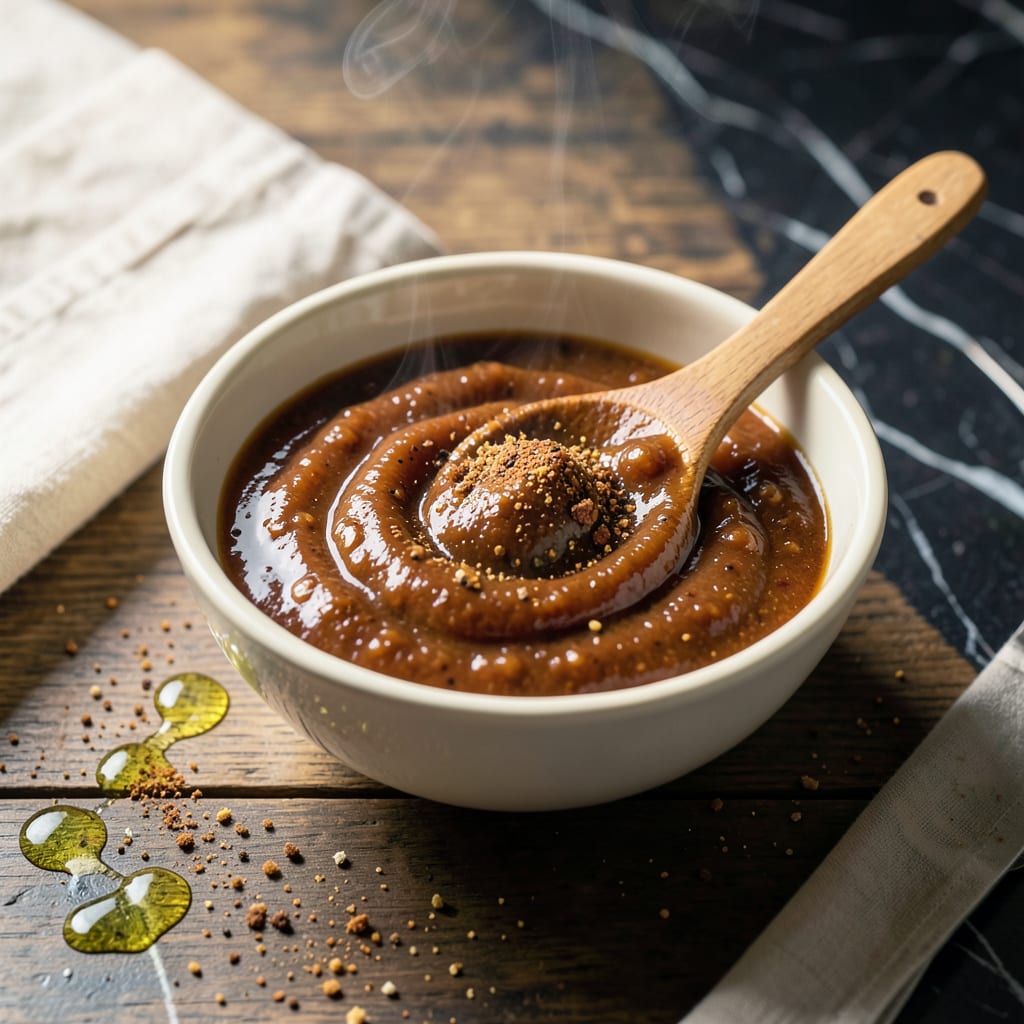
This sugar-free BBQ sauce delivers the bold smoky sweetness you crave without the carbs. I developed it to keep my competition ribs keto-friendly while maintaining that classic sticky, tangy profile.
With just 5 ingredients and 10 minutes, you’ll have a versatile sauce that works on ribs, chicken, or as a dipping sauce. Stores beautifully in the fridge for up to two weeks.
Ingredients for Keto Sweet Bbq Sauce
Nine simple ingredients for that classic sticky, smoky, keto-friendly BBQ flavor without the sugar.
| Ingredient | Amount | Notes |
|---|---|---|
| Sugar-Free Ketchup 🍅 | 1 cup | No added sugar variety |
| Apple Cider Vinegar 🍏 | ¼ cup | For tangy brightness |
| Liquid Smoke 🔥 | 1 tsp | Hickory flavor preferred |
| Erythritol or Monk Fruit Sweetener 🍚 | ⅓ cup | Granulated, adjust to taste |
| Smoked Paprika 🌶️ | 1 tsp | For deep smoky flavor |
| Garlic Powder 🧄 | ½ tsp | Fresh ground preferred |
| Onion Powder 🧅 | ½ tsp | Balances sweetness |
| Worcestershire Sauce 🫒 | 1 tbsp | Check for sugar-free label |
| Black Pepper 🌶️ | ¼ tsp | Freshly ground preferred |
[recipeingredientscaler]
The ketchup base matters most. G Hughes or Primal Kitchen make great sugar-free options with no weird aftertaste. I grab mine at Whole Foods or Amazon—most grocery stores carry at least one brand now. Liquid smoke is polarizing, but Wright’s is the gold standard (a little goes a long way). For the sweetener, erythritol blends like Lakanto dissolve best without cooling aftertaste.
No liquid smoke? Half a teaspoon of chipotle powder adds smokiness without the intensity. Swap apple cider vinegar for white vinegar if that’s what’s in the pantry. Out of sugar-free ketchup? Blend tomato paste with water and vinegar—not ideal but works. The smoked paprika is non-negotiable for that competition-level depth. If your sweetener is powdered, use slightly less since it’s more concentrated.
Keeps in the fridge for 2-3 weeks in a sealed jar. The flavors meld after a day, so make it ahead if you can. Freezes beautifully for up to 3 months—portion into ice cube trays for easy single-serving use. Stir before using as the sweeteners can settle.
Why You’ll Love This Recipe
- One Bowl Wonder: I just toss everything in a saucepan—no chopping, no fuss. Honestly, it’s ready before the grill heats up.
- Smoky Sweet Balance: The liquid smoke and smoked paprika give it that deep, campfire flavor while the monk fruit sweetener keeps it guilt-free.
- Meal Prep Hero: I make a big batch and use it on ribs, chicken, or even as a dipping sauce for veggies all week long.
- Budget Keeper: Sugar-free ketchup and pantry staples mean I’m not buying expensive bottled sauces. Here’s what sold me—it tastes better than store-bought.
Step-by-Step Instructions for Sugar-Free Barbecue Sauce
Here’s the method. Straightforward, tested, works every time.
Step 1: Combine the Wet Base Ingredients
In a medium saucepan, whisk together the 1 cup Sugar-Free Ketchup and 0.25 cup Apple Cider Vinegar until smooth. The vinegar’s acidity will brighten the ketchup’s natural sweetness while adding that classic tang every good barbecue sauce needs.
Place the saucepan over medium heat and warm the mixture gently. You’ll notice the vinegar’s sharp aroma mellow as it heats—this is normal. Don’t let it come to a boil at this stage; we want gradual flavor development.
Step 2: Add the Smoky Depth and Sweetness
Stir in the 1 tsp Liquid Smoke and 0.33 cup Erythritol or Monk Fruit Sweetener. The liquid smoke adds that authentic pit-smoked flavor without the hours of tending a fire. I’ve found hickory-flavored works best here.
The sweetener will dissolve completely as the mixture warms. Taste at this point—if you prefer a sweeter profile, you can add a pinch more, but remember the flavors will concentrate as it reduces. Keep the heat at medium to prevent scorching.
Step 3: Incorporate the Spice Blend
Add the 1 tsp Smoked Paprika, 0.5 tsp Garlic Powder, 0.5 tsp Onion Powder, 1 tbsp Worcestershire Sauce, and 0.25 tsp Black Pepper. Each of these plays a crucial role: the paprika deepens the smoky notes, while the garlic and onion powders create a savory backbone.
Whisk vigorously for 30 seconds to ensure all the spices are fully distributed and no lumps remain. The Worcestershire sauce adds umami complexity that balances the sweetness perfectly. You’ll start to see the sauce take on a richer, deeper color as the spices bloom.
Step 4: Simmer to Perfection
Reduce the heat to medium-low and let the sauce simmer gently for 10-12 minutes. Stir occasionally with a silicone spatula, making sure to scrape the bottom of the pan to prevent sticking.
You’ll know it’s ready when the sauce has thickened enough to coat the back of a spoon and the flavors have melded into a harmonious balance. The color should deepen to a rich mahogany. If it reduces too quickly, lower the heat slightly—we’re aiming for a slow, steady simmer, not a rapid boil.
Remove from heat and let cool to room temperature. The sauce will continue to thicken slightly as it cools. Transfer to an airtight container and store in the refrigerator for up to 2 weeks.
Pro Tips For Making Keto Sweet Bbq Sauce
- Simmer Low and Slow: Cook the sauce on low heat for at least 10-15 minutes—any higher and the sweetener can caramelize too fast, leaving a bitter aftertaste. I learned this the hard way after ruining a batch by rushing it on medium.
- Bloom the Paprika: Toast the smoked paprika in the saucepan for 30 seconds before adding liquids. Sounds weird, but it works: this wakes up the smoky depth that makes the sauce taste less flat.
- Balance the Vinegar: Start with half the apple cider vinegar, taste, then add more. After burning three batches, I finally figured out that too much upfront makes the sauce taste harsh, not tangy.
- Sweeten Gradually: Add the erythritol or monk fruit in small increments, stirring well between each. My grandmother swore by this, and she was right: it distributes evenly and prevents grainy texture in the final sauce.
Essential Equipment for Great keto sweet bbq sauce
Saucepan Selection
I always reach for my All-Clad stainless steel 2-quart saucepan—it distributes heat evenly and won’t react with the vinegar. For budget-friendly options, Cuisinart MultiClad works just as well. Avoid nonstick for this recipe since the sugar substitutes can leave residue. 🔥
Whisking Tool
A silicone whisk is my go-to for combining the ingredients without scratching your pan. The flat edges help scrape the bottom while mixing. I keep a OXO Good Grips whisk in my sauce-making arsenal—it’s heat-resistant up to 600°F.
Measuring Accuracy
Precision matters with sugar substitutes. I use stainless steel measuring spoons from Spring Chef for the spices and Pyrex glass measuring cups for liquids. The liquid smoke especially needs exact measurement—too much can overpower the sauce.
Simmering Thermometer
While not mandatory, a candy thermometer helps monitor the simmer. I clip my Taylor Classic to the pan side to maintain 220-230°F. This prevents scorching while ensuring proper reduction. Honestly, it changed my sauce game.
Storage Containers
For fridge storage, I love 16-ounce mason jars with airtight lids—they’re perfect for 2-week storage. For freezer portions, silicone ice cube trays let you freeze 1-tbsp portions for later use. Always leave ½-inch headspace for expansion.
Cleanup Essentials
A dough whisk makes cleanup a breeze if your sauce thickens more than expected. I also keep Bar Keepers Friend on hand for any stubborn residue on my stainless steel. The sauce cleans up easily when warm, so don’t let it sit too long. 💡
Nutrition Facts

Trained in classic French technique but raised on slow-cooked ribs and spicy rubs, she blends culinary skill with smoke and soul.
- Recipe for Boneless Pork Chops in Cast Iron Skillet: Sear and Baste to Juicy Perfection - October 3, 2026
- Recipe for Boneless Cross Rib Roast: Slow-Roasted Beef with Herb Crust - October 3, 2026
- Hamburgers in Sauce Recipe Crock Pot: Slow-Cooked Savory Delight - October 3, 2026