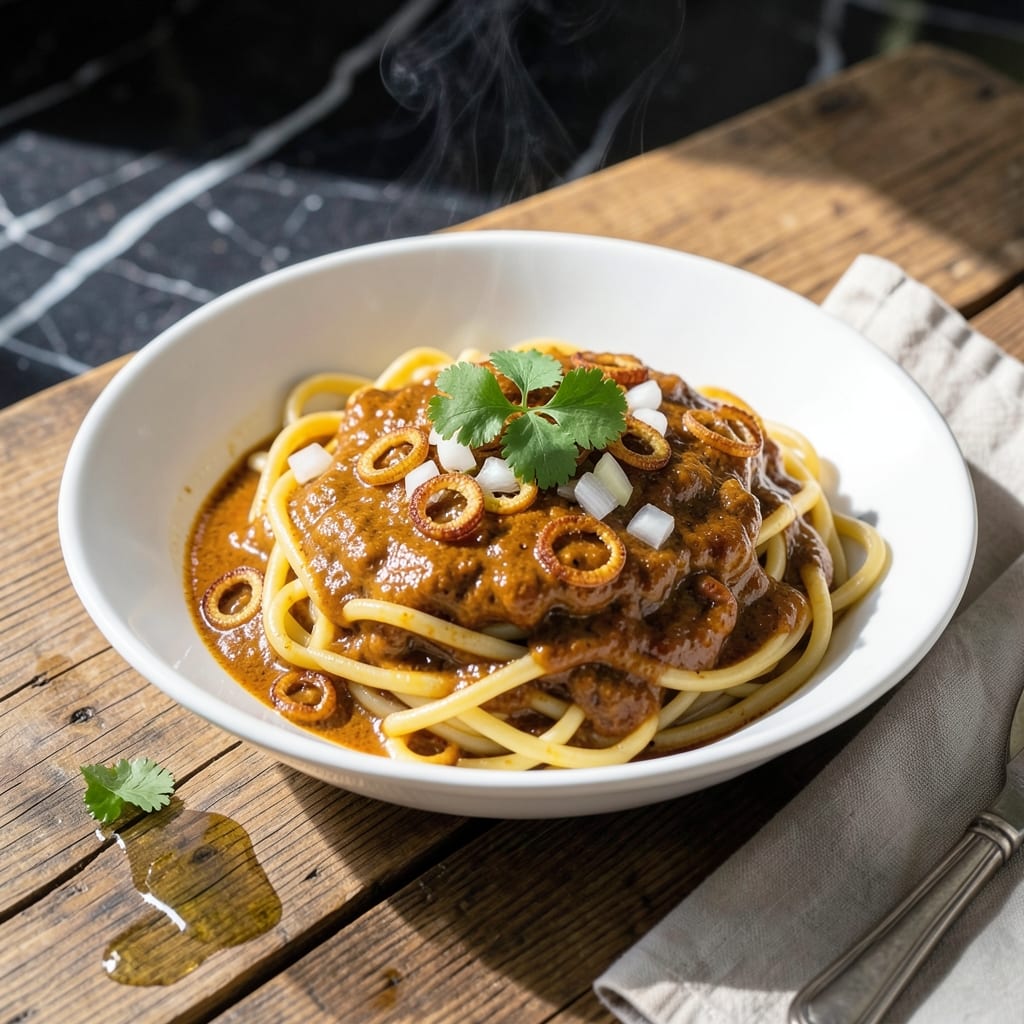
This Burmese noodle bowl brings together silky coconut curry and tender wheat noodles in a dish that’s both comforting and exotic. I first encountered it at a small family-run restaurant, where the complex layers of flavor immediately captivated me.
What makes this vegetarian version special is its balance of rich, creamy broth with fresh, crunchy toppings. The curry base combines coconut milk, turmeric, and aromatic spices, while the noodles soak up every bit of the flavorful sauce.
The toppings—crispy fried shallots, hard-boiled eggs, and lime wedges—add texture and brightness. Each bite offers a mix of creamy, spicy, and tangy notes that keep you coming back for more.
Perfect for a weekend project or a special weeknight meal, this dish is worth the effort. Here’s how to make it at home.
Ingredients for Khowsuey Recipe Veg
Silky coconut curry, tender noodles, and crispy shallots come together beautifully here.
| Ingredient | Amount | Notes |
|---|---|---|
| Wheat Egg Noodles 🍜 | 12 oz | Fresh or dried, al dente |
| Coconut Milk 🥥 | 2 cups | Full-fat for creaminess |
| Vegetable Broth 🥕 | 2 cups | Low-sodium preferred |
| Turmeric Powder 🌿 | 1 tbsp | Ground, for vibrant color |
| Madras Curry Powder 🌶️ | 2 tbsp | Aromatic, medium-hot |
| Onion 🧅 | 1 whole | Yellow or white, finely chopped |
| Garlic Cloves 🧄 | 4 cloves | Minced for depth |
| Fresh Ginger 🌿 | 1 tbsp | Peeled and grated |
| Shallots 🧅 | 2 whole | Thinly sliced for frying |
| Hard-Boiled Eggs 🥚 | 4 whole | Peeled and halved |
| Lime 🍋 | 2 whole | Cut into wedges |
| Fresh Cilantro 🌿 | ½ cup | Chopped, for garnish |
| Chili Oil 🌶️ | 2 tbsp | For drizzling finish |
| Soy Sauce 🥢 | 1 tbsp | Low-sodium for balance |
| Vegetable Oil 🫒 | ½ cup | For frying shallots |
[recipe_ingredient_scaler]
The coconut milk is non-negotiable—full-fat canned (like Thai Kitchen or Native Forest) gives you that luxurious, restaurant-quality texture. Turmeric loses potency fast, so check the expiration date and buy from bulk bins if you can (those little jars sit on shelves forever). Madras curry powder has the right heat and complexity, but any high-quality blend from Penzeys or an Indian grocery works. Fresh ginger and garlic are a must—no shortcuts.
No hard-boiled eggs? Tofu cubes (firm or extra-firm, pressed and pan-fried) give a similar protein boost. Out of shallots? Red onion slices fried to a crisp work in a pinch. The lime isn’t optional—bottled juice won’t cut it. Swap cilantro for Thai basil if you’re feeling fancy (Trader Joe’s often carries it). Soy sauce can be tamari for gluten-free, but taste first—it’s saltier.
Coconut milk and curry paste freeze well for 3 months (portion into ice cube trays). Fried shallots keep in a jar at room temp for 1 week—if they last that long. The broth and noodles reheat perfectly, but add a splash of water to loosen the sauce. Always garnish fresh.
Why You’ll Love This Recipe
- One Pot Wonder: I toss everything in a single pan—noodles, coconut milk, and those warm spices—minimal mess, maximum flavor.
- Creamy Spice Burst: That first bite with turmeric and madras curry swimming in coconut milk? Rich, fragrant, and honestly hard to stop eating.
- Crowd-Pleasing Flex: I serve it for lunch boxes, potlucks, or lazy Sundays. Even my picky nephew cleans his bowl.
- Budget Stretcher: Wheat noodles and pantry spices keep costs low, and leftovers taste even better the next day.
Step-by-Step Instructions for Burmese Coconut Curry Noodle Bowl
Here’s my foolproof method for building layers of flavor that make this dish truly unforgettable.
Step 1: Prepare and Fry the Shallots
Thinly slice the 2 whole Shallots into rings. Heat 0.5 cup Vegetable Oil in a small saucepan over medium heat until shimmering. Add the shallots and fry, stirring frequently, for 8-10 minutes until they turn deep golden brown and crisp.
This step is non-negotiable—it adds a crucial crunch and depth to the final dish. Use a slotted spoon to transfer them to a paper towel-lined plate to drain. Reserve the oil; you’ll use it later. The shallots will continue crisping as they cool, so pull them out just as they reach that perfect golden hue.
Step 2: Build the Curry Base
In a large pot, heat 2 tablespoons of the reserved shallot oil over medium-high heat. Add the finely chopped 1 whole Onion and sauté for 5 minutes until translucent. Stir in the minced 4 cloves Garlic Cloves and grated 1 tbsp Fresh Ginger, cooking for 1 minute until fragrant.
Add the 1 tbsp Turmeric Powder and 2 tbsp Madras Curry Powder, stirring constantly for 30 seconds to toast the spices. This blooms their flavors and prevents any raw taste. The mixture should look like a thick, golden paste and smell incredibly aromatic.
Step 3: Simmer the Coconut Broth
Pour in the 2 cups Coconut Milk and 2 cups Vegetable Broth, stirring to combine. Add the 1 tbsp Soy Sauce and bring to a gentle simmer. Reduce heat to medium-low and let it cook for 10-12 minutes until slightly thickened.
The sauce should coat the back of a spoon but still be pourable. Taste and adjust seasoning if needed, though the soy sauce and curry powder should provide enough saltiness. The coconut milk will mellow the spices beautifully, creating that signature creamy, rich base.
Step 4: Cook the Noodles and Assemble
Cook the 12 oz Wheat Egg Noodles according to package instructions until al dente. Drain and rinse under cold water to stop the cooking process. Divide the noodles among four bowls and ladle the hot curry broth generously over each portion.
Top each bowl with the crispy fried shallots, halved 4 whole Hard-Boiled Eggs, and a drizzle of 2 tbsp Chili Oil. The contrast of temperatures and textures—hot broth, cool noodles, crispy shallots, creamy eggs—is what makes this dish special.
Step 5: Garnish and Serve
Finish each bowl with a squeeze of 2 whole Lime wedges and a generous sprinkle of chopped 0.5 cup Fresh Cilantro. The lime’s acidity cuts through the richness of the coconut, while the cilantro adds a fresh, bright note.
Serve immediately while the broth is piping hot. Each bite should deliver a perfect balance of creamy, spicy, tangy, and crispy elements. The hard-boiled eggs soak up the broth beautifully, adding a satisfying heartiness to the dish.
Pro Tips For Making Khowsuey Recipe Veg
- Bloom the Spices: Toast the turmeric and Madras curry powder in 1 tablespoon of oil for 30 seconds before adding liquids—I learned this the hard way after my early batches tasted flat and dull.
- Undercook the Noodles: Boil the wheat egg noodles for 1 minute less than package instructions, then finish them in the hot broth so they soak up the coconut milk flavor without turning mushy.
- Use Full-Fat Coconut Milk: Sounds weird, but it works: skip the light version. The fat carries the curry spices and coats the noodles properly—my grandmother swore by this, and she was right.
- Warm the Broth First: Heat the vegetable broth before mixing it with coconut milk to prevent curdling. After burning three batches, I finally figured out that cold broth can split the sauce.
Dietary Considerations for This Recipe
Gluten-Free Adaptation
Swap the 12 oz Wheat Egg Noodles for rice sticks or gluten-free spaghetti—both soak up the coconut broth beautifully. I test with Jovial brown rice pasta for its firm bite. Cook 1 minute less than package instructions to prevent mushiness.
Vegan Modification
Replace the hard-boiled eggs with extra-firm tofu cubes (pressed and pan-fried). The tofu adds protein and absorbs the curry flavors wonderfully. Use 14 oz tofu for equivalent heartiness.
Dairy-Free Notes
This dish is naturally dairy-free since the creaminess comes from coconut milk. Double-check your Madras Curry Powder for milk derivatives—some blends contain traces. I trust Frontier Co-op for reliable dairy-free spices.
Nut Allergy Consideration
While coconut is technically a fruit, those with tree nut allergies should use caution. For a nut-free version, substitute oat milk for the coconut milk. The flavor will be milder but still delicious.
Lower Sodium Option
Use low-sodium Vegetable Broth and reduce Soy Sauce to ½ tbsp. Boost umami with 1 tsp mushroom powder instead. I find this maintains depth without excess salt.
Spice Sensitivity
Reduce Madras Curry Powder to 1 tbsp and add ½ tsp sweet paprika for color. Taste before serving—you can always add chili oil at the table for heat control. 💛
Nutrition Facts
Frequently Asked Questions
Can I use rice noodles instead of wheat?
Yes! Rice noodles work beautifully and make it gluten-free. Cook them 1 minute less than package directions to keep them firm. They soak up the coconut broth just as well.
How do I make this spicier?
Add 1-2 chopped Thai chilies with the garlic and ginger, or stir in ½ tsp cayenne with the curry powder. Adjust chili oil drizzle to taste.
Can I prepare the broth ahead?
The curry broth keeps well in the fridge for 3 days or freezes for 1 month. Reheat gently and thin with water if needed. Always fry shallots fresh.

Trained in classic French technique but raised on slow-cooked ribs and spicy rubs, she blends culinary skill with smoke and soul.
- Recipe for Boneless Pork Chops in Cast Iron Skillet: Sear and Baste to Juicy Perfection - October 3, 2026
- Recipe for Boneless Cross Rib Roast: Slow-Roasted Beef with Herb Crust - October 3, 2026
- Hamburgers in Sauce Recipe Crock Pot: Slow-Cooked Savory Delight - October 3, 2026