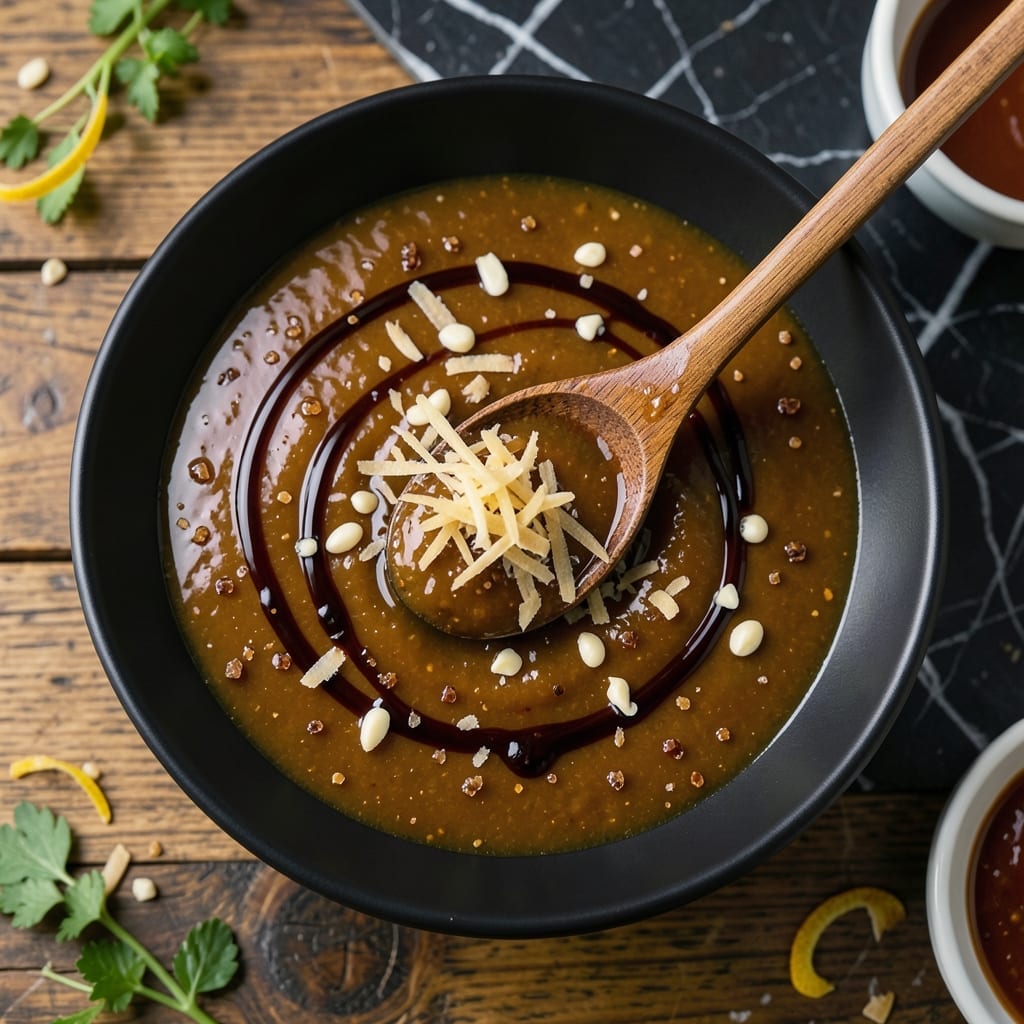
This glaze transforms ordinary grilled dishes into restaurant-quality masterpieces with its perfect balance of sweet and savory. I developed this version after years of experimenting with ratios to achieve that signature sticky, glossy finish.
The secret lies in the precise combination of soy sauce, sugar, and a touch of ginger for depth. Unlike store-bought versions, this homemade teriyaki maintains a smooth consistency that brushes on effortlessly and caramelizes beautifully under heat.
Use it as a final glaze for proteins or vegetables during the last few minutes of cooking. The high sugar content ensures a glossy sheen and deep flavor that penetrates every bite without overpowering the main ingredient.
Store in an airtight container for up to two weeks. The flavor intensifies over time, making it even better for your next cookout.
Ingredients for Kikkoman Teriyaki Glaze
Nine ingredients. Five minutes. Better than any bottled glaze you will find.
| Ingredient | Amount | Notes |
|---|---|---|
| Soy Sauce 🫒 | ¾ cup | Kikkoman brand preferred for authenticity |
| Brown Sugar 🍚 | ½ cup | Light or dark variety works |
| Granulated Sugar 🍚 | ¼ cup | Balances the saltiness perfectly |
| Rice Vinegar 🍶 | 2 tbsp | Adds essential tangy brightness |
| Fresh Ginger 🌿 | 1 tbsp | Finely grated for smooth texture |
| Garlic Cloves 🧄 | 3 cloves | Minced for flavor depth |
| Cornstarch 🌾 | 1 tbsp | Thickens to perfect consistency |
| Water 💧 | ¼ cup | For cornstarch slurry |
| Sesame Oil 🫒 | 1 tsp | Toasted variety for nutty aroma |
[recipe_ingredient_scaler]
The soy sauce is non-negotiable here—Kikkoman has that perfect umami balance. I grab mine at any regular grocery store (the standard bottle, not low-sodium). The brown sugar adds caramel depth, but if you’ve got turbinado or coconut sugar, those work too with slightly different notes. Fresh ginger is key for that bright zing—look for firm, smooth roots without wrinkles.
No fresh ginger? Ground ginger at one-third the amount works in a pinch. Swap rice vinegar for apple cider vinegar if needed (slightly fruitier). For a gluten-free version, tamari replaces soy sauce 1:1. The cornstarch slurry is what gives this that restaurant-quality gloss—don’t skip it. Honey can stand in for half the sugar if you want a different sweetness profile.
This keeps in an airtight jar for up to 2 weeks in the fridge. The flavors meld and deepen after a day, so make it ahead. Freezes beautifully for 3 months if you want to batch it. Just stir before using—separation is normal.
Why You’ll Love This Recipe
- 5-Minute Mix: I just dump everything in a saucepan and let it simmer—no fancy techniques, just soy sauce, sugars, and ginger doing their magic.
- Sweet-Savory Balance: That first hit of brown sugar caramelizing with the soy sauce and fresh ginger? Ridiculously good.
- Dinner or Dip: Slather it on chicken tonight, then use leftovers as a dipping sauce for dumplings tomorrow. Honestly, it works for everything.
- Pantry Staples: I always have these ingredients on hand, so I can make this glaze whenever a craving hits—no last-minute grocery runs.
Step-by-Step Instructions for Kikkoman Teriyaki Glaze
This method delivers a glossy, rich glaze with the perfect balance of sweet and savory flavors.
Step 1: Combine Base Ingredients and Simmer
In a medium saucepan, combine the 0.75 cup Soy Sauce, 0.5 cup Brown Sugar, 0.25 cup Granulated Sugar, 2 tbsp Rice Vinegar, finely grated 1 tbsp Fresh Ginger, and minced 3 cloves Garlic Cloves.
Place the saucepan over medium heat and bring the mixture to a gentle simmer, stirring frequently with a wooden spoon. You’ll notice the sugars begin to dissolve and the aroma of ginger and garlic fills the air—that’s your cue the base is developing properly.
Continue simmering for 3-4 minutes until the sugars are fully dissolved and the mixture starts to thicken slightly. Watch for small bubbles around the edges—this indicates the glaze is at the right stage.
Step 2: Prepare the Cornstarch Slurry
In a small bowl, whisk together the 1 tbsp Cornstarch and 0.25 cup Water until smooth and free of lumps. The slurry should look like thin, milky water—this ensures it blends seamlessly into the glaze.
This step is critical for achieving the perfect consistency. I’ve found that a whisk works better than a fork for preventing clumps. Set the slurry aside while you finish the next step—it needs to be ready to go as soon as the base mixture is prepared.
Step 3: Thicken the Glaze to Perfection
Slowly pour the cornstarch slurry into the simmering soy sauce mixture while stirring constantly. The glaze will begin to thicken immediately—you’ll see it transform from a thin liquid to a glossy, syrup-like consistency.
Continue cooking for an additional 1-2 minutes after adding the slurry, stirring frequently. The glaze is ready when it coats the back of a spoon and leaves a clear trail when you run your finger through it. Don’t overcook, or it may become too thick to brush.
Step 4: Finish with Sesame Oil and Cool
Remove the saucepan from heat and stir in the 1 tsp Sesame Oil. The toasted aroma will bloom immediately, adding a deep, nutty layer to the glaze. This is the signature touch that elevates it from ordinary to extraordinary.
Let the glaze cool for 10-15 minutes at room temperature. As it cools, it will thicken further and develop a beautiful sheen. You’ll know it’s ready when it’s warm to the touch but not piping hot—this makes it safe to brush on meats without cooking them prematurely.
Transfer to an airtight container or jar for storage. The glaze will keep in the refrigerator for up to 2 weeks, though I doubt it’ll last that long once you taste it.
Pro Tips For Making Kikkoman Teriyaki Glaze
- Simmer, Don’t Boil: Keep the heat at a gentle simmer—boiling the glaze too hard can make the sugars separate and turn grainy. I learned this the hard way after ruining a batch by rushing it on high heat.
- Grate the Ginger: Fresh ginger is non-negotiable here, but grating it instead of mincing releases more juice and flavor into the glaze. It blends in better and saves you from chewing on fibrous bits.
- Skip the Substitutes: Rice vinegar might seem interchangeable with other vinegars, but its mild tang balances the sweetness perfectly. After trying apple cider vinegar once, I can tell you—it’s not the same.
- Reduce to Coat: Let the glaze reduce until it’s thick enough to coat the back of a spoon, about 8-10 minutes. Sounds tedious, but it’s the only way to get that sticky, glossy finish that clings to whatever you’re glazing.
Best Sauces and Condiments for This kikkoman teriyaki glaze
Classic Pairing
This glaze shines brightest when brushed on grilled chicken thighs during the last 5 minutes of cooking. The high sugar content caramelizes beautifully, creating that signature sticky coating we all crave. I always keep a batch ready for weekend BBQs. 🔥
Seafood Special
For a coastal twist, try it on salmon fillets or shrimp skewers. The umami depth complements seafood’s natural richness. Brush lightly to avoid overpowering the delicate flavors—2-3 coats works perfectly.
Vegetable Boost
Transform simple grilled veggies into stars by tossing them in this glaze. Asparagus, bell peppers, and zucchini all benefit from the sweet-savory balance. I like to add a sprinkle of sesame seeds for extra texture.
Dipping Sauce
Thin it slightly with 1-2 tbsp water to create an incredible dipping sauce for spring rolls, dumplings, or crispy tofu. Serve warm for the best flavor experience.
Burger Upgrade
Drizzle over beef or turkey burgers just before serving. The glaze adds moisture and a complex flavor layer that plain ketchup can’t match. Pair with quick-pickled cucumbers for contrast.
Meal Prep Tip
Make a double batch and use half as a marinade for chicken breasts before grilling. The enzymes in fresh ginger help tenderize while the sugars promote browning. 💡
Nutrition Facts
Frequently Asked Questions
Can I use honey instead of sugar?
Yes! Replace up to half the sugars with honey for a different sweetness profile. Reduce other liquids slightly to compensate for honey’s moisture content.
Why does my glaze crystallize when cooling?
This happens if the sugar wasn’t fully dissolved before thickening. Stir constantly over medium heat until all sugar dissolves completely before adding the slurry.
How do I make it gluten-free?
Simply swap the soy sauce for tamari, which is naturally gluten-free. Use the same 0.75 cup measurement for identical flavor balance.
Can I freeze the glaze?
It freezes beautifully for up to 3 months. Thaw in the fridge overnight and stir well before using.

Trained in classic French technique but raised on slow-cooked ribs and spicy rubs, she blends culinary skill with smoke and soul.
- Recipe for Boneless Pork Chops in Cast Iron Skillet: Sear and Baste to Juicy Perfection - October 3, 2026
- Recipe for Boneless Cross Rib Roast: Slow-Roasted Beef with Herb Crust - October 3, 2026
- Hamburgers in Sauce Recipe Crock Pot: Slow-Cooked Savory Delight - October 3, 2026