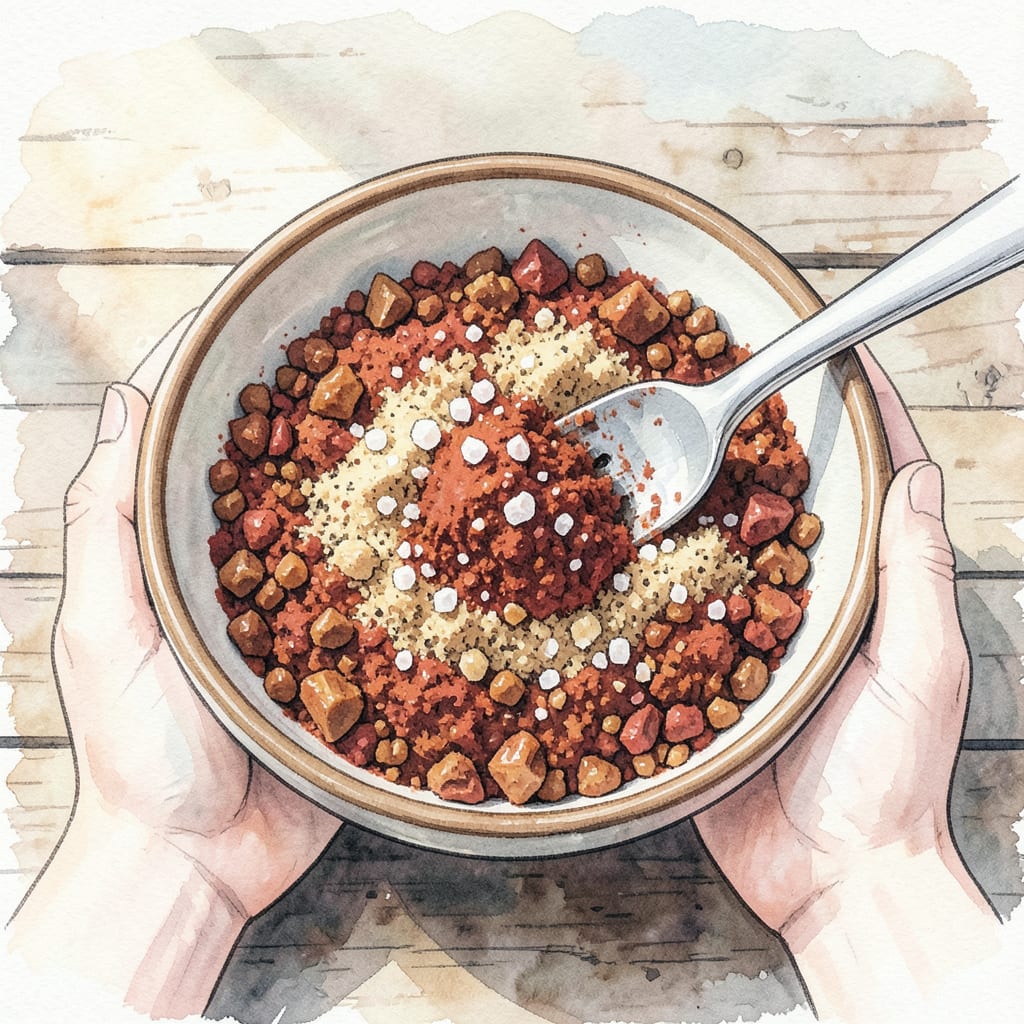
As a pitmaster, I’ve spent years perfecting my signature BBQ rub, inspired by the bold flavors of Killer Hogs. This dry spice blend combines smoky paprika, tangy brown sugar, and a hint of spice to elevate your grilled meats.
With just a few simple ingredients – including chili powder, garlic powder, and onion powder – you’ll create a complex rub that adds depth to any BBQ. Let’s get started!
Ingredients for Killer Hogs Bbq Rub
Simple ingredients make this BBQ rub shine with smoky paprika and tangy brown sugar.
| Ingredient | Amount | Notes |
|---|---|---|
| Chili Powder 🌶️ | 2 tbsp | Mild or hot variety |
| Smoked Paprika 🌶️ | 2 tbsp | Smoky flavor is key |
| Brown Sugar 🍮 | 1 tbsp | Adds sweetness balance |
| Garlic Powder 🧄 | 1 tbsp | Not garlic salt |
| Onion Powder 🧅 | 1 tbsp | Adds depth |
| Salt 🧂 | 1 tbsp | Kosher or sea salt |
| Black Pepper 🌶️ | 1 tsp | Freshly ground |
| Cayenne Pepper 🔥 | ½ tsp | Adjust for heat |
[recipe_ingredient_scaler]
For the best flavor, use high-quality smoked paprika—it makes all the difference. I buy mine from Penzeys or specialty spice stores. The chili powder can be mild or hot depending on your preference. If you’re using hot, start with less cayenne or omit it entirely.
No brown sugar? Coconut sugar works as a substitute, though it changes the flavor slightly. For a different twist, try adding 1 teaspoon of ground coffee—it enhances the smokiness. The garlic and onion powder should be fresh, not stale. Store them in airtight containers to keep their potency.
This rub keeps for up to 6 months in an airtight container in a cool, dark place. I like to make a double batch and store it in glass jars. Label them clearly so you remember what’s inside. The flavors meld together over time, making it even better after a week or so.
Step-by-Step Instructions for Killer Hogs BBQ Rub
Creating this signature rub is straightforward and rewarding—let’s get started with the process.
Step 1: Combine Dry Ingredients
In a small bowl, mix together the 2 tbsp Chili Powder, 2 tbsp Smoked Paprika, 1 tbsp Brown Sugar, 1 tbsp Garlic Powder, and 1 tbsp Onion Powder. I like to use a fork to whisk these ingredients until they’re evenly distributed—the mixture should have a uniform color and texture.
Make sure to break up any clumps in the 1 tbsp Brown Sugar as you mix, as this ensures even distribution throughout the rub. The combination of these ingredients creates a complex flavor profile that’s both smoky and slightly sweet.
Step 2: Add Salt and Peppers
Add the 1 tbsp Salt, 1 tsp Black Pepper, and 0.5 tsp Cayenne Pepper to the bowl. Mix these in thoroughly using your fork or a small whisk. The 1 tbsp Salt enhances the other flavors while the 1 tsp Black Pepper adds a subtle kick.
If you prefer a milder rub, you can reduce or omit the 0.5 tsp Cayenne Pepper. Conversely, if you like it spicier, you can add a bit more. The key is to mix until everything is well combined and there are no visible clumps.
Step 3: Store Your Rub
Transfer the mixed rub to an airtight container. I recommend using a glass jar with a tight-fitting lid to preserve the flavors. Store the container in a cool, dark place—the pantry or a cabinet works well.
The rub will keep for several months when stored properly. Before each use, give it a quick stir to ensure the ingredients haven’t settled or separated. This rub is versatile and can be used on various meats, from ribs to chicken to brisket.
Regional Styles of killer hogs bbq rub
Memphis-Style Dry Rub Tradition
This Killer Hogs BBQ rub recipe draws inspiration from Memphis-style dry rub traditions, where the focus is on a complex blend of spices that complement the meat without overpowering it. The combination of chili powder, smoked paprika, and brown sugar creates a rich flavor profile that’s both smoky and slightly sweet. I’ve found that using high-quality ingredients makes all the difference in the final product.
Carolina Influence
The use of mustard isn’t prominent in this recipe, but the tanginess from the brown sugar and the heat from the cayenne pepper nods to the vinegar-based traditions found in some Carolina-style BBQ. You can experiment with adding a small amount of yellow mustard to your rub for a unique twist that adds depth to the flavor. I sometimes add a hint of mustard when I’m cooking for a crowd.
Texas-Sized Flavor
While this rub isn’t traditionally Texan, the use of chili powder and garlic powder gives it a bold flavor reminiscent of Texas BBQ. You can enhance this Tex-Mex influence by adding 1 teaspoon of ground cumin to the mix, which pairs beautifully with beef or pork. I’ve had great success using this rub on brisket with a dry rub crust.
Regional Adaptations
One of the best things about this rub is its versatility. You can adjust the levels of heat and smokiness based on your regional preferences or the type of meat you’re cooking. For example, if you’re cooking chicken, you might want to reduce the amount of cayenne pepper to avoid overpowering the delicate flavor. Experimenting with different proportions is part of the fun.
Creating Your Signature Rub
The beauty of making your own BBQ rub is that you can customize it to your taste.

Trained in classic French technique but raised on slow-cooked ribs and spicy rubs, she blends culinary skill with smoke and soul.
- Recipe for Boneless Pork Chops in Cast Iron Skillet: Sear and Baste to Juicy Perfection - October 3, 2026
- Recipe for Boneless Cross Rib Roast: Slow-Roasted Beef with Herb Crust - October 3, 2026
- Hamburgers in Sauce Recipe Crock Pot: Slow-Cooked Savory Delight - October 3, 2026