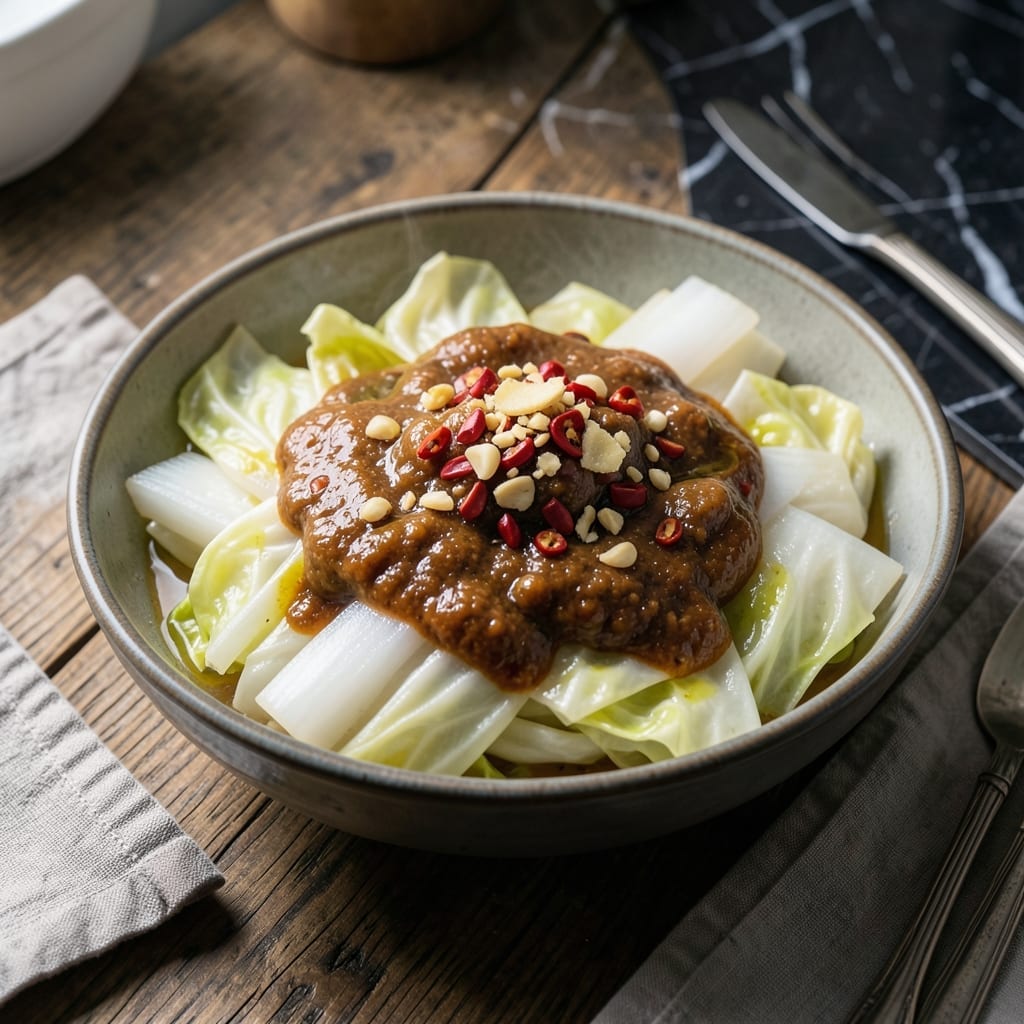
This authentic kimchi recipe brings traditional Korean fermentation to your kitchen with a bold gochujang twist. The paste adds depth while preserving the classic spicy, tangy profile.
You’ll love how simple ingredients transform into a fermented masterpiece over days. The process is straightforward, and the results are restaurant-quality every time.
Ingredients for Kimchi Recipe with Gochujang Paste
Traditional Korean flavors meet bold fermentation with these fresh, vibrant ingredients.
| Ingredient | Amount | Notes |
|---|---|---|
| Napa Cabbage 🥬 | 2 lb | Cored and quartered lengthwise |
| Kosher Salt 🧂 | ½ cup | Diamond Crystal preferred for brining |
| Gochujang Paste 🌶️ | ½ cup | Korean fermented chili paste |
| Korean Red Pepper Flakes 🌶️ | ½ cup | Gochugaru, fine or coarse |
| Fresh Garlic Cloves 🧄 | 8 cloves | Minced finely for paste |
| Fresh Ginger 🌿 | 1 tbsp | Peeled and grated |
| Fish-Free Soy Sauce 🫒 | ¼ cup | Vegan alternative to fish sauce |
| Rice Vinegar 🍚 | ¼ cup | Mild acidity for balance |
| Granulated Sugar 🍚 | 2 tbsp | Or coconut sugar for vegan option |
| Green Onions 🧅 | 6 whole | Thinly sliced for garnish |
| Asian Pear 🍐 | ½ whole | Peeled, grated for sweetness |
| Daikon Radish 🥬 | 8 oz | Julienned for crunch |
| Carrots 🥕 | 2 whole | Julienned for texture |
[recipe_ingredient_scaler]
The Napa cabbage is non-negotiable—look for firm heads with crisp leaves at H Mart or any Asian market. Kosher salt (specifically Diamond Crystal) ensures clean brining without additives. Gochujang and gochugaru are the soul of this dish; Sempio or Mother-in-Law’s brands are reliable. Fresh ginger and garlic? Grate and mince them yourself—pre-packaged lacks the punch.
No gochugaru? Substitute with cayenne at half the amount (but flavor won’t be identical). Skip the pear? Grated apple or a tbsp of maple syrup works. Fish-free soy sauce is key for vegan authenticity—Kikkoman or San-J Tamari are solid picks. The daikon and carrots add crunch, but jicama or kohlrabi can stand in if needed.
Fermented kimchi keeps for 1 month in the fridge (flavor deepens over time). Store in airtight containers, pressing down to submerge vegetables in liquid. Best eaten within 2 weeks for peak texture and tang.
Why You’ll Love This Recipe
- Minimal Effort: I just mix gochujang with the red pepper flakes and garlic—no fancy techniques, just bold flavor in minutes.
- Depth of Flavor: The gochujang adds this rich, fermented heat that makes the cabbage taste complex without extra work.
- Meal Prep Hero: I make a big batch on Sunday and it keeps getting better all week—toss it in rice, soups, or straight from the jar.
- Budget Friendly: Napa cabbage and gochujang stretch forever, and honestly, it tastes pricier than it is.
Step-by-Step Instructions for Kimchi With Gochujang Paste
This authentic method delivers bold, complex flavors with every crisp bite.
Step 1: Salt and Drain the Napa Cabbage
Cut the 2 lb Napa cabbage into quarters lengthwise, keeping the core intact. Rinse the leaves under cold water, then drain well. Sprinkle the 0.5 cup kosher salt between each leaf, focusing on the thick white stems where salt penetration matters most.
Place the cabbage in a large colander set over a bowl. Let it sit at room temperature for 1-2 hours, flipping the quarters halfway through. You’ll know it’s ready when the thickest stems bend easily without snapping. Rinse the cabbage thoroughly under cold water, then drain again. This step removes excess water, ensuring your kimchi stays crisp.
Step 2: Prepare the Vegetable and Fruit Components
While the cabbage drains, julienne the 8 oz daikon radish and 2 whole carrots into matchstick pieces. Thinly slice the 6 whole green onions into 2-inch pieces. Peel and grate the 0.5 whole Asian pear—its natural enzymes help tenderize the vegetables during fermentation.
Place all the prepared vegetables in a large mixing bowl. The combination of textures—crunchy radish, sweet carrot, and sharp green onion—creates the signature complexity of authentic kimchi. The Asian pear adds subtle sweetness that balances the heat and salt.
Step 3: Create the Kimchi Paste
In a medium bowl, combine the 0.5 cup gochujang paste, 0.5 cup Korean red pepper flakes, 8 cloves fresh garlic cloves (minced), 1 tbsp fresh ginger (grated), 0.25 cup fish-free soy sauce, 0.25 cup rice vinegar, and 2 tbsp granulated sugar.
Mix thoroughly until the ingredients form a thick, vibrant red paste. The gochujang provides deep umami, while the gochugaru adds bright, fruity heat. The soy sauce and vinegar create the perfect balance of salty and tangy, and the sugar helps feed the fermentation process for optimal flavor development.
Step 4: Combine and Pack for Fermentation
Add the drained cabbage to the bowl with the julienned vegetables. Pour the kimchi paste over the vegetables. Using your hands (wear gloves if sensitive to heat), massage the paste into every leaf and crevice, ensuring even distribution. The paste should coat every surface without pooling at the bottom.
Pack the kimchi tightly into clean glass jars, pressing down to remove air pockets. Leave 1-2 inches of headspace at the top to prevent overflow during fermentation. Seal the jars loosely—fermentation gases need to escape. Let the kimchi sit at room temperature for 1-2 days before transferring to the refrigerator. You’ll start smelling the fermentation within 24 hours—that’s how you know it’s working.
Step 5: Ferment and Store
After the initial room-temperature fermentation, move the jars to the refrigerator. The kimchi will continue to ferment slowly, developing more complex flavors over time. Taste after 1 week—it should be tangy with a pleasant heat that builds gradually.
For best results, let it ferment for at least 2 weeks before eating. The flavors will deepen and the texture will soften slightly while maintaining that essential crunch. Your kimchi will keep in the refrigerator for 1-2 months, though it’s so delicious it likely won’t last that long.
Pro Tips For Making Kimchi Recipe With Gochujang Paste
- Salt the Cabbage Twice: After the initial salting, rinse the cabbage, then lightly salt again before adding the paste—I learned this the hard way when my first few batches tasted bland.
- Toast the Gochujang: Heat the gochujang paste in a dry pan for 1-2 minutes until fragrant; it deepens the flavor and cuts the raw edge.
- Skip the Over-Garlic: Stick to 6-8 fresh garlic cloves max—more than that makes the kimchi bitter as it ferments, and I ruined a batch by doubling it.
- Wear Gloves: Mix the paste into the cabbage with your hands for even coating, but wear gloves unless you want red, stinging fingers for a day.
Flavor Customization for This Recipe
🔥 Make it Spicier
If you love intense heat, amp up your kimchi by adding 2 tsp of cayenne pepper or 1 tbsp of gochugaru (Korean red pepper flakes). This will deepen the fiery kick while keeping the gochujang paste’s rich base. Balance it with a touch of honey to mellow the burn if needed.
🍯 Add Sweetness
For a sweeter, more caramelized flavor, stir in 1 tbsp of brown sugar or 1 tbsp of honey. This softens the tang and spice, creating a harmonious blend that’s especially great for those new to kimchi. The sugar also helps with fermentation over time.
🍋 Tangy Twist
Boost the sourness by adding 2 tbsp of rice vinegar or 1 tbsp of apple cider vinegar. This sharpens the flavor and speeds up fermentation for a tangier bite. Pair it with a pinch of sugar to keep the taste balanced.
🌫️ Extra Smoky
For a deep, smoky depth, mix in 1 tsp of smoked paprika or a dash of liquid smoke. This adds a barbecue-like richness that complements the gochujang’s savory notes, making your kimchi more complex.
🎯 Umami Boost
Enhance the savory layers with 1 tbsp of soy sauce or 1 tsp of fish sauce. These ingredients amplify the umami, giving your kimchi a deeper, more satisfying taste that lingers on the palate.
Nutrition Facts

Trained in classic French technique but raised on slow-cooked ribs and spicy rubs, she blends culinary skill with smoke and soul.
- Recipe for Boneless Pork Chops in Cast Iron Skillet: Sear and Baste to Juicy Perfection - October 3, 2026
- Recipe for Boneless Cross Rib Roast: Slow-Roasted Beef with Herb Crust - October 3, 2026
- Hamburgers in Sauce Recipe Crock Pot: Slow-Cooked Savory Delight - October 3, 2026