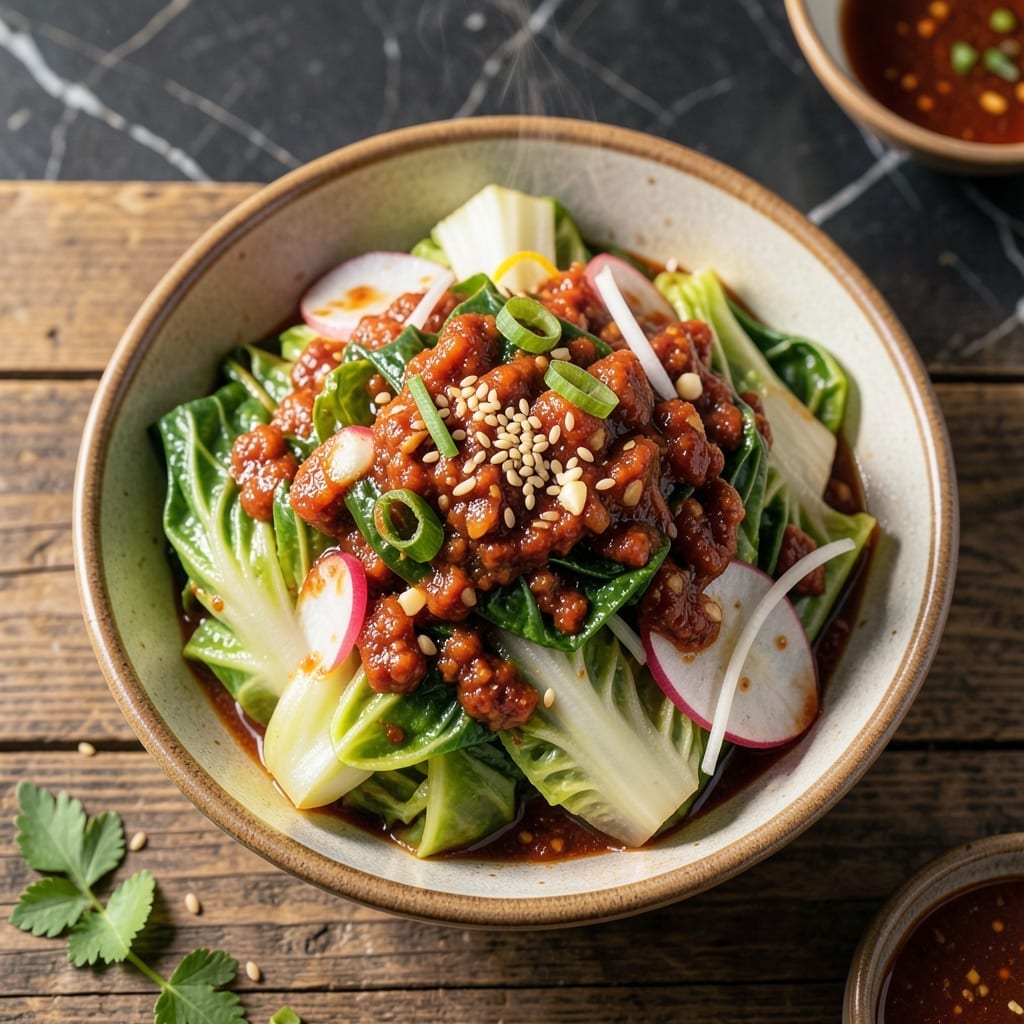
This vegan kimchi delivers the same bold, tangy flavor as traditional versions without any fish products. The secret lies in using soy sauce as a umami-rich substitute.
Through careful fermentation, you’ll achieve that perfect balance of spicy, sour, and complex flavors. The process takes patience but rewards with authentic taste.
Ingredients for Kimchi Recipe Without Fish Sauce
Bold, tangy, and packed with vegan umami. Just grab these fresh vegetables and pantry staples.
| Ingredient | Amount | Notes |
|---|---|---|
| Napa Cabbage 🥬 | 2 lb | Cut into quarters, cores removed |
| Daikon Radish 🥕 | 8 oz | Peeled, cut into matchsticks |
| Carrots 🥕 | 2 whole | Julienned or cut into matchsticks |
| Green Onions 🧅 | 6 whole | Cut into 2-inch pieces |
| Garlic Cloves 🧄 | 8 cloves | Minced finely |
| Fresh Ginger 🌿 | 2 tbsp | Peeled and minced |
| Korean Red Pepper Flakes 🌶️ | ½ cup | Gochugaru, adjust for spice preference |
| Soy Sauce 🫒 | 3 tbsp | Low-sodium preferred for umami |
| Rice Flour 🌾 | 2 tbsp | For porridge thickening |
| Sugar 🍚 | 2 tbsp | Organic or turbinado preferred |
| Salt 🧂 | 2 tbsp | Kosher or sea salt |
| Water 💧 | 2 cups | For rice flour porridge |
[recipe_ingredient_scaler]
Napa cabbage is the star here. Look for heads with crisp, tightly packed leaves—avoid any with wilting or brown spots. Most Asian markets carry it, but Whole Foods and well-stocked Kroger stores have it too. The daikon radish should feel firm and heavy for its size (the good stuff, not the rubbery kind). Don’t skip the rice flour—it’s what gives the kimchi that signature slight stickiness.
No gochugaru? Substitute with cayenne and sweet paprika at a 2:1 ratio, but the flavor won’t be as complex. Soy sauce is the umami hero here, but coconut aminos work too (use the same amount). If you’re out of rice flour, all-purpose flour or cornstarch will do in a pinch. The sugar can be swapped for agave or maple syrup—just use 1.5 tbsp instead.
Kimchi ferments at room temp for 1-2 days, then moves to the fridge. It’ll keep for 1 month refrigerated (though it’s best in the first 2 weeks). Pack it into clean jars, leaving 1 inch of headspace—the veggies will release liquid as they ferment.
Why You’ll Love This Recipe
- No Fuss Ferment: I just chop, salt, and pack—the cabbage and radish do the rest of the work overnight.
- Garlic Punch: That mountain of garlic cloves turns every bite into a spicy, tangy explosion.
- Meal Prep Hero: I jar it Sunday and it’s ready for rice bowls, tacos, or straight from the fridge by Wednesday.
- Budget Stretch: Napa cabbage and carrots stay cheap, and one batch fills two big jars for the week.
Step-by-Step Instructions for Kimchi Without Fish Sauce
This method keeps it vegan while delivering that classic tangy, spicy kick everyone loves.
Step 1: Salt and Soak the Vegetables
Cut the 2 lb Napa Cabbage into quarters and remove the cores. Rinse the quarters under cold water, then sprinkle the 2 tbsp Salt between each leaf, focusing on the thick white stems. Place the cabbage in a large bowl, add the 8 oz Daikon Radish, 2 whole Carrots, and 6 whole Green Onions, all cut as specified.
Pour 2 cups Water over the vegetables, ensuring they’re fully submerged. Let this soak at room temperature for 1-2 hours, flipping the cabbage halfway through. You’ll know it’s ready when the thickest stems bend easily without snapping—this means the salt has properly softened the texture.
Step 2: Prepare the Kimchi Paste
Drain the vegetables in a colander and rinse thoroughly under cold water 3-4 times to remove excess salt. Let them drain while you make the paste. In a bowl, whisk the 2 tbsp Rice Flour with 2 cups Water until smooth, then heat in a small saucepan over medium heat.
Stir constantly for 3-4 minutes until it thickens into a thin porridge. Remove from heat and let cool slightly. Add the 0.5 cup Korean Red Pepper Flakes, 3 tbsp Soy Sauce, 2 tbsp Sugar, 8 cloves Garlic Cloves, and 2 tbsp Fresh Ginger. Mix until it forms a vibrant, thick paste with no dry spots.
Step 3: Coat and Pack the Vegetables
Wearing gloves (trust me on this), spread the paste between each cabbage leaf, getting into all the nooks. Toss the daikon, carrots, and green onions in the remaining paste until evenly coated. The paste should cling thickly to every surface—if it seems dry, add a splash of water.
Pack everything tightly into clean glass jars or a large airtight container. Press down firmly to remove air pockets, which can cause mold. Leave 1-2 inches of space at the top—the vegetables will expand as they ferment.
Step 4: Ferment to Perfection
Cover the container loosely (to allow gases to escape) and leave at room temperature for 1-2 days. I start tasting after 24 hours—you want a pleasant tang with a bit of crunch. The kimchi is ready when it has a bright, sour flavor but the cabbage still has a slight bite.
Once it reaches your preferred taste, seal the container tightly and refrigerate. It’ll continue fermenting slowly in the fridge, developing deeper flavor over 1-2 weeks. The soy sauce in the paste ensures it stays vegan while still delivering that essential umami depth.
Pro Tips For Making Kimchi Recipe Without Fish Sauce
- Salt the Cabbage Twice: After the initial salting, rinse and drain the napa cabbage, then give it a second light salting before mixing with other veggies—this ensures even seasoning without overpowering the daikon and carrots.
- Grate the Daikon: I learned this the hard way—thinly grating the daikon radish instead of julienning makes it release moisture faster, which helps the kimchi ferment evenly without a watery mess.
- Skip Raw Garlic: Roast the garlic cloves first or blend them into the paste—raw garlic can get harsh over time and overpower the kimchi’s flavor as it ferments.
- Press Out Extra Water: After salting, squeeze the cabbage and radish hard in a colander for 5 minutes—sounds tedious, but it prevents a soggy batch and keeps the texture crisp.
Pro Cooking Tips for Great kimchi recipe without fish sauce
💡 Master the Fermentation Time
For the best kimchi recipe without fish sauce, fermentation is key. Start with a 1-2 day room-temperature ferment to kickstart the process, then move to the fridge. This slows fermentation while deepening flavors. Aim for 1-2 weeks in the fridge for optimal tang and texture.
✨ Boost Flavor with Umami Alternatives
Since fish sauce is omitted, rely on soy sauce, miso paste, or mushrooms for umami depth. A splash of soy sauce in the brine adds saltiness and complexity, while shiitake mushrooms bring earthy richness. Don’t skip these—they’re flavor game-changers!
🌡️ Control the Salt
Salt is critical for both taste and fermentation. Use fine sea salt and measure precisely—too much can halt fermentation, while too little risks spoilage. A good ratio is 1 tablespoon salt per 2 cups water for the brine. Taste as you go!
🎯 Texture Matters
For crunchy kimchi, massage the cabbage well with salt and let it sit for 30-60 minutes to soften slightly. Rinse thoroughly to remove excess salt, which can make the kimchi tough. Pack the jars tightly to minimize air gaps, ensuring even fermentation.
Nutrition Facts

Trained in classic French technique but raised on slow-cooked ribs and spicy rubs, she blends culinary skill with smoke and soul.
- Recipe for Boneless Pork Chops in Cast Iron Skillet: Sear and Baste to Juicy Perfection - October 3, 2026
- Recipe for Boneless Cross Rib Roast: Slow-Roasted Beef with Herb Crust - October 3, 2026
- Hamburgers in Sauce Recipe Crock Pot: Slow-Cooked Savory Delight - October 3, 2026