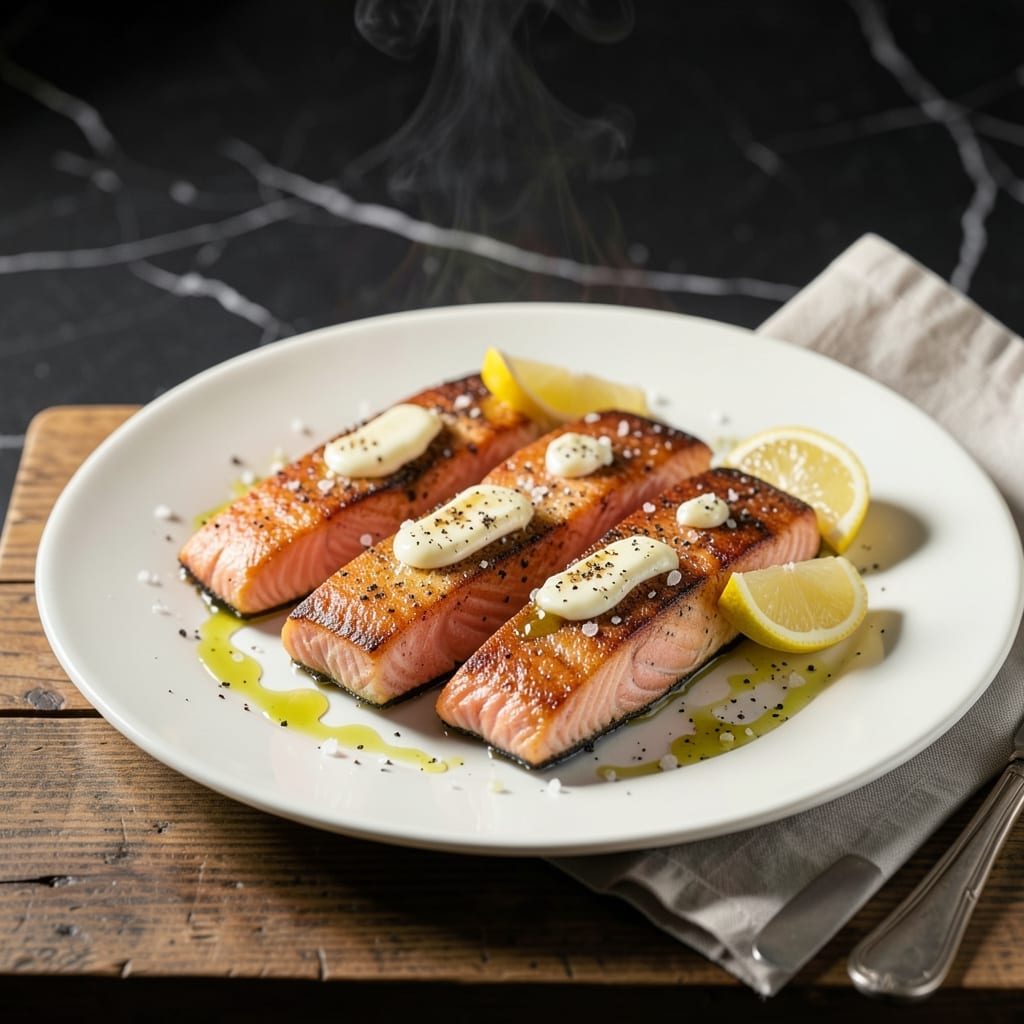
Pan-fried king salmon delivers the perfect balance of crisp skin and buttery flesh with minimal effort. This method highlights the fish’s natural richness without overpowering its delicate flavor.
The key is starting with a cold pan and cooking the salmon skin-side down first. This renders the fat slowly, creating a shatteringly crisp texture while keeping the inside moist and tender. A simple seasoning lets the salmon shine.
In just 10 minutes, you’ll have restaurant-quality results that taste far more impressive than the effort required. The contrast between the crispy skin and velvety flesh makes every bite satisfying.
Serve with lemon wedges and fresh herbs to complement the fish’s natural flavors. This technique works for any salmon fillet.
Ingredients for King Salmon Recipe Pan Fried
Simple, quality ingredients let the salmon’s natural richness shine through beautifully.
| Ingredient | Amount | Notes |
|---|---|---|
| King Salmon Fillets 🐟 | 4 whole | Skin-on, 6-8 oz each |
| Sea Salt 🧂 | 1 ½ tsp | Diamond Crystal preferred |
| Freshly Ground Black Pepper 🌶️ | 1 tsp | Coarse grind for texture |
| Extra-Virgin Olive Oil 🫒 | 3 tbsp | High smoke point variety |
| Unsalted Butter 🧈 | 2 tbsp | For basting while cooking |
| Fresh Lemon 🍋 | 1 whole | Cut into wedges for serving |
| Fresh Dill 🌿 | ¼ cup | Chopped, for garnish |
| Fresh Parsley 🍃 | ¼ cup | Chopped, for garnish |
| Garlic Cloves 🧄 | 2 cloves | Minced, optional for flavor boost |
| Dijon Mustard 🟡 | 1 tsp | For serving, optional |
[recipe_ingredient_scaler]
The salmon quality is non-negotiable here. Wild-caught king salmon from Whole Foods or a trusted fishmonger delivers the best flavor and texture. Look for fillets with vibrant color and a mild, fresh scent—avoid anything with a fishy odor. Skin should be intact and slightly moist. If buying frozen, thaw overnight in the fridge (never at room temperature). The fat content in king salmon makes it ideal for pan-frying.
Out of king salmon? Sockeye or coho work well too (adjust cooking time for thickness). No fresh herbs? Dried dill at one-third the amount, but fresh really elevates the dish. The butter can be swapped for ghee if you want a higher smoke point. For extra crispiness, pat the skin extremely dry before cooking. The lemon wedges aren’t just garnish—they cut through the richness beautifully.
Cook the salmon immediately after purchasing or thawing for best results. Leftovers keep for 2 days in the fridge (reheat gently to avoid drying). For longer storage, freeze raw fillets wrapped tightly in plastic for up to 3 months. Always bring fish to room temperature before cooking for even doneness.
Why You’ll Love This Recipe
- One Pan Wonder: I love that it’s just fillets, salt, pepper, oil, and butter—no fuss, no extra dishes.
- Crispy Golden Bite: The butter and olive oil combo gives that perfect sear with a flaky, rich center.
- Weeknight Hero: Honestly, it’s my go-to for busy evenings when I need something fast but impressive.
- Leftover Luxury: Cold king salmon on a salad the next day? Still ridiculously good.
Step-by-Step Instructions for Pan Fried King Salmon
Master this technique for restaurant-quality results with crisp skin and tender flesh every time.
Step 1: Prep the King Salmon Fillets
Pat the 4 whole King Salmon Fillets completely dry with paper towels. This critical step removes moisture that would otherwise steam the fish instead of crisping the skin. Season both sides evenly with the 1.5 tsp Sea Salt and 1 tsp Freshly Ground Black Pepper.
Let the seasoned fillets rest at room temperature for 10 minutes while you prepare the pan. This allows the salt to penetrate slightly and ensures even cooking. The skin should look slightly tacky from the salt—this helps create that perfect crust.
Step 2: Heat the Pan and Start Cooking
Heat 2 tbsp Extra-Virgin Olive Oil in a large skillet over medium-high heat until it shimmers but doesn’t smoke. Carefully place the fillets skin-side down in the hot oil. Press down gently with a fish spatula for the first 30 seconds to prevent curling and ensure full contact with the pan.
Cook undisturbed for 4-5 minutes until the skin becomes deep golden brown and crisp. Watch for the edges to turn opaque and rise slightly from the heat. Resist the urge to move the fillets—this is when the skin develops its signature crunch.
Step 3: Flip and Baste with Butter
Flip the fillets carefully using a thin spatula. Immediately add the 2 tbsp Unsalted Butter to the pan. As it melts, tilt the pan slightly and spoon the foaming butter over the fillets continuously for 2-3 minutes until the fish is just cooked through.
The butter should turn a light hazelnut color. For extra flavor, add the 2 cloves Garlic Cloves (minced) to the butter during the last 30 seconds of cooking. The fish is done when it flakes easily with a fork and reaches an internal temperature of 145°F.
Step 4: Rest and Garnish
Transfer the fillets to a warm plate, skin-side up. Let them rest for 2 minutes to allow the juices to redistribute. This brief rest ensures the flesh stays moist and tender rather than dry.
Garnish with the 0.25 cup Fresh Dill, 0.25 cup Fresh Parsley, and Fresh Lemon wedges. Serve immediately with the 1 tsp Dijon Mustard on the side for those who want an extra flavor boost. The skin should remain crisp for several minutes after cooking.
Pro Tips For Making King Salmon Recipe Pan Fried
- Dry the Fillets: Pat the king salmon fillets thoroughly dry with paper towels before seasoning—this guarantees a golden, crispy crust instead of a steamed exterior.
- Hot Pan, Cold Oil: Heat the pan until it’s nearly smoking, then add the olive oil; this prevents the salmon from sticking and gives you that perfect sear.
- Skin Side First: Always start with the skin side down in the pan and resist the urge to move it for at least 3-4 minutes—this is how you get that crispy skin everyone loves.
- Bast with Butter: Tilt the pan slightly and spoon the melted butter over the salmon repeatedly during the last 2 minutes of cooking; it adds richness and helps cook the top evenly.
Flavor Customization for This king salmon recipe pan fried
Herb Variations
Swap fresh dill for fresh tarragon—a classic pairing with salmon that adds a subtle anise note. Use the same ¼ cup quantity. For a bolder profile, mix 2 tbsp chopped chives with the parsley garnish. 🌿
Citrus Twists
Add 1 tsp lemon zest to the butter while basting for brighter flavor. Or try orange segments in place of lemon wedges—the sweetness complements the fish beautifully. Always use fresh citrus for maximum impact.
Spice Infusions
For heat, add ½ tsp red pepper flakes to the hot oil before cooking. A pinch of smoked paprika in the seasoning blend gives a subtle BBQ-like depth. These work especially well with the Dijon mustard serving option.
Butter Upgrades
Replace plain butter with garlic-herb compound butter for extra richness. Or brown the 2 tbsp butter first, then add to the pan—its nutty aroma elevates the dish significantly. 🔥
Umami Boosters
A dash of soy sauce in the basting butter adds depth without overpowering. Alternatively, sprinkle 1 tsp toasted sesame seeds over the finished fillets. Both pair surprisingly well with the natural salmon flavors.
Simple Elegance
For a restaurant-style finish, drizzle 1 tsp high-quality olive oil over each serving just before plating. This adds sheen and reinforces the dish’s luxurious quality. The simplest touches often make the biggest difference.
Nutrition Facts
Frequently Asked Questions
What’s the best oil for pan-frying salmon?
Use oils with a high smoke point like extra-virgin olive oil or avocado oil. These handle the medium-high heat without burning. Avoid butter for the initial sear as it can scorch.
How do I prevent the skin from sticking?
Pat the skin completely dry and ensure the pan is hot before adding the fillets. Press down gently with a spatula for the first 30 seconds to create a crisp barrier that releases easily.
Can I use frozen salmon fillets?
Yes, but thaw them overnight in the fridge first. Pat them extremely dry before cooking to avoid steaming. Never cook from frozen, as this leads to uneven doneness.
How can I tell when it’s done?
The fish should flake easily with a fork and reach an internal temperature of 145°F. The edges will turn opaque, and the center will still look slightly translucent when removed from heat.

Trained in classic French technique but raised on slow-cooked ribs and spicy rubs, she blends culinary skill with smoke and soul.
- Recipe for Boneless Pork Chops in Cast Iron Skillet: Sear and Baste to Juicy Perfection - October 3, 2026
- Recipe for Boneless Cross Rib Roast: Slow-Roasted Beef with Herb Crust - October 3, 2026
- Hamburgers in Sauce Recipe Crock Pot: Slow-Cooked Savory Delight - October 3, 2026