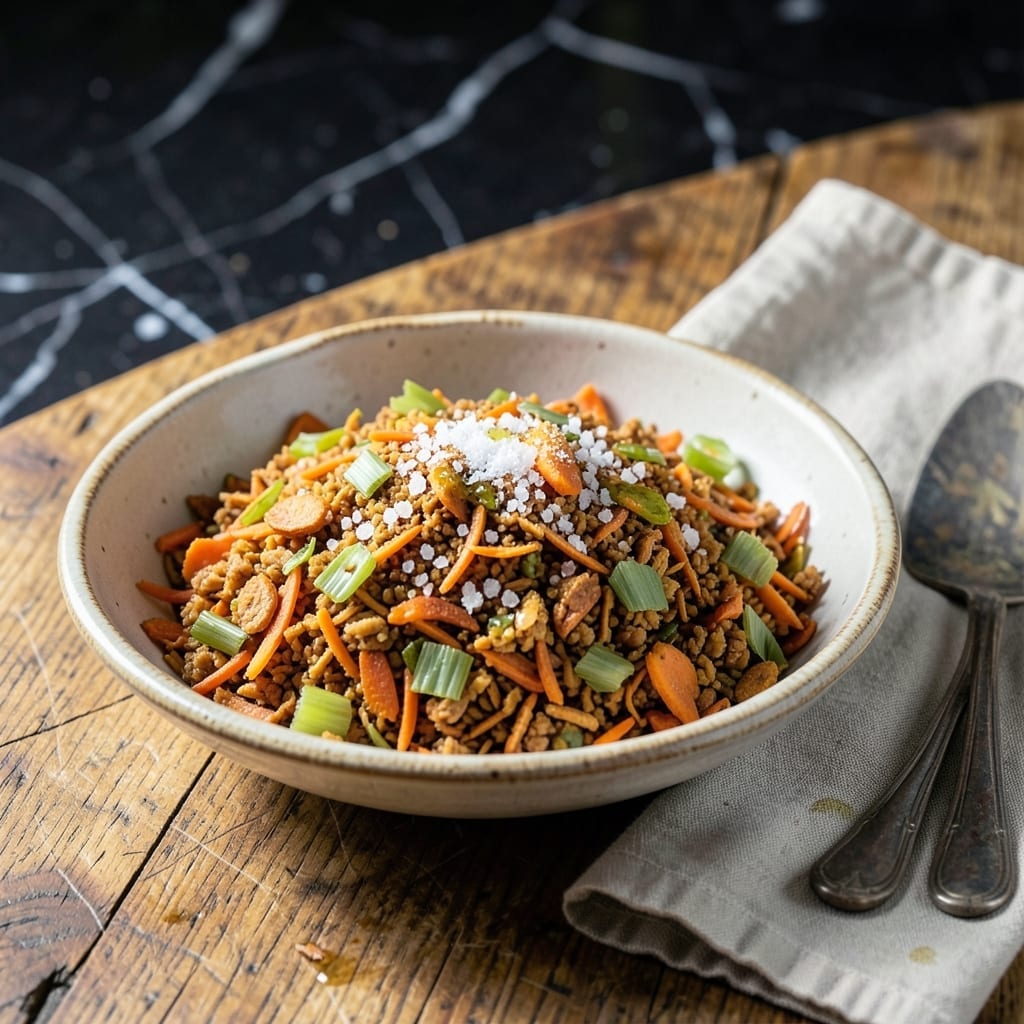
This homemade blend replicates the classic Knorr Vegetable Recipe Mix with simple pantry staples and dehydrated vegetables for consistent flavor in soups, stews, and casseroles.
With just tablespoons of herbs and spices, this versatile seasoning delivers the same savory depth without preservatives, ready to transform any dish instantly.
Ingredients for Knorr Vegetable Recipe Mix
Pantry staples and dehydrated vegetables recreate this savory seasoning blend with precision and depth.
| Ingredient | Amount | Notes |
|---|---|---|
| Dehydrated Onion Flakes 🧅 | 2 tbsp | Uniformly dried for best texture |
| Dehydrated Carrot Flakes 🥕 | 1 tbsp | Fine grind preferred |
| Dehydrated Celery Flakes 🌿 | 1 tbsp | Small pieces for even distribution |
| Salt 🧂 | 2 tbsp | Fine table salt for blending |
| Sugar 🍚 | 1 ½ tbsp | White granulated for consistency |
| Monosodium Glutamate 🧂 | 1 tsp | Optional for umami depth |
| Dried Parsley Flakes 🍃 | 1 tbsp | Bright green color preferred |
| Ground Black Pepper 🌶️ | ½ tsp | Freshly ground for potency |
| Celery Seed 🌿 | ½ tsp | Whole seeds for freshness |
| Paprika 🌶️ | ½ tsp | Sweet or mild variety |
[recipe_ingredient_scaler]
For optimal quality, source dehydrated vegetables from bulk food sections at stores like WinCo Foods or Natural Grocers—these maintain better flavor and color than pre-packaged options. The salt should be fine-grained table salt to ensure even distribution throughout the mix. Monosodium glutamate, while optional, adds the signature umami depth found in the original Knorr blend.
No dehydrated vegetables on hand? Freeze-dried alternatives work in a pinch, though they may require grinding to match the fine texture. For a cleaner label, omit the MSG entirely—the flavor will be slightly milder but still robust. The paprika can be swapped for smoked paprika for a deeper, more complex profile. Sugar substitutes like coconut sugar may alter the final color slightly.
Store this blend in an airtight container in a cool, dark place. It maintains peak potency for 6-12 months. For extended shelf life, consider adding a silica gel packet to absorb any moisture. This mix is ready to use whenever your dish needs a savory boost.
Why You’ll Love This Recipe
- No Chop Needed: I just add water to those dehydrated onion, carrot, and celery flakes—no knife or cutting board in sight.
- Rich Savory Depth: The mix of sweet sugar and salt with those veggies gives a surprisingly deep, savory flavor that tastes homemade.
- Soups to Casseroles: I toss it into soups, rice, or even meatloaf—works everywhere I need a quick veggie boost.
- Pantry Lifesaver: Honestly, it’s my $2 backup plan for busy nights when fresh veggies run out.
Step-by-Step Instructions for Homemade Vegetable Seasoning Mix
Combine these dehydrated vegetables and spices precisely for a balanced flavor profile in every batch.
Step 1: Measure and Prepare Dry Ingredients
Begin by gathering all the dry components. Measure out the 2 tbsp Dehydrated Onion Flakes, ensuring they are uniformly dried for optimal texture. Add the 1 tbsp Dehydrated Carrot Flakes with a fine grind, as this ensures even distribution throughout the mix.
Next, include the 1 tbsp Dehydrated Celery Flakes, which should be in small pieces to blend seamlessly with the other ingredients. These three dehydrated vegetables form the aromatic base of your seasoning.
Step 2: Combine Salty and Sweet Elements
Add the 2 tbsp Salt, using fine table salt for consistent blending. This provides the essential salinity that enhances all the other flavors in the mix. Follow this with the 1.5 tbsp Sugar, using white granulated sugar for reliable sweetness and texture.
The balance between salt and sugar is crucial. The salt intensifies the savory notes, while the sugar rounds out the overall flavor profile, preventing it from becoming overly sharp or one-dimensional.
Step 3: Incorporate Umami and Herbal Notes
Stir in the 1 tsp Monosodium Glutamate for umami depth. This ingredient acts as a flavor enhancer, elevating the natural tastes of the vegetables and spices. Then, add the 1 tbsp Dried Parsley Flakes, preferring bright green flakes for visual appeal and fresh flavor.
These components add complexity. The monosodium glutamate deepens the savory base, while the parsley contributes a subtle herbal note that complements the vegetable foundation.
Step 4: Finish with Spices and Final Blending
Add the 0.5 tsp Ground Black Pepper, ensuring it is freshly ground for maximum potency. Include the 0.5 tsp Celery Seed, using whole seeds for the most robust flavor. Finally, incorporate the 0.5 tsp Paprika, opting for a sweet or mild variety to add color and a hint of warmth.
Transfer all ingredients to an airtight container. Shake or stir thoroughly to ensure even distribution. Store in a cool, dry place to maintain freshness and preserve the blend’s vibrant flavors.
Pro Tips For Making Knorr Vegetable Recipe Mix
- Rehydrate First: Stir the mix into 1/4 cup hot water and let it sit for 3-5 minutes before adding to your dish—I learned this the hard way after biting into crunchy onion flakes too many times.
- Skip the Boil: Add the mix at the end of cooking instead of the beginning to preserve the veggies’ texture and color, especially for soups or casseroles.
- Balance the Salt: Taste before adding extra salt—the mix already contains plenty, and I’ve ruined a few pots of soup by over-seasoning without checking first.
- Boost with Fresh: Toss in a handful of fresh chopped celery or carrots along with the mix for a brighter, more vibrant flavor—sounds simple, but it actually changes the outcome.
Health Benefits of These Flavors
Nutrient-Packed Base
Dehydrated vegetables like onion, carrot, and celery retain most of their vitamins and minerals during drying. These provide fiber, vitamin A, and antioxidants that support immune function and overall health. 💪
Low-Calorie Flavor Boost
This seasoning adds bold flavor with minimal calories—just 5-10 calories per teaspoon. It’s an excellent way to enhance dishes without adding significant fat, sugar, or sodium when used mindfully.
Herbal Benefits
Parsley in the mix offers more than color—it’s rich in vitamin K and vitamin C. Meanwhile, paprika provides a dose of antioxidants like capsaicin, which may support metabolism.
Reduced Additives
Homemade blends let you control additives. By omitting preservatives and using natural ingredients, you create a cleaner, more wholesome alternative to store-bought versions. No artificial flavors or colors here!
Balanced Electrolytes
The salt in this mix provides essential electrolytes like sodium, which helps maintain fluid balance. Just
Versatile Wellness
Whether sprinkled on roasted veggies or stirred into soups, this creation encourages home cooking. That means more control over ingredients and fewer processed foods in your diet. 🌱
Nutrition Facts
Frequently Asked Questions
Can I use fresh vegetables instead of dehydrated?
No, fresh vegetables contain moisture that would cause spoilage. Dehydrated versions ensure a long shelf life and proper texture for the blend.
How long does this homemade mix last?
Stored in an airtight container in a cool, dark place, it maintains peak flavor for 6-12 months. Add a silica gel packet to extend freshness.
Is this blend suitable for low-sodium diets?
You can reduce or omit the salt entirely. The other spices and dehydrated vegetables still provide robust flavor without excess sodium.
What dishes work best with this seasoning?
It’s perfect for soups, stews, casseroles, and roasted vegetables. Sprinkle 1-2 teaspoons per pound of meat or serving of veggies for balanced flavor.

Trained in classic French technique but raised on slow-cooked ribs and spicy rubs, she blends culinary skill with smoke and soul.
- Recipe for Boneless Pork Chops in Cast Iron Skillet: Sear and Baste to Juicy Perfection - October 3, 2026
- Recipe for Boneless Cross Rib Roast: Slow-Roasted Beef with Herb Crust - October 3, 2026
- Hamburgers in Sauce Recipe Crock Pot: Slow-Cooked Savory Delight - October 3, 2026