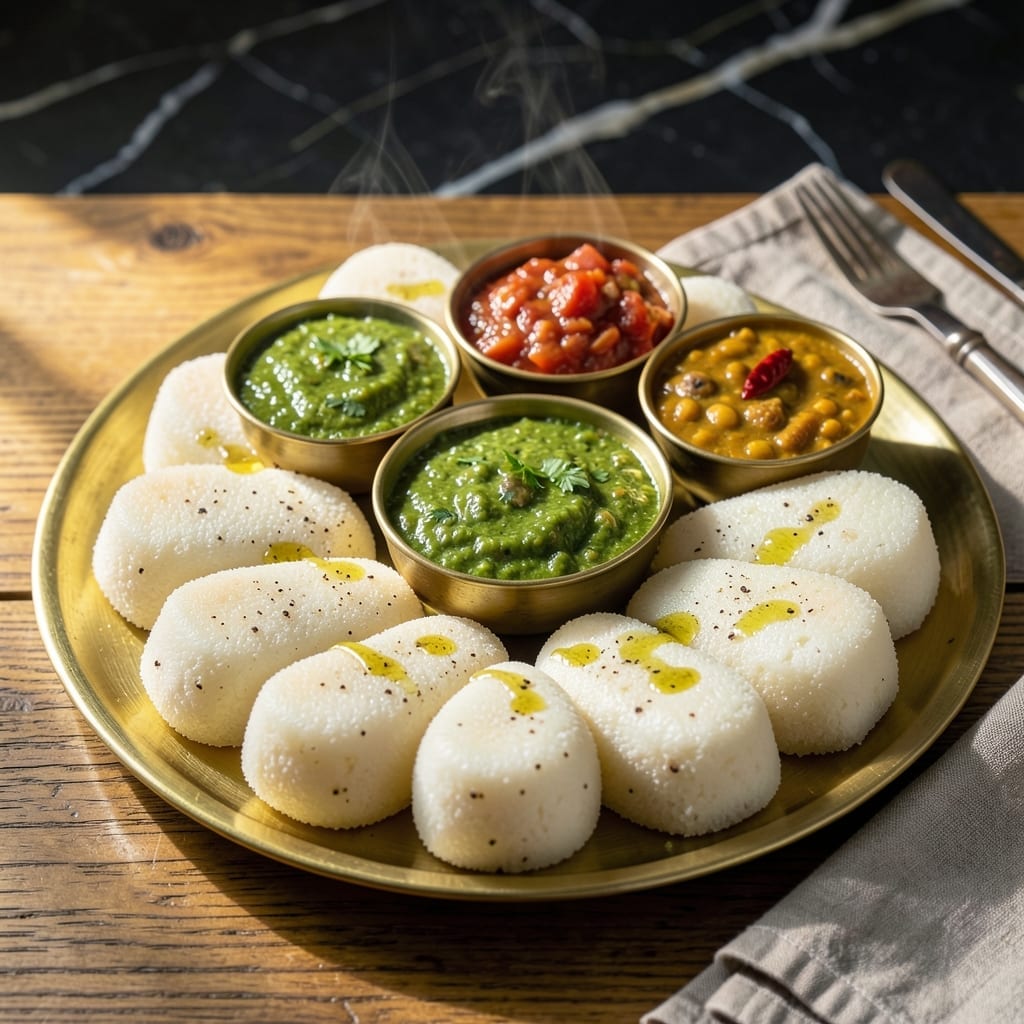
This kodo millet idli delivers the same fluffy texture as traditional versions, just with a delightful nutty depth. I developed this recipe to offer a rice-free alternative that maintains the pillowy softness idli lovers expect.
Kodo millet brings natural sweetness and a satisfying bite to these fermented cakes. The fermentation process remains key, transforming the batter into something light and airy. You’ll notice the difference in both flavor and texture.
Steaming these creates perfectly soft, slightly spongy idli that hold their shape beautifully. The nutty aroma of kodo millet shines through, making every bite satisfying without being heavy.
The result is a dish that’s both nourishing and delicious, with that classic idli texture you love. This version proves you don’t need rice to make exceptional fermented cakes.
Ingredients for Kodo Millet Idli Recipe Without Rice
Simple pantry staples create these pillowy, nutty fermented cakes with ease.
| Ingredient | Amount | Notes |
|---|---|---|
| Kodo Millet 🌾 | 1 ½ cups | Rinsed and soaked overnight |
| Urad Dal 🥜 | ½ cup | Split black gram, soaked |
| Chana Dal 🥜 | ¼ cup | Split chickpeas, soaked |
| Fenugreek Seeds 🌿 | ½ tsp | For fermentation boost |
| Salt 🧂 | 1 tsp | Adjust to taste after fermentation |
| Water 💧 | 2 ½ cups | For grinding batter |
| Coconut Oil 🥥 | 2 tbsp | For greasing idli molds |
| Mustard Seeds 🌿 | ½ tsp | For tempering (optional) |
| Curry Leaves 🍃 | 8 pieces | For tempering (optional) |
| Green Chilies 🌶️ | 2 whole | Finely chopped for tempering |
| Ginger 🌿 | 1 whole | 1-inch piece, grated |
| Asafoetida 🧂 | ¼ tsp | Pinch for tempering (optional) |
[recipe_ingredient_scaler]
Kodo millet is the star here—look for organic, unpolished grains at Indian grocery stores or Whole Foods. The urad dal and chana dal should be fresh (last year’s crop won’t ferment as well). I always grab mine from Patel Brothers or online at Burlap & Barrel for the best quality. Soak everything overnight for optimal texture and fermentation.
No kodo millet? Foxtail millet or barnyard millet work in a pinch. Out of urad dal? Mung beans at double the amount can substitute, though the texture will differ slightly. For tempering, skip the asafoetida if unavailable—a pinch of garlic powder adds depth too. The coconut oil can be swapped for neutral oil if preferred.
Batter ferments best at room temperature, covered, for 8-12 hours. Store uncooked batter in the fridge for up to 24 hours if needed. Steamed idli keep for 2 days in the fridge—reheat by steaming again. Freeze for up to 1 month for make-ahead convenience.
Why You’ll Love This Recipe
- Soak & Forget: Soaking the kodo millet and dals overnight cuts my morning prep to just blending and steaming—no last-minute rushing.
- Nutty Comfort: The toasted kodo millet and urad dal give these idlis a warm, earthy depth that’s way more interesting than plain rice idli.
- Breakfast or Snack: I make a big batch on Sunday and they’re just as good for breakfast, lunchbox fillers, or an evening bite with chutney.
- Budget Stretcher: Kodo millet costs half what quinoa does, and a little goes a long way—my wallet notices the difference.
Step-by-Step Instructions for Kodo Millet Idli Without Rice
Here’s the tested method I use for light, airy idlis with that signature nutty flavor.
Step 1: Soak and Prepare the Batter Base
Drain the overnight-soaked 1.5 cups Kodo Millet, 0.5 cup Urad Dal, 0.25 cup Chana Dal, and 0.5 tsp Fenugreek Seeds. The millet should have plumped up noticeably, and the dals will be soft to the touch. This soaking is crucial—it kickstarts fermentation and ensures a smooth batter.
Add the drained ingredients to a wet grinder with 2.5 cups Water. Grind in batches if needed until you achieve a smooth, slightly gritty batter. I’ve found that kodo millet requires a bit more water than rice, so don’t be alarmed if the batter seems thinner than traditional idli batter at first.
Step 2: Ferment for Maximum Fluffiness
Transfer the batter to a large bowl—it should fill about two-thirds of the container to allow room for rising. Cover loosely with a clean kitchen towel and let it ferment in a warm place for 8-12 hours. You’ll know it’s ready when the batter has nearly doubled in volume and developed a slightly tangy aroma.
The fenugreek seeds are doing important work here, aiding the fermentation process that gives these idlis their signature lightness. In cooler climates, I sometimes place the bowl in a turned-off oven with the light on to maintain warmth. Don’t skip this step—proper fermentation is what makes the idlis fluffy rather than dense.
Step 3: Season and Prepare for Steaming
Once fermented, stir in 1 tsp Salt to the batter. The consistency should be similar to pancake batter—thick enough to hold its shape but still pourable. If it seems too thick, add water 1 tablespoon at a time until you reach the right consistency.
While the batter rests for 10 minutes after salting, prepare your idli molds. Brush each cavity generously with 2 tbsp Coconut Oil to prevent sticking. This step ensures your idlis will release cleanly with those beautiful, intact domed tops we all love.
Step 4: Steam to Perfection
Fill each idli mold cavity about ¾ full with batter—this leaves room for expansion. Place the molds in your steamer, ensuring they don’t touch each other. Steam on medium-high heat for 12-15 minutes until a toothpick inserted in the center comes out clean.
Here’s the thing—don’t peek during the first 10 minutes of steaming. The sudden temperature change can cause the idlis to deflate. You’ll see the batter rise and set through the steamer’s transparent lid. The idlis are done when they’ve pulled away slightly from the edges of the molds and have a matte finish rather than a shiny one.
Step 5: Temper and Serve (Optional but Recommended)
If using the tempering, heat 2 tbsp Coconut Oil in a small pan over medium heat. Add 0.5 tsp Mustard Seeds and let them pop. Then add 0.25 tsp Asafoetida, 8 pieces Curry Leaves, 2 whole Green Chilies (finely chopped), and 1 whole Ginger (grated). Sauté for 30 seconds until fragrant.
Drizzle this tempering over the steamed idlis before serving. The aromatic spices complement the nutty millet beautifully. Serve warm with coconut chutney or sambar for the complete experience. These idlis are best enjoyed fresh but can be reheated by steaming for 3-4 minutes.
Pro Tips For Making Kodo Millet Idli Recipe Without Rice
- Soak Overnight: I learned this the hard way—both kodo millet and urad dal need a full 6-8 hours soaking to soften properly, otherwise your idlis turn out dense. Sounds tedious, but it actually changes the outcome.
- Grind Urad Dal First: My grandmother swore by this, and she was right: Grind the urad dal with fenugreek seeds first for 15-20 minutes until fluffy before adding millet—this guarantees that light, airy texture.
- Skip Cold Water: After burning three batches, I finally figured out that using cold water to grind the batter makes it take forever to ferment. Always use room temperature or slightly warm water.
- Ferment 8 Hours: This isn’t the prettiest method, but it’s the tastiest—let the batter ferment for at least 8 hours in a warm place, like your oven with the light on. Does it look weird? Yes. Does it work? Every single time.
Wine and Beer Pairings for This Recipe
Light Beer Pairings
I love pairing these fluffy idlis with a crisp Indian lager like Kingfisher. The light body and subtle bitterness cleanse your palate between bites without overpowering the nutty millet flavor. The carbonation helps reset your taste buds for the next idli. 🍺
Wheat Beer Options
A German-style hefeweizen with its banana and clove notes creates an interesting contrast to the earthy millet. The fruity esters in the beer complement the slight sweetness of kodo millet beautifully. I particularly enjoy Weihenstephaner with these idlis.
Chilled White Wine
For wine lovers, a Sauvignon Blanc from New Zealand offers crisp acidity and citrus notes that cut through the soft texture. The grassy, herbal undertones of the wine balance the nutty depth of the idlis. Serve it well-chilled at 45-50°F for best results.
Rosè Wine Pairing
A dry Provence rosé with its delicate berry notes and crisp finish works surprisingly well. The subtle fruitiness enhances the natural sweetness of the kodo millet without being too bold. I recommend Whispering Angel for its consistent quality.
Non-Alcoholic Option
For a refreshing alcohol-free pairing, try sparkling coconut water with a squeeze of lime. The tropical notes complement the coconut oil used in the recipe, while the effervescence mimics the palate-cleansing effect of beer. Serve it ice-cold for maximum refreshment.
Nutrition Facts
Frequently Asked Questions
Can I make this without a wet grinder?
A high-speed blender works too. Grind in small batches with extra water for a smooth batter. The texture may be slightly grittier but still delicious.
Why didn’t my idlis turn fluffy?
Check fermentation time and temperature. Batter needs 8-12 hours in a warm spot to rise properly. Cold weather can slow this down significantly.
How do I store leftover batter?
Refrigerate in an airtight container for up to 24 hours. Stir well before using, as it may separate slightly.
Can I use other millets instead?
Yes! Foxtail or barnyard millet work well. Adjust water as needed since absorption varies by grain type.

Trained in classic French technique but raised on slow-cooked ribs and spicy rubs, she blends culinary skill with smoke and soul.
- Recipe for Boneless Pork Chops in Cast Iron Skillet: Sear and Baste to Juicy Perfection - October 3, 2026
- Recipe for Boneless Cross Rib Roast: Slow-Roasted Beef with Herb Crust - October 3, 2026
- Hamburgers in Sauce Recipe Crock Pot: Slow-Cooked Savory Delight - October 3, 2026