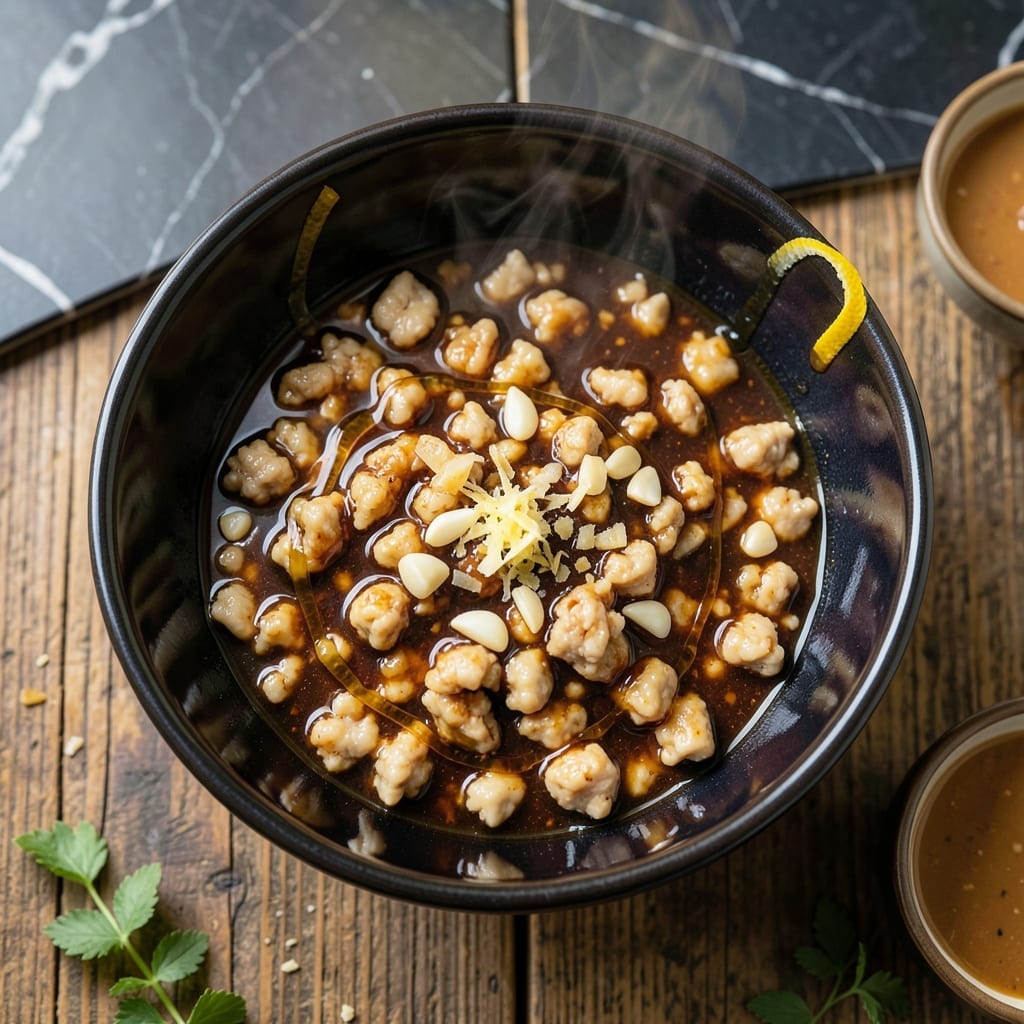
This marinade transforms ordinary chicken into restaurant-quality Korean barbecue with its sweet-savory depth of flavor. The balance of soy, garlic, and brown sugar creates a sticky glaze that caramelizes beautifully on the grill.
I developed this recipe after studying traditional Korean techniques, blending them with my pitmaster experience. It delivers authentic taste without complicated steps or hard-to-find ingredients.
Ingredients for Korean Barbecue Chicken Marinade
Nine ingredients create that signature sweet-savory depth with minimal effort required.
| Ingredient | Amount | Notes |
|---|---|---|
| Soy Sauce 🥢 | ½ cup | Low-sodium preferred for balance |
| Brown Sugar 🍚 | ½ cup | Packed, light or dark |
| Garlic Cloves 🧄 | 6 cloves | Minced finely for even distribution |
| Fresh Ginger 🌿 | 1 tbsp | Grated or minced |
| Sesame Oil 🫒 | 2 tbsp | Toasted for authentic flavor |
| Rice Vinegar 🍶 | 2 tbsp | Balances sweetness with acidity |
| Gochujang 🌶️ | 2 tbsp | Korean red pepper paste |
| Toasted Sesame Seeds 🌰 | 1 tbsp | For garnish and texture |
| Green Onions 🧅 | 3 whole | Thinly sliced for garnish |
[recipe_ingredient_scaler]
The soy sauce is the backbone here. Kikkoman low-sodium gives you clean flavor without overwhelming saltiness. Fresh ginger and garlic are non-negotiable—look for firm, unblemished roots at the grocery store. Asian markets often carry better-quality gochujang (Sempio brand is reliable) if your local store’s selection is limited. Don’t skip the toasting on the sesame oil—it adds a nutty depth that elevates the entire marinade.
No gochujang? Sriracha at half the amount works in a pinch, though the flavor profile shifts slightly. Brown sugar can be swapped for honey or maple syrup, but reduce liquids by 1 tbsp to compensate. For a gluten-free version, tamari instead of soy sauce does the trick. Rice vinegar can be replaced with apple cider vinegar if that’s what you have on hand.
The marinade keeps in the fridge for up to 5 days in an airtight container. For best results, use within 48 hours—the garlic and ginger flavors intensify over time. Freeze in ice cube trays for up to 3 months to have portions ready for quick meals.
Why You’ll Love This Recipe
- Minimal Effort: I just dump soy sauce, brown sugar, garlic, ginger, and sesame oil in a bowl—no fancy techniques required.
- Sweet & Savory: The brown sugar caramelizes while the garlic and ginger pack a serious flavor punch.
- Weeknight Hero: I marinate the chicken in the morning and it’s ready to grill or bake by dinner. (Yes, even on a Tuesday night)
- Budget Stretch: One batch of this marinade transforms cheap chicken thighs into restaurant-worthy meals.
Step-by-Step Instructions for Korean Barbecue Chicken Marinade
This professional method ensures maximum flavor penetration and perfect caramelization when grilled.
Step 1: Create the Aromatic Base
In a medium mixing bowl, I begin by combining the 6 cloves Garlic Cloves and 1 tbsp Fresh Ginger. I mince the garlic finely and grate the ginger to ensure even distribution throughout the marinade, which prevents any overpowering bites of whole spices.
This aromatic foundation is crucial as it infuses the meat with complex, layered flavors that define authentic Korean barbecue. The fine texture also helps the marinade cling better to the chicken surface.
Step 2: Build the Sweet-Savory Foundation
To the bowl, I add the 0.5 cup Soy Sauce and 0.5 cup Brown Sugar. I use packed brown sugar for its molasses notes which complement the umami of the soy sauce. Whisk these together until the sugar begins to dissolve.
The combination of soy sauce and brown sugar creates that signature sweet-savory balance. I always use low-sodium soy sauce here to control the overall saltiness of the marinade, allowing the other flavors to shine through.
Step 3: Incorporate the Signature Korean Elements
Next, I whisk in the 2 tbsp Gochujang, 2 tbsp Sesame Oil, and 2 tbsp Rice Vinegar. The gochujang adds depth and a subtle heat, while the sesame oil contributes its distinctive nutty aroma that’s essential to Korean flavors.
The rice vinegar serves a dual purpose: it balances the sweetness of the brown sugar and helps tenderize the chicken. I make sure all ingredients are fully emulsified at this stage, creating a smooth, cohesive marinade.
Step 4: Finish and Prepare for Marinating
Finally, I stir in the 1 tbsp Toasted Sesame Seeds and 3 whole Green Onions, thinly sliced. I reserve some sesame seeds and green onions for garnish when serving, as their fresh flavors and textures are best when added at the end.
I transfer the marinade to a resealable bag or airtight container with the chicken, ensuring all pieces are thoroughly coated. For optimal flavor development, I recommend marinating for at least 4 hours, though overnight in the refrigerator yields the most impressive results.
The marinade should appear thick and glossy, with visible specks of garlic, ginger, and sesame seeds. This consistency ensures it will adhere well to the chicken during grilling, creating that coveted caramelized crust.
Pro Tips For Making Korean Barbecue Chicken Marinade
- Marinate overnight: I learned this the hard way—less than 4 hours and the garlic and ginger don’t fully infuse into the chicken. 12 hours is the sweet spot for that deep, sticky flavor.
- Grate the ginger: Sounds tedious, but finely grated ginger blends into the marinade better than minced, so you don’t get fibrous bits stuck to your chicken.
- Skip the metal bowl: Soy sauce and acidity from the ginger can react with metal, giving your marinade a weird taste. Glass or plastic is the way to go.
- Bloom the aromatics: Sauté the garlic and ginger in sesame oil for 30 seconds before mixing into the marinade—it wakes up the flavors and makes the final dish taste richer.
Regional Styles of This Dish
Seoul Street Food
In bustling Seoul markets, this marinade appears on chimaek (chicken and beer) stalls, where vendors brush it on skewers over charcoal. They often add 1 tsp toasted sesame oil extra for shine. The smell of sizzling chicken draws crowds instantly. 🗺️
Busan Spicy Kick
Coastal Busan prefers a bolder version with 1 tbsp extra gochujang and 1 tsp gochugaru (Korean chili flakes). The maritime humidity makes the heat more pronounced. I tried this after a motorcycle ride along the coast—pure fire!
Jeonju Royal Cuisine
Jeonju’s royal kitchen tradition uses 2 tbsp honey instead of brown sugar for a smoother sweetness. They also infuse the marinade with 1 tsp grated Asian pear for natural tenderizing. This version feels almost elegant.
Gangwon Mountain Style
In the colder Gangwon region, they add 1 tbsp pine nut powder for richness and warmth. The mountain herbs they forage remind me of my own wild herb hunts. It adds a nutty depth that’s perfect for winter grilling.
Modern Fusion
Korean-American BBQ joints in LA often mix in 1 tbsp miso paste for umami depth. This fusion style bridges traditional and contemporary flavors beautifully. I first tasted this at a local competition—it won best sauce!
Nutrition Facts
Frequently Asked Questions
How long should I marinate the chicken?
For best flavor, marinate for at least 4 hours. Overnight in the fridge gives the deepest flavor penetration, but even 2 hours works in a pinch.
Can I substitute honey for brown sugar?
Yes! Use 2/3 cup honey and reduce other liquids by 1 tbsp to maintain the right consistency. The flavor will be slightly different but still delicious.
What if I don’t have gochujang?
Use 1 tbsp sriracha for heat, though it won’t have the same fermented depth. For authentic flavor, Korean markets often carry it, or order online.
How do I store leftover marinade?
Keep in an airtight container in the fridge for up to 5 days. For longer storage, freeze in ice cube trays for up to 3 months.

Trained in classic French technique but raised on slow-cooked ribs and spicy rubs, she blends culinary skill with smoke and soul.
- Recipe for Boneless Pork Chops in Cast Iron Skillet: Sear and Baste to Juicy Perfection - October 3, 2026
- Recipe for Boneless Cross Rib Roast: Slow-Roasted Beef with Herb Crust - October 3, 2026
- Hamburgers in Sauce Recipe Crock Pot: Slow-Cooked Savory Delight - October 3, 2026