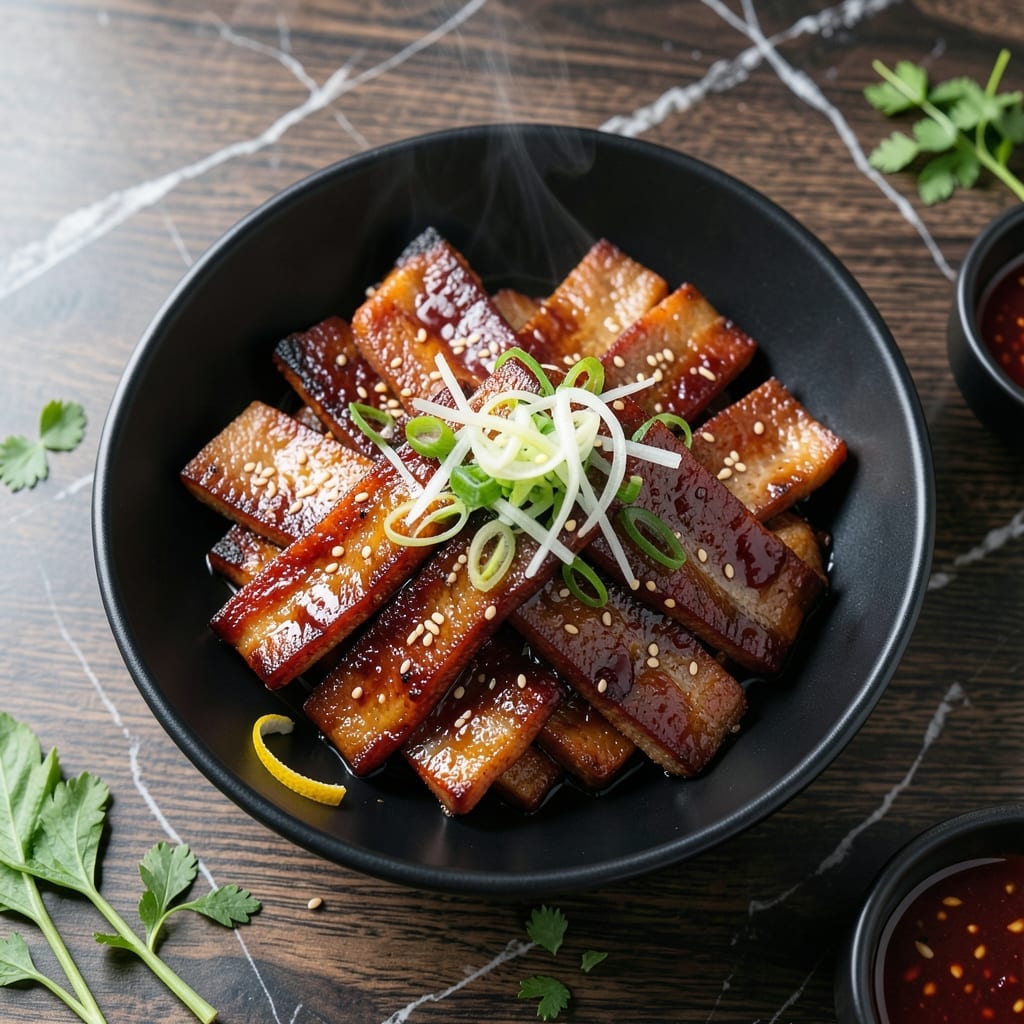
This recipe brings Korean BBQ flavors to a portable, protein-packed snack. The marinade combines sweet, spicy, and savory notes for a bold taste experience.
Thinly sliced pork absorbs the flavors deeply during marination, then dries into chewy, umami-rich jerky. A perfect fusion of tradition and convenience.
Ingredients for Korean Barbecue Pork Jerky
Thin pork slices meet bold marinade for portable Korean BBQ flavor. Sweet, spicy, umami-packed.
| Ingredient | Amount | Notes |
|---|---|---|
| Pork Shoulder 🥩 | 1 ½ lb | Thinly sliced against grain |
| Soy Sauce 🫒 | ½ cup | Low-sodium preferred |
| Brown Sugar 🍚 | ⅓ cup | Packed for sweetness balance |
| Gochujang 🌶️ | 3 tbsp | Korean red pepper paste |
| Sesame Oil 🫒 | 1 tbsp | Toasted for depth |
| Rice Vinegar 🍯 | 2 tbsp | Balances sweetness |
| Garlic Cloves 🧄 | 5 cloves | Minced for marinade |
| Fresh Ginger 🌿 | 1 tbsp | Grated finely |
| Black Pepper 🌶️ | 1 tsp | Freshly ground preferred |
| Sesame Seeds 🌰 | 2 tsp | Toasted for garnish |
| Green Onions 🧅 | 4 whole | Thinly sliced |
| Asian Pear 🍐 | ¼ cup | Pureed for marinade |
[recipe_ingredient_scaler]
The pork is everything here. Pork shoulder offers the perfect fat-to-meat ratio for tender jerky—avoid lean cuts like tenderloin, which dry out. Asian markets often sell pre-sliced meat for bulgogi, saving you time. Request 1/8-inch thick slices if asking the butcher to prep it. Look for well-marbled pieces with vibrant pink color, avoiding anything gray or with an off odor.
No gochujang? Sriracha mixed with miso paste (2:1 ratio) can substitute, though the flavor profile shifts slightly. Honey instead of brown sugar works but reduces the molasses depth. For a gluten-free version, tamari replaces soy sauce. The Asian pear is key for tenderness—grated apple or pineapple juice (2 tbsp) can pinch-hit if unavailable.
Marinate overnight for deepest flavor penetration. Dried jerky keeps in an airtight container at room temperature for 2 weeks, or freeze for 3 months. Refrigerate the marinade if prepping more than 24 hours ahead—flavors meld better cold.
Why You’ll Love This Recipe
- One Pan Wonder: The pork shoulder slices marinate in soy sauce and gochujang while I do the dishes—minimal cleanup, maximum flavor.
- Sweet Heat Perfection: Brown sugar and gochujang create that sticky, smoky-sweet kick I crave in every bite.
- Trail or Table: Honestly, I pack this for hikes or serve it as an appetizer—it’s just as good in a lunchbox as it is on a platter.
- Budget Stretcher: Pork shoulder is affordable, and this makes enough to last me all week without breaking the bank.
Step-by-Step Instructions for Korean Barbecue Pork Jerky
Master the technique for chewy, flavorful jerky with perfect texture and balanced sweet-spicy notes.
Step 1: Prepare the Marinade Base
In a large bowl, combine the 0.5 cup soy sauce, 0.33 cup brown sugar, 3 tbsp gochujang, 1 tbsp sesame oil, and 2 tbsp rice vinegar. Whisk vigorously until the mixture is smooth and the brown sugar fully dissolves—this ensures even flavor distribution throughout the pork.
Add the 5 cloves minced garlic, 1 tbsp grated fresh ginger, and 1 tsp black pepper. Stir to incorporate. The aromatic compounds in garlic and ginger will infuse the marinade, creating a complex flavor profile that defines authentic Korean barbecue.
Step 2: Incorporate the Asian Pear and Marinate
Stir in the 0.25 cup pureed Asian pear. This natural tenderizer breaks down proteins in the pork, ensuring the jerky remains tender while drying. The pear also adds subtle sweetness that complements the gochujang’s heat.
Place the 1.5 lb thinly sliced pork shoulder in a resealable plastic bag or shallow dish. Pour the marinade over the pork, ensuring every slice is fully coated. Seal and refrigerate for at least 4 hours, or preferably overnight. The longer marination time allows the flavors to penetrate deeply.
Step 3: Dry the Jerky
Preheat your oven to its lowest setting, ideally 170-180°F. Remove the pork slices from the marinade, shaking off excess liquid, and arrange them on wire racks set over baking sheets. This setup allows air circulation on both sides for even drying.
Bake for 3-4 hours, flipping the slices halfway through. The jerky is done when it’s dry to the touch but still pliable, with no visible moisture. Check for doneness by testing a piece—it should bend slightly without snapping.
Step 4: Finish and Store
Once dried, transfer the jerky to a wire rack to cool completely. This prevents condensation from forming, which could make the jerky sticky. As it cools, the texture will firm up further.
Sprinkle with the 2 tsp toasted sesame seeds and thinly sliced 4 whole green onions while still warm. Store in an airtight container in the refrigerator for up to 2 weeks, or freeze for longer storage. The flavors will continue to develop over time.
Pro Tips For Making Korean Barbecue Pork Jerky
- Slice Against Grain: Cut the pork shoulder into thin strips against the grain—I learned this the hard way after chewing through tough jerky my first three attempts.
- Marinate Overnight: Give the pork at least 12 hours in the soy sauce, brown sugar, and gochujang mix. Sounds tedious, but it actually changes the outcome.
- Low and Slow: Dry at 175°F for 4-6 hours, not hotter. After burning a batch at 200°F, I finally figured out patience is non-negotiable.
- Use Fresh Gochujang: That old jar in the back of your fridge won’t cut it—fresh gochujang makes a real difference in both color and spicy-sweet depth.
Common Mistakes When Making korean barbecue pork jerky
Skipping the Marinating Step
I’ve seen too many cooks rush this step, but 4 hours minimum is crucial. The Asian pear and gochujang need time to break down proteins and infuse flavor. Skipping it results in tough, bland jerky. 🔥
Uneven Slicing
Thickness matters—1/8-inch slices dry evenly. If some pieces are thicker, they’ll stay moist inside while thinner ones over-dry. Ask your butcher for consistent cuts, or freeze the pork slightly for easier slicing.
Overcrowding the Racks
Space the slices ½ inch apart on wire racks. Crowding traps moisture, leading to steaming instead of drying. Use multiple racks or bake in batches for perfect texture.
Wrong Oven Temperature
Too hot, and the outside burns before the inside dries. Too cool, and it takes forever. Aim for 170-180°F—any higher risks tough, overcooked edges. A thermometer is essential here.
Skipping the Cooling Step
Letting jerky cool completely on a rack prevents condensation. If you pack it warm, moisture builds up, making it sticky or mold-prone. Patience pays off with chewy, shelf-stable results.
Ignoring the Grain
Slice against the grain for tender jerky. Cutting with the grain makes it tough and hard to chew. Look for the muscle fibers and slice perpendicular to them. 💡
Nutrition Facts
Frequently Asked Questions
What’s the best cut of pork for jerky?
Pork shoulder is ideal for its fat marbling, which keeps the jerky tender. Avoid lean cuts like tenderloin, as they dry out too much.
Can I use a dehydrator instead of an oven?
Yes! Set your dehydrator to 160-165°F and dry for 4-6 hours, checking for doneness. This method often yields more consistent results.
How do I adjust the spice level?
Reduce or omit the gochujang for milder heat. For extra spice, add 1 tsp red pepper flakes or a dash of hot sauce to the marinade.
Why did my jerky turn out tough?
Tough jerky usually means over-drying or slicing with the grain. Slice against the grain and remove from heat as soon as it’s pliable.

Trained in classic French technique but raised on slow-cooked ribs and spicy rubs, she blends culinary skill with smoke and soul.
- Recipe for Boneless Pork Chops in Cast Iron Skillet: Sear and Baste to Juicy Perfection - October 3, 2026
- Recipe for Boneless Cross Rib Roast: Slow-Roasted Beef with Herb Crust - October 3, 2026
- Hamburgers in Sauce Recipe Crock Pot: Slow-Cooked Savory Delight - October 3, 2026