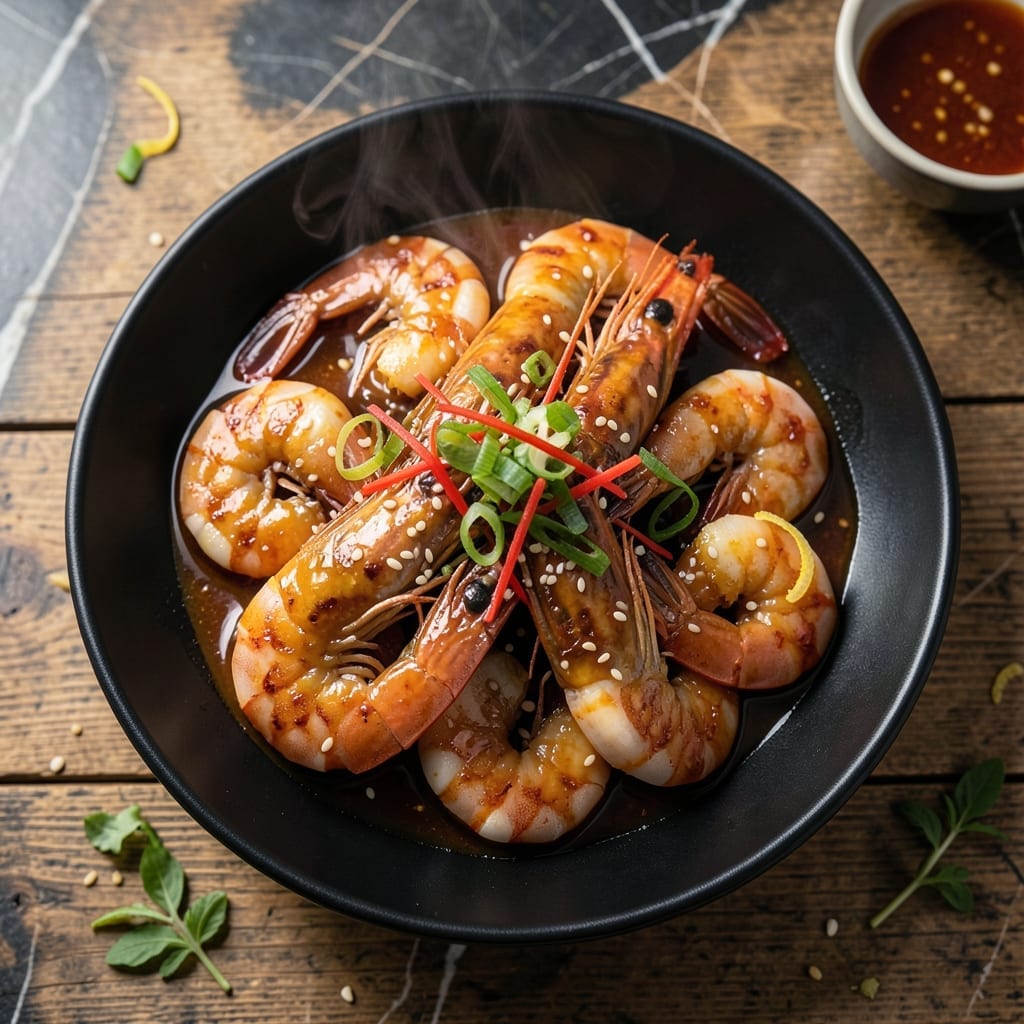
This shrimp brings bold Korean flavors to your grill with a perfect balance of spicy gochujang, sweet honey, and smoky depth. My French training taught me how to elevate these marinades.
You’ll achieve restaurant-quality results with simple ingredients and a hot fire. The glaze caramelizes beautifully, creating sticky, finger-licking goodness on every bite.
Ingredients for Korean Barbecue Shrimp
Bold Korean flavors meet fresh shrimp for a grill masterpiece. Nothing complicated, just delicious.
| Ingredient | Amount | Notes |
|---|---|---|
| Large Shrimp 🦐 | 1 ½ lb | Peeled, deveined, tails on |
| Gochujang 🌶️ | ¼ cup | Korean red chili paste |
| Honey 🍯 | 3 tbsp | For balancing heat |
| Soy Sauce 🫒 | 3 tbsp | Low-sodium preferred |
| Sesame Oil 🫒 | 1 tbsp | Toasted for depth |
| Rice Vinegar 💧 | 1 tbsp | For acidity balance |
| Garlic Cloves 🧄 | 4 cloves | Minced finely |
| Fresh Ginger 🌿 | 1 tbsp | Grated or minced |
| Green Onions 🧅 | 4 whole | Thinly sliced for garnish |
| Sesame Seeds 🌾 | 2 tsp | Toasted for garnish |
| Vegetable Oil 🫒 | 2 tbsp | For grilling prevention |
| Brown Sugar 🍚 | 2 tbsp | Light or dark works |
| Red Pepper Flakes 🌶️ | ½ tsp | Adjust to heat preference |
[recipe_ingredient_scaler]
The shrimp is the star here. Wild-caught Gulf shrimp if you can find them—they’ve got the best texture and flavor. Size matters: 16-20 count per pound works perfectly for grilling (big enough to handle the heat, small enough to cook through fast). Whole Foods and Trader Joe’s usually have good frozen options. Thaw them in cold water with a pinch of salt to keep them firm.
No gochujang? Sriracha plus a dash of miso paste gets you close (start with 2 tbsp Sriracha and 1 tsp miso). Honey can be swapped for maple syrup or agave—just know the flavor shifts slightly. If you’re avoiding gluten, tamari instead of soy sauce works. The sesame oil is non-negotiable though—it’s what gives that authentic nutty aroma.
Marinate the shrimp for exactly 30 minutes—any longer and the acid in the vinegar starts breaking them down. Leftovers? Rare, but they’ll keep 2-3 days in the fridge. Reheat gently in a pan to avoid overcooking. (Frozen shrimp loses its snap, so eat fresh if possible.)
Why You’ll Love This Recipe
- I’ll be real: these shrimp taste even better the next day, straight from the fridge or tucked into a quick rice bowl.
- One Pan Wonder: I just toss the shrimp with gochujang, honey, and soy sauce—no marinating, no fuss.
- Sweet and Spicy: That sticky glaze from the honey and gochujang clings to every shrimp, balancing heat with just the right sweetness.
- Weeknight Hero: Honestly, it’s my go-to for busy Tuesdays—ready faster than takeout and way more satisfying.
Step-by-Step Instructions for Korean Barbecue Shrimp
Here’s how to achieve perfectly caramelized shrimp with a spicy-sweet glaze every time.
Step 1: Prepare the Gochujang Marinade
In a medium bowl, whisk together the 0.25 cup Gochujang, 3 tbsp Honey, 3 tbsp Soy Sauce, 1 tbsp Sesame Oil, 1 tbsp Rice Vinegar, minced 4 cloves Garlic Cloves, and 1 tbsp Fresh Ginger until smooth. This creates a glossy, well-balanced marinade with depth of flavor.
The Gochujang provides the signature Korean heat, while the Honey and Brown Sugar you’ll add next tame the spice. I like to press the minced Garlic Cloves and Fresh Ginger against the bowl sides to release their full aroma.
Stir in the 2 tbsp Brown Sugar and 0.5 tsp Red Pepper Flakes until fully dissolved. The Brown Sugar adds caramel notes, and the Red Pepper Flakes enhance the gochujang’s heat. Let this sit for 5 minutes to meld the flavors.
Step 2: Marinate the Shrimp
Place the 1.5 lb Large Shrimp in a large bowl and pour the marinade over them. Toss gently but thoroughly to coat every piece. The shrimp should glisten with a thick, ruby-red coating.
Let the shrimp marinate at room temperature for 15-20 minutes. This is the sweet spot—long enough to infuse flavor but not so long that the acid in the marinade starts to “cook” the shrimp. If you prefer a milder flavor, you can reduce this to 10 minutes.
While the shrimp marinates, thinly slice the 4 whole Green Onions and set aside for garnish. This is also a good time to toast the 2 tsp Sesame Seeds in a dry pan over low heat for 2-3 minutes until golden and fragrant.
Step 3: Cook the Shrimp to Perfection
Heat the 2 tbsp Vegetable Oil in a large skillet over medium-high heat until it shimmers. Add the shrimp in a single layer, reserving any excess marinade. Cook for 2-3 minutes per side until the shrimp turn opaque pink with slightly charred edges.
Don’t overcrowd the pan—work in batches if needed. The shrimp should sizzle audibly when they hit the oil. You’ll know they’re ready to flip when the edges start to curl and turn white. Be careful not to overcook; shrimp go from perfect to rubbery in seconds.
Pour in the reserved marinade and cook for an additional 1-2 minutes, stirring constantly, until the sauce thickens into a glossy glaze that clings to the shrimp. The Honey and Brown Sugar will caramelize slightly, creating a beautiful sheen.
Step 4: Garnish and Serve Immediately
Transfer the shrimp to a serving platter and drizzle any remaining sauce from the pan over the top. Immediately sprinkle with the toasted 2 tsp Sesame Seeds and sliced 4 whole Green Onions.
The contrast of the green onions‘ fresh bite against the rich, spicy-sweet shrimp is what makes this dish special. Serve with steamed rice to soak up every last bit of that incredible sauce.
This dish is best enjoyed immediately while the shrimp are hot and the sauce is still glossy. The flavors will intensify as it sits, but the texture is ideal right out of the pan.
Pro Tips For Making Korean Barbecue Shrimp
- Dry the Shrimp: Pat the shrimp completely dry before marinating—watery shrimp steams instead of searing, and the sauce won’t cling as well. I learned this the hard way after ending up with a watery, sad pan.
- Bloom the Gochujang: Cook the gochujang in sesame oil for 30 seconds before adding other sauce ingredients. This wakes up the flavors and removes the raw, bitter edge.
- Skip the Overcrowding: Cook shrimp in a single layer with space between each piece. Crowding drops the pan temp, and you’ll get rubbery shrimp instead of that perfect char.
- Use Room-Temp Shrimp: Let the shrimp sit out for 15 minutes before cooking. Cold shrimp seizes up and cooks unevenly—this small step actually changes the outcome.
Common Mistakes When Making This Recipe
Over-Marinating Shrimp
The acid in rice vinegar and gochujang can break down shrimp proteins if left too long. Stick to the 15-20 minute marinating window. I learned this the hard way at my first BBQ competition—mushy shrimp don’t impress judges. 💡
Crowding the Pan
Shrimp release moisture as they cook, so overcrowding causes steaming instead of searing. Cook in batches if needed, giving each piece 1 inch of space. This ensures that beautiful caramelization you’re after.
Use a large skillet or cast-iron pan for best results. The wide surface area helps evaporate excess liquid quickly.
Skipping High Heat
Medium-high heat is essential for achieving that sticky, glossy glaze. If your pan isn’t hot enough, the shrimp will absorb the marinade instead of caramelizing it. Listen for that sizzle when the shrimp hit the oil.
Neglecting Garnishes
The toasted sesame seeds and green onions aren’t just for looks—they add texture and freshness that balance the rich, spicy sauce. Toast the seeds in a dry pan for 2-3 minutes until golden.
Overcooking Shrimp
Shrimp cook fast—2-3 minutes per side max. They’re done when opaque with a slight curl. Remove them just before they’re fully cooked, as residual heat will finish the job. 🔥
Nutrition Facts
Frequently Asked Questions
Can I use frozen shrimp for this?
Yes, but thaw them properly first. Place frozen shrimp in cold water with a pinch of salt for 15-20 minutes. Pat dry before marinating to ensure the glaze sticks.
How spicy is this dish?
The heat level is moderate from the gochujang and red pepper flakes. Reduce or omit the flakes for milder flavor. For extra heat, add 1/2 tsp more gochujang.
What can I serve with these shrimp?
Steamed jasmine rice is classic to soak up the sauce. For a full meal, add quick-pickled cucumbers or a crisp lettuce wrap. The cool crunch balances the spicy-sweet flavors perfectly.
Can I make this ahead?
Marinate the shrimp up to 1 hour ahead, but cook just before serving. The sauce thickens best fresh and shrimp are ideal hot off the pan. Leftovers keep 2 days refrigerated.

Trained in classic French technique but raised on slow-cooked ribs and spicy rubs, she blends culinary skill with smoke and soul.
- Recipe for Boneless Pork Chops in Cast Iron Skillet: Sear and Baste to Juicy Perfection - October 3, 2026
- Recipe for Boneless Cross Rib Roast: Slow-Roasted Beef with Herb Crust - October 3, 2026
- Hamburgers in Sauce Recipe Crock Pot: Slow-Cooked Savory Delight - October 3, 2026