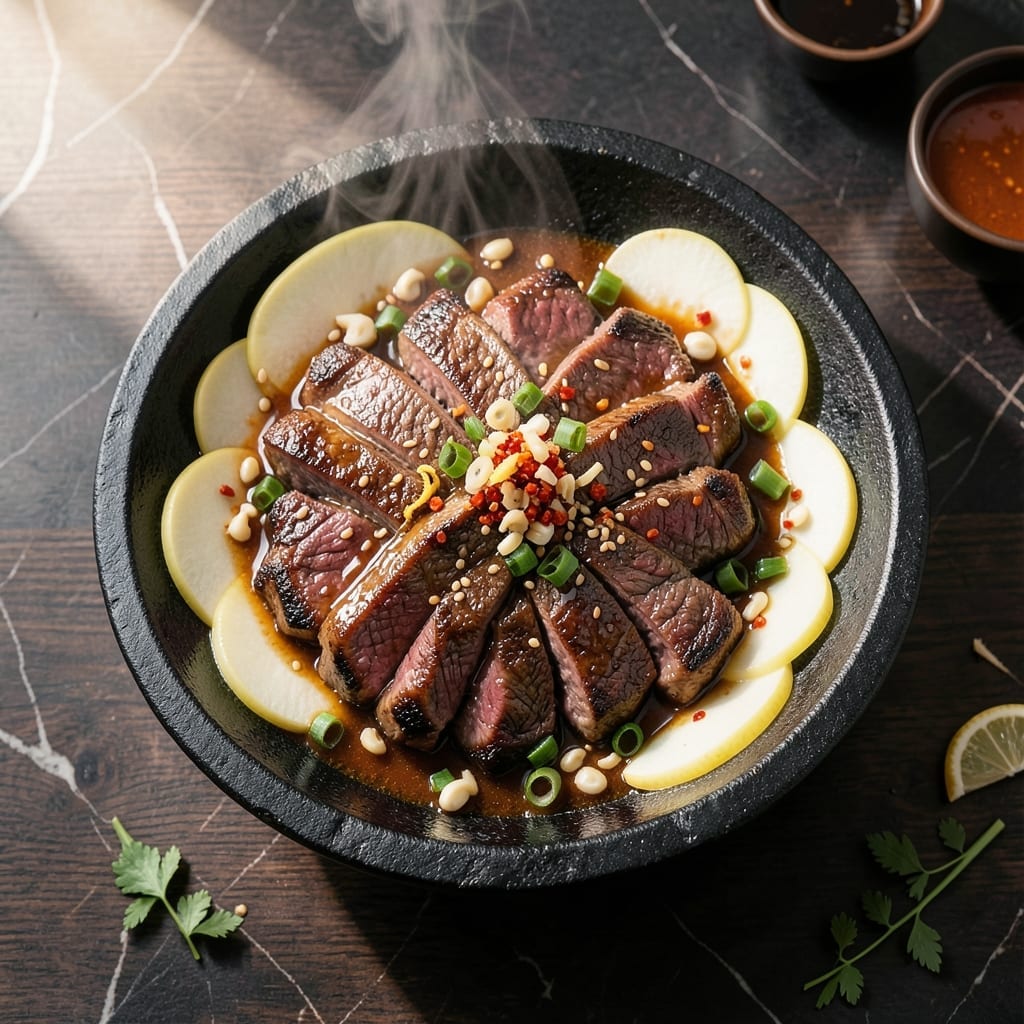
This recipe transforms ordinary steak into a flavor-packed Korean BBQ experience with a marinade that tenderizes while infusing bold sweet and savory notes.
Traditional techniques and simple ingredients create a grill masterpiece that delivers authentic taste with minimal effort and maximum impact.
Ingredients for Korean Barbecue Steak
Transform steak night with bold Korean flavors using these carefully selected ingredients.
| Ingredient | Amount | Notes |
|---|---|---|
| Ribeye Steak 🥩 | 2 lb | 1-inch thick, well-marbled |
| Soy Sauce 🥫 | ½ cup | Low-sodium preferred for balance |
| Brown Sugar 🍚 | ¼ cup | Light or dark, packed |
| Asian Pear 🍐 | ½ whole | Peeled, seeded, finely grated |
| Garlic Cloves 🧄 | 6 cloves | Minced for maximum flavor infusion |
| Fresh Ginger 🌿 | 1 tbsp | Peeled, finely grated |
| Sesame Oil 🫒 | 2 tbsp | Toasted for depth |
| Rice Vinegar 🍶 | 2 tbsp | Unseasoned variety |
| Gochujang 🌶️ | 2 tbsp | Korean chili paste, adjust to spice preference |
| Green Onions 🧅 | 4 whole | Thinly sliced for garnish |
| Sesame Seeds 🌾 | 2 tbsp | Toasted for garnish |
| Vegetable Oil 🫒 | 1 tbsp | High smoke point for grilling |
| Black Pepper 🌶️ | 1 tsp | Freshly ground preferred |
| Red Pepper Flakes 🌶️ | ½ tsp | Optional for additional heat |
[recipe_ingredient_scaler]
The ribeye is non-negotiable for optimal marbling and tenderness. Whole Foods or Costco offer high-quality cuts with consistent fat distribution. For the Asian pear, Korean markets often carry the most authentic varieties (the Bosc pear works in a pinch). Kikkoman soy sauce remains the gold standard for reliability, while Sempio gochujang delivers authentic fermented heat.
No Asian pear? Substitute with grated apple or pineapple for similar enzymatic tenderizing. Tamari at half the quantity replaces soy sauce if gluten-free is required. Gochujang can be swapped with 1 tbsp sriracha plus 1 tbsp miso paste. The brown sugar is flexible—honey or maple syrup work at a 1:1 ratio if preferred.
Marinate for 4-12 hours for peak flavor penetration. Completed dish keeps 3-4 days refrigerated or freezes well for 3 months. Toast sesame seeds just before serving for maximum aroma and crunch.
Why You’ll Love This Recipe
- I’ll be real: leftovers taste even better sliced thin over rice the next day, and the marinade doubles as a quick stir-fry sauce.
- One-Pan Wonder: I marinate the ribeye with soy sauce, brown sugar, and Asian pear in the morning, then grill it straight from the fridge at night—no extra prep.
- Sweet-Savory Magic: The brown sugar caramelizes with the garlic and pear, giving the steak this sticky, umami-rich crust that’s ridiculously good.
- Crowd Pleaser: Honestly, it’s my go-to for summer cookouts or even a fancy weeknight dinner—everyone from picky kids to meat lovers asks for seconds.
Step-by-Step Instructions for Korean Barbecue Steak
Master the marinade and grilling process for tender, flavorful steak with authentic Korean character.
Step 1: Prepare the Marinade Base
In a large bowl, combine the 0.5 cup Soy Sauce, 0.25 cup Brown Sugar, 2 tbsp Sesame Oil, 2 tbsp Rice Vinegar, and 2 tbsp Gochujang. Whisk vigorously until the brown sugar fully dissolves and the mixture becomes smooth and glossy.
The gochujang will create a thick, slightly chunky consistency at first. Keep whisking until it’s fully incorporated—the sauce should look uniform with no streaks of oil separating. This base delivers the perfect balance of salty, sweet, and spicy that defines Korean barbecue.
Step 2: Incorporate Fresh Aromatics
Add the 0.5 whole Asian Pear (finely grated), 6 cloves Garlic Cloves (minced), and 1 tbsp Fresh Ginger (finely grated) to the marinade. Stir well to distribute these fresh ingredients evenly throughout the mixture.
The grated Asian pear acts as a natural tenderizer due to its enzyme content, while the garlic and ginger infuse the marinade with complex, aromatic depth. The mixture should become slightly frothy from the pear’s natural juices.
Step 3: Marinate the Ribeye Steak
Place the 2 lb Ribeye Steak in a resealable plastic bag or shallow dish and pour the marinade over it, ensuring all surfaces are coated. Sprinkle with 1 tsp Black Pepper and 0.5 tsp Red Pepper Flakes (if using) for additional heat. Seal and refrigerate for at least 4 hours, or ideally overnight.
For maximum flavor penetration, massage the marinade into the meat every few hours. The ribeye’s marbling will absorb these bold flavors beautifully, while the acid in the vinegar and enzymes in the pear will begin to tenderize the flesh.
Step 4: Grill to Perfection
Remove the steak from the marinade (reserve marinade for basting) and pat dry with paper towels. Brush lightly with 1 tbsp Vegetable Oil to prevent sticking. Preheat your grill to high heat (about 450°F).
Grill the steak for 4-5 minutes per side for medium-rare, or until you achieve a dark, caramelized crust with internal temperature of 130-135°F. Baste with reserved marinade during the last minute of cooking, then discard any remaining marinade that touched raw meat.
Step 5: Rest and Garnish
Transfer the steak to a cutting board and let it rest for 10 minutes to allow the juices to redistribute. Slice thinly against the grain for maximum tenderness.
Garnish with 4 whole Green Onions (thinly sliced) and 2 tbsp Sesame Seeds (toasted). The green onions add freshness while the sesame seeds provide nutty crunch. Serve immediately while the edges are still sizzling.
Pro Tips For Making Korean Barbecue Steak
- Sear on High: Crank the heat to high for the first 2 minutes per side to get that caramelized crust on the ribeye—this locks in the marinade flavors from the soy and brown sugar.
- Grate the Pear: Sounds weird, but it works: grating the Asian pear instead of slicing it blends seamlessly into the marinade, tenderizing the meat more effectively.
- Skip the Overcrowding: I learned this the hard way—cook the steaks in batches if needed, because crowding the pan steams them instead of searing, and you lose that crispy edge.
- Rest Before Slicing: Give the ribeye a solid 5-10 minutes under foil after cooking; it redistributes the juices so they don’t all spill out when you cut into it.
Make-Ahead Tips for This Recipe
Marinade Prep Ahead
I always mix the marinade up to 24 hours in advance. The flavors meld beautifully as the Asian pear and brown sugar dissolve fully. Store it in an airtight container in the fridge—glass jars work best to prevent any plastic absorption of aromas.
Steak Marination
For optimal tenderness, marinate the ribeye for at least 4 hours, but I’ve found 12 hours is the sweet spot. Use a resealable bag to save space in the fridge, and turn it occasionally to ensure even coating. The enzymes in the pear work their magic over time.
Portion Control
If prepping for a crowd, divide the 2 lb ribeye into individual portions before marinating. This ensures quicker, more even flavor penetration. I recommend 8-ounce portions for consistent cooking and easy serving.
Garnish Prep
Toast the 2 tbsp sesame seeds and slice the green onions the day before. Store them separately in small containers—the seeds stay crisp, and the onions retain their freshness. Just combine them right before serving.
This step saves precious minutes when you’re ready to plate. 💡
Freezing Options
Marinated steak freezes well for up to 3 months. Vacuum-seal it with the marinade for best results, or use heavy-duty freezer bags. Thaw overnight in the fridge before grilling for the best texture.
Day-Of Efficiency
On grilling day, take the steak out of the fridge 30 minutes before cooking to bring it to room temperature. This ensures even cooking and a perfect sear. Trust me, it makes all the difference. 🔥
Nutrition Facts
Frequently Asked Questions
What can I use instead of Asian pear?
Substitute with grated apple or pineapple for similar tenderizing. These fruits contain enzymes that mimic the pear’s effect on the meat.
How long should I marinate the steak?
Marinate for 4-12 hours for best flavor penetration. Overnight works too, but don’t exceed 24 hours as the acid can start to break down the meat fibers too much.
Can I use a different cut of steak?
Yes, but ribeye’s marbling makes it ideal. For budget options, try flank or skirt steak, but reduce marinating time to 2-4 hours as they’re more tender.
What’s the best way to slice the steak?
Always slice against the grain into 1/4-inch thick pieces. This shortens muscle fibers for maximum tenderness. Use a sharp knife for clean cuts.

Trained in classic French technique but raised on slow-cooked ribs and spicy rubs, she blends culinary skill with smoke and soul.
- Recipe for Boneless Pork Chops in Cast Iron Skillet: Sear and Baste to Juicy Perfection - October 3, 2026
- Recipe for Boneless Cross Rib Roast: Slow-Roasted Beef with Herb Crust - October 3, 2026
- Hamburgers in Sauce Recipe Crock Pot: Slow-Cooked Savory Delight - October 3, 2026