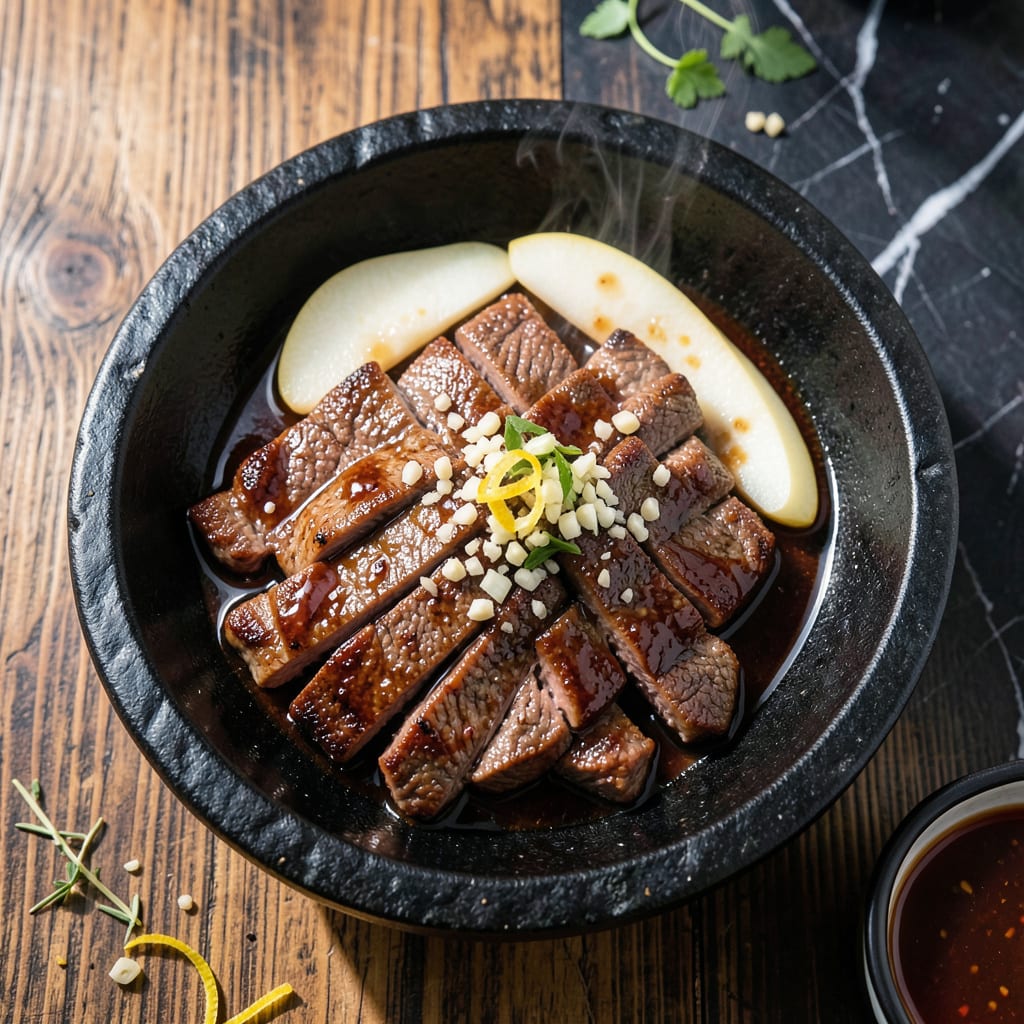
This traditional dish transforms thin-sliced beef through a sweet soy marinade that delivers tender, flavorful results. The key lies in the balance of sugar and soy, creating caramelization that forms those coveted charred edges.
I’ve perfected the technique of marinating the meat for at least 2 hours to allow the flavors to penetrate deeply. The result is beef that’s simultaneously tender and packed with complex, savory-sweet notes.
Ingredients for Korean Bbq Beef Bulgogi
Thin-sliced ribeye meets a sweet soy marinade for tender, caramelized beef with charred edges.
| Ingredient | Amount | Notes |
|---|---|---|
| Ribeye Steak 🥩 | 1 ½ lb | Thinly sliced against grain |
| Soy Sauce 🫒 | ½ cup | Low-sodium preferred for balance |
| Brown Sugar 🍚 | ⅓ cup | Light or dark variety |
| Asian Pear 🍐 | ½ whole | Peeled and finely grated |
| Garlic Cloves 🧄 | 6 cloves | Minced for marinade depth |
| Fresh Ginger 🌿 | 1 tbsp | Finely grated or minced |
| Sesame Oil 🫒 | 2 tbsp | Toasted variety for aroma |
| Rice Wine 🍶 | ¼ cup | Mirin or dry sherry substitute |
| Green Onions 🧅 | 4 whole | Thinly sliced for garnish |
| Toasted Sesame Seeds 🌰 | 2 tbsp | For finishing garnish |
| Black Pepper 🌶️ | 1 tsp | Freshly ground for best flavor |
| Vegetable Oil 🫒 | 2 tbsp | High smoke point for searing |
| White Onion 🧅 | ½ whole | Thinly sliced for cooking |
| Carrot 🥕 | 1 whole | Julienned or thinly sliced |
[recipe_ingredient_scaler]
The ribeye is non-negotiable for optimal marbling and tenderness. Whole Foods or Korean markets often carry pre-sliced beef for bulgogi, saving time. Look for well-marbled cuts—this fat renders down during cooking, basting the meat from within. The Asian pear is the secret tenderizer; Bosc or Anjou varieties work if Asian pears aren’t available (trust me on this one).
No Asian pear? Kiwi or pineapple (fresh, not canned) contains similar enzymes for tenderizing. Low-sodium soy sauce prevents the dish from becoming overwhelmingly salty—Kikkoman or San-J Tamari are reliable. For a gluten-free version, coconut aminos substitute beautifully. The rice wine can be omitted in a pinch, though the acidity balances the sweetness.
Marinate the beef for 2-12 hours for maximum flavor penetration. Cooked bulgogi keeps in the fridge for 3-4 days or can be frozen for 2 months. Slice the green onions and toast the sesame seeds just before serving to preserve their freshness and crunch.
Why You’ll Love This Recipe
- Minimal Chopping Required: The Asian pear grates right in for sweetness, and the ribeye slices fast—no fancy knife skills needed.
- Sweet-Savory Magic: Brown sugar caramelizes with soy sauce and garlic, creating that sticky, crave-worthy glaze bulgogi is famous for.
- Meal Prep Star: I make a big batch on Sunday and it tastes just as good in lettuce wraps, rice bowls, or straight from the fridge.
- Leftovers Disappear: Honestly, I’ve never had any last longer than 24 hours—my family fights over the last bits for lunch.
Step-by-Step Instructions for Korean BBQ Beef Bulgogi
Master the marinade technique and achieve perfectly charred, tender beef with these precise steps.
Step 1: Prepare the Marinade Base
In a large bowl, whisk together the 0.5 cup soy sauce, 0.33 cup brown sugar, 0.25 cup rice wine, and 2 tbsp sesame oil until the sugar fully dissolves. This balance of salty, sweet, and umami forms the foundation of authentic bulgogi flavor.
Add the 6 cloves minced garlic, 1 tbsp grated fresh ginger, and 1 tsp black pepper. The ginger and garlic should be finely minced to distribute evenly throughout the marinade and infuse every bite of the beef.
Step 2: Incorporate the Fruit and Vegetables
Peel and finely grate the 0.5 whole Asian pear directly into the marinade. The natural enzymes in the pear will tenderize the beef while adding subtle sweetness. Stir well to combine all the wet ingredients and fruit.
Thinly slice the 0.5 whole white onion and 1 whole julienned carrot. Add these to the marinade along with the 1.5 lb thinly sliced ribeye steak. Use your hands to massage the marinade into the beef, ensuring every slice is thoroughly coated.
Step 3: Marinate for Maximum Flavor Penetration
Cover the bowl with plastic wrap and refrigerate for at least 4 hours, or preferably overnight. This extended marination allows the flavors to deeply penetrate the beef while the acidity from the pear and rice wine begins to break down the fibers.
For even better results, I recommend flipping the bowl halfway through the marination period to redistribute the liquid and ensure all pieces remain submerged. The beef should become noticeably more tender and take on a darker, more translucent appearance.
Step 4: Cook to Charred Perfection
Heat 2 tbsp vegetable oil in a large skillet over medium-high heat until shimmering. Working in batches to avoid crowding, add the marinated beef along with the onions and carrots. Cook undisturbed for 2-3 minutes until the edges develop a deep brown crust.
Stir and cook for another 3-4 minutes until the beef is cooked through and the vegetables have softened. The beef should be caramelized at the edges with a glossy coating from the marinade reduction. Avoid overcooking—bulgogi is best when the beef retains some chew.
Step 5: Garnish and Serve Immediately
Transfer the cooked beef and vegetables to a serving platter. Drizzle any remaining pan juices over the top for extra flavor. Thinly slice the 4 whole green onions and sprinkle them over the beef along with the 2 tbsp toasted sesame seeds.
Serve the bulgogi hot with steamed rice and your choice of banchan. The ideal texture features tender, slightly charred beef with a sweet-savory glaze and the bright contrast of the green onion garnish. The sesame seeds add the final aromatic touch that completes this classic dish.
Pro Tips For Making Korean Bbq Beef Bulgogi
- Freeze the Ribeye: Pop the ribeye in the freezer for 30 minutes before slicing—it firms up just enough to cut paper-thin strips without mangling the meat.
- Grate the Pear: Sounds weird, but grated Asian pear blends into the marinade better than purée and breaks down the meat fibers for extra tenderness.
- Skip the Overcrowd: I learned this the hard way—cook the beef in batches so it sears instead of steams, or you’ll end up with soggy, gray bulgogi.
- Toast the Garlic: Lightly toast the minced garlic in the pan for 10 seconds before adding the beef—it mellows the bite and fills the kitchen with that deep, nutty aroma.
Make-Ahead Tips for This Dish
Marinade Prep Ahead
I always mix the marinade the night before—combine the 0.5 cup soy sauce, 0.33 cup brown sugar, and other wet ingredients in a jar. This saves 10 minutes on cooking day and lets flavors meld overnight in the fridge. 💡
Beef Pre-Slicing
Ask your butcher to thinly slice the 1.5 lb ribeye against the grain when you buy it. Store the pre-sliced beef with the marinade in a zip-top bag. This cuts active prep time to 5 minutes when you’re ready to cook.
Fruit Prep Shortcut
Peel and grate the 0.5 Asian pear the day before and store it in an airtight container with a splash of the rice wine. This prevents browning while keeping the tenderizing enzymes active.
Vegetable Prep
Slice the 0.5 white onion and 1 carrot the morning of cooking. Store them separately in the fridge to maintain crispness. Combine with beef just before marinating to avoid soggy vegetables.
Freezing for Later
Marinated beef freezes beautifully for up to 2 months. Portion into meal-sized bags and freeze flat. Thaw overnight in the fridge before cooking—I’ve found the texture remains perfect. ❄️
Garnish Last
Toast the 2 tbsp sesame seeds and slice the 4 green onions fresh the day of serving. This preserves their texture and vibrant flavor. Keep them in small containers until ready to garnish.
Nutrition Facts

Trained in classic French technique but raised on slow-cooked ribs and spicy rubs, she blends culinary skill with smoke and soul.
- Recipe for Boneless Pork Chops in Cast Iron Skillet: Sear and Baste to Juicy Perfection - October 3, 2026
- Recipe for Boneless Cross Rib Roast: Slow-Roasted Beef with Herb Crust - October 3, 2026
- Hamburgers in Sauce Recipe Crock Pot: Slow-Cooked Savory Delight - October 3, 2026