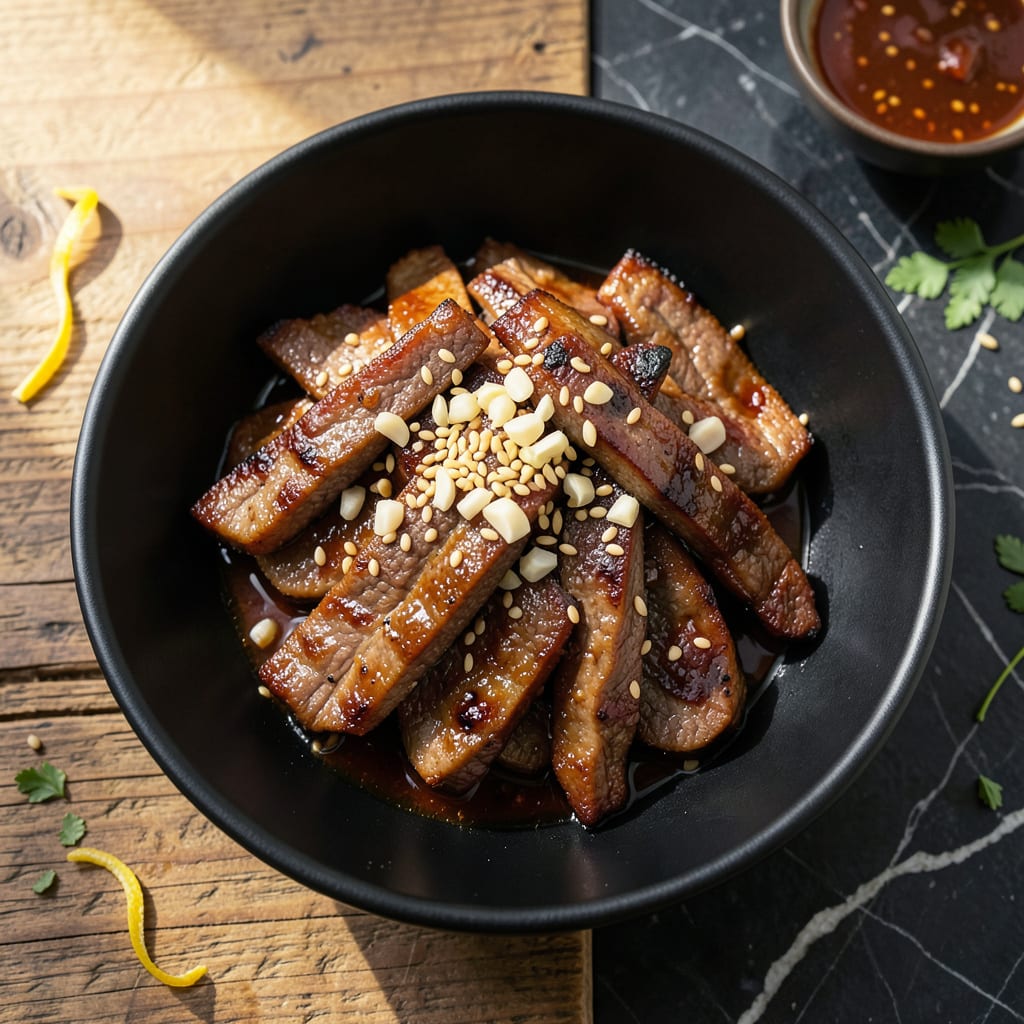
This Korean BBQ beef jerky delivers bold sweet-savory flavor in every chewy bite. The marinade combines soy sauce, brown sugar, and garlic for authentic taste.
Thinly sliced beef absorbs the marinade before drying to perfect chewiness. Great for snacking or packing for on-the-go energy.
Ingredients for Korean Bbq Beef Jerky
Thinly sliced beef meets a bold marinade for authentic Korean BBQ flavor in every bite.
| Ingredient | Amount | Notes |
|---|---|---|
| Beef Top Round 🥩 | 1 ½ lb | Thinly sliced against the grain |
| Soy Sauce 🫙 | ½ cup | Low-sodium preferred for balance |
| Brown Sugar 🍚 | ⅓ cup | Packed, for caramelization |
| Garlic Cloves 🧄 | 6 cloves | Minced for maximum flavor infusion |
| Sesame Oil 🫒 | 1 tbsp | Toasted for depth of flavor |
| Rice Vinegar 🍶 | 2 tbsp | Balances sweetness with acidity |
| Gochujang 🌶️ | 2 tbsp | Korean chili paste for heat |
| Fresh Ginger 🌿 | 1 tbsp | Grated, adds zesty brightness |
| Black Pepper 🌶️ | 1 tsp | Freshly ground for best results |
| Sesame Seeds 🌰 | 2 tbsp | Toasted, for garnish and crunch |
| Green Onions 🧅 | 3 whole | Thinly sliced for fresh finish |
| Red Pepper Flakes 🔥 | ½ tsp | Adjust to preferred spice level |
[recipeingredientscaler]
The beef cut is critical for proper texture. Top round offers the ideal lean-to-fat ratio for jerky, yielding chewy yet tender results. Source from Whole Foods or Costco for consistent quality, and ensure the butcher slices it thinly against the grain. Freezing the meat for 30 minutes prior to slicing makes the process more manageable at home.
No gochujang? Sriracha mixed with miso paste provides a similar depth, though the flavor profile will differ slightly. Brown sugar can be replaced with coconut sugar at a 1:1 ratio. For a gluten-free version, use tamari instead of soy sauce. The sesame oil is non-negotiable—it’s what gives the jerky its signature aroma.
Store finished jerky in an airtight container with a silica packet to absorb moisture. It remains fresh at room temperature for up to 2 weeks, or freeze for 3 months for longer storage. The marinade can be prepped a day ahead—flavors deepen overnight.
Why You’ll Love This Recipe
- Minimal Effort: I slice the beef, mix the marinade, and let the oven do the rest—hardly any hands-on time.
- Sweet-Savory Crave: That brown sugar caramelizes with the soy sauce, and the garlic-sesame kick? Ridiculously good.
- Snack or Meal: I pack it for road trips, toss it in lunchboxes, or set it out for game day—always disappears fast.
- Budget Stretcher: One pound of top round turns into a week’s worth of protein-rich snacks. Honestly, it’s my cheap thrill.
Step-by-Step Instructions for Korean BBQ Beef Jerky
This method delivers tender, flavorful jerky with the perfect balance of sweet, savory, and spicy notes.
Step 1: Prepare the Beef and Marinade Base
Begin by slicing the 1.5 lb beef top round thinly against the grain into ¼-inch thick strips. This cut is lean and ideal for jerky, and slicing against the grain ensures a tender texture. Place the strips in a large bowl or resealable plastic bag.
In a separate bowl, whisk together the 0.5 cup soy sauce, 0.33 cup brown sugar, 1 tbsp sesame oil, 2 tbsp rice vinegar, 2 tbsp gochujang, 1 tbsp fresh ginger, 1 tsp black pepper, and 0.5 tsp red pepper flakes until the brown sugar is fully dissolved. This marinade balances sweetness, umami, and a touch of heat.
Step 2: Infuse with Aromatics
Add the 6 cloves minced garlic cloves to the marinade and stir well. The garlic will infuse the beef with robust flavor as it marinates. Pour this mixture over the beef strips, ensuring each piece is fully coated. Massage the marinade into the beef to maximize flavor penetration.
Seal the bowl or bag and refrigerate for at least 4 hours, or ideally overnight. The longer it marinates, the deeper the flavors will develop. I recommend flipping the bag or stirring the bowl halfway through the marinating time to ensure even distribution.
Step 3: Dry the Jerky
After marinating, remove the beef from the refrigerator and drain off excess marinade. Pat the strips dry with paper towels—this step is crucial for achieving the right texture during drying. Arrange the strips on dehydrator trays or a wire rack set over a baking sheet, ensuring they do not overlap.
If using an oven, preheat it to its lowest setting, ideally around 170-175°F. Place the beef on the middle rack and prop the oven door open slightly with a wooden spoon to allow moisture to escape. Dry for 3-4 hours, flipping the strips halfway through, until the jerky is dry to the touch but still pliable.
Step 4: Finish and Store
Once the beef is fully dried, let it cool completely. The jerky should be chewy but not brittle. Sprinkle the 2 tbsp sesame seeds and 3 whole thinly sliced green onions over the strips while they’re still slightly warm, pressing gently so they adhere. The sesame seeds add a nutty crunch, while the green onions provide a fresh finish.
Store the jerky in an airtight container in the refrigerator for up to 2 weeks, or freeze for longer storage. For the best texture, let it come to room temperature before serving. This jerky makes a satisfying snack with layers of bold Korean BBQ flavors.
Pro Tips For Making Korean Bbq Beef Jerky
- Slice Against Grain: Cut the beef top round into thin strips against the grain—this makes the jerky tender instead of chewy. I learned this the hard way after my first batch felt like leather.
- Marinate Overnight: Give the beef at least 8 hours in the soy sauce, brown sugar, and garlic mix. Sounds weird, but it works: the flavors sink in deep, and the sugar caramelizes better when dehydrated.
- Pat Beef Dry: After marinating, pat the strips very dry with paper towels before drying. Skip this and your jerky will steam instead of crisp up—I burned two batches before figuring this out.
- Use Lean Cuts: Stick with top round and trim off any visible fat. Fat doesn’t dry out, it goes rancid, and nobody wants greasy jerky. My grandmother swore by this, and she was right.
Regional Styles of korean bbq beef jerky
Seoul-Style Classic
In the heart of Korea, this jerky leans heavily on soy sauce and brown sugar for its signature balance. The addition of 1 tbsp toasted sesame oil gives it that unmistakable nutty aroma. I learned this version from a vendor at Gwangjang Market—simple, bold, and addictive. 🗺️
Busan Spicy Kick
Down south, they amp up the heat with extra gochujang—try 3 tbsp instead of 2 tbsp for a fiery twist. The coastal influence also means a splash of 1 tsp fish sauce for umami depth. This variation packs serious heat but stays balanced with the sweetness.
Jeonju Royal Court
Jeonju’s refined palette prefers subtlety. Reduce the brown sugar to ¼ cup and add 1 tbsp honey for a smoother sweetness. A pinch of cinnamon (⅛ tsp) nods to the city’s historic royal cuisine. It’s elegant, less aggressive, but deeply flavorful.
Modern Fusion
For a twist, I add 1 tbsp miso paste to the marinade for a Japanese-Korean hybrid. The miso deepens the umami without overpowering. Another favorite: swap rice vinegar for apple cider vinegar for a fruitier tang. Perfect for my coastal rides when I crave something different.
Street Food Style
Inspired by Seoul’s bustling markets, this version uses 1 tbsp gochugaru (Korean chili flakes) for a coarser texture and smokier heat. I also add 1 tsp smoked paprika for a BBQ pit-like depth. It’s the jerky I pack for local BBQ competitions.
Quick Home Version
Short on time? Use pre-sliced beef from the butcher and marinate for just 2 hours. Boost flavor with 1 tbsp grated pear—its enzymes tenderize the meat fast. Still delicious, just less traditional. Honestly, this is my weekday go-to.
Nutrition Facts

Trained in classic French technique but raised on slow-cooked ribs and spicy rubs, she blends culinary skill with smoke and soul.
- Recipe for Boneless Pork Chops in Cast Iron Skillet: Sear and Baste to Juicy Perfection - October 3, 2026
- Recipe for Boneless Cross Rib Roast: Slow-Roasted Beef with Herb Crust - October 3, 2026
- Hamburgers in Sauce Recipe Crock Pot: Slow-Cooked Savory Delight - October 3, 2026