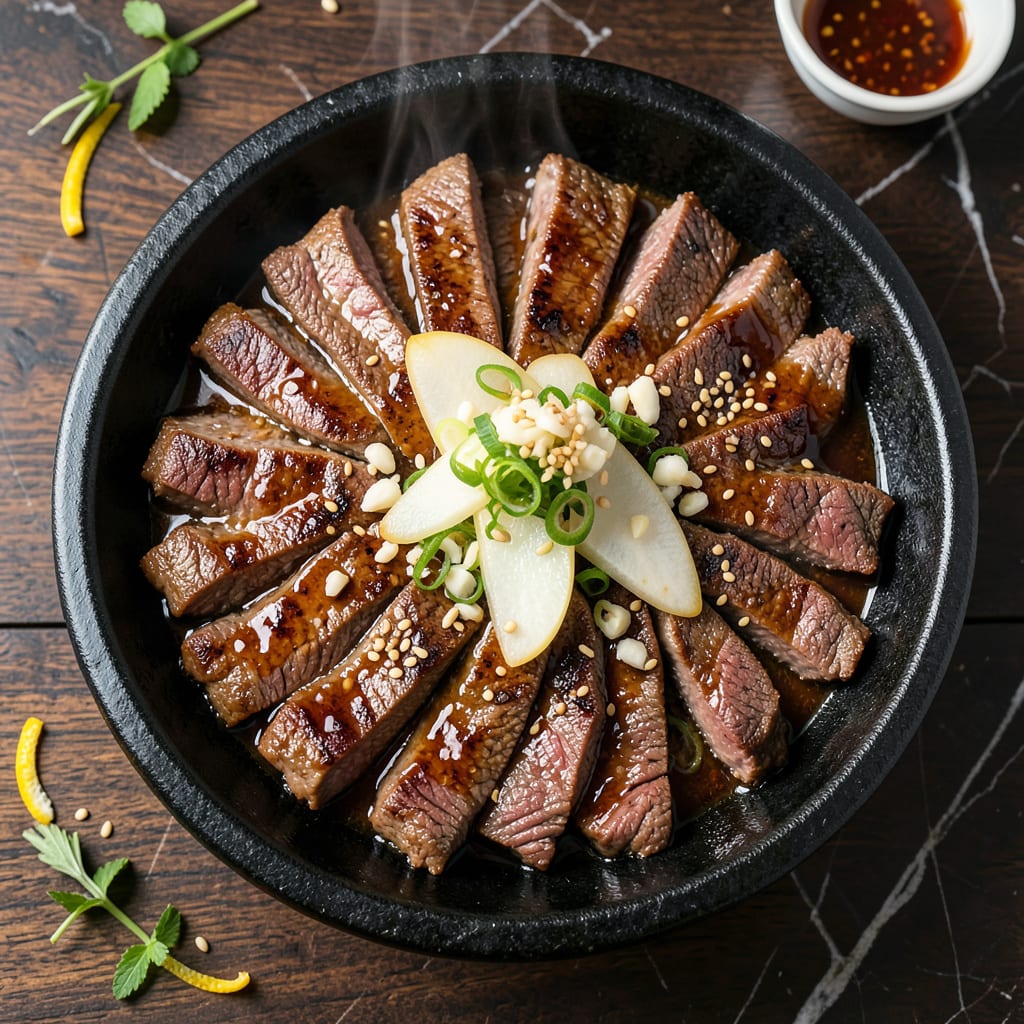
Marinating thinly sliced beef in a blend of soy sauce, brown sugar, and garlic creates the signature sweet-savory flavor of this dish. The key is letting it soak for at least 4 hours to achieve maximum tenderness.
Cooking over high heat ensures caramelization while keeping the meat juicy. This method delivers restaurant-quality results with simple ingredients and traditional technique.
Ingredients for Korean Bbq Beef
Thinly sliced beef meets a bold marinade of soy, sugar, garlic, and ginger for restaurant-quality results.
| Ingredient | Amount | Notes |
|---|---|---|
| Ribeye Steak 🥩 | 1 ½ lb | Thinly sliced against the grain |
| Soy Sauce 🥫 | ½ cup | Low-sodium preferred for balance |
| Brown Sugar 🍚 | ⅓ cup | Light or dark works equally |
| Garlic Cloves 🧄 | 6 cloves | Minced for even distribution |
| Fresh Ginger 🌿 | 1 tbsp | Grated, not powdered |
| Asian Pear 🍐 | ½ whole | Grated for natural tenderizer |
| Sesame Oil 🫒 | 2 tbsp | Toasted for authentic flavor |
| Rice Vinegar 🍯 | 2 tbsp | Balances sweetness in marinade |
| Gochujang 🌶️ | 1 tbsp | Korean chili paste optional for heat |
| Toasted Sesame Seeds 🌰 | 1 tbsp | For garnish and texture |
| Green Onions 🧅 | 4 whole | Thinly sliced for topping |
| Neutral Oil 🛢️ | 1 tbsp | For cooking at high heat |
| Black Pepper 🌶️ | 1 tsp | Freshly ground for best results |
[recipeingredientscaler]
The beef cut is critical here. Ribeye offers the perfect fat marbling for juiciness, while sirloin provides a leaner alternative. Most Asian markets sell pre-sliced beef for bulgogi—ask for it by name. If slicing yourself, freeze the meat for 30 minutes first for cleaner cuts. The Asian pear is a traditional tenderizer; Bosc pears work in a pinch but lack the same enzymatic properties.
No gochujang? Sriracha mixed with a pinch of sugar mimics the sweet-heat balance. Brown sugar can be substituted with coconut sugar or honey (though not traditional). For gluten-free, use tamari instead of soy sauce. The sesame oil is non-negotiable—it’s doing heavy lifting for that authentic Korean BBQ aroma. Fresh ginger is worth the effort; powdered lacks the bright zing.
Marinate the beef for 4-24 hours—the longer, the deeper the flavor. Cook in batches to avoid steaming. Leftovers keep 3-4 days refrigerated or 3 months frozen. Reheat quickly over high heat to maintain texture (microwaving makes it soggy).
Why You’ll Love This Recipe
- One Pan Wonder: I just toss the ribeye with soy sauce, brown sugar, garlic, and ginger, then let the oven do the work.
- Sweet & Savory: The brown sugar caramelizes with the soy sauce for that sticky, umami-packed bite I can’t resist.
- Meal Prep Hero: I make a big batch on Sunday and it tastes just as good in tacos, rice bowls, or straight from the fridge.
- Leftovers Love: Honestly, it’s even better the next day—the flavors deepen, and it reheats in seconds.
Step-by-Step Instructions for Korean BBQ Beef
Master the technique that transforms simple ingredients into tender, caramelized perfection every time.
Step 1: Prepare the Marinade Base
In a large bowl, whisk together the 0.5 cup Soy Sauce, 0.33 cup Brown Sugar, 2 tbsp Sesame Oil, 2 tbsp Rice Vinegar, and 1 tbsp Gochujang until the sugar fully dissolves. This balance of sweet, salty, and umami creates the signature bulgogi flavor profile. The mixture should appear glossy and slightly thick.
Add the 6 cloves Garlic Cloves (minced) and 1 tbsp Fresh Ginger (grated) to the bowl. These aromatics deepen the marinade’s complexity. I always use fresh ginger here—powdered lacks the bright, zesty notes that define authentic Korean BBQ.
Step 2: Incorporate the Tenderizer and Protein
Grate the 0.5 whole Asian Pear directly into the marinade, including any accumulated juices. The enzymes in the pear naturally break down proteins, ensuring exceptionally tender beef. Stir well to distribute the pear evenly throughout the mixture.
Add the 1.5 lb Ribeye Steak (thinly sliced against the grain) to the marinade. Use your hands to massage the mixture into the meat, ensuring every slice is thoroughly coated. The thin slicing maximizes surface area for marinade absorption and quick cooking. Cover and refrigerate for at least 1 hour, or preferably 4 hours for optimal flavor penetration.
Step 3: Cook the Marinated Beef
Heat 1 tbsp Neutral Oil in a large skillet or wok over high heat until shimmering. Working in batches to avoid crowding, add the marinated beef in a single layer. Let it sear undisturbed for 2-3 minutes until the edges develop a deep, caramelized crust.
Stir the beef and cook for an additional 3-4 minutes until fully cooked through and the sauce has thickened slightly, coating each piece with a glossy sheen. The beef should be tender with slightly charred edges—this contrast in texture is essential for authentic Korean BBQ.
Step 4: Finish and Serve
Remove the beef from heat and sprinkle with the 1 tsp Black Pepper (freshly ground). Toss gently to distribute the seasoning evenly. The pepper adds a subtle warmth that complements the sweet and savory elements of the dish.
Transfer to a serving platter and garnish with the 1 tbsp Toasted Sesame Seeds and 4 whole Green Onions (thinly sliced). The sesame seeds add a nutty crunch, while the green onions provide a fresh, crisp finish. Serve immediately with steamed rice to soak up the rich, flavorful sauce.
Pro Tips For Making Korean Bbq Beef
- Slice Against Grain: Freeze the ribeye for 15-20 minutes first to make thin slicing easier, then cut against the grain for melt-in-your-mouth texture—I learned this the hard way after chewing through tough strips.
- Bloom the Aromatics: Cook the minced garlic and grated ginger in a little oil for 30 seconds before adding the sauce. It deepens the flavor way more than just tossing them in raw.
- Skip the Overcrowding: Cook the beef in batches if needed—steer clear of packing the pan, or you’ll end up steaming the meat instead of getting that caramelized crust.
- Rest Before Serving: After cooking, let the beef sit for 5 minutes under foil. It keeps the juices from pooling on your plate instead of in the meat—sounds simple, but it actually changes the outcome.
Regional Styles of korean bbq beef
Seoul Street Style
This is the classic approach you’ll find at Korean pojangmacha (street tents). The beef is sliced paper-thin, marinated in the soy-garlic base, then cooked on a domed griddle right at your table. I love the sizzle and aroma that fills the air—it’s a sensory experience you won’t forget. 🔥
Royal Court Bulgogi
Historically prepared for Korean royalty, this version uses prime cuts like ribeye and includes kiwi or pineapple in the marinade for extra tenderness. The meat is often grilled on skewers over charcoal, giving it a smoky depth that pairs beautifully with the sweet marinade.
Spicy Dak Bulgogi
Hailing from the Chungcheong region, this variation swaps beef for chicken and amps up the heat with extra gochujang and gochugaru (Korean chili flakes). The result is fiery, sticky, and irresistibly aromatic. I like to add 1 tbsp of honey to balance the spice.
Jeju Island Twist
On Jeju Island, they incorporate local black pork and hallabong (a type of tangerine) into the marinade. The citrus brightens the rich pork, while the black pork’s marbling keeps it juicy. It’s a regional specialty worth seeking out if you visit.
I tried this version at a small olle (alleyway) restaurant and was amazed by the depth of flavor. ✨
Modern Fusion
In Seoul’s trendy Itaewon district, chefs are reimagining bulgogi with global twists. Think bulgogi tacos with kimchi slaw or bulgogi burgers topped with a fried egg. The fusion of Korean flavors with international dishes is creative and delicious.
Nutrition Facts

Trained in classic French technique but raised on slow-cooked ribs and spicy rubs, she blends culinary skill with smoke and soul.
- Recipe for Boneless Pork Chops in Cast Iron Skillet: Sear and Baste to Juicy Perfection - October 3, 2026
- Recipe for Boneless Cross Rib Roast: Slow-Roasted Beef with Herb Crust - October 3, 2026
- Hamburgers in Sauce Recipe Crock Pot: Slow-Cooked Savory Delight - October 3, 2026