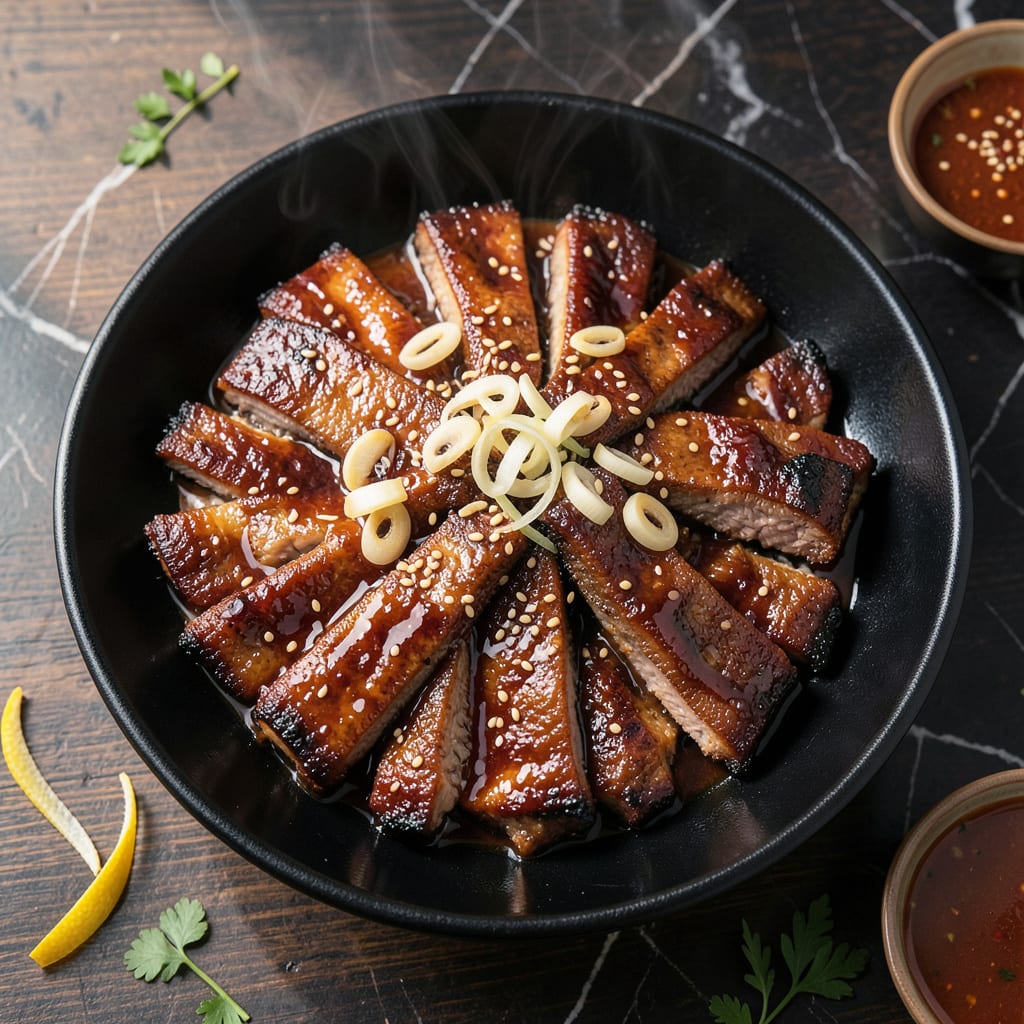
This recipe delivers restaurant-quality Korean BBQ ribs with minimal effort but maximum flavor. The marinade combines sweet, savory, and umami notes that caramelize beautifully on the grill.
I’ve perfected the balance of soy, brown sugar, and garlic to create tender meat with charred edges. These ribs are ideal for feeding a crowd or meal prepping for the week.
Ingredients for Korean Bbq Beef Ribs
Restaurant-quality ribs start with a bold marinade and perfectly selected beef cuts for maximum flavor.
| Ingredient | Amount | Notes |
|---|---|---|
| Beef Back Ribs 🥩 | 2 ½ lb | Bone-in, trimmed of excess fat |
| Soy Sauce 🫙 | ½ cup | Low-sodium preferred for control |
| Brown Sugar 🍚 | ½ cup | Packed, light or dark |
| Garlic Cloves 🧄 | 8 cloves | Minced for maximum flavor infusion |
| Fresh Ginger 🌿 | 1 tbsp | Peeled and finely grated |
| Sesame Oil 🫒 | 2 tbsp | Toasted for depth of flavor |
| Rice Vinegar 🍶 | 2 tbsp | Balances sweetness in marinade |
| Gochujang 🌶️ | 2 tbsp | Korean chili paste for heat |
| Asian Pear 🍐 | ½ whole | Peeled, grated for tenderizing |
| Green Onions 🧅 | 4 whole | Thinly sliced for garnish |
| Sesame Seeds 🌰 | 2 tbsp | Toasted for garnish |
| Vegetable Oil 🫒 | 1 tbsp | Neutral flavor for cooking |
| Black Pepper 🌶️ | 1 tsp | Freshly ground preferred |
[recipe_ingredient_scaler]
The beef ribs are non-negotiable here. Bone-in back ribs deliver the best texture and flavor—avoid pre-cut riblets as they dry out too quickly. Source from Whole Foods or a trusted butcher for consistent marbling. Asian pear is the secret tenderizer; Korean markets carry them fresh, but Bosc pears work in a pinch. For gochujang, Sempio or Kochujang brands offer authentic heat without additives.
No Asian pear? Kiwi or pineapple works as a meat tenderizer substitute. Out of gochujang? Sriracha plus a dash of miso paste mimics the complexity. For soy sauce, tamari is a gluten-free alternative. The brown sugar can be swapped for coconut sugar (same amount), though the caramelization may differ slightly. Always taste the marinade before applying—adjust salt or sugar as needed.
Marinate the ribs overnight for optimal flavor penetration and tenderness. Cooked ribs keep for 3-4 days refrigerated or freeze for 3 months. Store gochujang in the fridge after opening—it lasts 6-12 months. Toast sesame seeds just before serving to preserve their crunch.
Why You’ll Love This Recipe
- One Pan Wonder: I just toss the ribs with soy sauce, brown sugar, garlic and ginger in a single pan—no complicated steps.
- Sweet-Savory Magic: The brown sugar caramelizes with the soy sauce to create this sticky, finger-licking glaze that clings to every bite.
- Weeknight Hero: Between us, I’ve served this for casual dinners and had guests think I slaved for hours.
- Doubles Easily: Leftovers taste even better the next day, and the marinade stretches to feed a crowd without breaking the bank.
Step-by-Step Instructions for Korean BBQ Beef Ribs
Master the technique for fall-off-the-bone ribs with caramelized, charred edges every time.
Step 1: Prepare the Marinade Base
In a large bowl, combine the 0.5 cup soy sauce, 0.5 cup brown sugar, minced 8 cloves garlic cloves, 1 tbsp fresh ginger, 2 tbsp sesame oil, 2 tbsp rice vinegar, and 2 tbsp gochujang.
Whisk vigorously until the brown sugar fully dissolves and the mixture becomes smooth and glossy. I always taste at this stage to ensure the balance of sweet, salty, and spicy flavors is just right. The gochujang should create a rich, reddish hue throughout the marinade.
For extra tenderness, add the grated 0.5 whole Asian pear and 1 tsp black pepper to the mixture. The enzymes in the pear will help break down the proteins in the beef back ribs, resulting in more tender meat.
Step 2: Marinate the Beef Back Ribs
Place the 2.5 lb beef back ribs in a large, resealable plastic bag or shallow dish. Pour the marinade over the ribs, ensuring they are fully coated. Use your hands to massage the marinade into every crevice of the ribs.
Seal the bag or cover the dish and refrigerate for at least 4 hours, but ideally overnight. This extended marination allows the flavors to penetrate deeply into the meat. I find that turning the ribs once or twice during marination ensures even flavor distribution.
Remove the ribs from the refrigerator 30 minutes before cooking to bring them to room temperature. This step is crucial for even cooking and prevents the meat from seizing up when it hits the heat.
Step 3: Sear and Finish the Ribs
Heat 1 tbsp vegetable oil in a large skillet or grill pan over medium-high heat. Remove the beef back ribs from the marinade, reserving the marinade for basting, and place them in the hot pan.
Sear the ribs for 4-5 minutes per side until they develop a deep, caramelized crust. You’ll see the edges begin to char slightly—that’s the sugar in the marinade creating those coveted crispy bits. Reduce the heat to medium if the marinade starts to burn.
Baste the ribs with the reserved marinade during the last 2 minutes of cooking. This step builds layers of flavor and creates a glossy, sticky glaze that clings to the meat.
Step 4: Garnish and Serve
Transfer the ribs to a cutting board and let them rest for 5-10 minutes. This allows the juices to redistribute, ensuring every bite is moist and flavorful. While they rest, thinly slice the 4 whole green onions and toast the 2 tbsp sesame seeds in a dry pan over low heat for 1-2 minutes until fragrant.
Slice the ribs between the bones and arrange them on a serving platter. Sprinkle with the sliced green onions and toasted sesame seeds. The contrast of the bright green onions and nutty sesame seeds against the deep brown ribs makes for a visually stunning presentation.
Pro Tips For Making Korean Bbq Beef Ribs
- Parboil the Ribs: I learned this the hard way—boil the ribs for 10-12 minutes first to remove excess fat and impurities, which helps the marinade penetrate better and prevents a greasy final dish.
- Grind the Ginger: Fresh ginger is non-negotiable here, but finely grating or grinding it (instead of mincing) releases more of its juices and flavor into the soy-brown sugar marinade.
- Don’t Rush the Marinade: After burning three batches, I finally figured out that the ribs need at least 4 hours in the fridge with the soy-brown sugar mix—overnight if you can swing it—to get that deep, caramelized crust.
- Use a Meat Thermometer: Sounds obvious, but I was skeptical until I tried it—pull the ribs at 195°F for fall-off-the-bone tenderness without drying them out, even if they look done sooner.
Make-Ahead Tips for korean bbq beef ribs
Marinade Prep Ahead
I always mix the marinade the night before—it lets the gochujang, soy sauce, and brown sugar meld into a deeper flavor. Store in an airtight container in the fridge. This saves 20 minutes of prep on cooking day. 💡
Rib Marination
For best results, marinate the 2.5 lb beef back ribs overnight. Place them in a sealed bag with the marinade, turning once halfway through. This ensures every bite is infused with sweet-savory depth.
Partial Cook Method
Sear the ribs for 3 minutes per side, then refrigerate for up to 24 hours before finishing. This technique locks in flavors while letting you control the final cook time. I learned this at local BBQ competitions.
Freezing Cooked Ribs
After cooking, cool ribs completely before freezing. Wrap tightly in foil and place in a freezer bag—they’ll keep for 3 months. Reheat in the oven at 325°F for 20-25 minutes. ❄️
Garnish Prep
Toast the 2 tbsp sesame seeds and slice the 4 green onions the day before. Store seeds at room temperature and onions in water in the fridge. This keeps them fresh and ready for serving.
For extra flair, forage wild herbs from coastal rides to sprinkle over the ribs before serving.
Nutrition Facts

Trained in classic French technique but raised on slow-cooked ribs and spicy rubs, she blends culinary skill with smoke and soul.
- Recipe for Boneless Pork Chops in Cast Iron Skillet: Sear and Baste to Juicy Perfection - October 3, 2026
- Recipe for Boneless Cross Rib Roast: Slow-Roasted Beef with Herb Crust - October 3, 2026
- Hamburgers in Sauce Recipe Crock Pot: Slow-Cooked Savory Delight - October 3, 2026