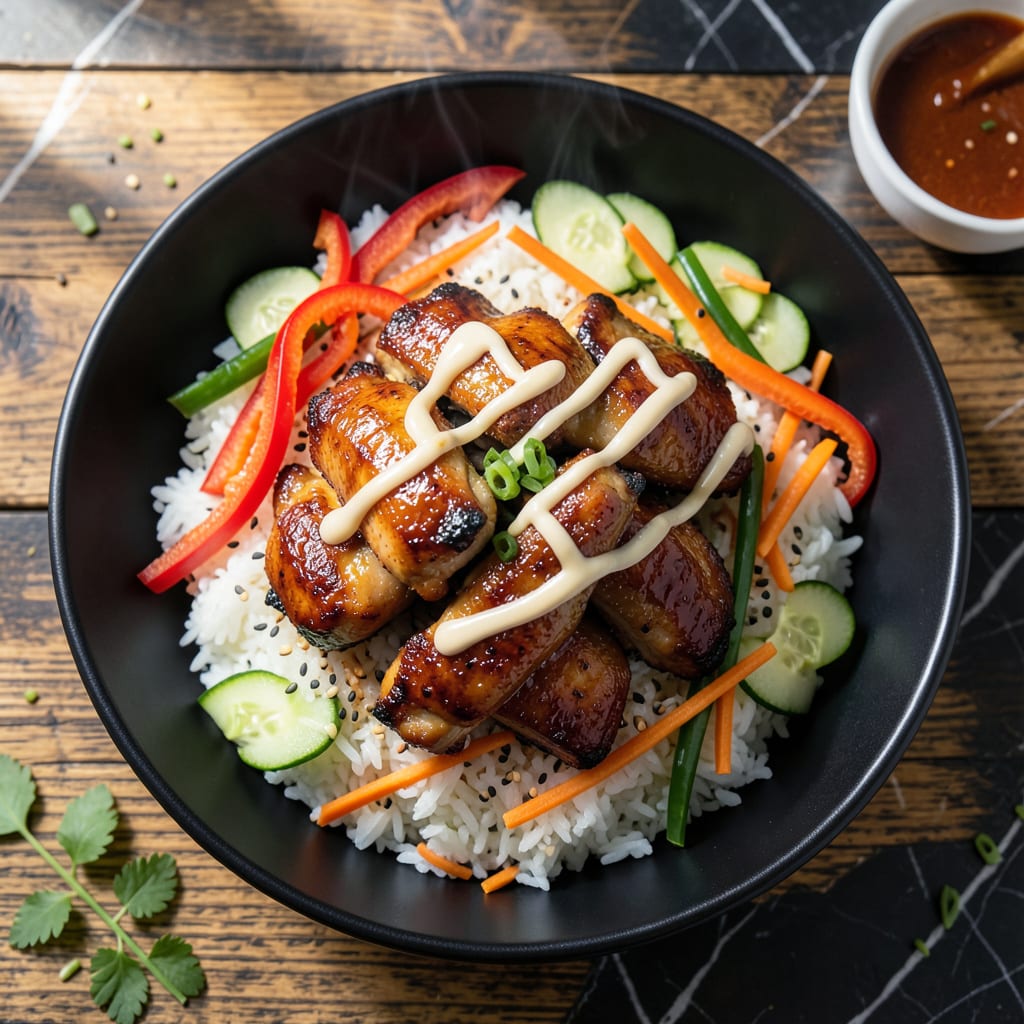
This recipe brings authentic Korean BBQ flavors to your home kitchen with minimal effort. The gochujang glaze delivers a perfect balance of sweet, spicy, and umami that transforms simple ingredients into something extraordinary.
You’ll marinate the chicken in a mixture of soy, garlic, and ginger before grilling or pan-searing. Served over steamed rice with fresh veggies, this dish proves restaurant-quality meals can be achieved at home with simple techniques and bold flavors.
Ingredients for Korean Bbq Chicken Rice Bowls
Bold Korean flavors start with these pantry staples and fresh produce. Nothing complicated, just authentic taste.
| Ingredient | Amount | Notes |
|---|---|---|
| Boneless Chicken Thighs 🍗 | 1 ½ lb | Skin-on or skinless preferred |
| Gochujang 🌶️ | ½ cup | Korean red chili paste |
| Soy Sauce 🥢 | ⅓ cup | Low-sodium recommended |
| Brown Sugar 🍚 | 3 tbsp | Packed, for sweetness |
| Fresh Garlic 🧄 | 4 cloves | Minced finely |
| Fresh Ginger 🌿 | 1 tbsp | Grated or minced |
| Rice Vinegar 🍯 | 2 tbsp | Or apple cider vinegar |
| Sesame Oil 🫒 | 1 tbsp | Toasted variety preferred |
| Jasmine Rice 🍚 | 2 cups | Uncooked, or sub short-grain |
| Green Onions 🧅 | 4 whole | Thinly sliced for garnish |
| Cucumber 🥒 | 1 whole | Thinly sliced or julienned |
| Carrots 🥕 | 2 whole | Julienned or shredded |
| Sesame Seeds 🌰 | 1 tbsp | Toasted for garnish |
| Vegetable Oil 🫒 | 2 tbsp | For cooking chicken |
[recipe_ingredient_scaler]
The gochujang is non-negotiable—H Mart or Korean markets carry authentic brands like Sempio or Kochukaru. Chicken thighs stay juicier than breasts during cooking (trust me on this). For the soy sauce, Kikkoman low-sodium is widely available and reliable. Fresh garlic and ginger make a huge difference here; jarred versions just don’t have the same punch.
No gochujang? Sriracha plus miso paste gets you in the ballpark (use 1:1 ratio). Brown sugar can be swapped for honey or maple syrup. Jasmine rice is traditional, but short-grain white rice works too. The veggies are flexible—swap cucumber for shredded lettuce or add sliced bell peppers for extra crunch.
Marinated chicken keeps 2-3 days in the fridge, uncooked. Cooked leftovers? 4 days max. The rice is best fresh but reheats fine with a splash of water. Gochujang keeps indefinitely in the fridge once opened.
Why You’ll Love This Recipe
- One Pan Wonder: I toss everything—the chicken, gochujang, soy sauce, and garlic—into one pan and let the oven do the work.
- Sweet & Spicy Magic: The gochujang and brown sugar create this sticky, caramelized glaze that clings to every bite of juicy chicken.
- Meal Prep Hero: I make a big batch on Sunday, and it reheats like a dream for lunches all week.
- Budget-Friendly Feast: Boneless thighs stay tender and cheap, and a little gochujang goes a long way for maximum flavor.
Step-by-Step Instructions for Korean BBQ Chicken Rice Bowls
Here’s the method. Straightforward, tested, works every time.
Step 1: Prepare the Gochujang Marinade
In a mixing bowl, combine the 0.5 cup Gochujang, 0.33 cup Soy Sauce, 3 tbsp Brown Sugar, 4 cloves Fresh Garlic, 1 tbsp Fresh Ginger, 2 tbsp Rice Vinegar, and 1 tbsp Sesame Oil. Whisk until the mixture is smooth and the brown sugar has dissolved completely.
This marinade develops deep, complex flavors as it rests. The gochujang provides a spicy-sweet base, while the soy sauce adds umami depth. I always let it sit for at least 5 minutes before using to allow the flavors to meld.
Step 2: Cook the Chicken Thighs
Heat the 2 tbsp Vegetable Oil in a large skillet over medium-high heat. Add the 1.5 lb Boneless Chicken Thighs and cook for 6-7 minutes per side until golden brown and the internal temperature reaches 165°F.
Once the chicken is cooked through, reduce the heat to medium and pour the marinade over the thighs. Simmer for 3-4 minutes, turning the chicken to coat evenly, until the sauce thickens and becomes glossy. The chicken should be fully glazed with a sticky, caramelized coating.
Step 3: Cook the Jasmine Rice
While the chicken cooks, prepare the 2 cups Jasmine Rice according to package instructions. Typically, this involves rinsing the rice until the water runs clear, then cooking it with 4 cups water in a covered pot over medium heat for 15-20 minutes until tender.
Once cooked, fluff the rice with a fork and let it sit covered for 5 minutes to steam and absorb any remaining moisture. The rice should be light, fragrant, and slightly sticky—perfect for soaking up the gochujang sauce.
Step 4: Assemble the Rice Bowls
To assemble, divide the cooked jasmine rice evenly among four bowls. Slice the glazed chicken thighs into strips and arrange them over the rice. The chicken should be tender, juicy, and coated in that rich, spicy-sweet sauce.
Garnish with the 4 whole Green Onions (thinly sliced), 1 whole Cucumber (julienned), and 2 whole Carrots (julienned or shredded). Sprinkle the 1 tbsp Sesame Seeds over the top for added crunch and visual appeal. Serve immediately while hot.
Pro Tips For Making Korean Bbq Chicken Rice Bowls
- Marinate Overnight: I learned this the hard way—give the chicken at least 4 hours in the gochujang, soy, and garlic mix, but overnight makes the flavor sink in deep.
- High Heat First: Crank the pan to medium-high when searing the thighs to get that sticky, caramelized crust on the sauce.
- Trim the Fat: Skip the skin and trim excess fat from the thighs so the sauce clings instead of pooling in grease.
- Toast the Garlic: After burning three batches, I finally figured out—bloom the minced garlic in oil for 30 seconds before adding sauce to kill the raw bite.
Common Mistakes When Making korean bbq chicken rice bowls
Skipping the Marinade Rest
I see this all the time—people rush the marinade. The gochujang mixture needs at least 30 minutes to penetrate the chicken. Less time and you’ll get surface flavor without the deep, layered taste we’re after. Trust me, patience pays off. 🔥
Overcrowding the Pan
When cooking the 1.5 lb chicken thighs, give them space in the pan. Crowding causes steaming instead of searing, and you’ll lose that beautiful caramelized crust. Cook in batches if needed—it’s worth the extra 5 minutes.
High Heat Scorching
Gochujang burns easily. Keep your heat at medium-high max when cooking the chicken. If the marinade starts smoking, lower the heat immediately. The sugar in the 3 tbsp brown sugar can turn bitter if burned.
Undercooked Rice
The 2 cups jasmine rice needs the full 15-20 minutes cooking time. Don’t peek or stir during cooking—this releases steam and can lead to uneven doneness. Let it rest covered for 5 minutes after cooking.
Dry Chicken
Chicken thighs are forgiving, but overcook them and they’ll dry out. Pull them at 165°F internal temperature—they’ll carry over to 170°F while resting. Use a meat thermometer; guessing leads to tough meat.
Skipping the Garnish
The fresh veggies aren’t just for looks. The cucumber and carrots add crunch that cuts through the richness. Skip them and you’ll miss that perfect texture contrast. Plus, they balance the heat from the gochujang. 💡
Nutrition Facts

Trained in classic French technique but raised on slow-cooked ribs and spicy rubs, she blends culinary skill with smoke and soul.
- Recipe for Boneless Pork Chops in Cast Iron Skillet: Sear and Baste to Juicy Perfection - October 3, 2026
- Recipe for Boneless Cross Rib Roast: Slow-Roasted Beef with Herb Crust - October 3, 2026
- Hamburgers in Sauce Recipe Crock Pot: Slow-Cooked Savory Delight - October 3, 2026