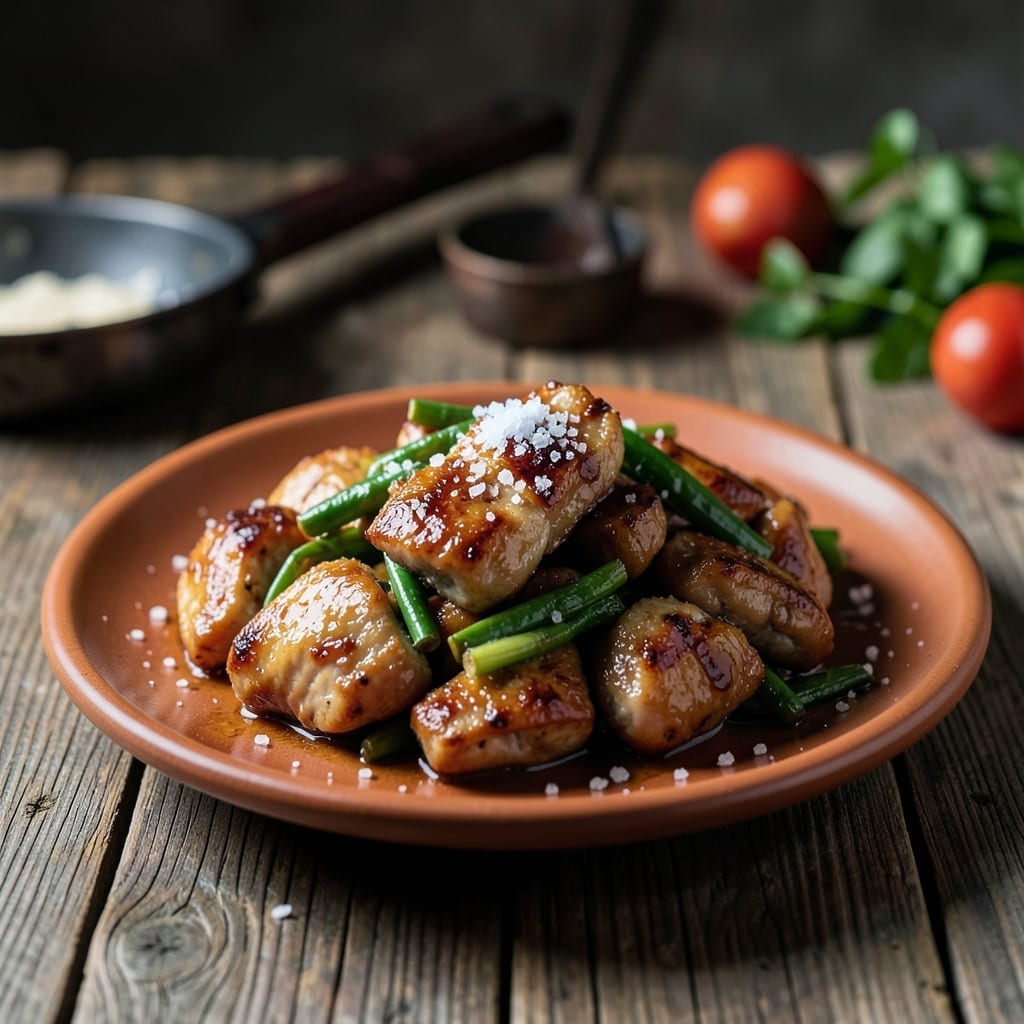
This Korean BBQ chicken stir fry delivers bold flavors with minimal effort. The marinade combines sweet and spicy elements for an irresistible glaze.
Quick cooking at high heat locks in moisture while creating a caramelized exterior. Serve over rice for a complete meal.
Ingredients for Korean Bbq Chicken Stir Fry
Bold Korean flavors come from a few key ingredients. Nothing complicated, just delicious.
| Ingredient | Amount | Notes |
|---|---|---|
| Boneless Chicken Thighs 🍗 | 1 ½ lb | Cut into bite-sized pieces |
| Soy Sauce 🫙 | ½ cup | Low-sodium preferred |
| Brown Sugar 🍚 | ¼ cup | Packed for sweetness |
| Gochujang 🌶️ | 2 tbsp | Korean chili paste |
| Sesame Oil 🫒 | 1 tbsp | Toasted for depth |
| Garlic Cloves 🧄 | 4 cloves | Minced finely |
| Fresh Ginger 🌿 | 1 tbsp | Grated or minced |
| Rice Vinegar 🍯 | 2 tbsp | Balances sweetness |
| Cornstarch 🌾 | 1 tbsp | For thickening sauce |
| Vegetable Oil 🫒 | 2 tbsp | High smoke point |
| Green Onions 🧅 | 4 whole | Thinly sliced for garnish |
| Sesame Seeds 🌿 | 1 tbsp | Toasted for crunch |
| Jasmine Rice 🍚 | 2 cups | Uncooked, for serving |
[recipe_ingredient_scaler]
The chicken thighs are non-negotiable here. Dark meat stays juicy even at high heat, while breast would dry out. Look for skinless, boneless at Whole Foods or any major grocery store—just avoid pre-marinated versions. The gochujang is the flavor powerhouse. H Mart or Asian markets carry authentic versions, but many supermarkets now stock it in the international aisle. Check the label for added sugar if you prefer less sweetness.
No gochujang? Sriracha plus 1 tsp miso paste gets you close, though the depth won’t be the same. Brown sugar can be swapped for honey or maple syrup at a 1:1 ratio. For a gluten-free version, tamari instead of soy sauce works perfectly. The cornstarch can be omitted if you prefer a thinner sauce, but it does help the glaze cling beautifully to the chicken.
Leftovers keep 3-4 days in the fridge and actually taste better as flavors meld. Freeze cooked chicken for up to 3 months—reheat gently to avoid drying. The rice is best fresh, but cooked rice freezes well for 1 month.
Why You’ll Love This Recipe
- One Pan Dinner: I toss everything in a skillet and let the gochujang and brown sugar do the work—minimal cleanup, maximum flavor.
- Sweet-Spicy Perfection: That sticky glaze from the soy, sugar, and gochujang? I could drink it with a spoon.
- Feeds the Crowd: I’ll double the batch for meal prep—it reheats beautifully and tastes even better the next day.
Step-by-Step Instructions for Korean BBQ Chicken Stir Fry
This method delivers restaurant-quality results with minimal effort and maximum flavor.
Step 1: Prepare the Chicken and Marinade
Cut the 1.5 lb boneless chicken thighs into bite-sized pieces—about 1-inch cubes work well. I find that uniform pieces ensure even cooking and better sauce coverage. Place the chicken in a large bowl.
In a separate bowl, whisk together the 0.5 cup soy sauce, 0.25 cup brown sugar, 2 tbsp gochujang, 1 tbsp sesame oil, 2 tbsp rice vinegar, 4 cloves minced garlic, and 1 tbsp fresh ginger until the sugar dissolves. This marinade balances sweet, spicy, and umami perfectly.
Step 2: Marinate and Coat the Chicken
Pour the marinade over the chicken and toss to coat evenly. Let it marinate for at least 15 minutes at room temperature, or up to 2 hours in the refrigerator for deeper flavor. I always marinate for the full 2 hours when time allows—it makes a noticeable difference.
After marinating, sprinkle the 1 tbsp cornstarch over the chicken and toss again. The cornstarch creates a light coating that helps the sauce cling to each piece and gives the chicken a velvety texture once cooked.
Step 3: Cook the Chicken in Batches
Heat 2 tbsp vegetable oil in a large wok or skillet over medium-high heat until shimmering. Working in batches to avoid overcrowding, add the chicken in a single layer. Cook for 5-6 minutes, turning occasionally, until the pieces are golden brown and cooked through.
Don’t rush this step—overcrowding the pan steams the chicken instead of searing it. You want that beautiful caramelization on each piece. Transfer cooked chicken to a plate and repeat with remaining batches.
Step 4: Thicken the Sauce and Combine
Once all the chicken is cooked, return it to the pan with any remaining marinade. Bring to a simmer over medium heat and cook for 2-3 minutes, stirring constantly, until the sauce thickens and coats the chicken in a glossy, sticky glaze.
The sauce should reduce slightly but still be pourable. If it thickens too much, add a splash of water to loosen it. Taste and adjust seasoning if needed, though the marinade is usually perfectly balanced.
Step 5: Garnish and Serve
Remove from heat and stir in half of the 4 whole green onions, thinly sliced. Transfer the chicken to a serving platter and sprinkle with the remaining green onions and 1 tbsp sesame seeds for a pop of color and crunch.
Serve immediately over steamed 2 cups jasmine rice. The rice soaks up that incredible sauce beautifully. For best results, garnish just before serving to keep the green onions fresh and crisp.
Pro Tips For Making Korean Bbq Chicken Stir Fry
- Velcro the chicken: Cut the thighs into 1-inch pieces so every bite gets maximum contact with the hot pan and the sauce actually clings instead of sliding off.
- Bloom the gochujang: Sauté the gochujang with the brown sugar for 30 seconds before adding liquids—it deepens the flavor and removes that raw paste taste.
- Skip the overcrowding: Cook the chicken in two batches if needed; dumping it all in at once steams it and you’ll end up with gray, sad pieces instead of caramelized edges.
- Finish with sesame oil: Drizzle the sesame oil off the heat at the very end—adding it earlier makes it bitter, but this way you get that nutty aroma without losing it to the flame.
Perfect Pairings for korean bbq chicken stir fry
Side Dishes
Elevate your korean bbq chicken stir fry with sides that balance its bold flavors. A crisp kimchi coleslaw adds tangy crunch, while steamed bok choy or sesame spinach brings freshness. For heartier options, try garlic butter rice or scallion pancakes to soak up the savory sauce. These pairings ensure every bite is packed with texture and flavor!
Drink Pairings
Cool the heat with refreshing beverages. A chilled Korean barley tea (boricha) or soju cocktail complements the dish’s spice. For non-alcoholic options, sparkling yuzu soda or green tea cleanses the palate. Sweet mango lassi also balances the smoky-sweet notes beautifully.
Complementary Flavors
Enhance the meal with flavors that harmonize with the stir fry. Add a side of pickled radish (danmuji) for a sweet-tangy contrast, or drizzle extra gochujang for depth. A sprinkle of toasted sesame seeds or crushed peanuts on top adds nutty richness, tying everything together.
Nutrition Facts

Trained in classic French technique but raised on slow-cooked ribs and spicy rubs, she blends culinary skill with smoke and soul.
- Recipe for Boneless Pork Chops in Cast Iron Skillet: Sear and Baste to Juicy Perfection - October 3, 2026
- Recipe for Boneless Cross Rib Roast: Slow-Roasted Beef with Herb Crust - October 3, 2026
- Hamburgers in Sauce Recipe Crock Pot: Slow-Cooked Savory Delight - October 3, 2026