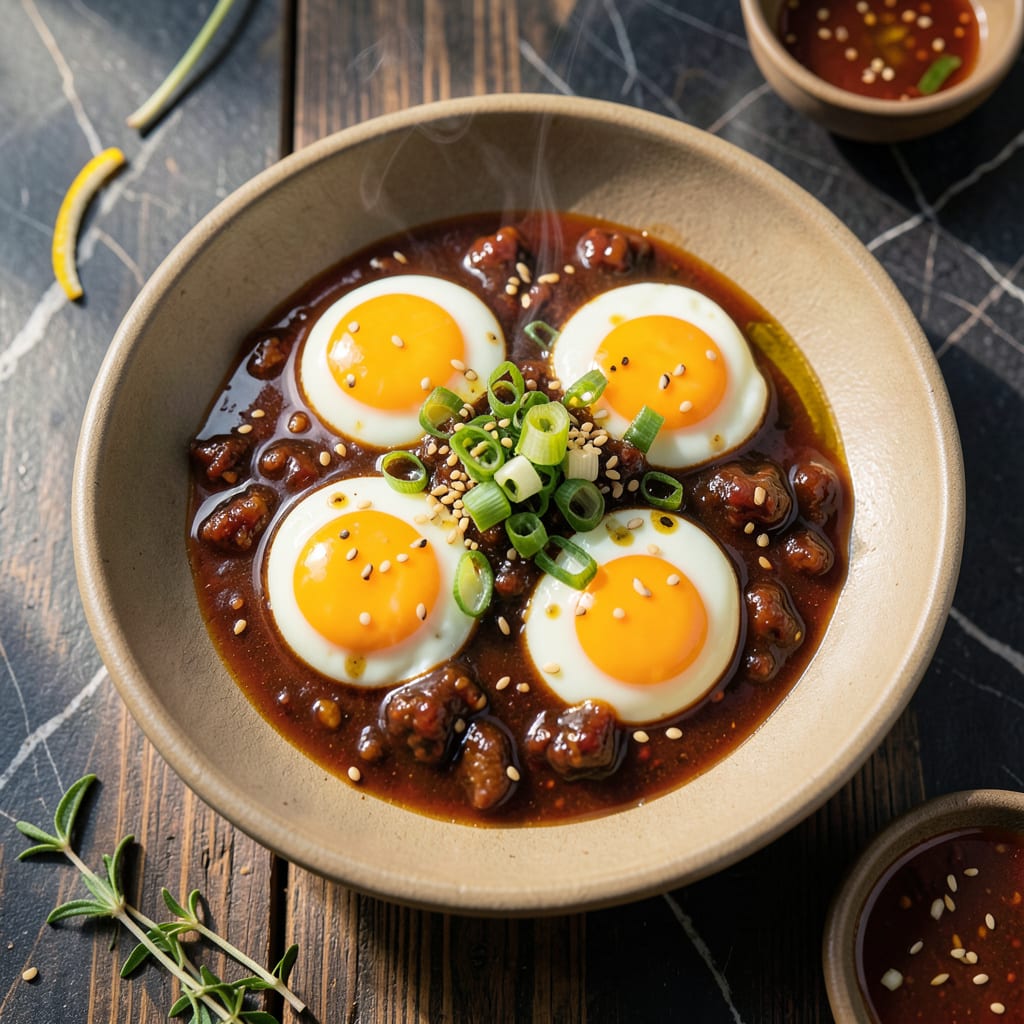
This breakfast transforms ordinary eggs with the bold flavors of Korean BBQ. The secret lies in a simple marinade that infuses each bite with sweet and savory depth.
Ready in minutes, this dish brings restaurant-quality taste to your morning. The combination of gochujang and soy sauce creates a fast, flavorful start to your day.
Ingredients for Korean Bbq Egg
Transform breakfast with bold Korean flavors and pantry staples you already love.
| Ingredient | Amount | Notes |
|---|---|---|
| Large Eggs 🥚 | 8 whole | Room temperature preferred |
| Gochujang 🌶️ | 2 tbsp | Korean red pepper paste |
| Soy Sauce 🫙 | 2 tbsp | Low-sodium preferred |
| Brown Sugar 🏝️ | 1 tbsp | Light or dark variety |
| Sesame Oil 🫒 | 1 tsp | Toasted for best flavor |
| Garlic Cloves 🧄 | 3 cloves | Minced finely |
| Fresh Ginger 🌿 | 1 tsp | Grated or minced |
| Green Onions 🧅 | 4 whole | Thinly sliced for garnish |
| Sesame Seeds 🌰 | 1 tsp | Toasted for garnish |
| Vegetable Oil 🫒 | 1 tbsp | For cooking eggs |
| Rice Vinegar 🍚 | 1 tsp | Balances sweetness |
| Salt 🧂 | ¼ tsp | Adjust to taste |
| Black Pepper 🌶️ | ¼ tsp | Freshly ground |
[recipe_ingredient_scaler]
The gochujang is non-negotiable here—H Mart or Korean markets carry the best selection. Look for a brand with just chili, rice, salt, and fermented soybean (no additives). I always grab Sempio or Chung Jung One when I’m stocking up. Fresh ginger and garlic matter too—skip the jarred stuff. A microplane makes quick work of both (worth the extra minute).
No gochujang? Sriracha plus a little miso paste gets you in the ballpark, but the flavor won’t be the same. Brown sugar can be swapped for honey or maple syrup. Out of sesame oil? Toasted sesame seeds crushed with oil works in a pinch. The soy sauce should be low-sodium so the dish doesn’t get too salty—Kikkoman is my go-to.
Marinated eggs keep 3-4 days in the fridge, but they’re best fresh. The sauce can be made ahead—stores for 1 week in a sealed jar. Toast the sesame seeds just before serving for maximum crunch (don’t skip this part).
Why You’ll Love This Recipe
- One Pan Wonder: I crack the eggs, mix the gochujang and soy sauce, and it’s ready before the rice finishes cooking.
- Sweet & Spicy Magic: That first bite of caramelized brown sugar with the kick of gochujang had me reaching for seconds.
- Breakfast or Dinner: Honestly, I serve these fluffy eggs for brunch, then pack leftovers for lunch the next day.
- Pantry Staples Only: Between us, I always have eggs, gochujang, and soy sauce on hand, so this saves me a grocery run.
Step-by-Step Instructions for Korean BBQ Eggs
This method delivers bold Korean flavors in minutes with minimal effort required.
Step 1: Prepare the Korean BBQ Glaze
In a small bowl, whisk together the 2 tbsp gochujang, 2 tbsp soy sauce, 1 tbsp brown sugar, 1 tsp sesame oil, minced 3 cloves garlic cloves, 1 tsp fresh ginger, 1 tsp rice vinegar, 0.25 tsp salt, and 0.25 tsp black pepper until smooth. I find that whisking vigorously for 30 seconds ensures the brown sugar fully dissolves.
The glaze should be thick but pourable. If it seems too stiff, add a splash of water. This balance of sweet, spicy, and umami is what makes the dish so addictive. Here’s the thing—taste it now and adjust seasoning if needed.
Step 2: Cook the Eggs to Perfect Doneness
Heat 1 tbsp vegetable oil in a large non-stick skillet over medium heat until it shimmers. Crack the 8 whole large eggs into the pan, keeping them spaced apart. For sunny-side up, cook undisturbed for 2-3 minutes until the whites are set but yolks remain runny.
If you prefer over-easy, flip each egg gently with a spatula after 2 minutes and cook for another 30 seconds. Watch for the whites to turn opaque with no translucent spots—this tells you they’re done. Don’t walk away; eggs cook fast at this temperature.
Step 3: Glaze and Garnish for Maximum Flavor
Once the eggs are cooked to your liking, drizzle the prepared glaze evenly over each one. I use about 1 tablespoon of glaze per egg, letting it pool around the edges. The residual heat will slightly warm the sauce without cooking it.
Immediately sprinkle with thinly sliced 4 whole green onions and 1 tsp sesame seeds for freshness and crunch. The green onions add a bright contrast to the rich, spicy glaze. Serve hot, with extra glaze on the side if desired.
Step 4: Rest Briefly and Serve
Let the eggs sit for 1 minute off the heat. This brief rest allows the glaze to adhere to the eggs rather than sliding off. The yolk should still be warm and runny when you cut into it.
I like to serve these with steamed rice to soak up every bit of that incredible sauce. The contrast between the creamy yolk and the bold Korean flavors is what makes this dish so special. Real talk: you’ll want to make extra glaze for drizzling.
Pro Tips For Making Korean Bbq Egg
- Whisk Eggs Hard: Beat the eggs until completely uniform—no streaks—so the gochujang and soy sauce blend seamlessly into every bite. I learned this the hard way after ending up with pockets of plain egg in my first few attempts.
- Bloom the Gochujang: Mix the gochujang with a teaspoon of sesame oil before adding to the eggs; this softens its bite and helps it distribute evenly instead of clumping.
- Low and Slow Heat: Cook the eggs on medium-low heat, stirring constantly, to avoid scrambling them too fast—they should stay silky, not rubbery.
- Sweeten Last: Add the brown sugar at the very end of cooking, just before the eggs set, so it caramelizes slightly without burning.
Flavor Customization for This Dish
Spice It Up
For heat lovers, add ½ tsp gochugaru (Korean chili flakes) to the glaze. This brings authentic fire without overwhelming the dish. I also like a pinch of cayenne pepper for extra kick. 🌶️
Sweet & Tangy Twist
Swap brown sugar for honey and add 1 tsp lime juice to the glaze for a brighter profile. The acidity cuts through the richness beautifully. This version pairs well with avocado slices on top.
Umami Boost
Stir 1 tsp fish sauce or 1 tbsp miso paste into the glaze for deeper savory notes. I learned this trick from a Korean chef friend—it elevates the flavor instantly. A little goes a long way.
Herb Infusion
Fresh herbs can transform this dish. Try adding 2 tbsp chopped cilantro or 1 tbsp minced mint to the glaze. The herbal notes complement the bold Korean flavors perfectly. I forage wild herbs for this whenever possible.
Cheesy Version
Sprinkle ¼ cup shredded mozzarella or 2 tbsp crumbled feta over the eggs just before glazing. The cheese melts slightly from the residual heat, creating a creamy texture. This makes it more filling for brunch.
Extra Garlicky
Double the garlic to 6 cloves for a more intense flavor. I do this when serving with rice—the extra garlic permeates the entire dish. Just be sure to mince it finely so it distributes evenly. 💛
Nutrition Facts

Trained in classic French technique but raised on slow-cooked ribs and spicy rubs, she blends culinary skill with smoke and soul.
- Recipe for Boneless Pork Chops in Cast Iron Skillet: Sear and Baste to Juicy Perfection - October 3, 2026
- Recipe for Boneless Cross Rib Roast: Slow-Roasted Beef with Herb Crust - October 3, 2026
- Hamburgers in Sauce Recipe Crock Pot: Slow-Cooked Savory Delight - October 3, 2026