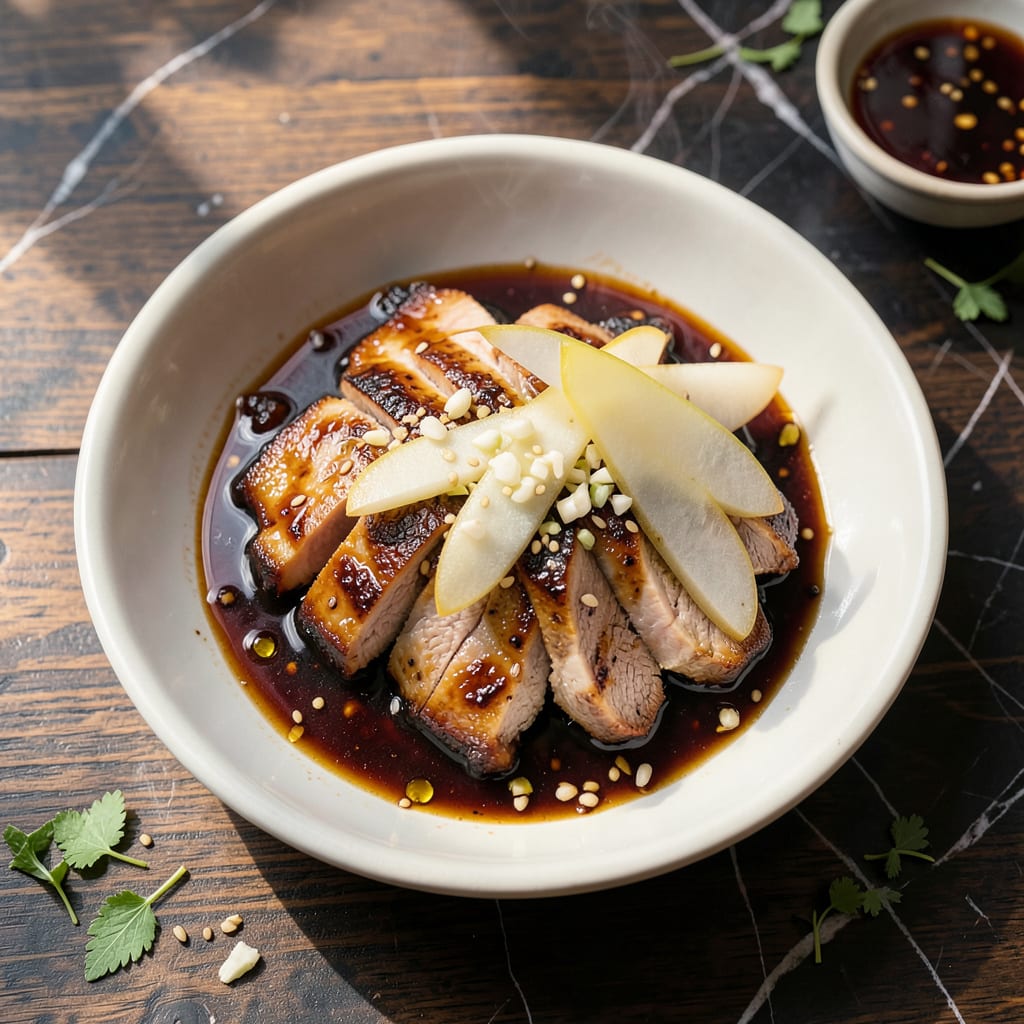
This marinade transforms ordinary pork into restaurant-quality Korean BBQ with its perfect balance of sweet and savory flavors. The combination of soy sauce, brown sugar, and garlic creates a depth that’s impossible to resist.
I developed this recipe after years of experimenting with different ratios, and it never fails to deliver that signature charred, caramelized crust. Use it for pork belly, chops, or tenderloin—just let the meat soak up the flavors for at least 4 hours.
Ingredients for Korean Bbq Marinade Recipe Pork
Nine ingredients create that signature sweet-savory Korean BBQ flavor for tender, charred pork every time.
| Ingredient | Amount | Notes |
|---|---|---|
| Soy Sauce 🥢 | ¾ cup | Low-sodium preferred for balance |
| Brown Sugar 🍚 | ½ cup | Packed, for caramelization |
| Garlic Cloves 🧄 | 6 cloves | Minced finely for even distribution |
| Asian Pear 🍐 | ½ whole | Grated, adds natural sweetness |
| Sesame Oil 🫒 | 2 tbsp | Toasted variety for depth |
| Rice Vinegar 🍯 | 2 tbsp | Balances sweetness with acidity |
| Gochujang 🌶️ | 2 tbsp | Korean chili paste for heat |
| Fresh Ginger 🌿 | 1 tbsp | Grated, for aromatic warmth |
| Green Onions 🧅 | 4 whole | Thinly sliced for garnish |
| Black Pepper 🌶️ | 1 tsp | Freshly ground for best flavor |
[recipeingredientscaler]
The soy sauce is foundational—Kikkoman or San-J tamari for gluten-free. Brown sugar depth comes from molasses, so dark brown is ideal. Asian pear tenderizes the meat naturally; find it at H Mart or Korean markets. Gochujang adds complexity, but Sempio or Chung Jung One brands are most accessible for home cooks needing that authentic heat.
No Asian pear? Bartlett pear or grated apple works in a pinch. Skip gochujang? 1 tbsp sriracha plus 1 tsp sugar approximates the flavor. For a gluten-free version, tamari or coconut aminos replace soy sauce 1:1. The sesame oil is non-negotiable though—it’s the aromatic backbone of the marinade’s authenticity.
Marinade keeps 5 days refrigerated in a sealed jar. For best flavor, prep it the night before. Freezes beautifully for 3 months—portion into ice cube trays for easy single-use amounts. Always bring to room temperature before tossing with pork.
Why You’ll Love This Recipe
- 5-Minute Mix: I just dump everything in a bowl—soy sauce, brown sugar, grated pear—and it’s ready before the grill heats up.
- Sweet-Savory Magic: The brown sugar caramelizes on the pork while the garlic and sesame oil hit that deep umami note I can’t get enough of.
- Meal Prep Hero: I marinate a big batch Sunday, then it’s ready for quick dinners or packed lunches all week.
- Stretches Far: One pound of pork feeds four, and the leftovers taste even better the next day in rice bowls.
Step-by-Step Instructions for Korean BBQ Marinade
This method ensures maximum flavor penetration and caramelization for your grilled meats.
Step 1: Prepare the Aromatics and Liquid Base
In a large mixing bowl, combine the 0.75 cup soy sauce and 0.5 cup brown sugar. Stir vigorously until the brown sugar begins to dissolve into the soy sauce, creating a glossy, dark liquid base that will carry all the flavors.
Add the 2 tbsp rice vinegar and 2 tbsp sesame oil to the soy mixture. The rice vinegar introduces a subtle tang that balances the sweetness, while the toasted sesame oil adds a nutty depth essential to authentic Korean flavor profiles.
Step 2: Incorporate the Spice and Fruit Elements
Stir in the 2 tbsp gochujang until fully dissolved. This fermented chili paste delivers the signature heat and umami backbone of the marinade. The mixture will darken and thicken slightly as the gochujang incorporates.
Add the 0.5 whole Asian pear, grated finely, to the bowl. The natural enzymes in the Asian pear work as a tenderizer, while its sweetness complements the brown sugar. Mix thoroughly to distribute the pear evenly throughout the marinade.
Step 3: Add the Fresh Aromatics
Finely mince the 6 cloves garlic cloves and grate the 1 tbsp fresh ginger, then add them to the marinade. These aromatics form the flavor foundation, infusing the mixture with pungent, warm notes that deepen during marination.
Stir in the 1 tsp black pepper, ensuring it disperses completely. The freshly ground black pepper adds a subtle sharpness that enhances the overall complexity without overpowering the other ingredients.
Step 4: Finish and Rest the Marinade
Thinly slice the 4 whole green onions and fold them into the marinade. These add a fresh, oniony brightness that cuts through the richness of the other components.
Cover the bowl and let the marinade rest at room temperature for 30 minutes to allow the flavors to meld. This resting period lets the gochujang mellow slightly and the aromatics infuse fully. Use within 24 hours for optimal flavor, or refrigerate for up to 3 days.
Pro Tips For Making Korean Bbq Marinade Recipe Pork
- Grate the Pear: Use a fine grater on the Asian pear—it dissolves into the marinade better than chunks, and I learned this the hard way after picking pear bits out of my teeth.
- Bloom the Garlic: Cook the minced garlic in a little sesame oil for 30 seconds before adding to the marinade. Sounds weird, but it works: it removes the raw bite and deepens the flavor.
- Marinate Overnight: Resist the urge to rush it—pork needs at least 8 hours in this marinade, or the flavors won’t penetrate. I skip this when I’m lazy, but the dish is noticeably better when I don’t.
- Balance the Sweet: Taste the marinade before using—if it’s too sweet from the brown sugar or pear, add a splash of soy sauce to cut it. My grandmother swore by this, and she was right.
Essential Equipment for Perfect Results
Mixing Bowls
A large stainless steel mixing bowl is essential for combining all marinade ingredients evenly. I prefer 1.5-quart capacity to give enough room for stirring without spills. The non-reactive surface won’t absorb odors or flavors from previous uses.
Fine Grater
For the Asian pear and ginger, a microplane grater is my go-to tool. It creates ultra-fine strands that dissolve into the marinade, distributing flavor more effectively. I’ve had my OXO Good Grips microplane for years and it still performs perfectly.
Garlic Press
Minced garlic is crucial for even flavor distribution. A quality garlic press saves time and ensures consistent texture. My Kuhn Rikon press handles 6 cloves at once and is dishwasher-safe for easy cleanup.
Liquid Measuring
Accurate measurements matter for balance. Use a clear glass measuring cup with both cup and milliliter markings. I prefer the Pyrek 2-cup version for this recipe’s quantities. The spout makes pouring soy sauce and sesame oil mess-free.
Whisk
A flat-bottom whisk helps dissolve the brown sugar completely. The flat edges scrape the bowl corners effectively. My 10-inch silicone-headed whisk from RSVP International won’t scratch stainless steel and handles thick mixtures beautifully. 💛
Air-Tight Storage
For marinade storage, glass mason jars are ideal. They’re non-reactive, easy to clean, and let you see the marinade’s color. I use 16-ounce wide-mouth jars that accommodate the full recipe. They seal tightly for refrigerator or freezer storage.
Nutrition Facts

Trained in classic French technique but raised on slow-cooked ribs and spicy rubs, she blends culinary skill with smoke and soul.
- Recipe for Boneless Pork Chops in Cast Iron Skillet: Sear and Baste to Juicy Perfection - October 3, 2026
- Recipe for Boneless Cross Rib Roast: Slow-Roasted Beef with Herb Crust - October 3, 2026
- Hamburgers in Sauce Recipe Crock Pot: Slow-Cooked Savory Delight - October 3, 2026