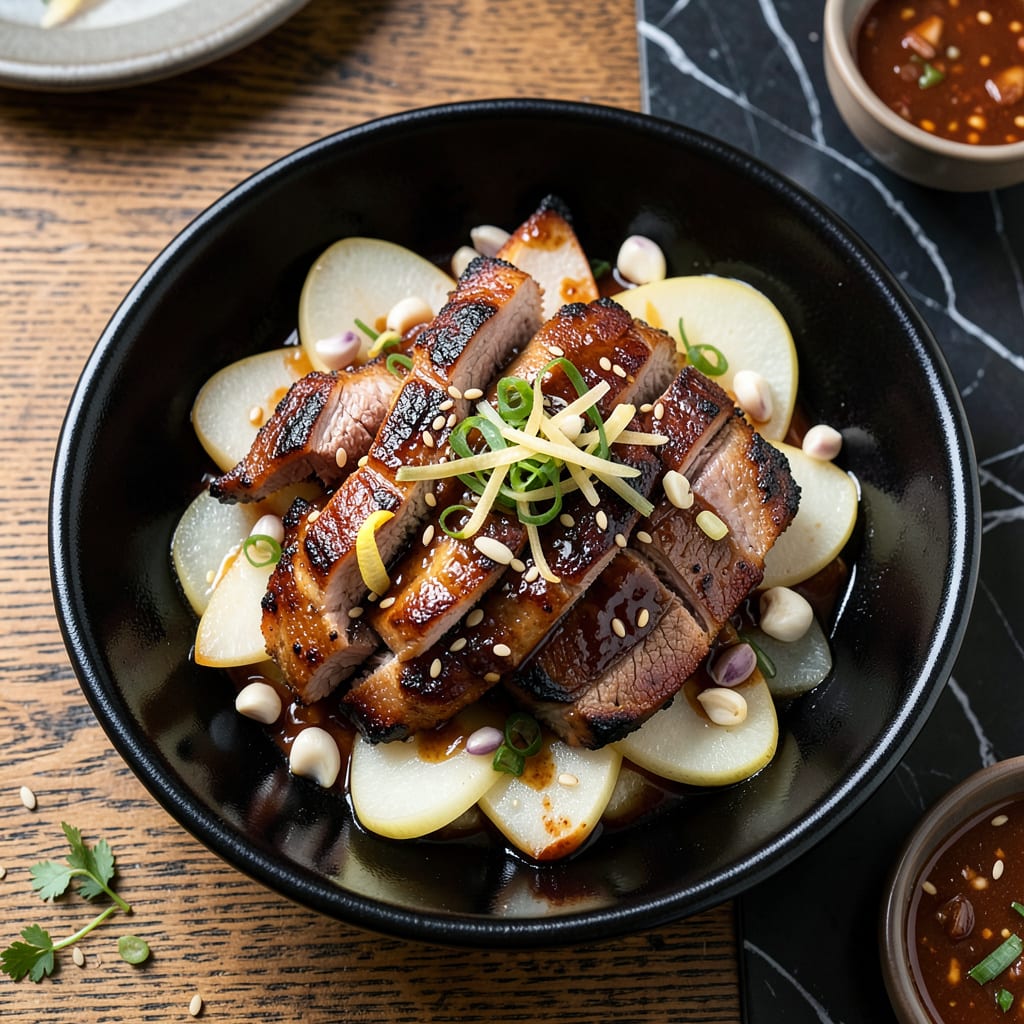
This Korean BBQ pork shoulder delivers restaurant-quality flavor through a 24-hour marinade that tenderizes while infusing bold, balanced taste.
Using simple ingredients and precise technique, the dish achieves perfectly caramelized edges with juicy, flavorful meat every time. The marinade transforms tough pork into melt-in-your-mouth perfection.
Ingredients for Korean Bbq Pork Shoulder
Transform tough pork with this bold, balanced marinade featuring classic Korean flavors and textures.
| Ingredient | Amount | Notes |
|---|---|---|
| Pork Shoulder 🥩 | 2 lb | Boneless, cut into strips |
| Soy Sauce 🫒 | ½ cup | Low-sodium preferred for balance |
| Brown Sugar 🍚 | ½ cup | Light or dark, packed |
| Asian Pear 🍐 | 1 whole | Grated for natural tenderizer |
| Garlic Cloves 🧄 | 8 cloves | Minced for maximum flavor infusion |
| Fresh Ginger 🌿 | 2 tbsp | Finely grated, peeled first |
| Sesame Oil 🫒 | 2 tbsp | Toasted for depth of flavor |
| Gochujang 🌶️ | 2 tbsp | Korean chili paste, adjust for spice |
| Rice Vinegar 💧 | 2 tbsp | Balances sweetness and saltiness |
| Green Onions 🧅 | 4 whole | Thinly sliced for garnish and marinade |
| Toasted Sesame Seeds 🌾 | 1 tbsp | For garnish and texture |
| Black Pepper 🌶️ | 1 tsp | Freshly ground for best aroma |
| Vegetable Oil 🫒 | 1 tbsp | For searing pork strips |
[recipeingredientscaler]
The pork shoulder is critical here—look for well-marbled pieces at your butcher or Costco for the best results. Asian pear is non-negotiable; its enzymes naturally tenderize the meat. Korean markets will have the best selection, but most large supermarkets carry them seasonally. The gochujang should be deep red with a thick consistency—avoid any with added preservatives.
No Asian pear? Substitute with grated apple or pineapple (same tenderizing effect). Out of gochujang? Sriracha plus 1 tsp miso paste gets you close. Brown sugar can be swapped for honey, but the flavor profile shifts slightly. For a gluten-free version, tamari instead of soy sauce works perfectly. The sesame oil must be toasted—light sesame oil lacks the depth.
Marinate the pork for 24 hours in the fridge for maximum flavor penetration. Cooked pork keeps for 4-5 days refrigerated or freezes beautifully for 3 months. Always bring meat to room temperature before grilling or pan-searing for even cooking.
Why You’ll Love This Recipe
- Set and Forget: I toss everything in the slow cooker before work and come home to fall-apart pork with zero effort.
- Sweet-Savory Magic: The brown sugar and Asian pear caramelize into this sticky glaze that clings to every bite—ridiculously good.
- Meal Prep MVP: I make a big batch Sunday and it transforms into tacos, rice bowls, or sandwiches all week long.
- Budget Hero: Pork shoulder is cheap, and the soy-garlic marinade turns it into something that tastes way fancier than the cost.
Step-by-Step Instructions for Korean BBQ Pork Shoulder
Master the marinade and cooking technique for tender, flavorful results every time.
Step 1: Prepare the Marinade Base
In a large bowl, combine the 0.5 cup soy sauce, 0.5 cup brown sugar, 2 tbsp sesame oil, 2 tbsp gochujang, and 2 tbsp rice vinegar. Whisk vigorously until the brown sugar fully dissolves and the mixture becomes smooth and glossy.
This base creates the signature balance of sweet, savory, and spicy flavors. I always use low-sodium soy sauce here to control the saltiness, allowing the other flavors to shine without overpowering the dish.
Step 2: Add Aromatics and Natural Tenderizer
To the marinade, add the 8 cloves minced garlic, 2 tbsp grated fresh ginger, and 1 grated Asian pear. The pear contains enzymes that naturally tenderize the pork shoulder, ensuring it remains juicy and easy to chew.
Stir in the 1 tsp black pepper and half of the 4 whole thinly sliced green onions. Mix thoroughly to distribute the aromatics evenly. This step infuses the marinade with layers of fresh, pungent flavors that define authentic Korean BBQ.
Step 3: Marinate the Pork Shoulder
Place the 2 lb pork shoulder strips in a resealable plastic bag or shallow dish. Pour the prepared marinade over the pork, ensuring all pieces are fully coated. Massage the marinade into the meat for 2-3 minutes to help it penetrate deeply.
Seal or cover and refrigerate for at least 4 hours, or preferably overnight. The longer the pork marinated, the more pronounced and complex the flavors will be. I recommend turning the bag or stirring the pork every few hours to ensure even marination.
Step 4: Sear and Cook the Pork
Heat the 1 tbsp vegetable oil in a large skillet or grill pan over medium-high heat. Remove the pork from the marinade (reserve the marinade) and sear for 3-4 minutes per side until deeply browned and caramelized.
Reduce the heat to medium, pour in the reserved marinade, and cover the pan. Simmer for 15-20 minutes, turning the pork occasionally, until the meat is cooked through and the marinade has reduced to a thick, sticky glaze.
Step 5: Rest and Garnish for Serving
Transfer the cooked pork to a serving platter and let it rest for 5 minutes. This allows the juices to redistribute, ensuring each bite is moist and flavorful.
Slice the pork into thin strips, if not already pre-cut, and garnish with the remaining green onions and 1 tbsp toasted sesame seeds. Serve immediately with steamed rice or fresh lettuce for wrapping.
Pro Tips For Making Korean Bbq Pork Shoulder
- Marinate Overnight: I learned this the hard way—pork shoulder needs at least 12 hours in the soy-brown sugar marinade to really soak up the Asian pear sweetness. Anything less and the flavor just sits on the surface.
- Score the Fat: Before marinating, cut shallow slits into the fat cap so the garlic and brown sugar penetrate deeper. Sounds tedious, but it actually changes the outcome.
- Low and Slow: Resist the urge to crank the heat—cook the pork at 300°F for 3-4 hours until it shreds easily. High heat dries it out before the collagen breaks down.
- Use Ripe Pear: An underripe Asian pear won’t blend into the marinade smoothly. Pick one that yields slightly to pressure—it’ll sweeten the sauce naturally without graininess.
Best Sauces and Condiments for This Recipe
Classic Ssamjang Dip
This thick, spicy-savory dip is a must for Korean BBQ. Mix 2 tbsp gochujang with 1 tbsp doenjang (fermented soybean paste), 1 tbsp sesame oil, 1 tsp honey, and 1 minced garlic clove. I always make extra—it disappears fast at my table. 🌶️
Pickled Radish
Thinly slice 1 cup Korean radish and soak in ½ cup rice vinegar, 2 tbsp sugar, and ¼ tsp salt for 30 minutes. The crisp, tangy crunch cuts through the richness perfectly. I use this at local BBQ competitions for a refreshing contrast.
Sesame-Garlic Sauce
Whisk 3 tbsp soy sauce, 1 tbsp sesame oil, 1 tbsp rice vinegar, 1 tbsp brown sugar, and 2 minced garlic cloves. Drizzle over the pork before serving for extra depth. This was my French technique twist on traditional Korean flavors.
Quick Cucumber Salad
Toss 2 cups thinly sliced cucumber with 1 tbsp rice vinegar, ½ tsp salt, and ½ tsp sesame seeds. Let sit for 10 minutes before serving. The cool crunch balances the bold pork beautifully.
Spicy Soy Dipping Sauce
Combine ¼ cup soy sauce, 1 tbsp gochujang, 1 tbsp rice vinegar, 1 tsp sesame oil, and 1 tsp honey. Add 1 sliced green onion for freshness. I learned this one from a Korean market owner on my coastal rides. 💛
Nutrition Facts

Trained in classic French technique but raised on slow-cooked ribs and spicy rubs, she blends culinary skill with smoke and soul.
- Recipe for Boneless Pork Chops in Cast Iron Skillet: Sear and Baste to Juicy Perfection - October 3, 2026
- Recipe for Boneless Cross Rib Roast: Slow-Roasted Beef with Herb Crust - October 3, 2026
- Hamburgers in Sauce Recipe Crock Pot: Slow-Cooked Savory Delight - October 3, 2026