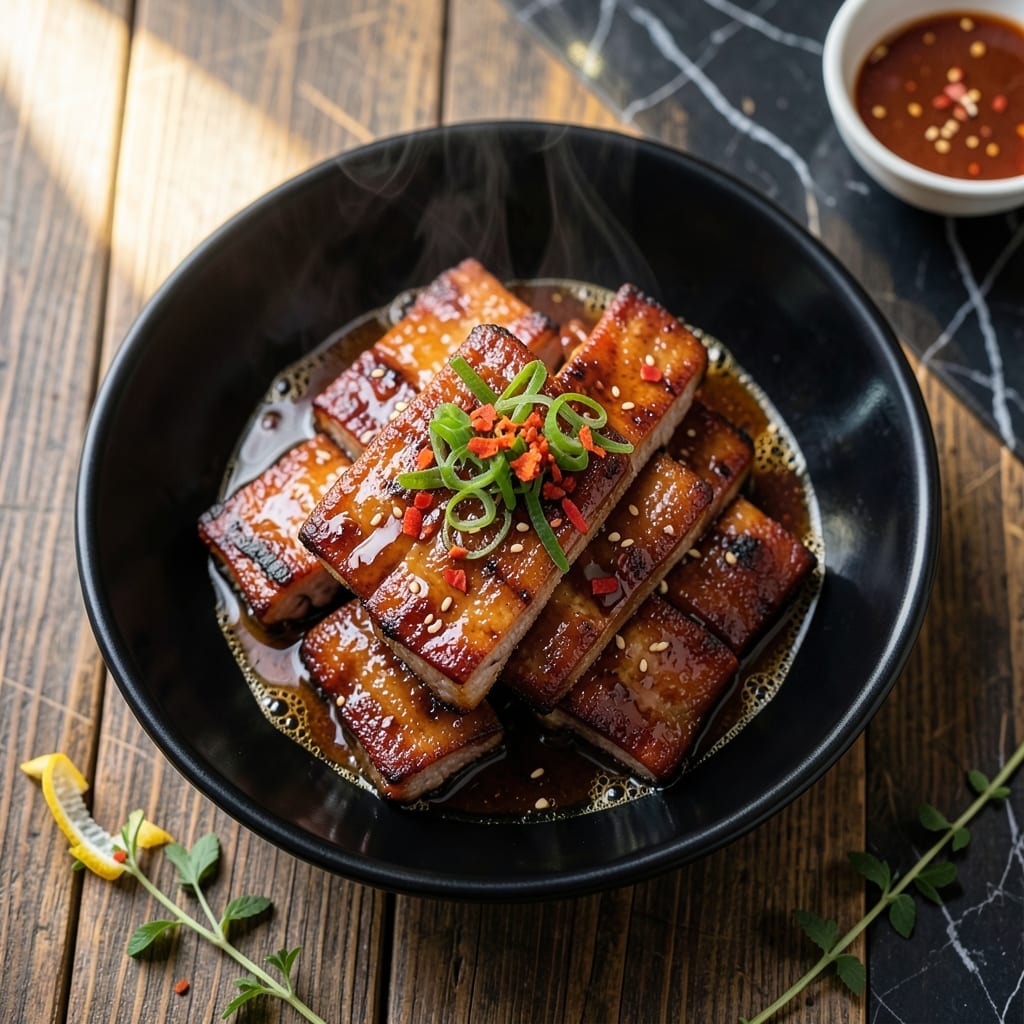
I developed this recipe after years of perfecting my Korean BBQ technique. The key is a sticky-sweet glaze that caramelizes beautifully on the grill.
These ribs combine traditional flavors with my pitmaster approach. The marinade tenderizes the meat while the glaze creates that signature charred finish everyone loves.
Ingredients for Korean Bbq Pork Spare Ribs
Sticky, sweet, and packed with bold Korean flavors. These ribs are worth the effort.
| Ingredient | Amount | Notes |
|---|---|---|
| Pork Spare Ribs 🐖 | 3 lb | Full rack, trimmed of excess fat |
| Soy Sauce 🫒 | ½ cup | Low-sodium preferred for balance |
| Brown Sugar 🍚 | ¾ cup | Packed, for sticky glaze |
| Gochujang 🌶️ | ¼ cup | Korean chili paste, essential |
| Honey 🍯 | ¼ cup | For natural sweetness and shine |
| Rice Vinegar 🍋 | 3 tbsp | Balances sweetness with acidity |
| Garlic Cloves 🧄 | 6 cloves | Minced for marinade depth |
| Fresh Ginger 🌿 | 2 tbsp | Grated, for aromatic warmth |
| Sesame Oil 🫒 | 2 tbsp | Toasted for nutty aroma |
| Toasted Sesame Seeds 🌰 | 2 tbsp | For garnish and crunch |
| Green Onions 🧅 | 4 whole | Thinly sliced for fresh finish |
| Korean Pear 🍐 | ½ whole | Grated, natural tenderizer |
| Black Pepper 🌶️ | 1 tsp | Freshly ground for heat |
[recipe_ingredient_scaler]
The ribs are the star here. Look for well-marbled spare ribs—they stay juicy through the long marinade and grill time. Most butchers will trim the membrane for you if you ask (worth the extra minute). Asian markets often have better prices on gochujang and sesame oil, but H-Mart or Whole Foods work too. The Korean pear is non-negotiable for that authentic tenderizing magic—Bosc or Anjou pears are fine substitutes if you’re in a pinch.
No gochujang? Sriracha mixed with a little miso paste gets you close, but the flavor won’t be quite the same. Skip the pear? Unsweetened applesauce or grated apple works in the marinade. The brown sugar can be swapped for coconut sugar—slightly different caramel note but still delicious. For the soy sauce, tamari makes this gluten-free if needed. Just don’t skip the sesame oil; it’s what gives that nutty depth.
Marinate the ribs overnight for maximum flavor penetration. The glaze can be made 2 days ahead and stored in the fridge. Leftovers keep for 4-5 days and reheat beautifully on the grill or under the broiler. Always garnish fresh—those sesame seeds and green onions lose their pop if they sit too long.
Why You’ll Love This Recipe
- 5-Minute Marinade: I mix soy sauce, gochujang, honey, and brown sugar, slather it on the ribs, and let the oven do the rest.
- Sticky, Spicy Sweetness: That glossy glaze from the honey and gochujang clings to every bite—savory, sweet, with just enough heat.
- Feeds a Hungry Table: Perfect for Sunday dinner or a casual backyard get-together, and everyone leaves happy.
- Leftovers Taste Better: Honestly, the flavors deepen overnight, so tomorrow’s lunch is even more crave-worthy.
Step-by-Step Instructions for Korean BBQ Pork Spare Ribs
Here’s the method I use for fall-off-the-bone ribs with that signature sticky char.
Step 1: Prepare the Marinade Base
In a large bowl, whisk together the 0.5 cup soy sauce, 0.75 cup brown sugar, 0.25 cup gochujang, 0.25 cup honey, and 3 tbsp rice vinegar until smooth. The brown sugar should dissolve completely, creating a glossy, thick liquid. This balance of sweet, salty, and spicy is what makes these ribs so addictive.
Real talk: don’t skip the gochujang—it’s non-negotiable for authentic Korean BBQ flavor. The vinegar cuts through the richness, so even though it seems like a lot of sugar, the final result won’t be cloying.
Step 2: Build Depth with Aromatics
Add the 6 cloves garlic cloves (minced), 2 tbsp fresh ginger (grated), 2 tbsp sesame oil, and 1 tsp black pepper to the marinade. Stir well and let it sit for 5 minutes to allow the flavors to meld. You’ll smell the ginger and garlic wake up almost immediately.
Now grate in the 0.5 whole Korean pear—this is the secret tenderizer. The enzymes in the pear break down the meat fibers, ensuring your ribs will be incredibly tender without needing a long marinade time.
Step 3: Marinate the Pork Spare Ribs
Place the 3 lb pork spare ribs in a large resealable bag or shallow dish. Pour the marinade over them, making sure every surface is coated. Massage the marinade into the meat for 2 minutes, then seal and refrigerate for at least 4 hours, ideally overnight.
The longer you marinate, the deeper the flavor penetration. I’ve found that overnight gives the best results, but even a few hours will make a noticeable difference. Turn the bag occasionally to ensure even coverage.
Step 4: Grill to Perfection
Preheat your grill to medium-high heat (about 375-400°F). Remove the ribs from the marinade (reserve the marinade) and place them on the grill. Cook for 6-8 minutes per side, basting occasionally with the reserved marinade.
You’re looking for a deep caramelization on the edges—that’s when you know the sugars are creating that sticky glaze. The ribs should develop a slight char in spots, which adds a smoky depth to the sweet-spicy flavor profile.
Step 5: Rest and Garnish
Transfer the ribs to a cutting board and let them rest for 10 minutes. This allows the juices to redistribute, ensuring every bite is moist and flavorful. Meanwhile, thinly slice the 4 whole green onions.
Slice the ribs between the bones and arrange on a platter. Sprinkle with the green onions and 2 tbsp toasted sesame seeds for a fresh finish and nutty crunch. Serve immediately while the glaze is still glossy and sticky.
Pro Tips For Making Korean Bbq Pork Spare Ribs
- Parboil First: I learned this the hard way—boiling the ribs for 10-15 minutes before marinating removes excess fat and guarantees the gochujang and brown sugar penetrate deeper.
- Balance the Sweetness: After burning a batch, I started adding a splash of rice vinegar to the soy-honey-brown sugar mix—it cuts through the sugar and keeps the glaze from turning bitter.
- Skip Overcrowding: Resist the urge to pack all the ribs on one tray; give each piece space so the heat circulates and you actually get that sticky, caramelized crust.
- Rest Before Serving: Sounds weird, but letting the ribs sit 5-10 minutes after grilling makes the juices redistribute—otherwise, that first bite’ll be all sauce and no pork.
Regional Styles of korean bbq pork spare ribs
Seoul Street Food Style
In the bustling markets of Seoul, you’ll find these ribs grilled over charcoal briquettes for that authentic smoky aroma. The vendors often brush the glaze on thickly during the last 2 minutes of cooking. I replicate this by using lump charcoal in my kamado grill for that real Korean BBQ experience. 🌶️
Busan Spicy Variation
Down in Busan, they amp up the heat with extra gochujang and a touch of gochugaru (Korean chili flakes). I add 1 tbsp gochugaru to the marinade for this regional twist. The result is a fiery kick that pairs perfectly with cold Hite beer.
Jeonju Royal Cuisine
Jeonju’s royal court version uses less sugar and more soy sauce for a deeper umami flavor. I adjust the ratio to ½ cup soy sauce and ½ cup brown sugar. This style highlights the pork’s natural sweetness while keeping the glaze more savory than sticky.
Gangwon Mountain Style
In the mountainous Gangwon region, they incorporate wild mountain herbs into the marinade. I add 1 tbsp chopped wild chives and 1 tsp pine nut powder when I can forage them during my coastal rides. The herbal notes complement the pork beautifully.
Modern Seoul Fusion
Contemporary Seoul chefs are adding miso paste to the marinade for complexity. I use 1 tbsp white miso blended into the glaze. This fusion approach creates a richer, more layered flavor profile that still respects the traditional roots.
Nutrition Facts

Trained in classic French technique but raised on slow-cooked ribs and spicy rubs, she blends culinary skill with smoke and soul.
- Recipe for Boneless Pork Chops in Cast Iron Skillet: Sear and Baste to Juicy Perfection - October 3, 2026
- Recipe for Boneless Cross Rib Roast: Slow-Roasted Beef with Herb Crust - October 3, 2026
- Hamburgers in Sauce Recipe Crock Pot: Slow-Cooked Savory Delight - October 3, 2026