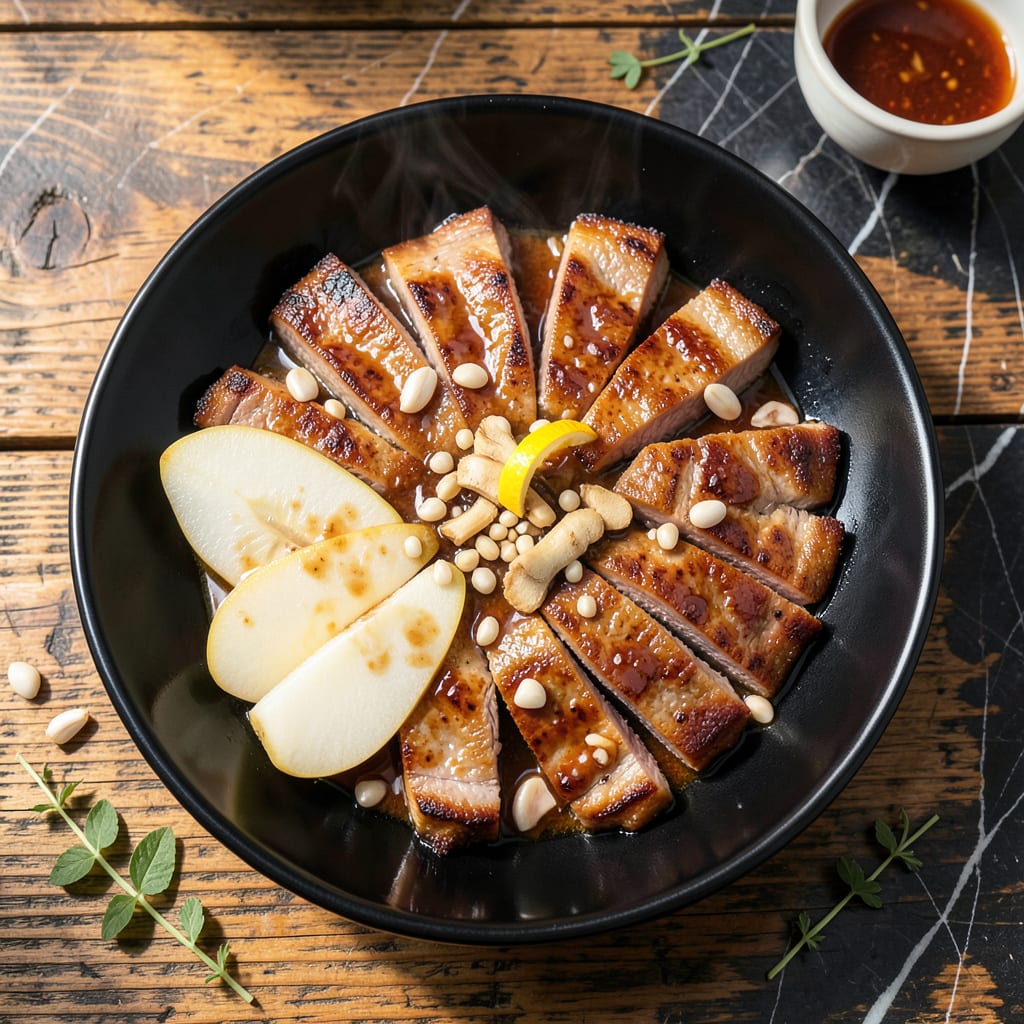
I developed this marinade after years of competing in local BBQ contests, blending sweet and savory flavors that make tender pork shine.
This method guarantees juicy, flavorful results with a caramelized crust that’s become my signature at family cookouts.
Ingredients for Korean Bbq Pork Tenderloin
A handful of bold flavors transform this pork into a BBQ champion. Nothing complicated here.
| Ingredient | Amount | Notes |
|---|---|---|
| Pork Tenderloin 🥩 | 1 ½ lb | Trimmed of excess fat |
| Soy Sauce 🫒 | ½ cup | Low-sodium preferred for balance |
| Brown Sugar 🍚 | ⅓ cup | Packed, for caramelization |
| Asian Pear 🍐 | ½ whole | Peeled, grated for natural sweetness |
| Garlic Cloves 🧄 | 6 cloves | Minced for full flavor infusion |
| Fresh Ginger 🌿 | 1 tbsp | Grated, adds zesty depth |
| Gochujang 🌶️ | 2 tbsp | Korean chili paste for heat |
| Sesame Oil 🫒 | 1 tbsp | Toasted for nutty aroma |
| Rice Vinegar 💧 | 2 tbsp | Balances sweetness with acidity |
| Green Onions 🧅 | 4 whole | Thinly sliced, for garnish |
| Toasted Sesame Seeds 🌾 | 1 tbsp | For finishing touch |
| Black Pepper 🌶️ | 1 tsp | Freshly ground for best results |
| Vegetable Oil 🫒 | 1 tbsp | For searing pork |
[recipeingredientscaler]
The pork tenderloin should be fresh—look for a pale pink color with minimal marbling. Whole Foods or Costco have great options. The Asian pear is key (Bosc or Anjou work too)—it tenderizes the meat naturally. For gochujang, H Mart or Korean markets carry authentic brands like Sempio. Don’t skip the fresh ginger; jarred stuff lacks the bright, spicy kick this dish needs.
No Asian pear? Substitute with grated apple or pineapple juice. Out of gochujang? Sriracha plus a dash of miso paste in a pinch. The brown sugar can be swapped for honey (1:1), but it won’t caramelize quite the same. If you’re avoiding gluten, use tamari instead of soy sauce. The sesame oil is non-negotiable—it’s what gives that nutty depth.
Marinate the pork for at least 4 hours (overnight for maximum flavor). Cooked pork keeps in the fridge for 3-4 days—great for meal prep. Freeze marinated pork for up to 3 months (thaw before cooking). Always let the meat rest 10 minutes after cooking to lock in juices.
Why You’ll Love This Recipe
- I’ll be real: it tastes even better the next day in tacos or over rice.
- One Pan Wonder: I toss the pork with soy, sugar, and Asian pear, then let the oven do the work—minimal mess, maximum flavor.
- Sweet-Savory Magic: The brown sugar caramelizes while the garlic and pear tenderize the meat into something ridiculously good.
- Feeds a Crowd: Honestly, it’s my go-to for dinner parties, but it’s just as reliable for a lazy Sunday meal.
Step-by-Step Instructions for Korean BBQ Pork Tenderloin
This method guarantees tender results with a perfect balance of sweet and savory flavors.
Step 1: Prepare the Marinade Base
In a bowl, combine the 0.5 cup soy sauce with the 0.33 cup brown sugar. I like to whisk vigorously until the brown sugar fully dissolves—this prevents any grainy texture in the final marinade and ensures even flavor distribution throughout the pork.
Add the 2 tbsp gochujang, 1 tbsp sesame oil, 2 tbsp rice vinegar, and 1 tsp black pepper. The gochujang will give the marinade its signature spicy depth, while the rice vinegar cuts through the richness with a bright acidity. Whisk until completely smooth.
Step 2: Incorporate the Aromatics and Fruit
Peel and grate the 0.5 whole Asian pear—it should yield about ¼ cup of grated flesh. Add this to the marinade along with the 6 cloves minced garlic cloves and 1 tbsp grated fresh ginger. The Asian pear contains enzymes that naturally tenderize the pork, which is key to achieving that melt-in-your-mouth texture.
Stir everything together until fully combined. The mixture will be thick and fragrant, with visible specks of ginger and garlic. Let it sit for 5 minutes to allow the flavors to meld before using.
Step 3: Marinate the Pork Tenderloin
Cut the 1.5 lb pork tenderloin into 1-inch thick medallions. Place them in a resealable plastic bag or shallow dish and pour the marinade over. Turn the pork several times to ensure every piece is thoroughly coated. I always press the pork down into the marinade to maximize contact.
Seal or cover and refrigerate for at least 4 hours, but overnight is ideal. The longer marinating time allows the flavors to penetrate deeply and the Asian pear to work its tenderizing magic. Don’t skip this step—it’s what makes the pork so incredibly tender.
Step 4: Cook the Pork to Perfection
Heat the 1 tbsp vegetable oil in a large skillet over medium-high heat until shimmering. Remove the pork from the marinade (reserve the marinade) and sear for 3-4 minutes per side until deeply browned and cooked through. You’ll know it’s done when the internal temperature reaches 145°F.
Pour the reserved marinade into the skillet and simmer for 2-3 minutes until it thickens into a glossy sauce that coats the back of a spoon. This step is crucial for both safety (to kill any bacteria from the raw pork) and flavor (to concentrate the marinade into a rich finishing sauce).
Step 5: Rest and Garnish
Transfer the pork to a serving platter and let it rest for 5 minutes. This allows the juices to redistribute, ensuring every bite is moist and flavorful. While the pork rests, thinly slice the 4 whole green onions and toast the 1 tbsp toasted sesame seeds if not already prepared.
Drizzle the reduced marinade sauce over the pork and sprinkle with the green onions and sesame seeds. The sauce should glaze the pork beautifully, while the garnishes add freshness and crunch. Serve immediately while hot.
Pro Tips For Making Korean Bbq Pork Tenderloin
- Sear Over High Heat: I learned this the hard way—pork tenderloin needs a screaming hot pan or grill to get that caramelized crust. About 2-3 minutes per side before lowering the heat to finish cooking through.
- Grate the Pear: After burning three batches, I finally figured out that grating the Asian pear into the marinade makes it incorporate better and tenderize the meat more effectively than just slicing it.
- Skip the Overcooking: Pork tenderloin goes from perfect to dry in minutes. Pull it off at 145°F and let it rest for 5-10 minutes under foil—it’ll keep cooking as it sits.
- Marinate Overnight: Sounds weird, but it works: giving the pork a full 12-24 hours in the soy-brown sugar-garlic marinade makes a real difference in flavor depth. I was skeptical until I tried it.
Serving Suggestions for This korean bbq pork tenderloin
Traditional Korean Sides
Serve with kimchi for a spicy, tangy contrast that cuts through the sweetness. I also love pickled radish—it adds a refreshing crunch. Both are staples at any Korean BBQ spread and balance the rich flavors perfectly. 💛
Rice Pairings
Steamed white rice is a must—it soaks up the extra sauce beautifully. For a heartier option, try brown rice or short-grain sticky rice. I prefer jasmine rice for its fragrant aroma that complements the pork.
Fresh Vegetable Accompaniments
Thinly sliced cucumber or lettuce leaves make great wraps for the pork. Add a drizzle of ssamjang (Korean dipping sauce) for extra depth. This is how I enjoy it at local BBQ competitions.
Simple Garnishes
Sprinkle extra toasted sesame seeds and sliced green onions on top right before serving. A squeeze of lime wedges adds a bright citrus note that lifts all the flavors. These small touches make a big difference.
Beverage Pairings
An ice-cold Korean lager like Hite or OB pairs perfectly with the bold flavors. For non-alcoholic options, try barley tea or soju cocktail. The crispness cleanses your palate between bites. 🍺
Family-Style Serving
Arrange everything on a large platter with small bowls for sides. Let guests build their own bites—this is how we do it at my family cookouts. It makes the meal interactive and fun for everyone.
Nutrition Facts

Trained in classic French technique but raised on slow-cooked ribs and spicy rubs, she blends culinary skill with smoke and soul.
- Recipe for Boneless Pork Chops in Cast Iron Skillet: Sear and Baste to Juicy Perfection - October 3, 2026
- Recipe for Boneless Cross Rib Roast: Slow-Roasted Beef with Herb Crust - October 3, 2026
- Hamburgers in Sauce Recipe Crock Pot: Slow-Cooked Savory Delight - October 3, 2026