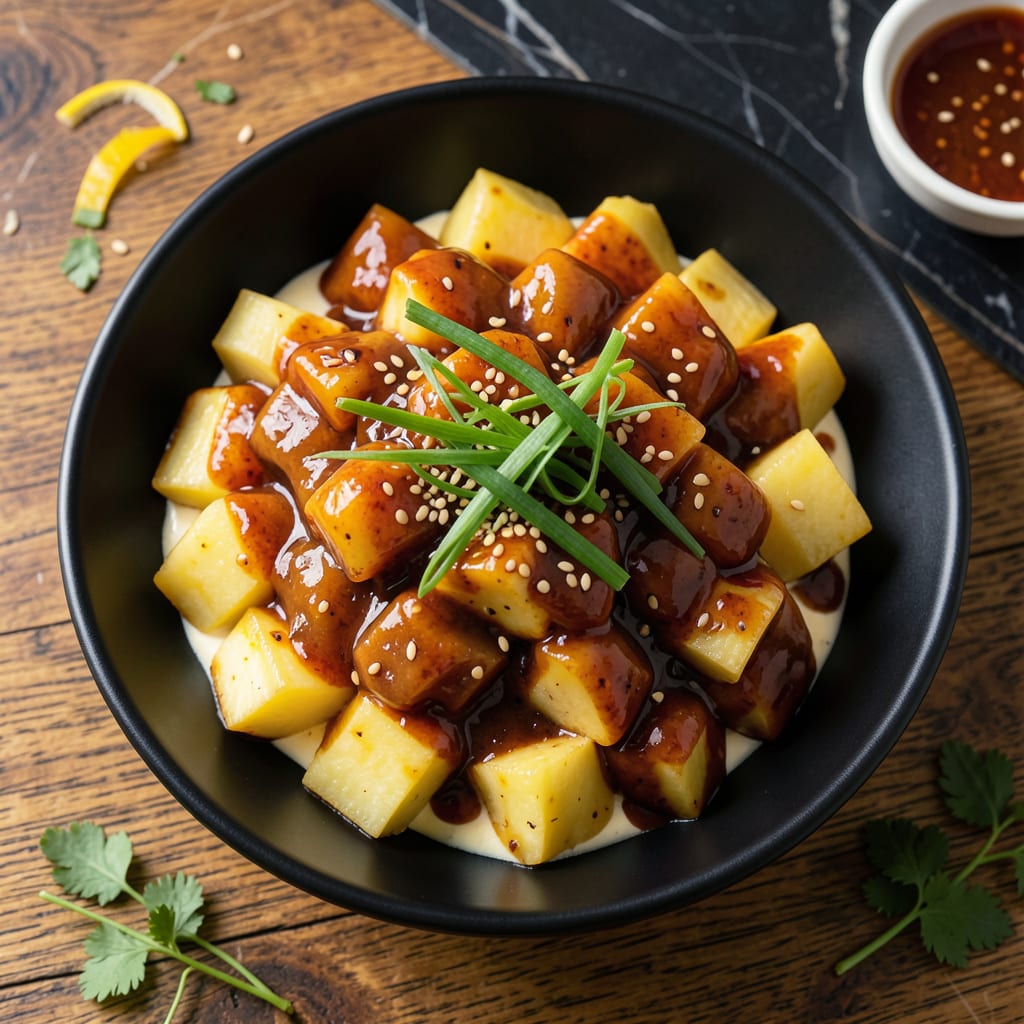
This potato salad brings Korean BBQ flavors to your table with a creamy twist. I developed this version to capture the sweet and smoky notes of traditional bulgogi in a refreshing side dish.
Boiled potatoes meet a velvety dressing with gochujang, honey, and sesame for depth. The result is a dish that’s both familiar and exciting, perfect alongside any grilled main.
Ingredients for Korean Bbq Potato Salad
Creamy, smoky, and sweet—this potato salad brings bold flavors together effortlessly.
| Ingredient | Amount | Notes |
|---|---|---|
| Yukon Gold Potatoes 🥔 | 2 lb | Peeled and cubed evenly |
| Mayonnaise 🥫 | ¾ cup | Full-fat for creaminess |
| Gochujang 🌶️ | 2 tbsp | Korean chili paste, adjust to taste |
| Honey 🍯 | 2 tbsp | Pure, for sweetness and balance |
| Rice Vinegar 🍶 | 1 ½ tbsp | For tangy brightness |
| Sesame Oil 🫒 | 1 tbsp | Toasted for depth |
| Soy Sauce 🥫 | 1 tbsp | Low-sodium preferred |
| Toasted Sesame Seeds 🌰 | 2 tbsp | For garnish and crunch |
| Green Onions 🧅 | 4 whole | Thinly sliced, green parts only |
| Hard-Boiled Eggs 🥚 | 4 whole | Chopped for texture |
| Carrots 🥕 | 1 whole | Julienned or finely diced |
| Garlic Cloves 🧄 | 2 cloves | Minced for dressing |
| Salt 🧂 | ½ tsp | Kosher or sea salt |
| Black Pepper 🌶️ | ¼ tsp | Freshly ground preferred |
[recipe_ingredient_scaler]
The gochujang is non-negotiable here—H Mart or Korean markets carry the best brands like Sempio or Chung Jung One. Yukon Golds hold their shape better than russets (which get too mealy). I always grab mine from Trader Joe’s when I’m stocking up on Asian staples. For the sesame oil, Kadoya is my go-to—pure toasted flavor without bitterness.
No gochujang? Sriracha plus 1 tsp miso paste works in a pinch (not the same, but close). Swap honey for agave or maple syrup if you need vegan. Skip the eggs? Extra diced cucumber or avocado adds creaminess. The rice vinegar can be apple cider in a bind, but it changes the flavor profile slightly.
This keeps 3-4 days in the fridge—actually tastes better after a night as flavors meld. Don’t freeze (mayo separates). Store sesame oil in the fridge after opening to prevent rancidity. Always toast a new batch of sesame seeds right before serving for maximum crunch.
Why You’ll Love This Recipe
- I’ll be real: it tastes even better the next day after the flavors meld, and it stays fresh for three days in the fridge.
- One Pot Wonder: I just boil the Yukon Golds, mix everything in one bowl, and we’re eating in 20. No fuss, no extra pans.
- Sweet Heat Balance: The gochujang and honey hit that spot—spicy, sweet, and tangy all at once, with rice vinegar cutting through the mayo.
- Picnic to Potluck: Honestly, it’s my go-to for summer BBQs, work lunches, or even a quick dinner side.
Step-by-Step Instructions for Korean BBQ Potato Salad
This method ensures a perfectly creamy texture with bold, balanced flavors every time.
Step 1: Boil and Cool the Potatoes
Place the 2 lb Yukon Gold Potatoes (peeled and cubed evenly) in a large pot and cover with cold water by about 1 inch. Add the 0.5 tsp Salt to the water. Bring to a boil over high heat, then reduce to medium and cook for 10-12 minutes until the cubes are fork-tender but still hold their shape.
Drain immediately and spread the potatoes on a baking sheet. Let them cool completely at room temperature for about 20 minutes. This prevents them from turning mushy when mixed with the dressing. I’ve found that warm potatoes absorb too much dressing, making the salad heavy.
Step 2: Prepare the Vegetables and Eggs
While the potatoes cool, thinly slice the 4 whole Green Onions (green parts only) and julienne the 1 whole Carrots. Chop the 4 whole Hard-Boiled Eggs into small, even pieces. Set these aside in separate bowls to maintain their distinct textures.
Mince the 2 cloves Garlic Cloves finely. Having all your ingredients prepped and ready ensures a smooth assembly process. The carrots add a pleasant crunch, while the eggs bring a rich, creamy element that complements the potatoes beautifully.
Step 3: Whisk Together the Korean BBQ Dressing
In a medium bowl, combine the 0.75 cup Mayonnaise, 2 tbsp Gochujang, 2 tbsp Honey, 1.5 tbsp Rice Vinegar, 1 tbsp Sesame Oil, and 1 tbsp Soy Sauce. Whisk vigorously until the mixture is smooth and fully emulsified. The gochujang will give it a vibrant red hue with a hint of heat.
Stir in the minced garlic, 0.25 tsp Black Pepper, and 0.5 tsp Salt. Taste and adjust the seasoning if needed, though the soy sauce and gochujang already contribute a good amount of saltiness. This dressing should be tangy, slightly sweet, and umami-rich.
Step 4: Combine and Chill for Optimal Flavor
In a large mixing bowl, gently fold the cooled potatoes into the dressing until they are evenly coated. Be careful not to overmix, as you want to keep some texture in the potatoes. Add the chopped green onions, carrots, and hard-boiled eggs. Fold everything together just until combined.
Cover the bowl and refrigerate for at least 1 hour, but 2 hours is ideal. This chilling time allows the flavors to meld and the potatoes to absorb the dressing fully. Before serving, sprinkle the 2 tbsp Toasted Sesame Seeds on top for a nutty crunch and a visually appealing finish.
Pro Tips For Making Korean Bbq Potato Salad
- Boil Whole, Then Cube: Start potatoes whole in salted water, then cube after cooking—I learned this the hard way after too many mushy batches from pre-cutting.
- Balance the Gochujang: Mix the gochujang with honey first before adding to mayo; it smooths out the heat and prevents clumpy dressing.
- Chill Before Mixing: Let the potatoes cool completely before folding in the sauce, or you’ll end up with a greasy, separated mess.
- Add Vinegar Last: Stir in the rice vinegar at the very end—it keeps the flavors bright and prevents the mayo from curdling if mixed too early.
Regional Styles of korean bbq potato salad
Seoul Street Food
In Korea, this style often appears as gamja salad at food stalls, using a lighter dressing with more rice vinegar. Vendors often add diced apples or cucumbers for extra freshness. I first tried this version at a bustling Seoul market during my culinary travels. 🗺️
Busan Spicy Kick
Busan’s coastal influence brings extra heat with 3 tbsp gochujang and 1 tsp gochugaru (Korean chili flakes). They also incorporate shredded kimchi for fermented depth. The spice level matches the city’s fiery personality perfectly.
Jeju Island Twist
Jeju’s version incorporates local ingredients like hallabong juice (a citrusy tangerine) instead of honey. They also use purple sweet potatoes for vibrant color. The island’s volcanic soil gives their produce incredible sweetness.
Royal Court Style
Traditional royal cuisine uses duck eggs instead of chicken for richer flavor. The dressing includes pine nuts and jujubes for texture. This elegant version was served at Korean royal banquets during the Joseon dynasty.
Modern Fusion
Korean-American chefs often add crumbled bacon or shredded cheddar for a Western touch. Some even swap mayo for Greek yogurt to lighten it up. I love how this adaptation bridges both culinary worlds. ✨
Nutrition Facts

Trained in classic French technique but raised on slow-cooked ribs and spicy rubs, she blends culinary skill with smoke and soul.
- Recipe for Boneless Pork Chops in Cast Iron Skillet: Sear and Baste to Juicy Perfection - October 3, 2026
- Recipe for Boneless Cross Rib Roast: Slow-Roasted Beef with Herb Crust - October 3, 2026
- Hamburgers in Sauce Recipe Crock Pot: Slow-Cooked Savory Delight - October 3, 2026