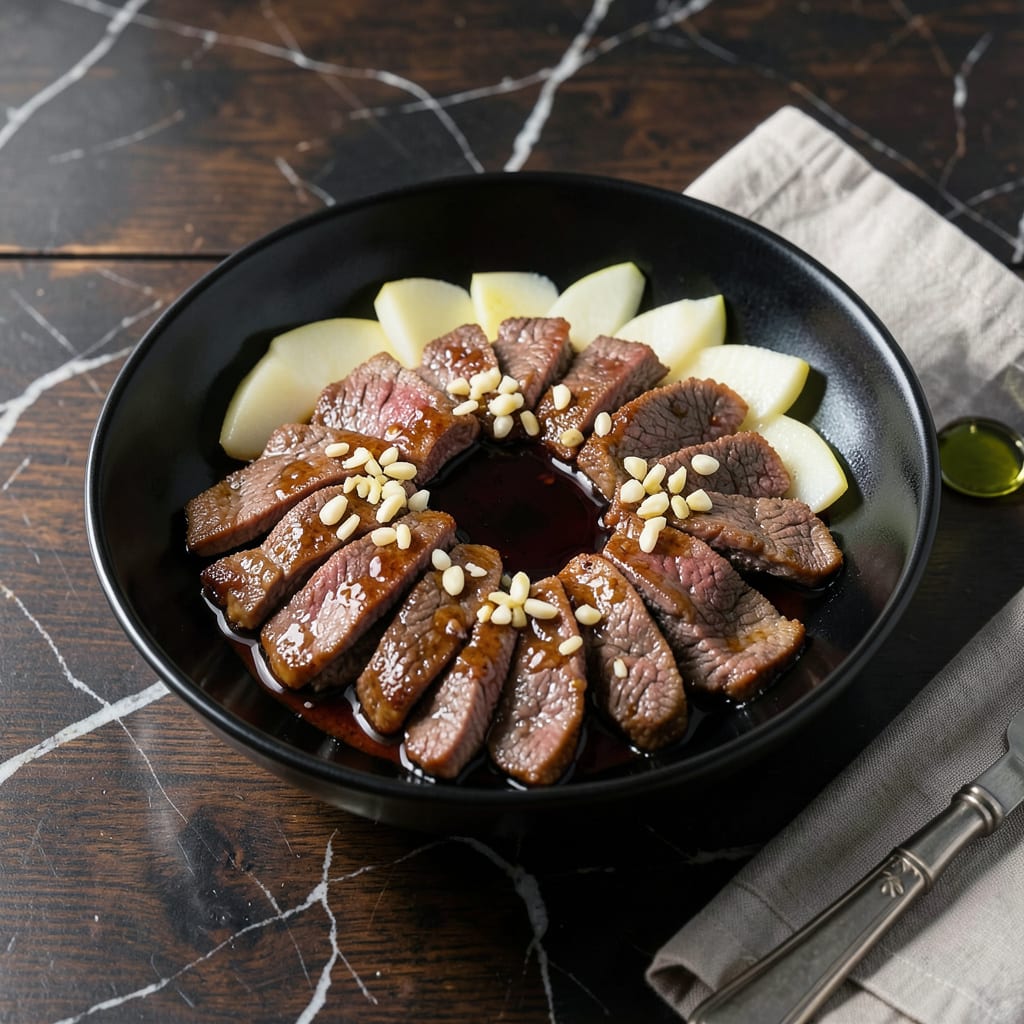
This slow cooker method brings authentic Korean BBQ flavors to your kitchen with minimal effort. The marinade infuses the beef with sweet, savory, and umami notes as it cooks low and slow.
You’ll achieve tender, caramelized meat that falls apart at the touch, ready to serve with rice and your favorite banchan. It’s a foolproof way to enjoy restaurant-quality results at home.
Ingredients for Korean Bbq Recipe Slow Cooker
Thinly sliced beef and a bold marinade come together for that signature Korean BBQ taste.
| Ingredient | Amount | Notes |
|---|---|---|
| Beef Chuck Roast 🥩 | 2 lb | Thinly sliced for marinade penetration |
| Soy Sauce 🫕 | ¾ cup | Low-sodium preferred for balance |
| Brown Sugar 🍚 | ½ cup | Packed, for caramelization |
| Asian Pear 🍐 | ½ whole | Grated, adds natural sweetness |
| Garlic Cloves 🧄 | 6 cloves | Minced for even distribution |
| Fresh Ginger 🌿 | 1 tbsp | Grated, skin removed |
| Sesame Oil 🫒 | 2 tbsp | Toasted for depth of flavor |
| Rice Vinegar 🍶 | 3 tbsp | Balances sweetness with acidity |
| Gochujang 🌶️ | 2 tbsp | Korean chili paste, adjust for spice |
| Onion 🧅 | 1 whole | Thinly sliced, yellow or white |
| Green Onions 🧅 | 4 whole | Sliced for garnish |
| Sesame Seeds 🌰 | 2 tbsp | Toasted for garnish |
| Black Pepper 🌶️ | 1 tsp | Freshly ground preferred |
[recipeingredientscaler]
The beef is everything here. Chuck roast stays tender after hours in the slow cooker—avoid leaner cuts like sirloin. Costco has great pre-sliced options, or ask your butcher to slice it thin (about 1/4-inch). Look for well-marbled pieces; the fat keeps it juicy. For the gochujang, check the Asian aisle at Kroger or H Mart—it’s usually near the soy sauces.
No Asian pear? Bosc pear or grated apple works in a pinch. Swap gochujang for sriracha plus a little miso if you’re desperate (not the same, but close). Brown sugar can be coconut sugar, but the flavor changes slightly. The sesame oil is non-negotiable—it adds that nutty depth. If you’re out of rice vinegar, apple cider vinegar at the same amount gets the job done.
Marinate the beef overnight if you can (worth the extra minute). Leftovers keep 4-5 days in the fridge or freeze for 3 months. Reheats beautifully—great for meal prep. Drizzle with extra sesame oil before serving for a fresh pop of flavor.
Why You’ll Love This Recipe
- Set It and Forget: I dump everything in the slow cooker before work and come home to fall-apart beef.
- Sweet-Savory Magic: The brown sugar and Asian pear caramelize into the meat, making each bite ridiculously good.
- Feeds the Gang: I use this for Sunday family dinners, and everyone—even the picky nephew—cleans their plate.
- Leftovers for Days: The chuck roast stretches for sandwiches, tacos, or rice bowls all week. Honestly, it tastes even better the next day.
Step-by-Step Instructions for Korean BBQ Slow Cooker
This hands-free method delivers tender, flavor-packed beef with minimal effort.
Step 1: Prepare the Beef and Marinade Base
Thinly slice the 2 lb Beef Chuck Roast against the grain into ¼-inch thick strips. This ensures the meat absorbs the marinade fully and cooks evenly in the slow cooker. I find it easiest to partially freeze the roast for 30 minutes first—this makes slicing much cleaner.
In a large bowl, whisk together the 0.75 cup Soy Sauce, 0.5 cup Brown Sugar, 2 tbsp Sesame Oil, 3 tbsp Rice Vinegar, and 2 tbsp Gochujang until the brown sugar dissolves completely. The mixture should look smooth with no visible sugar granules.
Step 2: Add Aromatics and Fruit for Depth
Grate the 0.5 whole Asian Pear directly into the marinade—this adds natural sweetness and tenderizing enzymes. Then add the minced 6 cloves Garlic Cloves, grated 1 tbsp Fresh Ginger, and 1 tsp Black Pepper. Stir well to combine all the flavors.
The Asian pear is key here—it breaks down during cooking, infusing the beef with subtle sweetness while keeping it incredibly tender. Don’t skip this ingredient; it’s what makes this dish special.
Step 3: Combine and Slow Cook to Perfection
Place the sliced beef in the slow cooker along with the thinly sliced 1 whole Onion. Pour the marinade over everything, making sure all the beef is submerged. Cover and cook on low for 6-7 hours or high for 3-4 hours.
You’ll know it’s done when the beef is fork-tender and the sauce has thickened slightly. I recommend checking at the 6-hour mark on low—if it needs more time, give it another 30-60 minutes. The beef should practically melt when pierced with a fork.
Step 4: Finish and Garnish for Serving
Once the beef is tender, give everything a good stir to coat the meat in the rich, glossy sauce. Transfer to a serving dish and garnish with the sliced 4 whole Green Onions and toasted 2 tbsp Sesame Seeds.
The sauce should be thick enough to cling to the beef but still pourable. If it’s too thin, leave the lid off for the last 30 minutes of cooking to let some liquid evaporate. Serve immediately over steamed rice for the full experience.
Pro Tips For Making Korean Bbq Recipe Slow Cooker
- Sear the Beef: I learned this the hard way—skipping the sear means missing out on deep flavor. Give the chuck roast a quick 2-3 minutes per side in a hot pan before it goes into the slow cooker.
- Grate the Pear: Sounds weird, but it works: grating the Asian pear instead of slicing helps it melt into the sauce, giving you that silky texture without lumps.
- Skip the Overcrowding: Resist the urge to cram all the beef in at once. Leave at least an inch of space at the top of the slow cooker so the sauce reduces properly instead of steaming the meat.
- Use Fresh Garlic: After burning three batches with old garlic, I finally figured out fresh cloves make a real difference. The flavor is sharper and brighter against the soy and brown sugar.
Regional Styles of This Recipe
Classic Korean Galbi
In Korea, galbi is the gold standard for BBQ, traditionally made with marinated beef short ribs grilled over charcoal. The marinade uses similar ingredients to this dish—soy sauce, brown sugar, and Asian pear—but often includes kiwi for extra tenderizing power.
Spicy Dak Bulgogi
For a poultry twist, dak bulgogi swaps beef for chicken thighs, amping up the heat with extra gochujang and gochugaru (Korean chili flakes). The slow cooker works beautifully here too, though I’d reduce cooking time to 4-5 hours on low to prevent drying out. 🌶️
Seoul Street Food
In bustling Seoul markets, you’ll find bossam—pork belly wrapped in lettuce with kimchi and ssamjang. While not a slow cooker dish, the flavors are complementary. I love serving this creation with ssamjang on the side for dipping.
Jeju Island Style
Jeju’s version often incorporates black pork, a local delicacy, and uses hallabong (a Jeju tangerine) in the marinade. The citrus brightens the rich meat beautifully. If you can’t find hallabong, clementine zest works as a substitute.
Busan Port Influence
Busan’s coastal location brings seafood into the mix. Try adding shrimp or scallops for the last 30 minutes of cooking. The sweetness of the seafood pairs perfectly with the savory-sweet sauce. I learned this trick from a fisherman at the Jagalchi Market. 💛
Modern Fusion
For a contemporary take, some Korean chefs add miso paste or hoisin sauce to deepen the umami. A splash of mirin can add a subtle sweetness too. These tweaks keep the dish authentic while adding a personal touch.
Nutrition Facts

Trained in classic French technique but raised on slow-cooked ribs and spicy rubs, she blends culinary skill with smoke and soul.
- Recipe for Boneless Pork Chops in Cast Iron Skillet: Sear and Baste to Juicy Perfection - October 3, 2026
- Recipe for Boneless Cross Rib Roast: Slow-Roasted Beef with Herb Crust - October 3, 2026
- Hamburgers in Sauce Recipe Crock Pot: Slow-Cooked Savory Delight - October 3, 2026