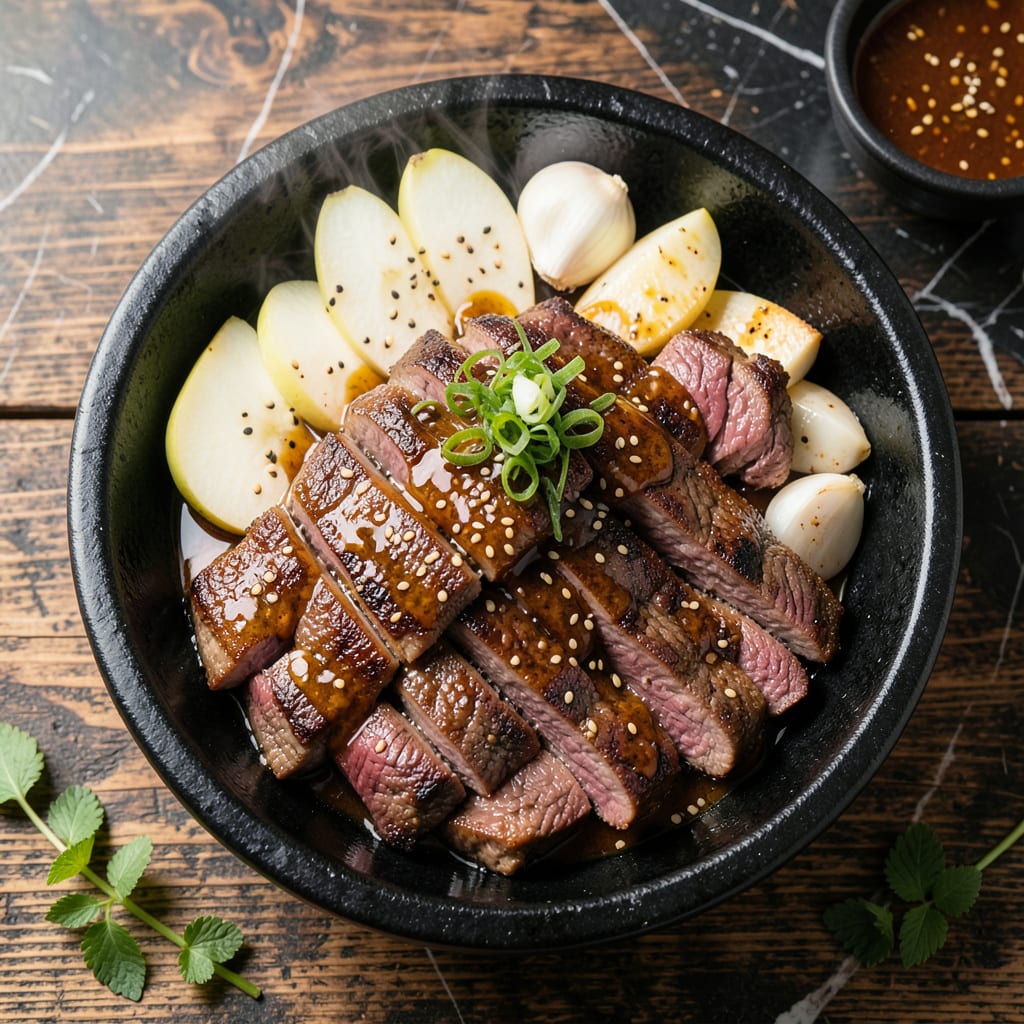
Achieving authentic Korean BBQ at home requires mastering the balance of smoky and sweet flavors. This method delivers restaurant-quality results with traditional marinade techniques.
I’ve refined this process through years of pitmaster experience, combining classic French precision with my love for bold, charred flavors. The result is tender, caramelized meat ready for your table.
Ingredients for Korean Bbq
A few quality ingredients transform into that smoky-sweet Korean BBQ you crave at home.
| Ingredient | Amount | Notes |
|---|---|---|
| Ribeye Steak 🥩 | 2 lb | Thinly sliced for quick cooking |
| Soy Sauce 🫒 | ½ cup | Low-sodium preferred for balance |
| Brown Sugar 🍚 | ⅓ cup | Packed for sweetness depth |
| Asian Pear 🍐 | ½ whole | Peeled and puréed for marinade |
| Garlic Cloves 🧄 | 6 cloves | Minced for aromatic base |
| Fresh Ginger 🌿 | 1 tbsp | Grated for zesty kick |
| Sesame Oil 🫒 | 2 tbsp | Toasted for nutty aroma |
| Rice Vinegar 💧 | 2 tbsp | Balances sweetness with acidity |
| Gochujang 🌶️ | 2 tbsp | Korean chili paste for heat |
| Green Onions 🧅 | 4 whole | Thinly sliced for garnish |
| Sesame Seeds 🌾 | 1 tbsp | Toasted for crunch and visual appeal |
| Black Pepper 🌶️ | 1 tsp | Freshly ground for best flavor |
| Vegetable Oil 🫒 | 1 tbsp | High smoke point for searing |
[recipe_ingredient_scaler]
The ribeye is non-negotiable here. Costco or Whole Foods have great options with good marbling—ask for it to be sliced thin at the counter (saves time). Asian pear is the secret to tenderizing; look for firm, fragrant ones at an Asian market (H Mart is my go-to). Gochujang can be found in the international aisle, but Korean markets have better variety.
No Asian pear? Substitute with grated apple or pineapple for similar enzymatic action. Out of gochujang? Sriracha plus a teaspoon of miso gets you close. Brown sugar can be swapped for coconut sugar, but the flavor profile shifts slightly. For the soy sauce, tamari works for gluten-free (just reduce salt elsewhere in the marinade).
Marinate the beef overnight for maximum flavor penetration—it’s worth the wait. Cooked meat keeps 3-4 days in the fridge (reheat gently) or freezes for 2 months. The marinade itself? Use within 2 days or freeze for 1 month (don’t reuse raw meat marinade).
Why You’ll Love This Recipe
- Minimal Marinating: I toss the ribeye with soy sauce, brown sugar, and grated Asian pear while the grill heats up—no overnight soak needed.
- Sweet-Savory Magic: The caramelized brown sugar and garlic create this sticky, umami-packed crust on the steak that’s honestly hard to resist.
- Crowd Pleaser: I’ve served this at casual dinners and summer cookouts, and it’s always the first thing to disappear.
- Leftovers? Yes Please: The flavors deepen overnight, so I intentionally make extra for next-day bulgogi tacos or rice bowls.
Step-by-Step Instructions for Korean BBQ
This method delivers tender, caramelized meat with that signature smoky-sweet flavor you crave.
Step 1: Prepare the Marinade Base
In a large bowl, whisk together the 0.5 cup Soy Sauce, 0.33 cup Brown Sugar, 2 tbsp Rice Vinegar, 2 tbsp Sesame Oil, and 2 tbsp Gochujang until the sugar dissolves. The mixture should be smooth with a deep amber color, slightly thick from the gochujang.
Add the 0.5 whole Asian Pear purée, 6 cloves Garlic Cloves, and 1 tbsp Fresh Ginger. Stir well to combine. Here’s the thing—the pear purée acts as a natural tenderizer, breaking down proteins in the ribeye for melt-in-your-mouth results.
Step 2: Marinate the Ribeye
Slice the 2 lb Ribeye Steak thinly against the grain into ¼-inch thick strips. This ensures quick cooking and maximum flavor absorption. Place the slices in the marinade, turning to coat every piece evenly.
Cover and refrigerate for at least 2 hours, or overnight for deeper flavor penetration. I always let it sit at room temperature for 30 minutes before cooking—cold meat seizes up on the grill and cooks unevenly.
Step 3: Grill to Perfection
Heat a grill or grill pan over high heat until smoking hot. Brush lightly with the 1 tbsp Vegetable Oil to prevent sticking. Remove the ribeye from the marinade (shake off excess) and grill in a single layer for 2-3 minutes per side.
Look for deep caramelization on the edges and slight char marks—that’s how you know the sugars in the marinade are creating that signature Korean BBQ crust. Avoid overcrowding the pan; cook in batches if needed to maintain high heat.
Step 4: Rest and Garnish
Transfer the grilled ribeye to a serving platter and let it rest for 5 minutes. This allows the juices to redistribute so every bite stays succulent. Sprinkle with the 4 whole Green Onions (thinly sliced) and 1 tbsp Sesame Seeds.
Finish with a pinch of the 1 tsp Black Pepper for a subtle kick. Real talk: the garnishes aren’t just for looks—they add freshness and texture that cut through the richness of the meat.
Pro Tips For Making Korean Bbq
- Sear on High Heat: Crank your pan or grill to screaming hot before adding the ribeye—I learned this the hard way after too many gray, steamed steaks. A proper sear locks in juices and gives that caramelized crust that makes Korean BBQ sing.
- Grate the Pear: Skip the chunks and finely grate the Asian pear into your marinade. Sounds weird, but it works: the enzymes tenderize the meat better, and you avoid biting into undercooked fruit bits.
- Don’t Over-Marinate: Ribeye only needs 2-4 hours in the soy-brown sugar mix—any longer and the sugar starts to cure the meat like jerky. I ruined a perfect cut by leaving it overnight once; lesson learned.
- Rest Before Slicing: Give the steak a solid 5-10 minutes under foil after cooking, even if you’re starving. Slicing too soon sends all those juices straight to the cutting board instead of your plate—your future self will thank you.
Common Mistakes When Making korean bbq
Overcrowding the Grill
This is the most common mistake I see. When you pack too much meat on the grill, the temperature drops and the ribeye steams instead of searing. Cook in single-layer batches with space between pieces for proper caramelization. Trust me, patience pays off with better flavor.
Skipping the Rest
I’ll admit, I used to slice right into the meat after grilling. But those 5 minutes of rest let the juices redistribute. Without it, you’ll lose all that beautiful moisture on the cutting board. The meat continues cooking internally during this time too. 💡
Marinating Too Long
While overnight marinating works, going beyond 24 hours can make the meat mushy. The Asian pear and rice vinegar are powerful tenderizers. For best texture, stick to the 2-12 hour window I recommended. Your meat will thank you with perfect tenderness.
Uneven Slicing
Cutting against the grain is non-negotiable for tenderness. But also aim for ¼-inch thick slices so they cook evenly. Thicker pieces won’t cook through, thinner ones will burn. I use my Wüsthof granton knife for precision.
Wrong Heat Level
High heat is essential for that signature Korean BBQ char. If your grill isn’t screaming hot, you’ll get pale, sad meat. Preheat for 10-15 minutes and test with a drop of water—it should sizzle and evaporate instantly. 🔥
Ignoring Garnishes
Those green onions and sesame seeds aren’t just pretty. They add freshness that cuts through the richness. Skip them and your dish will taste flat. I always toast my sesame seeds for extra nutty aroma.
Nutrition Facts

Trained in classic French technique but raised on slow-cooked ribs and spicy rubs, she blends culinary skill with smoke and soul.
- Recipe for Boneless Pork Chops in Cast Iron Skillet: Sear and Baste to Juicy Perfection - October 3, 2026
- Recipe for Boneless Cross Rib Roast: Slow-Roasted Beef with Herb Crust - October 3, 2026
- Hamburgers in Sauce Recipe Crock Pot: Slow-Cooked Savory Delight - October 3, 2026