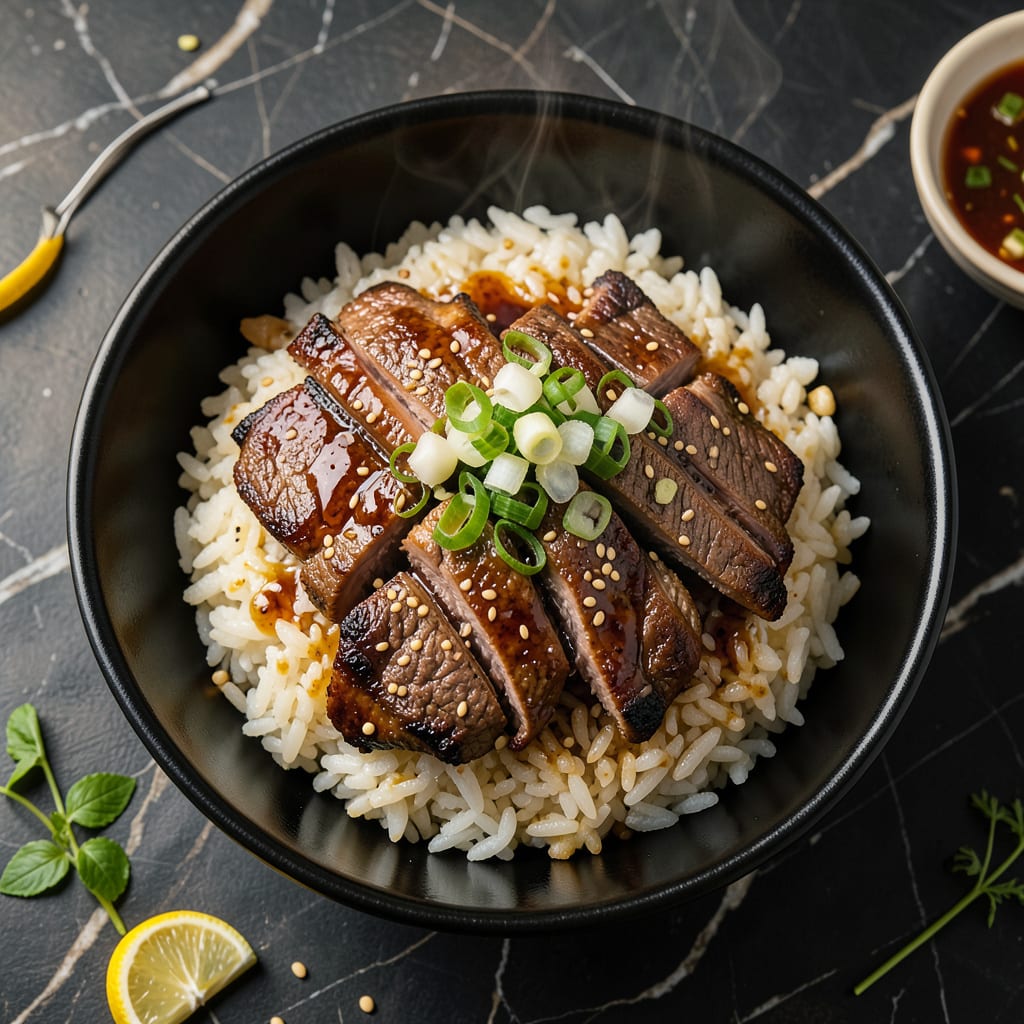
This dish brings smoky Korean BBQ flavors to your kitchen with minimal effort. The combination of tender, charred meat and fluffy rice creates a restaurant-quality meal at home.
I developed this method after years of perfecting my BBQ techniques. The key is marinating the meat properly and cooking it at high heat for that signature char.
Ingredients for Korean Bbq Rice
Ribeye, rice, and a handful of pantry staples bring those smoky BBQ flavors home.
| Ingredient | Amount | Notes |
|---|---|---|
| Ribeye Steak 🥩 | 1 ½ lb | Thinly sliced for quick cooking |
| Short-Grain White Rice 🍚 | 2 cups | Rinsed until water runs clear |
| Soy Sauce 🫒 | ½ cup | Low-sodium preferred for balance |
| Brown Sugar 🍚 | ¼ cup | Packed, for caramelization |
| Garlic Cloves 🧄 | 6 cloves | Minced finely for marinade |
| Fresh Ginger 🌿 | 1 tbsp | Grated, no fibers remaining |
| Sesame Oil 🫒 | 2 tbsp | Toasted variety for depth |
| Rice Vinegar 💧 | 2 tbsp | Unseasoned for acidity balance |
| Gochujang 🌶️ | 2 tbsp | Korean chili paste for heat |
| Asian Pear 🍐 | ½ whole | Grated, for natural tenderizer |
| Green Onions 🧅 | 4 whole | Thinly sliced for garnish |
| Toasted Sesame Seeds 🌿 | 2 tbsp | For finishing touch |
| Vegetable Oil 🫒 | 2 tbsp | High smoke point for searing |
| Kosher Salt 🧂 | 1 tsp | Diamond Crystal preferred |
| Black Pepper 🌶️ | ½ tsp | Freshly ground for best flavor |
[recipe_ingredient_scaler]
The ribeye is non-negotiable here—well-marbled cuts from Costco or Whole Foods give you that buttery texture once charred. Ask your butcher for thin slices (about 1/8-inch thick) if you’re not slicing it yourself at home. The rice should be short-grain; sushi rice works perfectly. I always rinse mine in a fine-mesh strainer until the water runs completely clear—worth the extra minute for fluffy grains.
No ribeye? Flank steak or sirloin work in a pinch (slice against the grain). Short on time? Pre-sliced meat for shabu-shabu at H Mart saves prep. The gochujang can be swapped for sriracha plus 1 tsp sugar, but the pear is key—it tenderizes the meat naturally. If you can’t find Asian pear, Bosc pear or grated apple get you close.
Marinate the meat overnight if you can—12 hours is ideal. Cooked rice keeps in the fridge for 3-4 days (splash water and microwave to refresh). The marinade freezes beautifully for 3 months, so make a double batch next time.
Why You’ll Love This Recipe
- One Pan Meal: Most of the work happens in a single skillet—sear the ribeye, toss in garlic, then mix with rice.
- Sweet-Savory Magic: Brown sugar caramelizes with soy sauce for that sticky, umami-packed glaze on every bite.
- Weeknight Hero: I throw this together after work and still get that restaurant-quality taste.
- Leftovers Win: Tastes even better the next day—if it lasts that long.
Step-by-Step Instructions for Korean BBQ Rice
Here’s my tested method for achieving those smoky charred bites over perfectly fluffy grains.
Step 1: Marinate the Ribeye Steak
In a large bowl, combine the thinly sliced 1.5 lb Ribeye Steak with 0.5 cup Soy Sauce, 0.25 cup Brown Sugar, 6 cloves minced Garlic Cloves, 1 tbsp Fresh Ginger, 2 tbsp Sesame Oil, 2 tbsp Rice Vinegar, 2 tbsp Gochujang, 0.5 whole grated Asian Pear, 1 tsp Kosher Salt, and 0.5 tsp Black Pepper.
Mix thoroughly to ensure every slice is evenly coated. I like to use my hands for this—it’s messy but ensures the marinade penetrates every nook. Cover and refrigerate for at least 1 hour, or up to 4 hours for maximum flavor development.
Step 2: Cook the Short-Grain White Rice
Rinse the 2 cups Short-Grain White Rice under cold water until the water runs completely clear. This removes excess starch and prevents gummy rice. Drain well in a fine-mesh strainer.
Combine the rinsed rice with 2 cups water in a rice cooker or heavy pot. Cook according to your rice cooker’s instructions, or bring to a boil, then reduce to a simmer, cover, and cook for 15 minutes. Remove from heat and let it steam, covered, for 10 minutes. Fluff with a fork before serving.
Step 3: Sear the Marinated Ribeye
Heat 2 tbsp Vegetable Oil in a large skillet or griddle over high heat until it just starts to shimmer. Working in batches to avoid crowding, add the marinated ribeye slices in a single layer.
Cook for 2-3 minutes per side until the edges are beautifully charred and caramelized. Don’t move the slices around too much—let them develop that perfect sear. Transfer the cooked meat to a plate and tent with foil to keep warm.
Step 4: Assemble and Garnish
Divide the cooked short-grain white rice among four bowls. Arrange the seared ribeye slices over the top of each portion. The contrast of the warm, fluffy rice with the hot, caramelized meat is what makes this dish special.
Garnish each serving with thinly sliced 4 whole Green Onions and a sprinkle of 2 tbsp Toasted Sesame Seeds. The green onions add a fresh crunch while the sesame seeds provide a nutty finish that ties all the flavors together.
Pro Tips For Making Korean Bbq Rice
- Slice Against the Grain: Cut your ribeye into thin strips against the grain for tender, melt-in-your-mouth texture—this makes a real difference with Korean BBQ.
- Rinse the Rice: Wash your short-grain white rice until the water runs clear to remove excess starch, guaranteeing fluffier, less sticky rice.
- Don’t Over-Sauce: Resist the urge to drown the steak in marinade—just enough soy sauce, brown sugar, and garlic to coat, or it’ll steam instead of caramelize.
- Use Day-Old Rice: I learned this the hard way—fresh rice turns mushy when stir-fried, so cook it a day ahead and refrigerate for that perfect chewy texture.
Dietary Considerations for This korean bbq rice
Gluten-Free Adaptation
To make this dish gluten-free, simply swap the soy sauce for tamari—it’s naturally gluten-free and delivers the same umami depth. I always keep a bottle of San-J Tamari in my pantry for this exact purpose. 💡
Lower Sodium Option
Use low-sodium soy sauce and reduce the added kosher salt by half. The gochujang and brown sugar already contribute significant flavor, so you won’t miss the extra salt. I’ve tested this version for friends watching their sodium intake.
Dairy-Free by Default
This recipe is inherently dairy-free, so no modifications are needed. The marinade relies on plant-based ingredients like sesame oil and rice vinegar, making it a great option for those avoiding dairy. I love that it’s naturally inclusive.
Vegetarian Alternative
Replace the ribeye steak with 1.5 lb portobello mushrooms or extra-firm tofu. Slice them thinly and marinate as directed. The mushrooms absorb the flavors beautifully, while tofu benefits from pressing first to remove excess moisture. ✨
Nut-Free Considerations
This dish is nut-free as written, but always double-check your gochujang label, as some brands may contain traces of nuts. I recommend Sempio for a reliable nut-free option. It’s a small detail that ensures everyone can enjoy the meal safely.
Sugar Reduction Tip
Cut the brown sugar in half and add 1 tbsp honey or maple syrup for a less refined sweetener. The Asian pear also adds natural sweetness, so you can reduce sugar without sacrificing flavor. I often do this for a lighter touch.
Nutrition Facts

Trained in classic French technique but raised on slow-cooked ribs and spicy rubs, she blends culinary skill with smoke and soul.
- Recipe for Boneless Pork Chops in Cast Iron Skillet: Sear and Baste to Juicy Perfection - October 3, 2026
- Recipe for Boneless Cross Rib Roast: Slow-Roasted Beef with Herb Crust - October 3, 2026
- Hamburgers in Sauce Recipe Crock Pot: Slow-Cooked Savory Delight - October 3, 2026