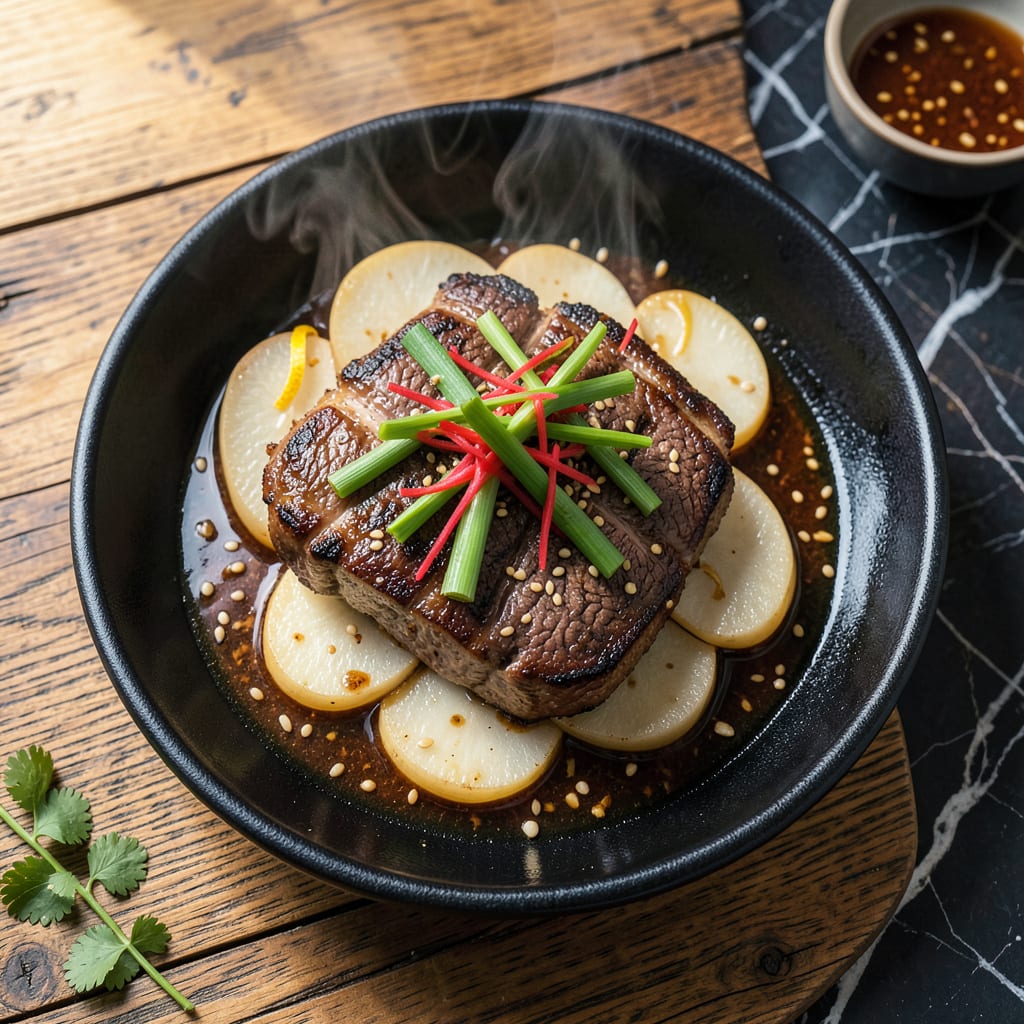
This Korean-inspired roast delivers restaurant-quality flavor with charred caramelization that locks in juices. My pitmaster background meets French technique in this foolproof method.
Marinate the beef overnight for maximum flavor penetration, then roast at high heat to achieve that signature crispy exterior. The result is tender, flavorful meat with perfect caramelization every time.
Ingredients for Korean Bbq Roast
Restaurant-quality ingredients create charred caramelization and tender, flavorful beef in every bite.
| Ingredient | Amount | Notes |
|---|---|---|
| Beef Ribeye Roast 🥩 | 2 ½ lb | Well-marbled, boneless preferred |
| Soy Sauce 🫒 | ¾ cup | Low-sodium for better control |
| Brown Sugar 🍚 | ½ cup | Light or dark, packed |
| Garlic Cloves 🧄 | 8 cloves | Minced for maximum infusion |
| Fresh Ginger 🌿 | 2 tbsp | Peeled and finely grated |
| Sesame Oil 🫒 | 2 tbsp | Toasted variety for depth |
| Rice Vinegar 💧 | ¼ cup | Unseasoned for balance |
| Gochujang 🌶️ | 3 tbsp | Korean chili paste essential |
| Asian Pear 🍐 | ½ whole | Peeled and grated for tenderness |
| Green Onions 🧅 | 6 whole | Thinly sliced for garnish |
| Toasted Sesame Seeds 🌿 | 2 tbsp | For finishing touch |
| Black Pepper 🌶️ | 1 tsp | Freshly ground for boldness |
| Vegetable Oil 🫒 | 2 tbsp | High smoke point for searing |
[recipe_ingredient_scaler]
The beef is non-negotiable here. Ribeye offers the marbling needed for juicy results—Costco or a trusted butcher will have high-quality cuts. Look for bright red color with abundant fat streaking. The Asian pear is a traditional tenderizer; find it at H Mart or Korean markets. Always use toasted sesame oil—regular lacks the depth this dish demands.
No gochujang? Sriracha mixed with a bit of miso paste can work in a pinch (use half the amount). Substitute the pear with kiwi or pineapple—same enzymatic tenderizing effect. Brown sugar can be swapped for coconut sugar. For the soy sauce, tamari works for gluten-free needs. Don’t skip the overnight marinade—this is where the magic happens.
Marinated beef keeps 3-4 days in the fridge (uncooked). Once roasted, store leftovers 4 days or freeze for 3 months. Bring to room temperature before reheating to preserve moisture. The charred exterior is best fresh, but still delicious warmed through in a skillet.
Why You’ll Love This Recipe
- Set It and Forget: I toss the ribeye with soy sauce, brown sugar, and ginger in the morning, then let the oven do the work.
- Sweet-Savory Magic: The brown sugar caramelizes with the soy and garlic into this sticky, umami-packed glaze that clings to every bite.
- Feeds My Crew: One roast, endless options—sliced thin for tacos, piled on rice bowls, or stuffed into sandwiches the next day.
- Leftovers for Days: Honestly, it tastes even better reheated, and the flavor just deepens overnight.
Step-by-Step Instructions for Korean BBQ Roast
Master the technique for perfectly charred, caramelized beef with deep umami flavor.
Step 1: Create the Marinade Base
In a large bowl, whisk together the 0.75 cup soy sauce, 0.5 cup brown sugar, and 0.25 cup rice vinegar until the sugar fully dissolves. The vinegar’s acidity balances the sweetness while tenderizing the beef.
Add the 3 tbsp gochujang, 2 tbsp sesame oil, minced 8 cloves garlic cloves, and finely grated 2 tbsp fresh ginger. Whisk vigorously until smooth. The gochujang lends its signature fermented spice, while the sesame oil adds nutty depth.
Step 2: Incorporate the Tenderizing Elements
Peel and finely grate the 0.5 whole asian pear directly into the marinade. The natural enzymes in the pear break down proteins, ensuring exceptional tenderness. Stir in the 1 tsp black pepper—freshly ground delivers more aromatic impact.
Place the 2.5 lb beef ribeye roast in a resealable plastic bag or shallow dish. Pour the marinade over, ensuring it coats all surfaces. Massage the mixture into the beef, paying special attention to any crevices or fat caps.
Step 3: Marinate and Sear for Maximum Flavor
Cover and refrigerate for at least 4 hours, or ideally overnight. The extended marinating time allows the flavors to penetrate deeply. Remove the beef from the refrigerator 30 minutes before cooking to bring it to room temperature.
Heat the 2 tbsp vegetable oil in a heavy skillet or Dutch oven over medium-high heat until shimmering. Sear the beef on all sides for 3-4 minutes per side until deeply browned. This creates the foundation for the signature charred caramelization.
Step 4: Finish and Rest
Reduce heat to medium and continue cooking, basting the beef with the collected marinade, for 15-20 minutes until the internal temperature reaches 135°F for medium-rare. The marinade will reduce into a glossy glaze.
Transfer the beef to a cutting board and let it rest for 15 minutes before slicing thinly against the grain. Thin slices expose more surface area to the caramelized exterior, maximizing flavor in each bite.
Garnish with thinly sliced 6 whole green onions and sprinkle with 2 tbsp toasted sesame seeds for texture and visual contrast.
Pro Tips For Making Korean Bbq Roast
- Score the Fat: Use a sharp knife to cut 1/4-inch slits in the ribeye’s fat cap before marinating—this lets the soy-garlic mixture penetrate deeper and crisp up better during roasting.
- Bloom the Aromatics: Sauté the minced garlic and grated ginger in a little oil for 30 seconds before adding to the marinade; raw garlic can taste harsh, but this softens the bite and wakes up the flavors.
- Don’t Rush the Marinade: I learned this the hard way—give the ribeye at least 4 hours (overnight is better) in the soy-brown sugar mix, or the exterior will taste underseasoned compared to the center.
- Rest Before Slicing: Tent the roast with foil and let it sit 15 minutes after pulling it from the oven—this keeps the juices from pooling on the cutting board instead of in the meat.
Serving Suggestions for This Recipe
Traditional Table Setup
Serve this on a large platter with steamed white rice as the base. I love using sushi rice for its sticky texture that soaks up the marinade beautifully. Arrange thin slices of beef in an overlapping pattern for visual appeal. 💛
Fresh Wraps
Offer butter lettuce leaves or perilla leaves for DIY wraps—a Korean BBQ classic. Add kimchi and sliced cucumbers for crunch. The cool lettuce balances the rich, charred beef perfectly.
Side Dish Pairings
Kongnamul muchim (seasoned soybean sprouts) adds refreshing contrast. Quick-pickle radishes in rice vinegar with a pinch of sugar for a tangy bite. These sides complement the bold flavors without overpowering.
Dipping Sauces
Provide small bowls of ssamjang (mix 2 tbsp gochujang with 1 tbsp doenjang and 1 tsp sesame oil). A simple soy-garlic dip with 1 tbsp soy sauce, 1 tsp minced garlic, and 1 tsp sugar also works wonders. 🔥
Garnish Generously
Beyond green onions and sesame seeds, add thinly sliced red onion for sharpness. A sprinkle of coarse sea salt enhances the caramelized crust. Fresh cilantro adds a bright, citrusy note that cuts through the richness.
Leftovers Reinvented
Slice leftover beef thin and pile onto toasted brioche buns with sriracha mayo for next-day sandwiches. Or chop and stir-fry with vegetables for a quick bibimbap bowl. The flavors deepen overnight, making leftovers just as exciting.
Nutrition Facts

Trained in classic French technique but raised on slow-cooked ribs and spicy rubs, she blends culinary skill with smoke and soul.
- Recipe for Boneless Pork Chops in Cast Iron Skillet: Sear and Baste to Juicy Perfection - October 3, 2026
- Recipe for Boneless Cross Rib Roast: Slow-Roasted Beef with Herb Crust - October 3, 2026
- Hamburgers in Sauce Recipe Crock Pot: Slow-Cooked Savory Delight - October 3, 2026