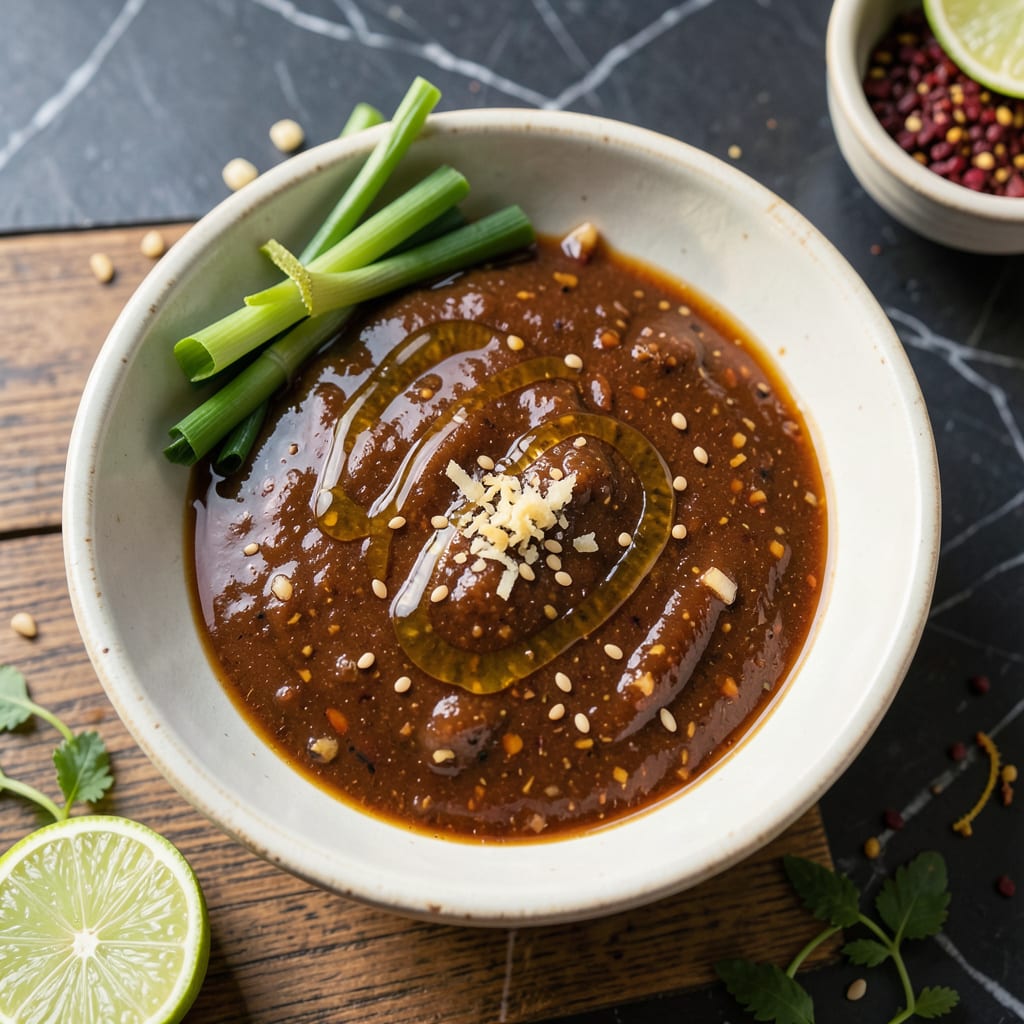
This dressing captures the essence of Korean BBQ flavors in a versatile liquid form. I developed it to bring sweet-savory depth to simple greens.
With just a few pantry staples, you create a bold umami boost that transforms any salad. The balance of soy, sesame, and garlic makes it irresistibly complex.
Ingredients for Korean Bbq Salad Dressing
Nine pantry staples create this bold, umami-packed dressing with sweet-savory depth.
| Ingredient | Amount | Notes |
|---|---|---|
| Soy Sauce 🫒 | ½ cup | Low-sodium preferred for balance |
| Sesame Oil 🫒 | 2 tbsp | Toasted for rich nutty flavor |
| Rice Vinegar 🍯 | 3 tbsp | Unseasoned variety recommended |
| Honey 🍯 | 3 tbsp | Or substitute agave for vegan |
| Garlic Cloves 🧄 | 4 cloves | Minced for maximum flavor release |
| Fresh Ginger 🌿 | 1 tbsp | Peeled and finely grated |
| Gochujang 🌶️ | 1 tbsp | Korean chili paste for heat |
| Toasted Sesame Seeds 🌰 | 1 tbsp | Plus extra for garnish |
| Green Onions 🧅 | 2 whole | Thinly sliced for freshness |
[recipe_ingredient_scaler]
The soy sauce base is key here. Kikkoman low-sodium gives you control over the salt level without sacrificing depth. Toasted sesame oil (not the raw stuff) adds that signature nutty aroma—look for it in the Asian aisle at Kroger or any well-stocked supermarket. Fresh ginger and garlic are non-negotiable; the pre-minced jars just don’t cut it for that bright, zingy punch.
No gochujang? Sriracha at half the amount works in a pinch, though it’ll be less complex. Swap honey for maple syrup or agave if you need it vegan. The rice vinegar can be apple cider vinegar (same quantity), but avoid white vinegar—it’s too harsh. Sesame seeds can be skipped, but they add a nice crunch. Trader Joe’s has great prices on both gochujang and sesame oil.
This dressing keeps 1 week in the fridge in a sealed jar. The flavors actually deepen over 24-48 hours, so make it ahead if you can. Shake well before using, as the ingredients will separate. Freezing isn’t recommended—it can alter the texture of the sesame oil.
Why You’ll Love This Recipe
- 5-Minute Whisk: I toss the soy sauce, sesame oil, rice vinegar, honey, and garlic into a jar, shake it, and it’s ready—no cooking, no fuss.
- Sweet-Savory Punch: The honey balances the soy’s saltiness while garlic and sesame oil add that deep, umami kick I crave on everything from greens to grilled chicken.
- Drizzle on Anything: I’ve used it on noodle bowls, as a marinade, and even drizzled over roasted veggies. Honestly, it’s my go-to for anything needing a flavor boost.
- Stays Fresh for Days: One batch lasts me a week in the fridge, so I can prep it Sunday and still have that bold taste ready for quick meals.
Step-by-Step Instructions for Korean BBQ Salad Dressing
Here’s the method. Straightforward, tested, works every time.
Step 1: Combine the Liquid Base Ingredients
In a medium bowl, whisk together the 0.5 cup Soy Sauce, 2 tbsp Sesame Oil, 3 tbsp Rice Vinegar, and 3 tbsp Honey until the honey fully dissolves into the mixture. I find the honey incorporates best when the soy sauce is at room temperature.
The soy sauce provides the salty umami foundation while the sesame oil adds its distinctive nutty aroma. The rice vinegar balances the richness with a clean acidity, and the honey brings sweetness that will caramelize slightly when used on grilled meats.
Step 2: Add the Aromatic Components
Next, add the 4 cloves Garlic Cloves (minced) and 1 tbsp Fresh Ginger (peeled and finely grated) to the bowl. Stir thoroughly to distribute these aromatics throughout the dressing. The garlic and ginger will infuse the mixture with their pungent, warming qualities.
Real talk: fresh ginger makes a noticeable difference here. The pre-ground version lacks the bright, zesty character that fresh ginger brings to this Korean-inspired dressing. Make sure to peel it first to remove any bitter fibers from the skin.
Step 3: Incorporate the Spice and Finishing Touches
Add the 1 tbsp Gochujang to the bowl and whisk vigorously to fully incorporate the thick chili paste. The gochujang will add a deep red color and a subtle heat that builds complexity in the dressing.
Finally, stir in the 1 tbsp Toasted Sesame Seeds and 2 whole Green Onions (thinly sliced). The sesame seeds provide a nutty crunch while the green onions add a fresh, oniony brightness that lightens the rich flavors.
Step 4: Rest and Allow Flavors to Meld
Cover the bowl and let the dressing sit at room temperature for at least 30 minutes before using. This resting period allows all the bold flavors to harmonize and mellow slightly.
I know it seems weird, but the dressing actually improves with time. The flavors become more cohesive after 2-3 hours in the refrigerator. Always give it a good stir before using as the ingredients may settle during storage.
Pro Tips For Making Korean Bbq Salad Dressing
- Mince Garlic Fine: Press or finely mince the garlic cloves—big chunks leave a harsh bite. I learned this the hard way after ruining a batch with lazy chopping.
- Warm the Honey: Microwave the honey for 10-15 seconds before mixing—it blends smoothly with the soy sauce and vinegar instead of clumping at the bottom.
- Balance the Vinegar: Start with 1 tablespoon rice vinegar, taste, then add more. Too much makes the dressing sharp and overpowering, especially with the salty soy sauce.
- Bloom Sesame Oil: Lightly toast the sesame oil in a dry pan for 30 seconds before adding it to the mix—it deepens the nutty flavor without burning.
Regional Styles of This korean bbq salad dressing
Seoul Street Style
This version amps up the heat with 2 tbsp gochujang and adds 1 tbsp gochugaru (Korean chili flakes) for extra spice. I love this for its bold kick—perfect for those who crave heat. The dressing turns a deep red and pairs beautifully with grilled meats. 🌶️
Busan Coastal Twist
Inspired by Busan’s seafood culture, I add 1 tbsp fish sauce and 1 tsp roasted seaweed flakes to the base. The fish sauce deepens the umami, while seaweed adds a subtle oceanic note. It’s fantastic on seafood salads or grilled fish.
Jeonju Traditional
This style leans into fermentation with 1 tbsp doenjang (fermented soybean paste) replacing half the gochujang. The result is a more complex, funky flavor that’s true to Jeonju’s culinary heritage. I find it pairs wonderfully with hearty greens.
Modern Fusion
For a contemporary take, I blend in 1 tbsp miso paste and 1 tsp sriracha. The miso adds depth while sriracha brings a different kind of heat. This version works surprisingly well on non-Korean dishes too.
Gangwon Mountain
Inspired by the mountainous region, this includes 1 tbsp pine nut oil and 1 tsp wild mountain pepper. The pine nut oil adds a delicate nutty aroma, while the pepper provides a unique warmth. It’s my go-to for foraged greens.
Nutrition Facts

Trained in classic French technique but raised on slow-cooked ribs and spicy rubs, she blends culinary skill with smoke and soul.
- Recipe for Boneless Pork Chops in Cast Iron Skillet: Sear and Baste to Juicy Perfection - October 3, 2026
- Recipe for Boneless Cross Rib Roast: Slow-Roasted Beef with Herb Crust - October 3, 2026
- Hamburgers in Sauce Recipe Crock Pot: Slow-Cooked Savory Delight - October 3, 2026