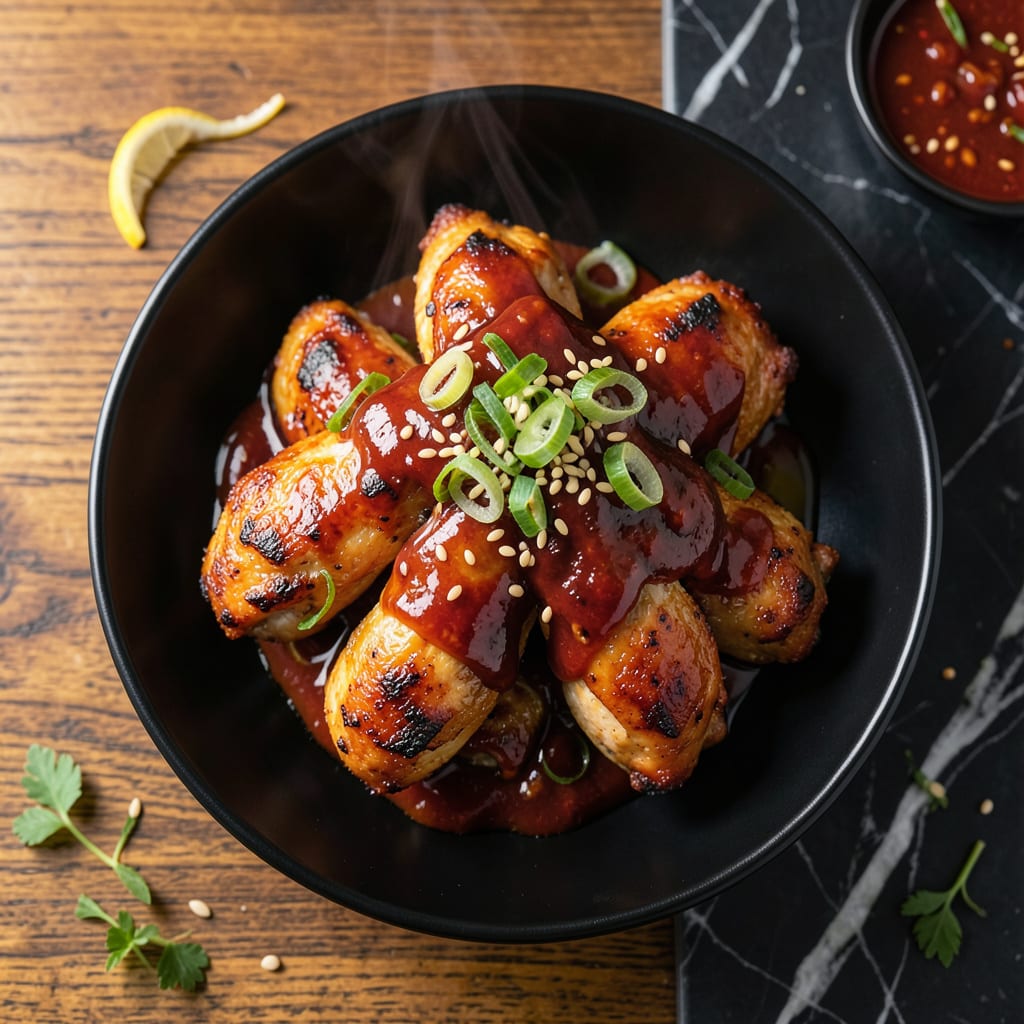
This Korean BBQ chicken delivers perfectly balanced sweet and spicy flavors with a glossy glaze that caramelizes beautifully. The marinade transforms ordinary chicken into restaurant-quality dish.
I developed this method after years of testing different ratios to achieve that signature Korean BBQ taste. The sauce clings to every bite, creating a perfect harmony of savory, sweet, and spicy notes.
Ingredients for Korean Bbq Sauce Recipe Chicken
Transform ordinary chicken with bold, balanced flavors that shine in every bite. Nothing short of perfection.
| Ingredient | Amount | Notes |
|---|---|---|
| Boneless Chicken Thighs 🍗 | 2 lb | Skin-on for crispiness, or skinless |
| Gochujang 🌶️ | ½ cup | Korean red chili paste, essential |
| Soy Sauce 🫒 | ⅓ cup | Low-sodium preferred for balance |
| Brown Sugar 🍚 | ½ cup | Packed for rich sweetness |
| Honey 🍯 | 3 tbsp | For natural sweetness and glaze |
| Rice Vinegar 🍶 | 2 tbsp | Balances sweetness with acidity |
| Sesame Oil 🫒 | 1 tbsp | Toasted variety for depth |
| Fresh Garlic Cloves 🧄 | 4 cloves | Minced for maximum flavor |
| Fresh Ginger 🌿 | 1 tbsp | Grated, adds zesty warmth |
| Green Onions 🧅 | 4 whole | Thinly sliced for garnish |
| Sesame Seeds 🌾 | 2 tbsp | Toasted for garnish |
| Vegetable Oil 🫒 | 2 tbsp | High smoke point for searing |
| Black Pepper 🌶️ | ½ tsp | Freshly ground for best flavor |
| Red Pepper Flakes 🔥 | ½ tsp | Adjust for heat preference |
[recipe_ingredient_scaler]
The gochujang is non-negotiable here—look for it in the Asian aisle at Kroger or Whole Foods, or grab a tube from H-Mart if you have one nearby. It’s the backbone of that signature Korean BBQ flavor. Chicken thighs are ideal (dark meat stays juicy), but breasts work if that’s what you’ve got—just don’t overcook them. For the soy sauce, Kikkoman low-sodium keeps the salt in check without sacrificing depth.
No gochujang? Sriracha plus a little miso paste gets you in the ballpark, but the flavor won’t be quite the same. Brown sugar can be swapped for white in a pinch, though the molasses notes add complexity. Fresh ginger and garlic are key—jarred versions lack the bright, sharp punch. If you’re avoiding honey, use agave or maple syrup at a 1:1 ratio. The sesame oil? Don’t skip it—it’s what ties everything together.
The sauce keeps in the fridge for up to 1 week, so make extra. Chicken is best served fresh but leftovers reheat well—store in an airtight container for 3-4 days. Toast the sesame seeds just before serving for maximum crunch.
Why You’ll Love This Recipe
- One Pan Wonder: I toss everything in a bowl, let it marinate, and the oven does the rest—no babysitting required.
- Sweet-Spicy Magic: The gochujang and honey create this sticky, caramelized glaze that clings to every bite of juicy thigh.
- Meal Prep MVP: Honestly, it tastes even better the next day stuffed in wraps or over rice for lunch.
- Budget-Friendly Feast: Boneless thighs stay cheap, and a little sauce goes a long way to feed a crowd.
Step-by-Step Instructions for Korean BBQ Chicken
Achieve restaurant-quality results with this precise method for perfectly glazed chicken.
Step 1: Prepare the Korean BBQ Sauce
In a medium bowl, whisk together the 0.5 cup Gochujang, 0.33 cup Soy Sauce, 0.5 cup Brown Sugar, 3 tbsp Honey, 2 tbsp Rice Vinegar, and 1 tbsp Sesame Oil until smooth. The mixture should be thick but pourable—this consistency ensures it clings to the chicken beautifully.
Add the minced 4 cloves Fresh Garlic Cloves and grated 1 tbsp Fresh Ginger, then stir in the 0.5 tsp Black Pepper and 0.5 tsp Red Pepper Flakes. I always let this sauce sit for 10 minutes to allow the flavors to meld before using it.
Step 2: Sear the Chicken Thighs
Heat the 2 tbsp Vegetable Oil in a large skillet over medium-high heat until shimmering. Pat the 2 lb Boneless Chicken Thighs dry with paper towels, then carefully place them in the hot oil. Sear undisturbed for 4-5 minutes until the undersides develop a deep golden-brown crust.
Flip the thighs and sear for another 3-4 minutes. You’ll notice the edges starting to crisp—that’s your signal they’re ready for the sauce. Remove the chicken from the skillet and set aside temporarily.
Step 3: Glaze and Caramelize
Reduce the heat to medium and pour the prepared sauce into the same skillet. Return the chicken to the pan, coating each piece thoroughly in the sauce. Cook for 3-4 minutes, turning the thighs occasionally, until the sauce thickens into a glossy glaze.
The sauce should bubble gently, reducing to a syrupy consistency that coats the back of a spoon. Watch for the edges of the chicken to darken slightly—this caramelization is key to the dish’s signature sticky, slightly charred finish.
Step 4: Garnish and Serve
Transfer the glazed chicken to a serving platter. Immediately sprinkle with the 2 tbsp Sesame Seeds and thinly sliced 4 whole Green Onions. These garnishes add freshness and a satisfying crunch that contrasts beautifully with the tender, saucy chicken.
Let the chicken rest for 2-3 minutes before serving. This brief pause allows the glaze to set slightly, ensuring every bite delivers the perfect balance of sweet, spicy, and umami flavors.
Pro Tips For Making Korean Bbq Sauce Recipe Chicken
- Sear Before Saucing: I learned this the hard way—get a good brown crust on the chicken thighs in a hot pan first, then add the gochujang sauce. This keeps the meat from steaming in the sauce and gives you that sticky, caramelized glaze.
- Thin the Honey: Sounds weird, but it works: warm the honey for 10 seconds in the microwave before mixing it with the gochujang and soy sauce. It blends smoother and coats the chicken more evenly.
- Skip the Overcrowding: After burning three batches, I finally figured out that cooking the thighs in a single layer is non-negotiable. Crowding drops the pan temp and turns your sauce into a sad, watery mess.
- Rest Under Foil: Give the chicken a solid 5-10 minutes under foil after cooking—yes, even if you’re impatient like me. The juices redistribute, and the sauce clings better instead of pooling at the bottom.
Dietary Considerations for This korean bbq sauce recipe chicken
Gluten-Free Option
Swap the soy sauce for tamari—it’s naturally gluten-free and delivers the same rich umami flavor. I’ve tested this with San-J Tamari and the results are indistinguishable from the original. Always check labels, as some brands may differ. 💡
Reduced Sugar
Cut the brown sugar by half and add 1 tbsp monk fruit sweetener to maintain sweetness without the sugar spike. The sauce will be slightly less caramelized but still packed with flavor. I use Lakanto for this.
Dairy-Free
This recipe is naturally dairy-free, but double-check your gochujang brand—some contain trace dairy. Sunchang and Chung Jung One are safe bets. The sesame oil and seeds add richness without any dairy at all.
Low-Sodium
Use low-sodium soy sauce and reduce the total amount by 25%. Boost flavor with extra garlic and ginger to compensate. I find Kikkoman’s low-sodium works perfectly here.
Spice Adjustments
For sensitive palates, reduce red pepper flakes to ¼ tsp or omit entirely. For heat lovers, add 1 tsp gochugaru (Korean chili flakes). I often keep a small bowl of extra flakes on the side for customization. 🔥
Protein Swaps
This sauce works beautifully with tofu or pork for variety. For tofu, press and cube 1 lb firm tofu, then sear before glazing. Pork shoulder slices need 5-6 minutes per side to cook through.
Nutrition Facts

Trained in classic French technique but raised on slow-cooked ribs and spicy rubs, she blends culinary skill with smoke and soul.
- Recipe for Boneless Pork Chops in Cast Iron Skillet: Sear and Baste to Juicy Perfection - October 3, 2026
- Recipe for Boneless Cross Rib Roast: Slow-Roasted Beef with Herb Crust - October 3, 2026
- Hamburgers in Sauce Recipe Crock Pot: Slow-Cooked Savory Delight - October 3, 2026