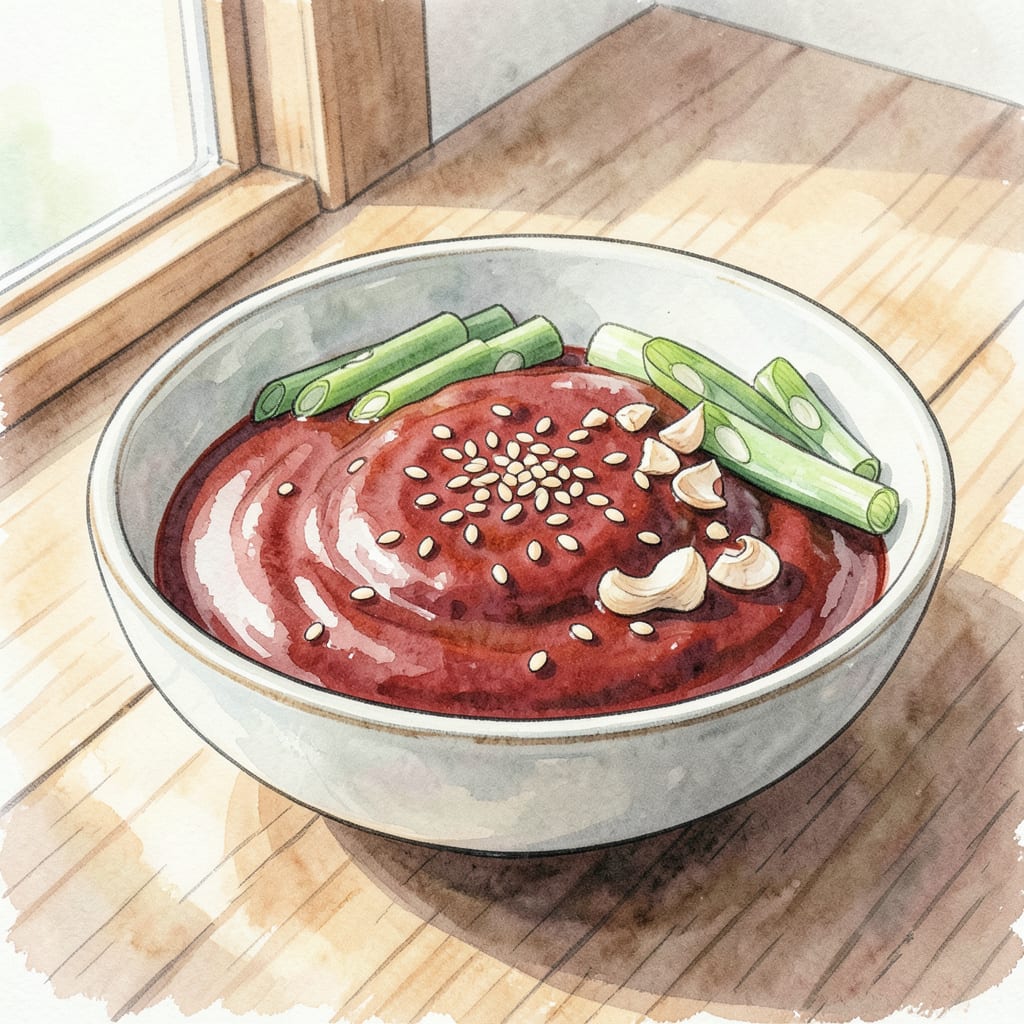
I’ve perfected my Korean BBQ sauce recipe through years of experimenting with different combinations of sweet and spicy flavors. This homemade version captures the essence of traditional Korean BBQ in just a few minutes.
With a balance of soy sauce, brown sugar, garlic, and gochujang, this sauce brings depth and complexity to any grilled meat or vegetable. It’s a versatile condiment that can be used as a marinade, glaze, or dipping sauce, making it a staple in my kitchen.
Ingredients for Korean Bbq Sauce Recipe Homemade
Make this Korean BBQ sauce in minutes with pantry staples and a few fresh ingredients.
| Ingredient | Amount | Notes |
|---|---|---|
| Soy Sauce 💧 | ½ cup | Low-sodium preferred |
| Brown Sugar 🍮 | ¼ cup | Packed light brown |
| Garlic Cloves 🧄 | 4 cloves | Minced, fresh |
| Gochujang 🌶️ | 2 tbsp | Korean chili paste |
| Rice Vinegar 🍋 | 2 tbsp | Unseasoned, mild |
| Ginger 🌿 | 1 tbsp | Fresh, grated |
| Sesame Oil 🫒 | 1 tsp | Toasted, for flavor |
| Crushed Red Pepper Flakes 🔥 | ½ tsp | Optional, for heat |
[recipe_ingredient_scaler]
For the best gochujang, check Asian markets or Trader Joe’s. Quality matters here—the fermented kind has more depth. Regular soy sauce works, but low-sodium gives better balance. I like using dark brown sugar for richer flavor, but light works too.
No gochujang? Sriracha or sambal oelek can substitute, but start with half the amount. For less heat, reduce or omit crushed red pepper flakes. Want thicker sauce? Simmer 5-7 minutes longer until it coats the back of a spoon. For thinner sauce, add a splash of water or rice vinegar.
This sauce keeps in the fridge for 2-3 weeks. I portion it into ice cube trays so I can thaw just what I need. Freezes beautifully for 3 months—no flavor loss. Use within a few days of thawing for best results.
Step-by-Step Instructions for Korean BBQ Sauce
Here’s the method. Straightforward, tested, works every time for that perfect sweet and spicy flavor.
Step 1: Combine Wet Ingredients and Sugar
In a medium saucepan, combine the 0.5 cup Soy Sauce, 0.25 cup Brown Sugar, 2 tbsp Rice Vinegar, and 1 tsp Sesame Oil. Whisk until the sugar is mostly dissolved – you’ll still see some graininess, but that’s okay. The mixture will be slightly salty from the soy sauce and have a rich aroma from the sesame oil.
Place the saucepan over medium heat and bring to a simmer, whisking occasionally. You’ll know it’s ready when the mixture starts to bubble gently around the edges.
Step 2: Add Aromatics and Spice
Once simmering, add the 4 cloves Garlic Cloves and 1 tbsp Ginger. Stir well to combine. The garlic will be quite pungent at this stage, but it will mellow as the sauce reduces. Let it simmer for 2-3 minutes until you can smell the garlic and ginger melding with the other ingredients.
Next, add the 2 tbsp Gochujang and 0.5 tsp Crushed Red Pepper Flakes. Stir vigorously to incorporate the gochujang fully – it tends to clump at first. The mixture will start to thicken slightly and develop a deep reddish-brown color.
Step 3: Simmer and Reduce to Perfect Consistency
Continue simmering the sauce over medium-low heat for 8-10 minutes, stirring occasionally, until it thickens to your liking. You’ll know it’s ready when it coats the back of a spoon and has reduced slightly. If you prefer a thicker sauce, simmer for a few minutes longer, checking consistency frequently.
Remove from heat and let cool to room temperature. The sauce will thicken further as it cools. Transfer to an airtight container and refrigerate for at least 1 hour before using to allow flavors to meld.
Regional Styles of This Recipe
Traditional Korean Style
The authentic Korean BBQ sauce originates from Korean cuisine, where it’s used for bulgogi (thinly sliced marinated beef) and other grilled meats. Traditional recipes often include gochujang (Korean chili paste) and doenjang (fermented soybean paste) for depth. I love visiting local Korean markets to find these ingredients. 🔥
Japanese-Inspired Variation
Some Korean BBQ sauce variations incorporate Japanese flavors like mirin or sake. These additions give the sauce a sweeter, more complex profile. When I’m feeling adventurous, I add a splash of sake to my sauce for a unique twist.
Southeast Asian Fusion
Modern variations of Korean BBQ sauce often blend with Southeast Asian flavors. You might find versions with fish sauce or lemongrass, creating a Southeast Asian-Korean fusion. I’ve experimented with adding Thai chili for an extra kick.
Regional American Adaptations
In the United States, different regions have adapted Korean BBQ sauce to local tastes. Some versions might be sweeter (using more brown sugar) or spicier (adding more gochugaru). I’ve noticed that West Coast variations often incorporate fresh ginger for added zing.
Modern Twists
Contemporary recipes often put modern spins on traditional Korean BBQ sauce. You might see versions with maple syrup instead of sugar or smoked paprika for added smokiness. I enjoy experimenting with honey or agave nectar for different sweetness levels.
Personalizing Your Sauce
The beauty of homemade Korean BBQ sauce is its customizability. You can adjust the heat level by adding more or less gochujang. For a thicker sauce, simmer it longer or add a cornstarch slurry. I like to make a big batch and freeze portions for later use. ❄️

Trained in classic French technique but raised on slow-cooked ribs and spicy rubs, she blends culinary skill with smoke and soul.
- Recipe for Boneless Pork Chops in Cast Iron Skillet: Sear and Baste to Juicy Perfection - October 3, 2026
- Recipe for Boneless Cross Rib Roast: Slow-Roasted Beef with Herb Crust - October 3, 2026
- Hamburgers in Sauce Recipe Crock Pot: Slow-Cooked Savory Delight - October 3, 2026