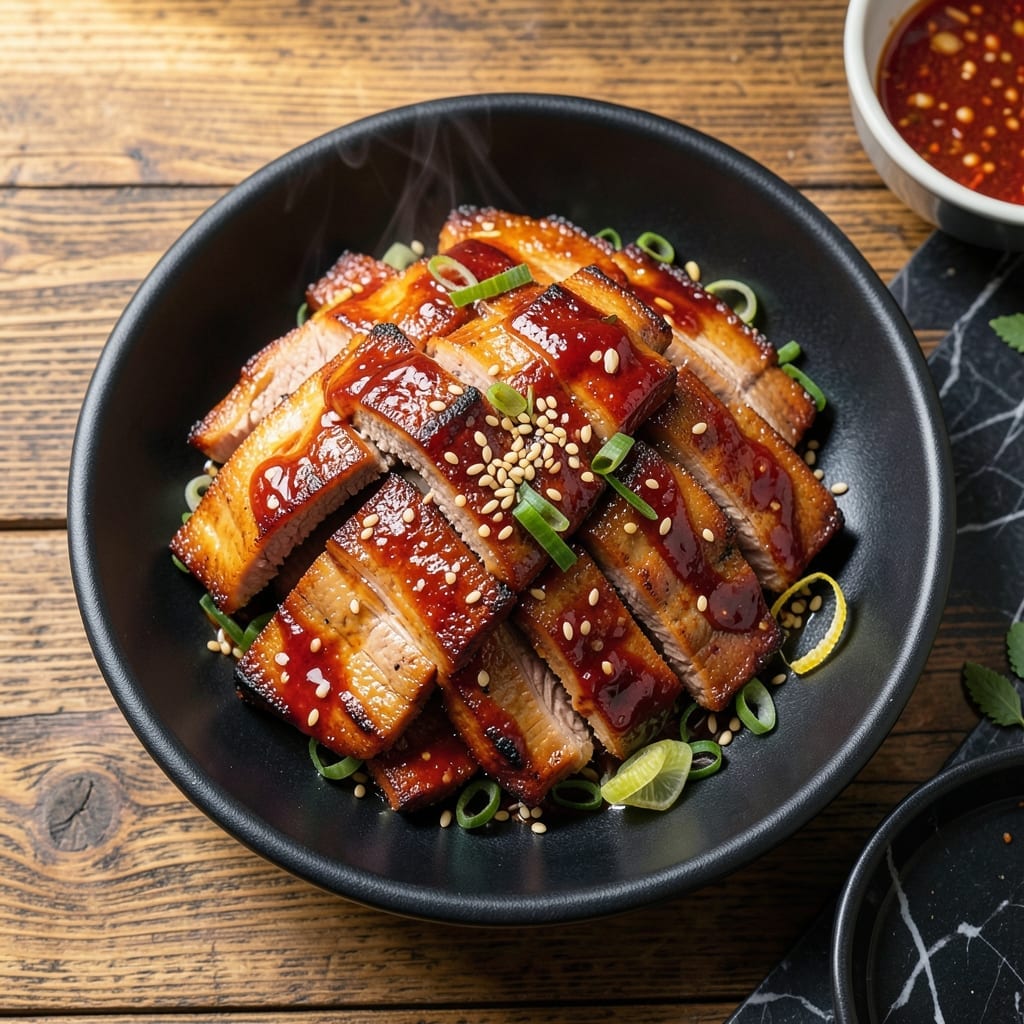
This recipe delivers restaurant-quality Korean BBQ with a bold gochujang glaze that creates caramelized edges. I perfected it by combining traditional techniques with my pitmaster approach.
The marinade transforms tender pork belly into a dish with complex spicy-sweet flavors. Each bite balances heat and caramelization for an authentic taste.
Ingredients for Korean Bbq Spicy Pork Belly
Bold flavors start with pork belly and a fiery gochujang marinade for authentic Korean BBQ at home.
| Ingredient | Amount | Notes |
|---|---|---|
| Pork Belly 🥩 | 2 lb | Skin-on, cut into 1-inch pieces |
| Gochujang 🌶️ | ½ cup | Korean red pepper paste |
| Soy Sauce 🥢 | ⅓ cup | Low-sodium preferred |
| Brown Sugar 🍚 | ⅓ cup | Light or dark variety |
| Garlic Cloves 🧄 | 6 cloves | Minced for marinade |
| Fresh Ginger 🌿 | 1 tbsp | Peeled and grated |
| Sesame Oil 🫒 | 2 tbsp | Toasted for depth of flavor |
| Rice Vinegar 🍶 | 2 tbsp | Or apple cider vinegar |
| Black Pepper 🌶️ | 1 tsp | Freshly ground preferred |
| Sesame Seeds 🌰 | 2 tbsp | Toasted for garnish |
| Green Onions 🧅 | 4 whole | Thinly sliced for topping |
| Asian Pear 🍐 | ½ whole | Peeled, grated (optional tenderizer) |
| Canola Oil 🫒 | 2 tbsp | For cooking pork belly |
| Kosher Salt 🧂 | 1 tsp | Adjust to taste |
| Honey 🍯 | 2 tbsp | For balancing heat |
[recipe_ingredient_scaler]
The pork belly is non-negotiable here. Look for skin-on slabs at Korean markets or well-stocked Asian grocers—H Mart always has it. Avoid pre-sliced if possible; you want to cut your own 1-inch pieces for even cooking and maximum caramelization. If you can’t find pork belly, pork shoulder works in a pinch (just trim excess fat).
No gochujang? Sriracha plus 1 tbsp miso paste gets you 80% there. Missing Asian pear? Swap in grated apple or kiwi—the acid helps tenderize. For the soy sauce, Tamari works for gluten-free. The brown sugar can be coconut sugar if you prefer. Skip the honey if vegan, but add a touch more sugar to balance.
Marinate the pork belly for at least 4 hours (overnight is ideal). Cooked dish keeps 3-4 days in the fridge, but best eaten fresh. Freeze raw marinated pork for up to 3 months—thaw before cooking.
Why You’ll Love This Recipe
- One Pan Wonder: Honestly, I just toss the pork belly with the gochujang, soy, and brown sugar, then let the oven do the work—minimal cleanup, maximum flavor.
- Sweet & Spicy Fix: That caramelized brown sugar with the heat from gochujang? I’ll be real: it’s the reason I make this twice a month.
- Crowd-Pleasing Dish: Between us, this is my go-to when friends come over—everyone goes back for seconds, even the picky eaters.
- Leftovers for Days: I’ll meal prep this on Sunday and the flavors just get better—perfect for quick lunches or late-night snacks.
Step-by-Step Instructions for Korean BBQ Spicy Pork Belly
Here’s the method. Straightforward, tested, works every time.
Step 1: Create the Marinade Base
In a large bowl, I whisk together the 0.5 cup Gochujang, 0.33 cup Soy Sauce, 0.33 cup Brown Sugar, 2 tbsp Sesame Oil, 2 tbsp Rice Vinegar, and 2 tbsp Honey until smooth. The gochujang will be thick, so press it against the bowl with the back of a spoon to break it up.
Next, add the 6 cloves Garlic Cloves (minced), 1 tbsp Fresh Ginger (grated), 1 tsp Black Pepper, and 1 tsp Kosher Salt. Stir well to combine. This creates a complex marinade that balances heat, sweetness, and umami. The brown sugar will start dissolving as you mix.
Step 2: Marinate the Pork Belly
Pat the 2 lb Pork Belly (cut into 1-inch pieces) dry with paper towels. This helps the marinade adhere better. Place the pork belly in the marinade and turn to coat every piece completely. I like to use my hands for this—it’s the best way to ensure full coverage.
For extra tenderness, add the 0.5 whole Asian Pear (peeled and grated) to the marinade. The enzymes in the pear help break down the meat fibers. Cover and refrigerate for at least 2 hours, or ideally overnight for maximum flavor penetration.
Step 3: Cook the Pork Belly to Caramelized Perfection
Heat 2 tbsp Canola Oil in a large skillet over medium-high heat. Working in batches if necessary, add the pork belly pieces in a single layer. Cook undisturbed for 4-5 minutes until the edges start to brown and crisp.
Flip the pieces and cook for another 4-5 minutes until the pork is cooked through and the marinade has caramelized into a glossy, sticky glaze. You’ll see the edges become deep mahogany and slightly charred in spots—that’s the flavor we want.
Step 4: Garnish and Serve
Transfer the cooked pork belly to a serving plate. Drizzle any remaining sauce from the pan over the top. Sprinkle with 2 tbsp Sesame Seeds (toasted) and 4 whole Green Onions (thinly sliced) for freshness and crunch.
Serve immediately while hot, with steamed rice to soak up the extra sauce. The pork should be tender on the inside with a slightly crispy, caramelized exterior that gives way to juicy, flavorful meat with every bite.
Pro Tips For Making Korean Bbq Spicy Pork Belly
- Score the Fat: Slice shallow, diamond-shaped cuts into the pork belly fat cap before marinating—this helps the gochujang and soy sauce penetrate deeper and renders the fat more evenly.
- Bloom the Gochujang: Heat the gochujang, soy sauce, and brown sugar in a pan for 2-3 minutes before mixing with pork; it mellows the raw edge of the fermented paste and deepens the flavor.
- Skip the Overcrowding: I learned this the hard way—cook the pork belly in a single layer on the grill or pan, or it’ll steam instead of caramelize, and you’ll lose that sticky, spicy crust.
- Rest Before Slicing: Let the cooked pork belly rest for 5-10 minutes under foil after grilling—it keeps the juices from running out when you cut into it, and the flavors settle in a way that’s noticeable.
Dietary Considerations for This korean bbq spicy pork belly
Gluten-Free Adaptation
Swap the soy sauce for tamari or a certified gluten-free soy alternative. Verify your gochujang brand—some contain wheat. I trust Sempio for gluten-free options at local Asian markets. 💡
Lower Sugar Version
Reduce brown sugar to ¼ cup and replace honey with 1 tbsp sugar-free maple syrup. Add 1 tsp erythritol to maintain caramelization. The marinade will be less sweet but still deeply flavorful.
Dairy-Free Note
This recipe is naturally dairy-free, but check your gochujang label—some brands add milk powder. Stick with pure Korean-made pastes. I always scan labels at H Mart to be safe.
Spice Level Control
For milder heat, reduce gochujang to ⅓ cup and add 2 tbsp gochujang-free Korean red pepper flakes. For extra heat, add 1 tsp gochugaru (Korean chili flakes) to the marinade.
Pork-Free Alternative
Use 2 lb chicken thighs (skin-on, boneless) for a lighter option. Marinate as directed but cook for 6-7 minutes per side. The flavor profile changes but stays delicious.
Low-Sodium Adjustments
Use low-sodium soy sauce and reduce total to ¼ cup. Boost umami with 1 tbsp fish sauce or 1 tsp mushroom powder. I find this balances the flavors without losing depth. ✨
Nutrition Facts

Trained in classic French technique but raised on slow-cooked ribs and spicy rubs, she blends culinary skill with smoke and soul.
- Recipe for Boneless Pork Chops in Cast Iron Skillet: Sear and Baste to Juicy Perfection - October 3, 2026
- Recipe for Boneless Cross Rib Roast: Slow-Roasted Beef with Herb Crust - October 3, 2026
- Hamburgers in Sauce Recipe Crock Pot: Slow-Cooked Savory Delight - October 3, 2026