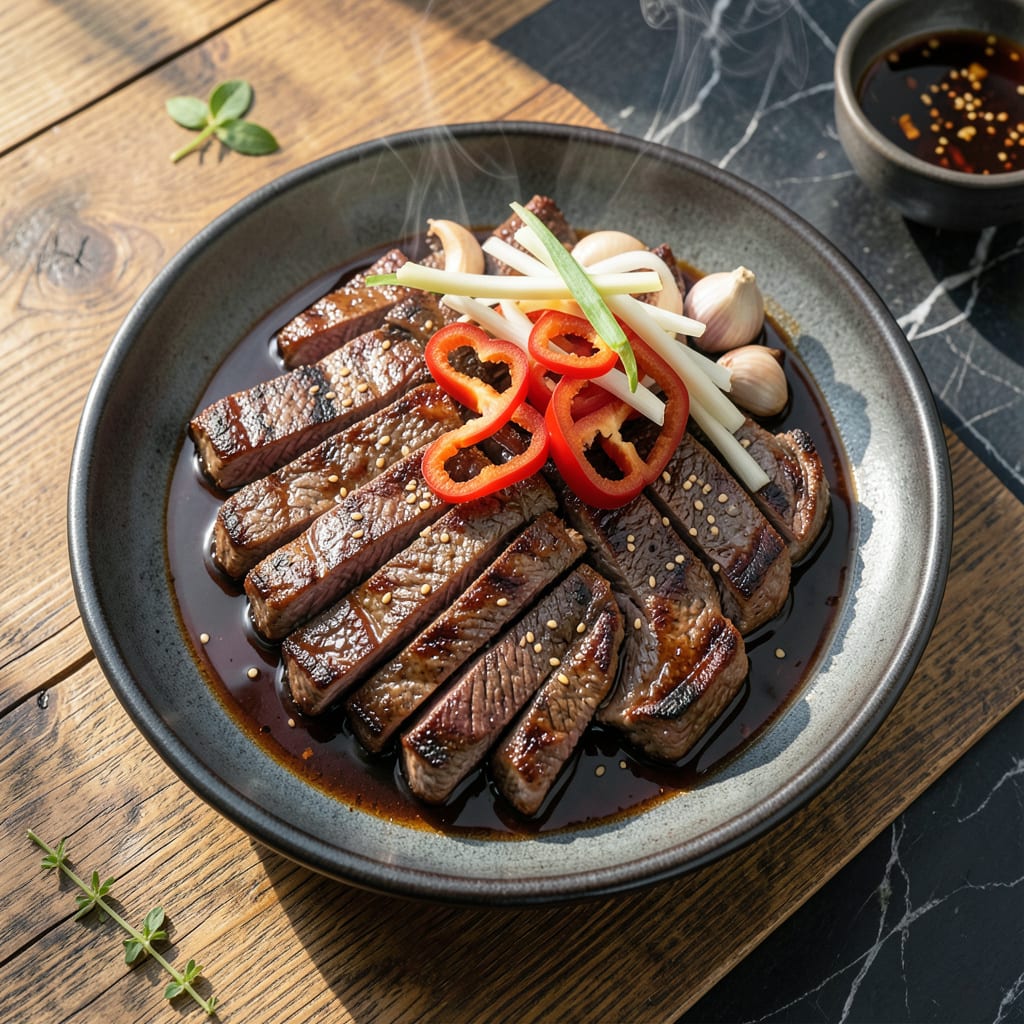
This Korean BBQ steak recipe transforms simple ingredients into a sweet and savory grill masterpiece. The marinade combines soy sauce, brown sugar, garlic, and sesame oil for layers of flavor.
After marinating for at least 4 hours, the steak grills to perfection with caramelized edges and tender centers. Serve with rice and kimchi for a complete meal.
Ingredients for Korean Bbq Steak
Transform everyday ingredients into bold Korean flavors with this easy marinade and premium steak.
| Ingredient | Amount | Notes |
|---|---|---|
| Ribeye Steak 🥩 | 2 lb | Thinly sliced for marinating |
| Soy Sauce 🫒 | ¾ cup | Low-sodium preferred for balance |
| Brown Sugar 🍚 | ½ cup | Packed, for caramelization |
| Garlic Cloves 🧄 | 6 cloves | Minced finely for marinade |
| Sesame Oil 🫒 | 2 tbsp | Toasted variety for depth |
| Rice Vinegar 🍚 | 3 tbsp | Balances sweetness with acidity |
| Ginger Root 🌿 | 1 tbsp | Freshly grated for zing |
| Green Onions 🧅 | 4 whole | Thinly sliced for garnish |
| Toasted Sesame Seeds 🌰 | 2 tbsp | For finishing touch |
| Gochujang 🌶️ | 2 tbsp | Korean chili paste for heat |
| Asian Pear 🍐 | ½ whole | Grated for natural tenderizer |
| Black Pepper 🌶️ | 1 tsp | Freshly ground for aroma |
| Vegetable Oil 🫒 | 2 tbsp | For high-heat grilling |
| Cooked White Rice 🍚 | 4 cups | For serving with steak |
| Kimchi 🥬 | 1 cup | For traditional accompaniment |
[recipe_ingredient_scaler]
The ribeye is non-negotiable here—well-marbled cuts from Whole Foods or Costco yield the most tender, flavorful results. Look for USDA Choice or Prime with visible fat streaking (that’s where the flavor hides). For the soy sauce, Kikkoman or Pearl River Bridge strike the right balance. Asian pear might seem niche, but it’s worth hunting down at H Mart or your local Asian market. It tenderizes the meat naturally without overpowering.
Out of gochujang? Sriracha plus a pinch of sugar works in a pinch, though the depth won’t be the same. No brown sugar? Coconut sugar or maple syrup can substitute at a 1:1 ratio. The rice vinegar is key for brightness—apple cider vinegar at half the amount if that’s all you’ve got. Fresh ginger is ideal, but ground ginger at one-quarter the quantity does the trick. Just don’t skip the marinating time (those 4 hours are critical).
Marinated steak keeps in the fridge for up to 24 hours—actually improves with time. Cooked leftovers? 3-4 days refrigerated, 3 months frozen. Slice against the grain before storing for easier reheating. The kimchi and rice are best fresh, so add those just before serving.
Why You’ll Love This Recipe
- Minimal Effort: I just mix soy sauce, brown sugar, and garlic while the steak comes to room temp—no fancy steps.
- Sweet and Savory: The brown sugar caramelizes with the soy sauce for that sticky, umami-packed bite I crave.
- Feeds a Crowd: Ribeye slices stretch far for tacos, rice bowls, or straight off the grill for a party.
- Leftovers Rock: Honestly, the flavors deepen overnight—perfect for next-day fried rice or sandwiches.
Step-by-Step Instructions for Korean BBQ Steak
Master the technique to achieve perfectly caramelized, tender slices with authentic Korean flavors.
Step 1: Prepare the Marinade with Aromatic Depth
In a large bowl, whisk together the 0.75 cup soy sauce, 0.5 cup brown sugar, 2 tbsp sesame oil, 3 tbsp rice vinegar, 2 tbsp gochujang, and 1 tsp black pepper until the sugar fully dissolves. The mixture should be smooth and slightly glossy.
Add the 6 cloves garlic cloves (minced), 1 tbsp ginger root (grated), and 0.5 whole Asian pear (grated). Stir to combine. The Asian pear contains enzymes that naturally tenderize the ribeye steak while adding subtle sweetness to balance the soy sauce’s saltiness.
Step 2: Marinate the Ribeye for Maximum Flavor Penetration
Place the 2 lb ribeye steak in a shallow dish or resealable plastic bag. Pour the marinade over the steak, ensuring all pieces are fully coated. I always slice the ribeye thinly against the grain before marinating—this increases surface area for better flavor absorption.
Cover and refrigerate for at least 4 hours, though overnight yields the most tender and flavorful results. The steak should darken slightly as it absorbs the marinade, with visible moisture pooling at the bottom of the container.
Step 3: Grill to Caramelized Perfection
Preheat your grill or grill pan to medium-high heat. Add the 2 tbsp vegetable oil and spread it evenly across the cooking surface. The oil should shimmer but not smoke—this ensures proper searing without burning the sugars in the marinade.
Remove the ribeye steak from the marinade, shaking off excess (but don’t rinse). Grill for 3-4 minutes per side until deeply caramelized with visible char marks. The edges should appear slightly crispy, and the internal temperature should reach 145°F for medium-rare.
Step 4: Rest and Garnish for Authentic Presentation
Transfer the steak to a cutting board and let it rest for 5-10 minutes. This allows the juices to redistribute throughout the meat, ensuring each bite is moist and flavorful.
Slice thinly against the grain and arrange on a platter. Garnish with the 4 whole green onions (thinly sliced) and 2 tbsp toasted sesame seeds. The green onions add freshness that cuts through the richness, while the sesame seeds provide nutty crunch.
Serve immediately with the 4 cups cooked white rice and 1 cup kimchi on the side for a complete Korean BBQ experience.
Pro Tips For Making Korean Bbq Steak
- Sear Hot, Marinate Cold: Get your pan screaming hot before adding the ribeye to lock in juices, then let the sliced steak soak in the soy-brown sugar marinade for at least 30 minutes in the fridge—any longer and the sugar starts breaking down the meat.
- Slice Against Grain: After resting the steak, cut it thinly against the grain so every bite is tender, not chewy. I learned this the hard way after serving a few tough batches to skeptical friends.
- Skip the Overcooking: Ribeye is forgiving, but for Korean BBQ style, pull it at medium-rare (130°F internal) and let it carry over to medium while resting. Sounds weird, but it stays juicy under that sweet-savory crust.
- Toast the Garlic: Before mincing the garlic, lightly toast the cloves in a dry pan for 1-2 minutes to mellow the bite—your marinade will taste deeper, not harsh. My grandmother swore by this, and she was right.
Storing and Reheating This Dish
Refrigerator Storage
Let your steak cool for no more than 2 hours before transferring to airtight containers. Store at 40°F or below for up to 3-4 days. The marinade flavors actually intensify overnight, making leftovers taste even better. ❄️
Freezer Storage
For longer storage, freeze cooked steak in single layers separated by parchment, then transfer to freezer bags. It keeps well for up to 3 months without texture loss. I always use quart-size bags for portion control.
Stovetop Reheating
My preferred method: heat a skillet over medium-low heat, add steak with 2 tbsp water, cover for 2-3 minutes. This prevents drying while restoring that caramelized crust. 🔥
Microwave Method
Place slices on a microwave-safe dish, cover with a damp paper towel, and heat on 50% power for 1-2 minutes. Let rest 1 minute before serving to allow juices to redistribute.
Pro Tips
Slice against the grain before storing for easier reheating. Always reheat only what you plan to eat—this dish doesn’t do well with multiple reheats.
For best results, serve reheated steak with fresh kimchi and white rice to maintain authentic flavors.
Nutrition Facts

Trained in classic French technique but raised on slow-cooked ribs and spicy rubs, she blends culinary skill with smoke and soul.
- Recipe for Boneless Pork Chops in Cast Iron Skillet: Sear and Baste to Juicy Perfection - October 3, 2026
- Recipe for Boneless Cross Rib Roast: Slow-Roasted Beef with Herb Crust - October 3, 2026
- Hamburgers in Sauce Recipe Crock Pot: Slow-Cooked Savory Delight - October 3, 2026