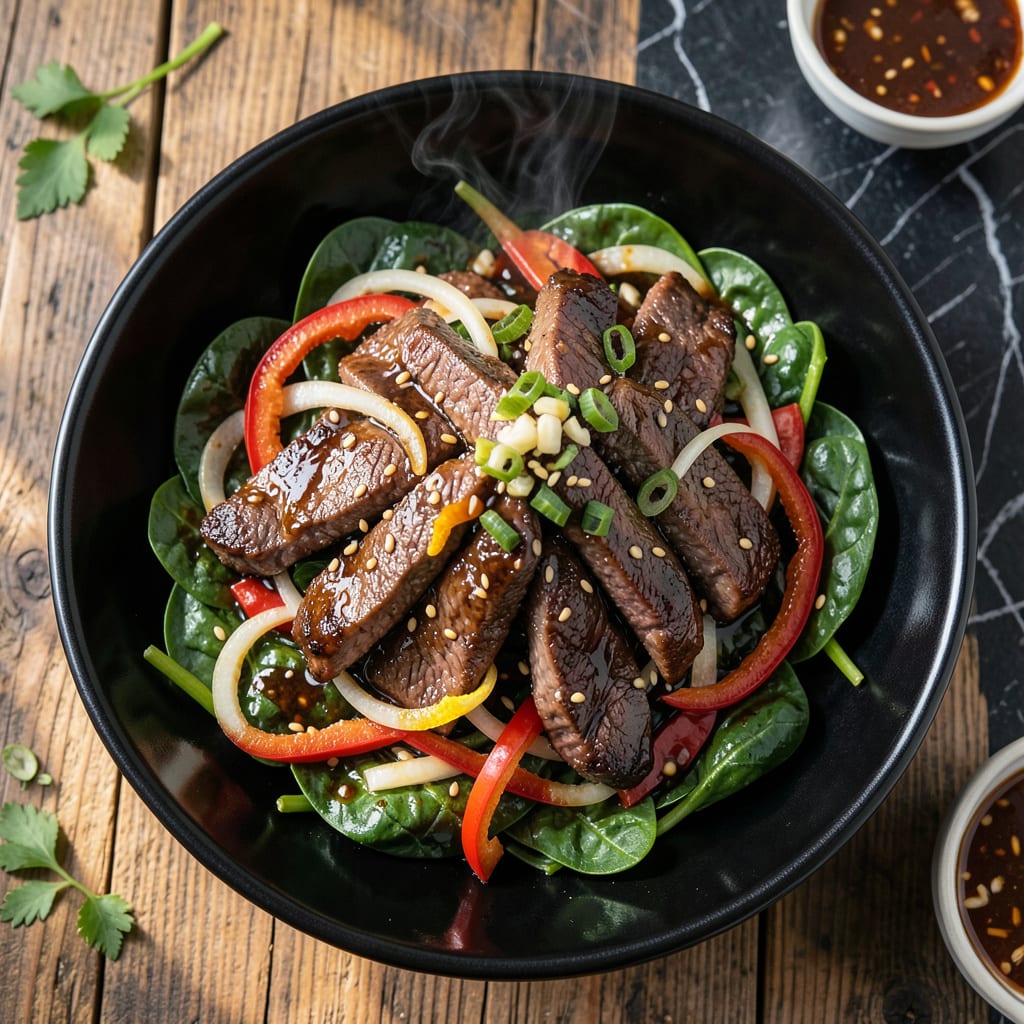
This stir fry brings bold Korean BBQ flavors to your home kitchen with a simple wok-tossed method. My training taught me that great dishes start with balance, and this one nails it.
Sweet and savory collide in every bite, with a quick cooking time that preserves the freshness of your ingredients. The result is restaurant-quality at home, no smoker required.
Ingredients for Korean Bbq Stir Fry
Ribeye, veggies, and a bold sauce—everything you need for that Korean BBQ magic at home.
| Ingredient | Amount | Notes |
|---|---|---|
| Ribeye Steak 🥩 | 1 ½ lb | Thinly sliced against grain |
| Soy Sauce 🫒 | ½ cup | Low-sodium preferred |
| Brown Sugar 🍚 | ¼ cup | Packed, for caramelization |
| Sesame Oil 🫒 | 1 tbsp | Toasted for depth |
| Garlic Cloves 🧄 | 5 cloves | Minced for maximum flavor |
| Fresh Ginger 🌿 | 1 tbsp | Grated, peeled |
| Gochujang 🌶️ | 2 tbsp | Korean chili paste |
| Rice Vinegar 🍶 | 2 tbsp | Balances sweetness |
| Bell Peppers 🌶️ | 2 whole | Thinly sliced, any color |
| Carrots 🥕 | 2 whole | Julienned for crunch |
| Green Onions 🧅 | 4 whole | Sliced, white and green parts |
| Vegetable Oil 🫒 | 2 tbsp | High smoke point for stir-frying |
| Sesame Seeds 🌾 | 1 tbsp | Toasted for garnish |
| White Rice 🍚 | 2 cups | Uncooked, for serving |
[recipe_ingredient_scaler]
The ribeye is key here. Look for well-marbled cuts at your butcher or the meat section at Whole Foods—it stays juicy even after high-heat cooking. Slice it thin against the grain yourself (or ask the butcher to do it). Don’t skip the gochujang; H Mart or Korean markets carry it, or order online. Fresh ginger and garlic make a huge difference over the jarred stuff.
No ribeye? Flank steak or sirloin work in a pinch (just slice extra thin). Out of gochujang? Sriracha plus a dash of miso gets you close. Use half the brown sugar if you prefer less sweetness. Bell peppers can be swapped for snap peas or mushrooms—whatever’s fresh. The rice vinegar is flexible; apple cider vinegar works too.
Leftovers keep 4-5 days in the fridge (reheat gently to avoid drying out the beef). Sauce can be prepped 2 days ahead—it actually improves. Freeze cooked beef separately for up to 3 months, but trust me, it’s best fresh.
Why You’ll Love This Recipe
- I’ll be real: between work and soccer practice, this comes together faster than takeout and still tastes like a restaurant dish.
- One Pan Meal: I toss everything—ribeye strips, garlic, and that glossy soy-brown sugar glaze—into a single skillet and let the magic happen.
- Sweet-Savory Boom: The brown sugar caramelizes with the soy and sesame oil, while the garlic adds this deep, aromatic punch that’s ridiculously good.
- Weeknight Hero: I’ll be real: between work and soccer practice, this comes together faster than takeout and still tastes like a restaurant dish.
Step-by-Step Instructions for Korean BBQ Stir Fry
Here’s the method. Straightforward, tested, works every time.
Step 1: Marinate the Ribeye Steak
In a large bowl, whisk together the 0.5 cup soy sauce, 0.25 cup brown sugar, 1 tbsp sesame oil, minced 5 cloves garlic cloves, 1 tbsp fresh ginger, 2 tbsp gochujang, and 2 tbsp rice vinegar until the brown sugar dissolves completely. This creates a sweet, savory, and slightly spicy marinade.
Add the thinly sliced 1.5 lb ribeye steak to the marinade, ensuring each piece is fully coated. Let it sit at room temperature for 15-20 minutes while you prep the vegetables. The acid in the marinade will start tenderizing the meat, and the flavors will penetrate deeply.
Step 2: Prep the Vegetables
Thinly slice the 2 whole bell peppers into strips and julienne the 2 whole carrots into matchstick-sized pieces. Slice the 4 whole green onions into 1-inch pieces, keeping the white and green parts separate if desired. Having all your ingredients prepped and ready ensures a smooth stir-fry process.
I like to arrange everything in small bowls near the stove. This mise en place approach prevents any frantic chopping mid-cook and keeps the process organized. The vibrant colors of the vegetables will make your dish pop.
Step 3: Stir-Fry the Steak and Vegetables
Heat the 2 tbsp vegetable oil in a large skillet or wok over high heat until it shimmers. Remove the ribeye from the marinade (reserve the marinade) and add it to the pan in a single layer. Cook undisturbed for 2-3 minutes until the edges are browned and caramelized.
Add the bell peppers and carrots to the pan, stirring constantly for 4-5 minutes until the vegetables soften slightly but retain their crunch. Pour in the reserved marinade and continue cooking for another 2 minutes until the sauce thickens and coats everything evenly.
Step 4: Finish and Serve
Toss in the green onions and cook for 30 seconds just until they wilt slightly. Remove from heat and sprinkle with the 1 tbsp sesame seeds. The seeds add a nutty crunch that contrasts beautifully with the tender meat and crisp-tender vegetables.
Serve immediately over steamed 2 cups white rice. The rice soaks up the extra sauce, making every bite flavorful. Garnish with extra green onions if desired, and enjoy while hot for the best texture and taste.
Pro Tips For Making Korean Bbq Stir Fry
- Slice Against the Grain: Cut the ribeye into thin strips against the grain—about 1/4-inch thick—for tender bites that soak up the soy-garlic marinade.
- Bloom the Garlic: Cook the minced garlic in sesame oil for 30 seconds until fragrant before adding the meat, but don’t let it brown or it’ll turn bitter.
- Skip Overcrowding: Stir-fry the steak in batches to avoid steaming; a crowded pan makes the meat release water and lose that caramelized crust.
- Rest Before Slicing: Let the ribeye rest 5-10 minutes after cooking so the juices redistribute—this keeps every bite juicy, not dry.
Regional Styles of These Flavors
Seoul Street Food Style
In the bustling markets of Seoul, this dish often features thinly sliced beef with napa cabbage and sweet potato noodles. The street vendors I’ve watched use high-heat charcoal grills for that signature smoky char. It’s all about the sizzle and the aroma drawing you in. 🔥
Busan Coastal Twist
Down in Busan, they add seafood to the mix—think shrimp or scallops tossed in with the beef. The coastal influence brings a briny depth that pairs perfectly with the sweet-savory sauce. I love how the ocean meets the grill in this version.
Jeonju Traditional
Jeonju, known as Korea’s food capital, keeps it classic with ribeye and mushrooms. They often use pineapple in the marinade for extra tenderness and a touch of sweetness. It’s a nod to royal cuisine, refined yet approachable.
Modern Fusion
For a contemporary take, try adding kimchi or zucchini to the stir fry. The tang of kimchi cuts through the richness, while zucchini adds a light, fresh crunch. It’s how I bridge tradition and innovation in my own kitchen.
Spicy Gochujang Boost
If you love heat, double the gochujang or add 1 tsp red pepper flakes. This amps up the spice without overpowering the dish. I learned this trick from a local chef in Insadong—it’s a game-changer. 🌶️
Vegetarian Adaptation
Swap the beef for tofu or tempeh, and use mushrooms for a meaty texture. The marinade works just as well, infusing every bite with that unmistakable Korean BBQ flavor. Even my meat-loving friends are surprised by how satisfying it is.
Nutrition Facts

Trained in classic French technique but raised on slow-cooked ribs and spicy rubs, she blends culinary skill with smoke and soul.
- Recipe for Boneless Pork Chops in Cast Iron Skillet: Sear and Baste to Juicy Perfection - October 3, 2026
- Recipe for Boneless Cross Rib Roast: Slow-Roasted Beef with Herb Crust - October 3, 2026
- Hamburgers in Sauce Recipe Crock Pot: Slow-Cooked Savory Delight - October 3, 2026