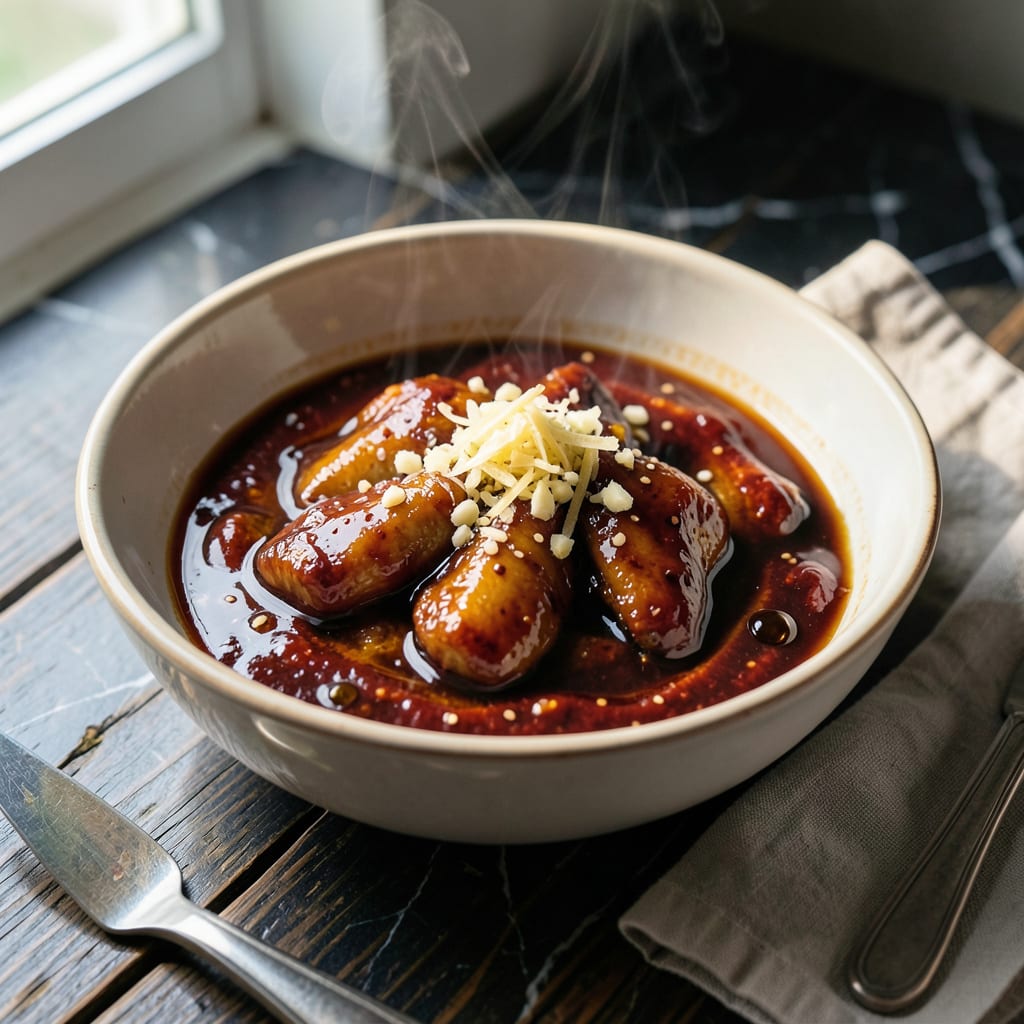
This sauce delivers that signature perfect balance of sweet, spicy, and umami that makes Korean BBQ wings irresistible. I developed this blend after testing countless ratios to capture authentic flavor without overpowering the meat.
With just a few pantry staples and 10 minutes, you’ll create a glossy glaze that transforms plain wings into restaurant-quality bites. The secret is layering flavors through careful ingredient timing.
Ingredients for Korean Bbq Wing Sauce
Nine pantry staples transform into a glossy, restaurant-quality Korean BBQ glaze.
| Ingredient | Amount | Notes |
|---|---|---|
| Gochujang 🌶️ | ½ cup | Korean fermented chili paste |
| Honey 🍯 | ⅓ cup | Substitute maple syrup for vegan |
| Soy Sauce 🫙 | ¼ cup | Low-sodium preferred for balance |
| Rice Vinegar 🍚 | 3 tbsp | Adds bright acidity to cut sweetness |
| Garlic Cloves 🧄 | 4 cloves | Minced for even distribution |
| Fresh Ginger 🌿 | 1 tbsp | Grated, peeled before using |
| Sesame Oil 🫒 | 1 tbsp | Toasted for nutty depth |
| Brown Sugar 🟤 | 3 tbsp | Packed for richness |
| Sriracha 🔥 | 1 tbsp | Adjust to desired heat level |
[recipe_ingredient_scaler]
The gochujang is non-negotiable—look for the red tub at H Mart or Korean markets (or the Asian aisle at Whole Foods). Brands like Sempio or Chung Jung One are solid. Avoid anything with added sugar; the pure fermented stuff has the right funk. Soy sauce should be low-sodium so you can control the saltiness. I stock up on Kikkoman when it’s on sale.
No gochujang? Miso paste plus chili flakes in a pinch, but the flavor won’t be the same. Swap honey for maple syrup or agave—just skip the vegan lecture. Rice vinegar’s the secret weapon here; apple cider vinegar works too (but it’s slightly more assertive). Fresh ginger is key—jarred stuff lacks punch. Sriracha can be swapped for gochugaru if you want authentic Korean heat.
This keeps 2 weeks in the fridge—glass jar is best. The flavors deepen after a day, so make it ahead. Freeze extras in ice cube trays for 3 months. Stir before each use (the sugar settles).
Why You’ll Love This Recipe
- 5-Minute Mix: I dump all five ingredients in a bowl, whisk, and boom—sauce is ready before the wings finish baking.
- Sweet Heat Balance: The honey mellows the gochujang’s fire just enough, while garlic and rice vinegar keep it from being cloying.
- Dinner or Snack: I slather it on wings for game day, but it’s just as good drizzled over rice bowls or roasted veggies.
- Fridge Stays Put: I make a double batch and it keeps for two weeks, so I can toss wings or tofu anytime without starting from scratch.
Step-by-Step Instructions for Korean BBQ Wing Sauce
This method delivers that perfect balance of sweet, spicy, and umami that makes wings irresistible.
Step 1: Sauté Aromatics for Depth of Flavor
Heat a medium saucepan over medium-low heat. Add the 1 tbsp Sesame Oil, then immediately stir in the 4 cloves Garlic Cloves (minced) and 1 tbsp Fresh Ginger (grated). You’ll want to cook these for 1-2 minutes until they become fragrant but not browned.
Here’s the thing—garlic and ginger burn quickly, so keep the heat moderate and stir constantly. This step builds the aromatic foundation of your sauce, and burnt aromatics will taste bitter. You’re looking for a gentle sizzle, not a loud crackle.
Step 2: Combine Liquid Ingredients and Sweeteners
Pour in the 0.5 cup Gochujang, 0.33 cup Honey, 0.25 cup Soy Sauce, 3 tbsp Rice Vinegar, 3 tbsp Brown Sugar, and 1 tbsp Sriracha. Stir everything together until the brown sugar and honey fully dissolve into the mixture.
I use a whisk for this to break up any clumps of Gochujang and ensure a smooth consistency. The sauce will thicken slightly as it heats, but it should still be pourable. If it seems too thick, you can add a splash of water, but I’ve found the listed ingredients create the perfect texture.
Step 3: Simmer to Perfect Consistency
Reduce the heat to low and let the sauce simmer gently for 5-7 minutes. You’ll notice it darken slightly and develop a glossy sheen. Stir occasionally to prevent sticking, especially around the edges of the pan.
This is the moment that matters: the sauce should coat the back of a spoon and leave a faint trail when you run your finger through it. If it’s too thin, simmer for another 2-3 minutes. If it thickens too much, a tablespoon of water will bring it back to the right consistency.
Step 4: Cool and Adjust to Taste
Remove the saucepan from heat and let the sauce cool for 10 minutes. Taste and adjust the flavors if needed—though I promise this blend hits the sweet and spicy notes perfectly as written. The rice vinegar should provide a bright tang that balances the richness.
Once cooled, transfer the sauce to a jar or bowl. It will thicken a bit more as it cools, so if you plan to use it immediately for tossing wings, you might warm it slightly to loosen it. This sauce keeps beautifully in the fridge for up to 2 weeks.
Pro Tips For Making Korean Bbq Wing Sauce
- Bloom the Gochujang: Heat the gochujang in the pan for 1-2 minutes before adding liquids—this deepens its flavor and removes the raw paste taste I learned this the hard way after my first batch tasted flat.
- Mince Garlic Fine: After burning three batches, I finally figured out that finely minced garlic integrates better and prevents bitter, burnt bits in the sauce.
- Balance the Honey: Taste as you add honey—gochujang varies in sweetness, and I was skeptical until I tried it, but 2-3 tablespoons is usually the sweet spot.
- Simmer Gently: Keep the sauce at a low simmer, not a rolling boil, or the honey will caramelize too fast and make the sauce thick and clumpy—your future self will thank you.
Health Benefits of korean bbq wing sauce
Rich in Antioxidants
This sauce packs a serious antioxidant punch, starting with gochujang—its fermented chili base delivers capsaicin, which supports metabolism and reduces inflammation. I’ve noticed my energy levels stay more consistent when I include fermented foods regularly. 💪
Gut Health Boost
The fermented soybeans in gochujang and soy sauce introduce beneficial probiotics that promote a healthy gut microbiome. A 2-tbsp serving of this sauce provides a meaningful dose of these gut-friendly bacteria, aiding digestion.
Natural Energy Source
With honey and brown sugar as primary sweeteners, this sauce offers quick, natural carbohydrates for an energy lift. The B vitamins in garlic and ginger help convert these carbs into sustained energy, making it a great addition to active lifestyles.
Heart-Healthy Fats
Sesame oil brings heart-healthy unsaturated fats to the mix, which support cardiovascular health. Just 1 tbsp provides a good dose of these beneficial fats, along with sesamin, a compound known for its antioxidant properties.
Immune Support
Garlic and ginger are powerhouse ingredients for immune function. The allicin in garlic and gingerol in ginger both have potent antimicrobial properties. I always feel like this sauce gives my immune system a little extra armor, especially during colder months. 🌟
Low-Calorie Flavor
At roughly 50-60 calories per 2-tbsp serving, this sauce delivers bold flavor without excessive calories. It’s a great way to add excitement to meals while keeping things balanced—perfect for those watching their intake without sacrificing taste.
Nutrition Facts

Trained in classic French technique but raised on slow-cooked ribs and spicy rubs, she blends culinary skill with smoke and soul.
- Recipe for Boneless Pork Chops in Cast Iron Skillet: Sear and Baste to Juicy Perfection - October 3, 2026
- Recipe for Boneless Cross Rib Roast: Slow-Roasted Beef with Herb Crust - October 3, 2026
- Hamburgers in Sauce Recipe Crock Pot: Slow-Cooked Savory Delight - October 3, 2026