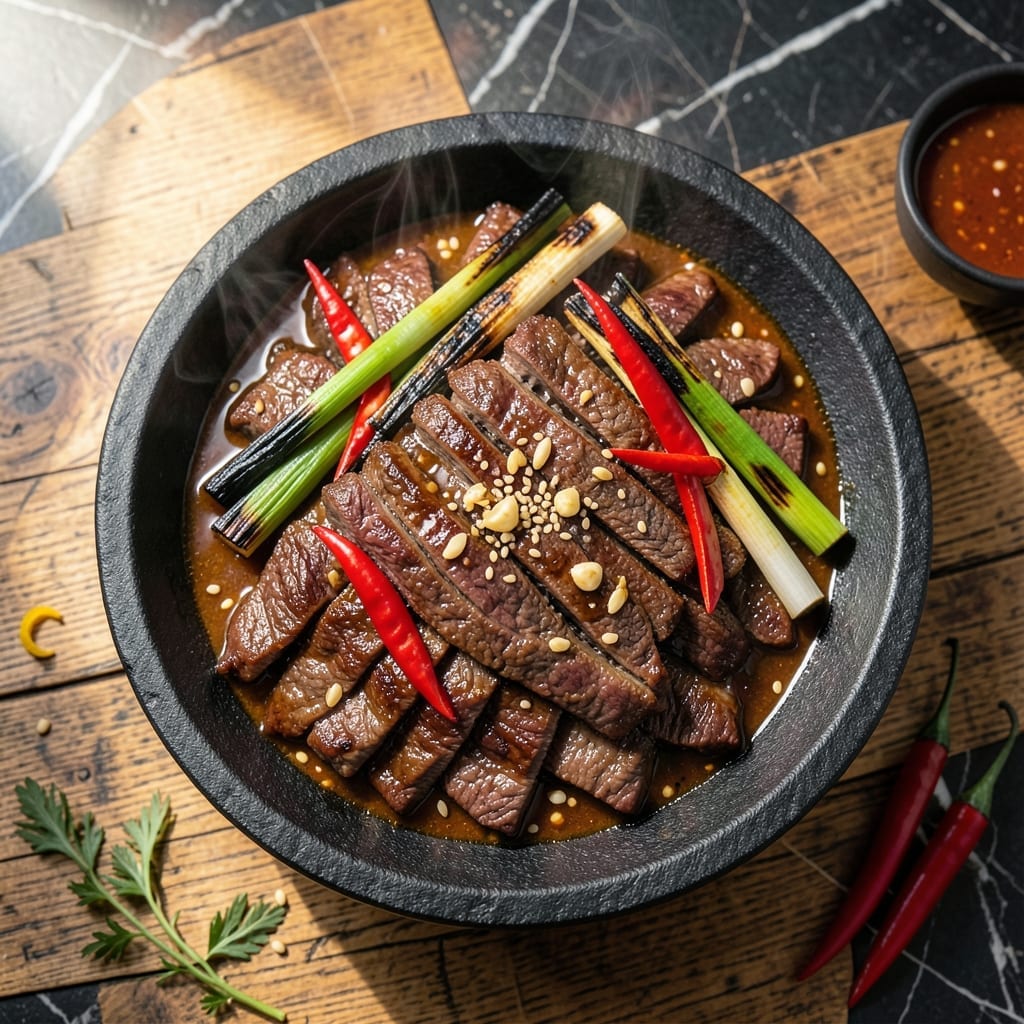
This dish brings the bold flavors of Korean barbecue straight to your grill. The marinade combines sweet, savory, and umami for restaurant-quality results at home.
With thinly sliced beef and a quick char over high heat, you’ll achieve perfectly caramelized edges and tender meat every time.
Ingredients for Korean Beef Barbecue
Thin beef, bold marinade, and a hot grill bring Korean BBQ home effortlessly.
| Ingredient | Amount | Notes |
|---|---|---|
| Ribeye Steak 🥩 | 1 ½ lb | Thinly sliced against grain |
| Soy Sauce 🫒 | ½ cup | Low-sodium preferred for balance |
| Brown Sugar 🍚 | ⅓ cup | Packed, for sweetness and caramelization |
| Garlic Cloves 🧄 | 6 cloves | Minced for maximum flavor infusion |
| Fresh Ginger 🌿 | 1 tbsp | Grated, for zesty depth |
| Sesame Oil 🫒 | 2 tbsp | Toasted, for nutty aroma |
| Rice Vinegar 🍋 | 2 tbsp | For tangy brightness |
| Gochujang 🌶️ | 2 tbsp | Korean chili paste, adjust for heat |
| Asian Pear 🍐 | ½ whole | Grated, for natural tenderizer |
| Green Onions 🧅 | 4 whole | Thinly sliced for garnish |
| Sesame Seeds 🌾 | 2 tbsp | Toasted, for crunch and garnish |
| Black Pepper 🌶️ | 1 tsp | Freshly ground for best flavor |
| Vegetable Oil 🫒 | 2 tbsp | High smoke point, for grilling |
[recipe_ingredient_scaler]
The beef is everything here. Ribeye gives you that buttery richness and perfect marbling for grilling—avoid lean cuts like sirloin (they dry out fast). Most Asian markets sell pre-sliced beef for Korean BBQ, but any good butcher will slice it thin for you. For the marinade, Kikkoman soy sauce is my go-to, and the Asian pear is the secret (don’t skip it—it tenderizes like magic).
No gochujang? Sriracha mixed with a little miso paste gets you close. The pear can be swapped for kiwi or pineapple in a pinch. For a gluten-free version, use tamari instead of soy sauce. The brown sugar can be dark or light, but the dark adds a deeper molasses note. If you’re sensitive to spice, cut the gochujang in half and add a dash of honey.
Marinate the beef for at least 2 hours (overnight is even better). Grill leftovers keep 3-4 days in the fridge or freeze for up to 3 months. The marinade itself? Mix it fresh—don’t store it, as raw meat contaminants make it unsafe.
Why You’ll Love This Recipe
- One Pan Marvel: I toss everything in a skillet and let the ribeye soak up that soy-garlic-ginger magic while I set the table.
- Sweet-Savory Fix: That brown sugar caramelizes with the soy sauce, giving the beef this sticky, finger-licking glaze.
- Weeknight Hero: Honestly, it’s my Tuesday lifesaver—ready faster than delivery and way more impressive.
- Leftovers Win: I pack extras for lunch the next day, and the flavors taste even deeper after a night in the fridge.
Step-by-Step Instructions for Korean Beef Barbecue
Master the marinade and grilling process for tender, caramelized beef with authentic Korean flavors.
Step 1: Prepare the Marinade with Aromatic Depth
In a large bowl, whisk together the 0.5 cup soy sauce, 0.33 cup brown sugar, 6 cloves minced garlic, 1 tbsp grated fresh ginger, 2 tbsp sesame oil, 2 tbsp rice vinegar, 2 tbsp gochujang, and 1 tsp black pepper until the brown sugar fully dissolves. This balance of sweet, salty, spicy, and tangy creates the signature profile.
Add the 0.5 whole grated Asian pear to the marinade—its natural enzymes tenderize the beef while adding subtle sweetness. Stir well to incorporate. The marinade should be thick but pourable, with visible specks of garlic, ginger, and gochujang.
Step 2: Marinate the Beef for Maximum Flavor
Slice the 1.5 lb ribeye steak thinly against the grain into ¼-inch thick strips. This cross-grain slicing ensures tenderness in every bite. Place the beef in the marinade and turn to coat every piece thoroughly.
Cover the bowl and refrigerate for at least 1 hour, or ideally 4 hours for deeper flavor penetration. I’ve found that overnight marinating works too, but the Asian pear’s enzymes can start to over-tenderize the meat beyond 8 hours, so don’t exceed that. Stir the beef once or twice during marinating to redistribute the flavors.
Step 3: Grill to Charred Perfection
Heat your grill or grill pan to high heat and brush with 2 tbsp vegetable oil. The oil’s high smoke point prevents burning while allowing the beef to develop a beautiful char. Remove the beef from the marinade, shaking off excess (but don’t rinse—those flavors are gold), and arrange the strips in a single layer on the grill.
Cook for 2-3 minutes per side until the edges are dark brown and slightly charred and the beef reaches your desired doneness. Ribeye cooks quickly when sliced thin, so watch closely. The sugar in the marinade caramelizes fast—this is where the magic happens, creating that sticky, glossy glaze.
Step 4: Rest and Garnish for Serving
Transfer the grilled beef to a serving platter and let it rest for 5 minutes. This allows the juices to redistribute, ensuring every bite is moist and flavorful. While it rests, thinly slice the 4 whole green onions and toast the 2 tbsp sesame seeds in a dry pan over medium heat for 1-2 minutes until golden and fragrant.
Sprinkle the green onions and sesame seeds over the beef just before serving. The contrast of the bright green onions and nutty sesame seeds against the dark, caramelized beef is as beautiful as it is delicious. Serve immediately with steamed rice and your favorite banchan for a complete Korean barbecue experience.
Pro Tips For Making Korean Beef Barbecue
- Slice Against the Grain: Cut your ribeye into thin strips against the grain before marinating—this shortens the fibers and makes every bite tender. I learned this the hard way after chewing through tough slices my first few attempts.
- Bloom the Aromatics: Cook the minced garlic and ginger in a little oil for 30 seconds until fragrant before adding the marinade. Sounds weird, but it works: this deepens their flavor so the sauce doesn’t taste raw.
- Skip the Overcrowding: Don’t dump all the beef into the pan at once—cook in batches to avoid steaming. After burning three batches, I finally figured out that patience gives you that perfect caramelized crust.
- Rest Before Serving: Let the beef rest for 5 minutes after cooking so the juices redistribute. My grandmother swore by this, and she was right: it keeps the meat juicy instead of dry.
Flavor Customization for korean beef barbecue
Spice Level Adjustments
For milder heat, reduce the gochujang to 1 tbsp and add 1 tbsp honey to balance. I often do this for friends who prefer subtle warmth over fiery spice. The Asian pear’s natural sweetness also helps counteract any lingering heat. 🌶️
Extra Umami Boost
Add 1 tbsp fish sauce or 1 tsp anchovy paste to the marinade for deeper savory complexity. This trick comes from my coastal rides—local seafood markets always inspire my flavor experiments. The result is a richer, more layered taste.
Citrus Twist
Brighten the marinade with 1 tbsp fresh lime juice or 1 tsp orange zest. The acidity cuts through the richness beautifully. I love how this small addition makes the flavors pop, especially when grilling outdoors.
Herb Infusion
Forage or add 2 tbsp chopped cilantro or 1 tbsp minced mint to the marinade. These fresh herbs complement the beef’s charred notes. Honestly, wild herbs from my foraging spots take this dish to another level.
Sweetness Variations
Swap brown sugar for maple syrup or pineapple juice for a different sweet profile. Each brings its own nuance—maple adds earthiness, while pineapple introduces tropical brightness. Adjust to taste.
Smoky Depth
Add ½ tsp smoked paprika or a pinch of ground chipotle to the marinade. This nod to my pitmaster roots gives the beef a subtle smokiness that pairs perfectly with the char from the grill. 🔥
Nutrition Facts
Frequently Asked Questions
What cut of beef works best for grilling?
Ribeye is ideal for its marbling and tenderness. Avoid lean cuts like sirloin, as they dry out quickly on high heat.
Can I marinate the beef overnight?
Yes, but don’t exceed 8 hours. The Asian pear’s enzymes can over-tenderize the meat beyond that point.
What if I don’t have gochujang?
Use 1 tbsp sriracha mixed with 1 tsp miso paste as a substitute. It won’t be identical but adds similar heat and depth.
How do I prevent the sugar from burning?
Grill over high heat but watch closely. The sugar caramelizes fast—flip the beef every 2-3 minutes for even char.

Trained in classic French technique but raised on slow-cooked ribs and spicy rubs, she blends culinary skill with smoke and soul.
- Recipe for Boneless Pork Chops in Cast Iron Skillet: Sear and Baste to Juicy Perfection - October 3, 2026
- Recipe for Boneless Cross Rib Roast: Slow-Roasted Beef with Herb Crust - October 3, 2026
- Hamburgers in Sauce Recipe Crock Pot: Slow-Cooked Savory Delight - October 3, 2026