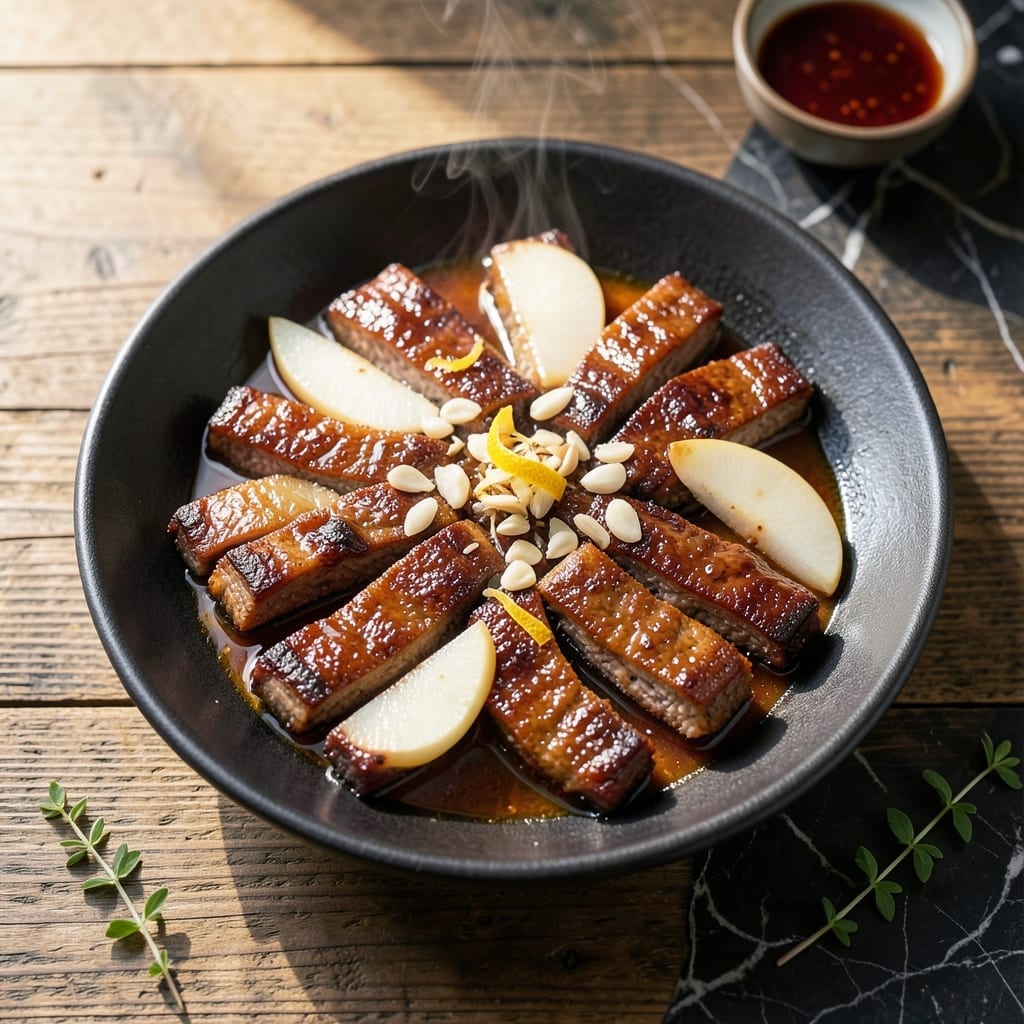
This oven-baked version of classic Korean galbi delivers tender meat with caramelized edges using a simple marinating technique.
I perfected this method after years of experimenting with traditional Korean flavors at home. The key is a balanced marinade of soy sauce, brown sugar, garlic, and pear that tenderizes the beef while creating a sticky, flavorful crust.
You will achieve restaurant-quality results with minimal effort. The oven does most of the work, transforming tough short ribs into melt-in-your-mouth perfection with deeply browned, sweet-savory edges.
Serve with steamed rice and quick-pickled vegetables for a complete Korean-inspired meal. This dish brings authentic flavors to your kitchen without complicated techniques.
Ingredients for Korean Beef Short Ribs Recipe Oven
A few quality ingredients transform beef short ribs into tender, caramelized galbi right in your oven.
| Ingredient | Amount | Notes |
|---|---|---|
| Beef Short Ribs 🥩 | 3 lb | Bone-in, cut 1/2-inch thick |
| Soy Sauce 🥢 | ¾ cup | Low-sodium preferred for balance |
| Brown Sugar 🍚 | ½ cup | Packed, for caramelization |
| Asian Pear 🍐 | 1 whole | Peeled, grated for tenderness |
| Garlic Cloves 🧄 | 8 cloves | Minced for marinade depth |
| Fresh Ginger 🌿 | 2 tbsp | Grated, for zesty kick |
| Sesame Oil 🫒 | 2 tbsp | Toasted, for nutty aroma |
| Rice Vinegar 🍶 | 2 tbsp | Balances sweetness in marinade |
| Gochujang 🌶️ | 1 tbsp | Korean chili paste for heat |
| Green Onions 🧅 | 4 whole | Thinly sliced for garnish |
| Sesame Seeds 🌰 | 2 tbsp | Toasted, for crunchy finish |
| Steamed White Rice 🍚 | 2 cups | Uncooked, for serving |
| Vegetable Oil 🫒 | 1 tbsp | For greasing baking dish |
[recipe_ingredient_scaler]
The beef short ribs are the star—look for bone-in, English-cut (about 1/2-inch thick) at Korean markets or well-stocked supermarkets like H Mart. Ask the butcher to cut them if they’re too thick. The Asian pear is non-negotiable (Bosc or Korean varieties work best) for that signature tenderness and subtle sweetness. I’ve found Trader Joe’s carries them seasonally, but any firm pear will do in a pinch.
No Asian pear? Kiwi or grated apple (with skin on) works as a tenderizer substitute. For the soy sauce, Kikkoman or Jin are reliable brands—avoid cheap imitations. Gochujang can be found in the Asian aisle or Amazon. If you’re sensitive to heat, reduce it to 1/2 tbsp. The brown sugar can be swapped for coconut sugar, but it won’t caramelize quite as beautifully.
Marinate the ribs overnight for maximum flavor penetration—12-24 hours is ideal. Leftovers keep in the fridge for 3-4 days or freeze for up to 3 months. Reheat gently in the oven to maintain that coveted caramelized crust (microwaving turns them soggy, so avoid it).
Why You’ll Love This Recipe
- Hands-Off Cooking: Just mix the marinade, let the oven do the work. I love walking away while the ribs get tender and caramelized.
- Sweet-Savory Magic: The brown sugar and Asian pear create this sticky, crave-worthy glaze that pairs perfectly with the soy and garlic.
- Crowd Pleaser: I’ve served this at dinner parties and weeknight meals—everyone from picky kids to foodie friends cleans their plates.
- Leftovers Win: Honestly, these taste even better the next day. I always make extra for easy lunches or rice bowls.
Step-by-Step Instructions for Korean Beef Short Ribs Oven
Here’s my foolproof method for achieving tender, caramelized galbi with minimal effort.
Step 1: Create the Flavor-Packed Marinade
In a large bowl, whisk together the 0.75 cup soy sauce, 0.5 cup brown sugar, 2 tbsp sesame oil, 2 tbsp rice vinegar, and 1 tbsp gochujang until the sugar begins to dissolve. The mixture will look slightly thick and glossy.
Add the grated flesh from the 1 whole Asian pear, 8 cloves minced garlic, and 2 tbsp grated fresh ginger. The pear acts as a natural tenderizer while adding subtle sweetness. Stir everything together until fully combined—the marinade should be fragrant and slightly chunky from the ginger and garlic.
Step 2: Marinate the Beef Short Ribs Thoroughly
Place the 3 lb beef short ribs in a large resealable bag or shallow dish. Pour the marinade over the ribs, making sure they’re fully coated. Massage the marinade into the meat for 1-2 minutes to ensure it penetrates all the crevices.
Seal the bag or cover the dish and refrigerate for at least 4 hours, or ideally overnight. For best results, turn the ribs occasionally during marination. You’ll notice the meat darkens slightly as it absorbs the flavors, and the marinade will thicken from the pear’s natural pectin.
Step 3: Roast in the Oven Until Caramelized
Preheat your oven to 400°F. Lightly grease a baking dish with the 1 tbsp vegetable oil to prevent sticking. Arrange the marinated ribs in a single layer, bone-side down, reserving the marinade for basting.
Roast for 25 minutes, then flip the ribs and baste with the reserved marinade. Continue roasting for another 20-25 minutes until the edges are deeply caramelized and the meat reaches an internal temperature of 145°F. The ribs should have a glossy, sticky glaze with slightly charred bits at the edges.
Step 4: Rest and Garnish for Serving
Remove the ribs from the oven and let them rest for 5-10 minutes. This allows the juices to redistribute throughout the meat. While they rest, thinly slice the 4 whole green onions and toast the 2 tbsp sesame seeds in a dry pan until golden brown and fragrant.
Sprinkle the ribs with the toasted sesame seeds and sliced green onions just before serving. The contrast of the nutty seeds and fresh onion against the rich, sticky ribs is incredible. Serve immediately over 2 cups steamed white rice to soak up all the delicious sauce.
Pro Tips For Making Korean Beef Short Ribs Recipe Oven
- Sear First, Braise Later: I learned this the hard way—browning the short ribs in a screaming hot pan before oven-braising adds depth that skipping this step just can’t match. About 3-4 minutes per side in oil until deeply caramelized.
- Grate the Pear: Sounds weird, but finely grating the Asian pear into the marinade (skin and all) makes it incorporate better than chunks and tenderizes the meat more effectively. The texture disappears but the flavor stays.
- Don’t Drown in Sauce: Resist the urge to overload the pan with marinade—use just enough to coat the ribs, about 1 1/2 cups max. Too much liquid steams instead of braises, and you’ll end up with boiled meat.
- Cover Then Uncover: Braise covered for the first 2 hours at 325°F, then uncover for the last 30 minutes. This guarantees fall-off-the-bone tenderness first, then a sticky, glazy finish on top.
Creative Variations of These Flavors
Spicy Gochujang Boost
Double the gochujang to 2 tbsp for serious heat lovers. Add 1 tsp gochugaru (Korean chili flakes) for extra depth. I found this variation at a Portland food cart and now make it weekly. The heat builds beautifully against the sweet caramelization. 🌶️
Sweet and Fruity
Add ½ cup pineapple juice to the marinade for tropical sweetness. The natural enzymes further tenderize the beef. Pair with grilled pineapple slices for serving—this was a hit at my daughter Lily’s birthday party last summer.
Citrus Twist
Include the zest and juice of 1 orange in the marinade for bright acidity. The citrus lifts the rich flavors beautifully. I use oranges from our backyard tree in Portland when in season.
Umami Bomb
Stir 1 tbsp fish sauce into the marinade for extra savory depth. Add ¼ cup chopped kimchi to the baking dish for fermented complexity. These additions create layers of flavor that remind me of Korean BBQ spots in Cincinnati.
Quick Weeknight Version
Use 1 lb boneless short ribs cut into 1-inch pieces. Marinate for just 2 hours and roast at 425°F for 15-20 minutes. Still delicious when I’m short on time after Pickles’ vet appointments. ⏰
Vegetable Addition
Add 1 cup sliced carrots and 1 cup sliced onions to the baking dish. They caramelize alongside the ribs, soaking up the marinade. I grow these in my Portland garden and love the extra texture they provide.
Nutrition Facts
Frequently Asked Questions
Can I use boneless short ribs instead?
Yes, but reduce cooking time to 15-20 minutes at 400°F. They cook faster than bone-in and may dry out if overcooked.
What if I don’t have an Asian pear?
Substitute with ½ cup grated kiwi or apple. These work as natural tenderizers too, though the flavor will differ slightly.
How do I know when they’re done?
Look for deep caramelization and an internal temperature of 145°F. The meat should pull away from the bone easily.
Can I make this ahead?
Marinate ribs for up to 2 days before cooking. Cooked ribs keep well for 3-4 days refrigerated or 3 months frozen.

Trained in classic French technique but raised on slow-cooked ribs and spicy rubs, she blends culinary skill with smoke and soul.
- Recipe for Boneless Pork Chops in Cast Iron Skillet: Sear and Baste to Juicy Perfection - October 3, 2026
- Recipe for Boneless Cross Rib Roast: Slow-Roasted Beef with Herb Crust - October 3, 2026
- Hamburgers in Sauce Recipe Crock Pot: Slow-Cooked Savory Delight - October 3, 2026