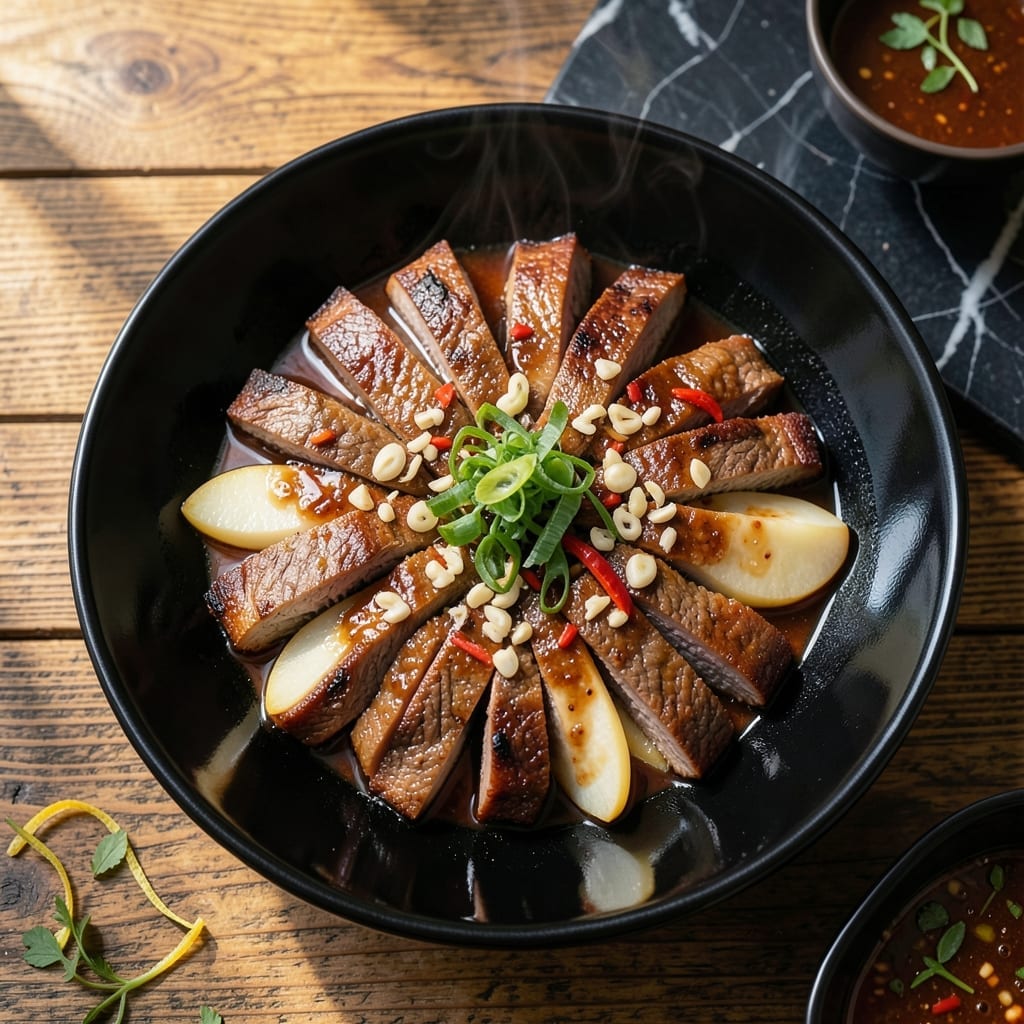
This recipe brings authentic Korean flavors to your grill with tender, marinated beef short ribs. The combination of sweet and savory creates a dish that’s both comforting and exciting.
I’ve refined this method to ensure the meat stays juicy while developing a rich, caramelized crust. Perfect for gatherings or a special weeknight meal.
Ingredients for Korean Boneless Beef Short Ribs
These authentic ingredients deliver bold Korean flavors with every juicy, caramelized bite.
| Ingredient | Amount | Notes |
|---|---|---|
| Beef Short Ribs 🥩 | 2 ½ lb | Boneless, thin-cut for grilling |
| Soy Sauce 🥫 | ¾ cup | Low-sodium preferred for balance |
| Brown Sugar 🍚 | ½ cup | Light or dark, packed tightly |
| Asian Pear 🍐 | ½ whole | Grated, for natural sweetness |
| Fresh Garlic Cloves 🧄 | 6 cloves | Minced finely for even distribution |
| Fresh Ginger 🌿 | 1 tbsp | Grated, peeled first |
| Sesame Oil 🫒 | 2 tbsp | Toasted variety for depth |
| Rice Vinegar 🍶 | ¼ cup | Or apple cider vinegar |
| Gochujang 🌶️ | 2 tbsp | Korean chili paste for heat |
| Green Onions 🧅 | 4 whole | Thinly sliced for garnish |
| Sesame Seeds 🌰 | 1 tbsp | Toasted, for finishing touch |
| Black Pepper 🌶️ | 1 tsp | Freshly ground for best flavor |
| Vegetable Oil 🫒 | 2 tbsp | For greasing grill grates |
[recipe_ingredient_scaler]
The beef is everything here. Boneless short ribs (often labeled flanken-style) are essential for that melt-in-your-mouth texture. Look for well-marbled cuts at Korean markets or the international section of Whole Foods. The Asian pear is the secret—Bosc or Anjou work best if you can’t find Asian variety. Don’t skip the grated ginger and garlic; they form the flavor base.
Need a soy sauce swap? Tamari works at equal ratio, but it’s saltier—reduce the total by one-fourth. No gochujang? Sriracha plus a pinch of sugar gets you close but lacks depth. The brown sugar can be substituted with honey or maple syrup if avoiding refined sugar. For the sesame oil, toasted is non-negotiable—untoasted tastes flat.
Marinate the beef for at least 4 hours, preferably overnight for maximum flavor penetration. The marinade keeps in the fridge for 3 days if prepping ahead. Cooked ribs are best served immediately but will hold in a warm oven for 30 minutes without drying out.
Why You’ll Love This Recipe
- One Pan Marvel: I toss everything in a single dish—ribs, soy sauce, brown sugar, pear—and let the oven do the work.
- Sweet-Savory Magic: The Asian pear tenderizes the meat while the garlic and brown sugar create this sticky, umami-rich glaze.
- Meal Prep Hero: I make a big batch on Sunday and it tastes even better reheated for lunches all week.
- Budget Stretcher: One pack of short ribs feeds my whole family, and the leftovers (if there are any) freeze beautifully.
Step-by-Step Instructions for Korean Boneless Beef Short Ribs
Master the marinade and grilling process for tender, flavorful results every time.
Step 1: Prepare the Marinade Base
In a large bowl, combine the 0.75 cup soy sauce, 0.5 cup brown sugar, and 0.25 cup rice vinegar. Whisk vigorously until the brown sugar fully dissolves—the mixture should be smooth with no visible granules.
Add the 2 tbsp gochujang and 2 tbsp sesame oil, then whisk again to create a glossy, richly colored base. The gochujang will give the marinade its signature depth and subtle heat, while the sesame oil adds nutty complexity.
Step 2: Incorporate Aromatics and Fruit
Peel and grate the 0.5 whole Asian pear directly into the marinade. The pear’s natural enzymes will tenderize the beef while adding subtle sweetness. Stir in the 6 cloves fresh garlic cloves (minced) and 1 tbsp fresh ginger (grated and peeled).
Finish with 1 tsp black pepper, ensuring it’s freshly ground for maximum aroma. The marinade should be fragrant with visible specks of garlic, ginger, and pear. Let it sit for 5 minutes to allow the flavors to meld before adding the beef.
Step 3: Marinate the Beef Short Ribs
Place the 2.5 lb beef short ribs in a resealable plastic bag or shallow dish. Pour the marinade over the ribs, ensuring every piece is fully coated. Massage the marinade into the meat for 1-2 minutes to break down surface tension and enhance absorption.
Seal the bag or cover the dish and refrigerate for at least 4 hours, or preferably overnight. The longer the beef marinates, the more pronounced the flavors become. For best results, turn the bag occasionally to redistribute the marinade.
Step 4: Grill to Perfection
Preheat your grill to medium-high heat (about 375-400°F). Use 2 tbsp vegetable oil to grease the grates thoroughly—this prevents sticking and ensures clean grill marks. Remove the beef from the marinade, shaking off excess, and discard the remaining marinade.
Grill the ribs for 4-5 minutes per side until the edges are charred and the center reaches your desired doneness. Avoid moving the ribs too soon; let them sear undisturbed for the first 2-3 minutes to develop a caramelized crust.
Step 5: Rest and Garnish
Transfer the grilled ribs to a cutting board and let them rest for 5-10 minutes. This allows the juices to redistribute, ensuring every bite is moist and flavorful. Slice the ribs thinly against the grain for maximum tenderness.
Garnish with 4 whole green onions (thinly sliced) and 1 tbsp sesame seeds (toasted) for a fresh, nutty finish. Serve immediately with steamed rice or your favorite side dishes.
Pro Tips For Making Korean Boneless Beef Short Ribs
- Tenderize with Pear: Grate the Asian pear finely and mix it into the marinade—its enzymes break down the beef fibers, making the short ribs noticeably more tender after just 30 minutes.
- Slice Against Grain: After cooking, slice the ribs thinly against the grain so each bite is easy to chew, not stringy. I learned this the hard way after serving tough slices to dinner guests.
- Don’t Overcrowd Pan: Sear the ribs in batches if needed—crowding the pan steams instead of browns, and you’ll lose that caramelized crust from the brown sugar.
- Marinate Overnight: Give the soy sauce, garlic, and sugar at least 8 hours to work their magic. Sounds like a long time, but the flavor difference is undeniable.
Regional Styles of This Dish
Korean BBQ Style
The classic galbi approach uses bone-in ribs, but this boneless version keeps the same bold flavors. I learned this method from a Korean friend at Austin’s farmers market. The marinade’s sweet-savory balance is key, with the pear adding natural tenderness. 💛
Spicy Gochujang Twist
For a fiery kick, increase the gochujang to 3 tbsp and add 1 tbsp gochugaru (Korean chili flakes). This version packs serious heat while maintaining the dish’s signature caramelized crust. David, my taste-tester, prefers this spicier take.
Southern Fusion Adaptation
Living in Austin, I sometimes add a Southern touch with 1 tbsp smoked paprika and 1 tsp cumin to the marinade. The smoky depth pairs surprisingly well with the sweet marinade, creating a unique Texas-Korean fusion.
Quick Weeknight Version
Short on time? Use a food processor to blend the marinade ingredients into a smooth paste. This speeds up the mixing process and helps the flavors penetrate the beef faster. I’ve tested this with 2-hour marinating and still got great results.
Gluten-Free Option
Replace the soy sauce with tamari or coconut aminos to make this dish gluten-free. The flavor profile remains rich and complex, though you may need to adjust the saltiness slightly. San-J tamari is my go-to brand for this swap.
Nutrition Facts
Frequently Asked Questions
Can I use regular short ribs instead of boneless?
Yes, but bone-in ribs need 1-2 extra hours to marinate for full flavor penetration. They’ll also take 1-2 minutes longer per side to grill due to the bone.
Why is Asian pear used in the marinade?
The pear’s enzymes naturally tenderize the meat while adding subtle sweetness. No pear? Substitute 1/4 cup grated pineapple or 2 tbsp kiwi puree for similar results.
How do I prevent the ribs from sticking to the grill?
Clean and oil the grates thoroughly before heating. Use tongs (not forks) to flip, and don’t move the meat for the first 2-3 minutes of cooking.
What’s the best way to store leftovers?
Store in an airtight container for up to 3 days. Reheat gently in a skillet with a splash of water to prevent drying out.

Trained in classic French technique but raised on slow-cooked ribs and spicy rubs, she blends culinary skill with smoke and soul.
- Octopus Recipe Pan Fried: Crispy Edges With Tender Bites - October 3, 2026
- Recipe For Fried Pork Chops In An Iron Skillet: Crispy Crust With Juicy Centers - October 3, 2026
- Recipe for Fully Cooked Spiral Ham: Sweet Glaze and Effortless Elegance - October 3, 2026