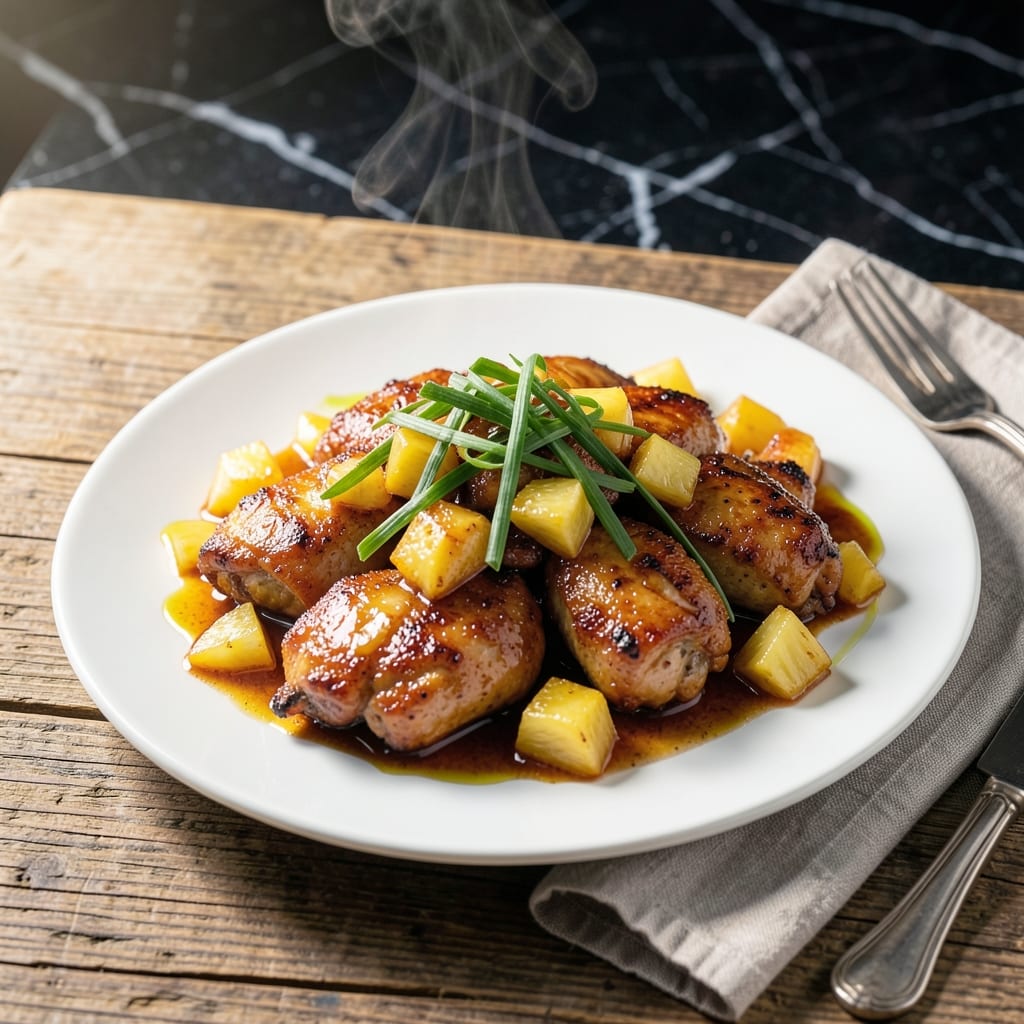
This fusion dish brings together the bold flavors of Korea with the tropical sweetness of Hawaii in one unforgettable meal.
I developed this recipe to capture the perfect balance between spicy gochujang and sweet pineapple, creating a glaze that’s both complex and approachable. The chicken stays juicy while absorbing every bit of that sticky, caramelized coating.
What sets this apart is the contrast of textures—crispy edges on the chicken paired with the smooth, glossy glaze. It’s a dish that feels special but comes together with simple, everyday techniques.
Serve it with rice to soak up every last drop of sauce. Here’s how to make it at home.
Ingredients for Korean Chicken Recipe Hawaii
Bold Korean flavors meet Hawaiian sweetness in this fusion dish with everyday ingredients.
| Ingredient | Amount | Notes |
|---|---|---|
| Boneless Skinless Chicken Thighs 🍗 | 2 lb | Cut into bite-sized pieces |
| Gochujang 🌶️ | ½ cup | Korean red chili paste |
| Pineapple Chunks 🍍 | 2 cups | Fresh or canned, drained |
| Soy Sauce 🥢 | ⅓ cup | Low-sodium preferred |
| Honey 🍯 | ¼ cup | For balancing spice |
| Rice Vinegar 💧 | 2 tbsp | Adds tang to glaze |
| Sesame Oil 🫒 | 1 tbsp | Toasted for depth |
| Garlic Cloves 🧄 | 4 cloves | Minced for maximum flavor |
| Fresh Ginger 🌿 | 1 tbsp | Grated, no fibers |
| Cornstarch 🌾 | 2 tbsp | For thickening glaze |
| Sesame Seeds 🌰 | 1 tbsp | Toasted, for garnish |
| Green Onions 🧅 | ½ cup | Sliced thin for topping |
| Vegetable Oil 🫒 | ¼ cup | For frying chicken |
| Kosher Salt 🧂 | 1 tsp | For seasoning chicken |
| Black Pepper 🌶️ | ½ tsp | Freshly ground preferred |
[recipe_ingredient_scaler]
The gochujang is non-negotiable for that signature heat and depth. H Mart or Korean grocery stores carry authentic brands like Sempio or Chung Jung One. For the pineapple, fresh is ideal (that juicy, bright flavor), but canned in its own juice works in a pinch—just drain it well. Chicken thighs stay juicier than breasts here, and boneless, skinless makes prep faster. Look for thighs with good marbling for extra tenderness.
No gochujang? Sriracha mixed with a little miso paste gets you close but not identical. Fresh ginger can be swapped for ground ginger at one-quarter the amount. Honey can be replaced with brown sugar (dissolve in a splash of warm water first). The soy sauce should be low-sodium to keep the glaze from getting too salty—Kikkoman makes a reliable version found in most supermarkets.
The glaze keeps well in the fridge for up to 5 days—reheat gently to loosen. Chicken is best eaten fresh but reheats decently if stored in an airtight container for 3-4 days. Freeze cooked chicken separately from the sauce for up to 3 months.
Why You’ll Love This Recipe
- One Pan Wonder: I toss everything—the chicken, gochujang, and pineapple—into one pan and let the oven do the work.
- Sweet & Spicy Magic: That gochujang and honey combo with juicy pineapple? Ridiculously good and totally addictive.
- Weeknight Hero: Honestly, it’s my go-to for busy evenings when I need dinner fast but still crave big flavors.
- Budget Friendly: Chicken thighs are cheap, and this recipe stretches them into a meal that feels way fancier than it is.
Step-by-Step Instructions for Korean Chicken with Sweet and Spicy Glaze
Master this technique for crispy chicken coated in a perfectly balanced sweet-spicy sauce every time.
Step 1: Season and Coat the Chicken
Pat the 2 lb Boneless Skinless Chicken Thighs dry with paper towels, then cut them into bite-sized pieces. Season with 1 tsp Kosher Salt and 0.5 tsp Black Pepper, tossing to coat evenly. This step ensures the chicken stays juicy and flavorful throughout cooking.
Place the 2 tbsp Cornstarch in a large bowl. Add the seasoned chicken pieces and toss until each piece is fully coated. The cornstarch creates a light, crispy exterior that will hold the sauce beautifully. Set aside while you prepare the glaze.
Step 2: Fry the Chicken to Golden Perfection
Heat the 0.25 cup Vegetable Oil in a large skillet over medium-high heat until it shimmers. Add half the chicken in a single layer—don’t overcrowd the pan or the pieces will steam instead of crisp. Cook for 4-5 minutes per side until golden brown and cooked through.
Transfer the cooked chicken to a paper towel-lined plate to drain excess oil. Repeat with the remaining chicken, adding more oil if needed. The chicken should be crispy on the outside and tender inside before you add the sauce.
Step 3: Create the Sweet and Spicy Glaze
In a medium bowl, whisk together the 0.5 cup Gochujang, 0.33 cup Soy Sauce, 0.25 cup Honey, 2 tbsp Rice Vinegar, and 1 tbsp Sesame Oil until smooth. The gochujang provides the heat, while the honey balances it with sweetness.
Add the 4 cloves Garlic Cloves (minced) and 1 tbsp Fresh Ginger (grated) to the skillet you used for the chicken. Sauté over medium heat for 30 seconds until fragrant. Pour in the glaze mixture and the 2 cups Pineapple Chunks, stirring to combine.
Step 4: Combine Chicken and Glaze
Return all the cooked chicken to the skillet with the glaze. Stir to coat each piece evenly in the sauce. Reduce heat to medium-low and let it simmer for 3-4 minutes until the sauce thickens slightly and clings to the chicken.
The sauce should be glossy and coat the back of a spoon. If it’s too thick, add a splash of water to reach your desired consistency. The pineapple chunks will soften slightly and absorb the flavors of the glaze.
Step 5: Garnish and Serve
Transfer the chicken and sauce to a serving platter. Sprinkle with the 1 tbsp Sesame Seeds and 0.5 cup Green Onions for freshness and crunch. The sesame seeds add a nutty flavor, while the green onions provide a bright contrast to the rich sauce.
Serve immediately while hot, with the sauce spooned over the top. The chicken should have a sticky, glossy coating with a perfect balance of sweet, spicy, and tangy flavors in every bite.
Pro Tips For Making Korean Chicken Recipe Hawaii
- Sear Chicken First: Brown the thighs in a hot pan for 3-4 minutes per side before adding sauce—this builds a deep flavor base that soaks up the gochujang and honey better than raw meat ever could.
- Drain Pineapple Well: Press the pineapple chunks between paper towels to remove excess juice, or your sauce will turn watery. I learned this the hard way after my first batch was more soup than glaze.
- Simmer, Don’t Boil: Once the sauce is in, keep it at a gentle simmer—boiling hardens the gochujang and makes the honey separate. Stir occasionally and let it thicken slowly over medium-low heat.
- Slice Against Grain: Trim any visible fat from the thighs first, then slice across the grain after cooking. It makes the chicken tender and easier to eat, especially when coated in that sticky-sweet sauce.
Wine and Beer Pairings for This Dish
Beer Pairings
For this dish, I love a crisp Korean lager like Hite or OB Beer—their light profile lets the bold flavors shine. A Hawaiian-style blonde ale from Maui Brewing Co. also works beautifully with its tropical notes. 🍺
White Wine Options
Try an off-dry Riesling with its honeyed notes complementing the glaze. German Kabinett Riesling is my go-to, but a Washington State version offers similar acidity to cut through the richness.
Rosé Selections
A chilled Provençal rosé brings red fruit flavors that pair well with the pineapple. Whispering Angel is widely available and offers consistent quality. Serve at 45-50°F for best results.
Cocktail Match
For non-wine drinkers, a lychee martini echoes the dish’s sweet-spicy balance. Muddle 3 lychees with 1 oz vodka, ½ oz St-Germain, and ½ oz lime juice, then shake with ice. 💫
Sparkling Options
A dry Prosecco cleanses your palate between bites. Look for Brut styles with fine bubbles. The effervescence contrasts nicely with the sticky glaze texture.
Non-Alcoholic Pairing
Sparkling pineapple ginger beer from Fever-Tree captures the dish’s tropical essence. Its spicy kick mirrors the gochujang while the pineapple ties directly to the recipe. Serve over ice with a lime wedge.
Nutrition Facts
Frequently Asked Questions
Can I use chicken breast instead of thighs?
Yes, but thighs stay juicier. If using breasts, cut into 1-inch pieces and reduce cooking time to 3-4 minutes per side to prevent dryness.
How do I make the glaze less spicy?
Reduce gochujang to ¼ cup and add 1 tbsp more honey. For milder heat, substitute half with miso paste.
Can I make this ahead of time?
Cook chicken and glaze separately, then combine and reheat gently. Store in an airtight container for up to 3 days.

Trained in classic French technique but raised on slow-cooked ribs and spicy rubs, she blends culinary skill with smoke and soul.
- Recipe for Boneless Pork Chops in Cast Iron Skillet: Sear and Baste to Juicy Perfection - October 3, 2026
- Recipe for Boneless Cross Rib Roast: Slow-Roasted Beef with Herb Crust - October 3, 2026
- Hamburgers in Sauce Recipe Crock Pot: Slow-Cooked Savory Delight - October 3, 2026